
How a Shelter Dog Named Biscuit Taught One Family to Slow Down
Story Subject
Biscuit
Type
Dog
Read Time
7 min
Shared By
Maria & Carlos Martinez
Editor
Mr Pet Lover Admin
In This Guide
The Martinez family walked into the shelter looking for a puppy. Something small, playful, and full of energy to match their two kids under ten. They walked past kennel after kennel of bouncing, barking dogs.
Then they saw Biscuit.
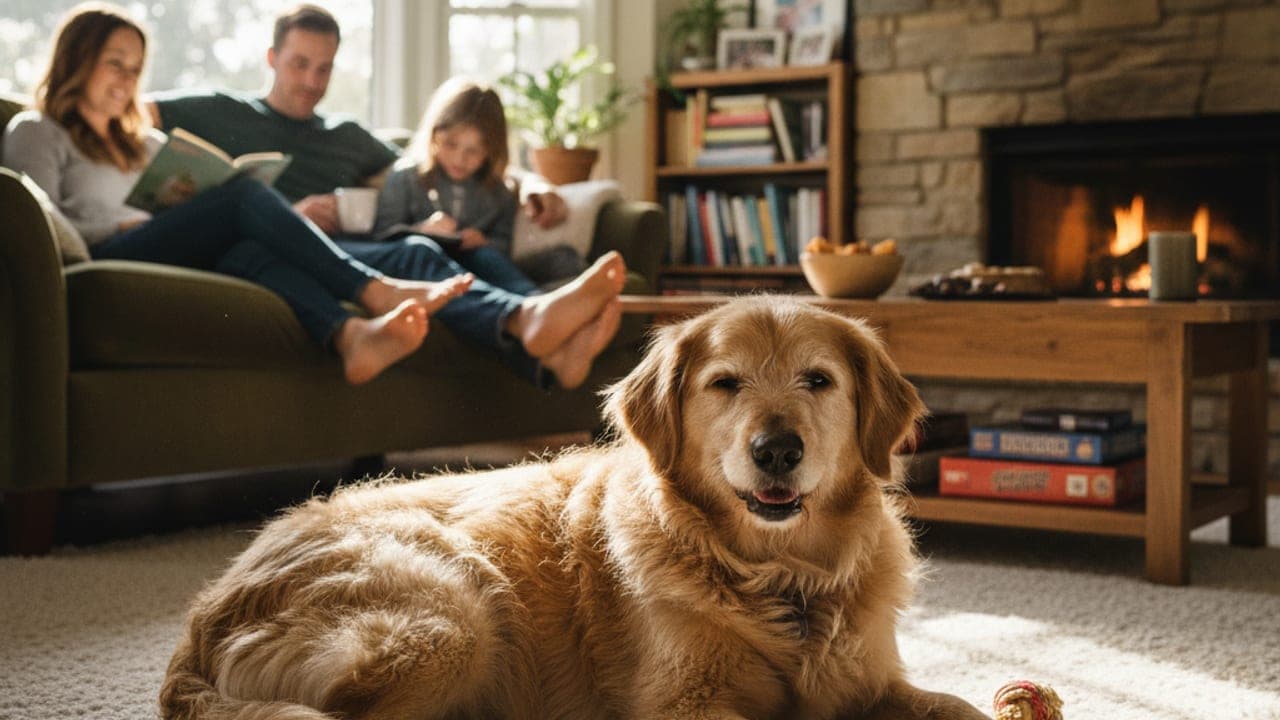
She was lying on her bed in the corner of her kennel, watching the chaos around her with quiet dignity. A nine-year-old Golden Retriever mix with a graying muzzle and the softest brown eyes. She didn't bark. She didn't jump. She just looked up and gently wagged her tail.
"She's been here for four months," the shelter volunteer said. "Nobody wants the older ones."
Maria Martinez knelt down. Biscuit placed her chin on Maria's knee and sighed.
"We were supposed to get a puppy," Maria's husband, Carlos, told us later. "But something about her made us stop."
The First Week
Biscuit wasn't what they expected. She didn't need constant walks or frantic play sessions. She wanted to be near her people. While the kids did homework, Biscuit lay at their feet. While Carlos cooked dinner, she watched from her bed in the kitchen. She didn't demand attention — she just offered her quiet presence.
"Our house was always loud and busy," Maria said. "Biscuit brought this calm energy. The kids started sitting on the floor to pet her instead of running around. It was like she taught us all to just... be."
Finding Her Confidence
The first month, Biscuit was cautious. She flinched at sudden movements and wouldn't eat if anyone watched. The shelter couldn't say what her past looked like, but the signs suggested she hadn't always been treated gently.
Week by week, she opened up. She started greeting the family at the door — not with barking, but with a full-body wiggle that made everyone laugh. She learned that the kids' hugs were safe. She discovered that the couch was allowed.
By month three, Biscuit was a different dog. Not in personality — she was always gentle — but in confidence. She would initiate play with the kids, bringing them her favorite squeaky toy and standing there with hopeful eyes until someone threw it.
The Lesson
"People told us we were crazy for adopting an old dog," Carlos said. "They said we'd have her for two years and it would break the kids' hearts."
It's been three years. Biscuit is twelve now. She moves a little slower, naps a little more. But every morning, she's the first to greet the kids when they come downstairs.
"She taught our kids something I couldn't have taught them with words," Maria said. "That love doesn't have to be loud or dramatic. Sometimes the quietest love is the deepest."
Biscuit looked up from her bed, tail wagging gently, as if she agreed.
Thinking about adopting a senior dog? They're often calmer, already trained, and deeply grateful for a second chance. Explore our dog breed guides to find a breed that matches your family's lifestyle.
Families who adopt older or formerly stray dogs often describe the same shift Biscuit prompted: the dog's pace becomes the household's pace. That isn't a problem to fix; it's the trade-off that makes adopting a senior dog a different proposition than raising a puppy. You give up the energy and the long horizon. You get a creature who already knows how to be loved and asks for very little — short walks, warm beds, and the patient company of people willing to slow down enough to notice.
Why the older dogs wait longest — and what you actually get
The volunteer's line — "Nobody wants the older ones" — is the quiet heartbreak of almost every shelter: puppies tend to be adopted first, while a grey-muzzled dog like Biscuit can wait months. Our guide Adopting a Senior Pet treats that as less a warning than an opportunity, because the dog waiting out those months is often the easiest one in the building to live with.
What you gain is easy to miss until you've lived it: a senior is usually already house-trained, past the destructive adolescence that ambushes young dogs, and settled into a known temperament — what you meet in the kennel is close to what you bring home. With a retriever-type dog the gap is dramatic: our Golden Retriever profile describes a young Golden as a high-energy working breed needing 60–90 minutes of exercise a day — the dog so often surrendered as "hyper" at one or two. Biscuit, at nine, wanted short walks, a warm bed, and her people nearby; the calm the family fell for wasn't luck, it was age.
What to expect: health screening and helping her settle in
Two things reassure most adopters. The first is a baseline vet visit: a newly adopted senior earns a thorough physical and, ideally, senior bloodwork soon after coming home. It establishes what's normal for this dog and catches age-related conditions (kidney, thyroid, dental disease, early arthritis) early, when they're far easier to manage — our guides on senior vet visits and bloodwork and senior dog care explain what the panels catch. For a Golden-type dog, ask about weight, teeth, those floppy moisture-trapping ears, and the breed's known cancer risk, all detailed on the breed profile. None of this makes an older dog fragile; it just means you adopt with clear eyes.
The second is patience with the settling-in weeks. Biscuit's early caution — flinching at sudden movements, refusing to eat while anyone watched — is a normal decompression pattern for a dog leaving the stress of a shelter, not a flaw to correct. A predictable routine, a quiet space, and no pressure let confidence rebuild on the dog's own timeline; Biscuit's arc from wary to full-body-wiggle is what that looks like when it goes well, and the slower mornings she shows at twelve are their own manageable chapter of senior dog arthritis and joint care.
What Biscuit taught the Martinez family about a slower kind of love
They came for a puppy and left with a nine-year-old — and three years on, none of them would trade it. The lesson wasn't that every family should skip the puppy; it's narrower than that. Biscuit asked for very little — short walks, a warm bed, her people nearby — and in exchange she reset the whole household to her pace, teaching two kids under ten that love doesn't have to be loud to run deep. The grey muzzle nobody else wanted turned out to be the easiest dog in the shelter to love back.
Questions About Biscuit
Common questions answered to help you better understand this story
For many families, yes. If you want a calmer companion and can accept a shorter time together, an older dog is often the better match — frequently already house-trained, past the destructive adolescent phase, and settled in temperament, so what you meet is what you get. The honest trade-offs, a shorter horizon and possible age-related vet costs, are covered in our senior-pet adoption guide.
Expect a quiet first few weeks. Many dogs arrive cautious — hesitant to eat while watched, startled by sudden movement — and open up gradually over one to three months, as Biscuit did. Book a baseline vet exam and senior bloodwork early, then offer a steady routine and let confidence build on the dog's timeline.
Usually easier, day to day. Seniors need less exercise, are often already trained, and skip the chewing-and-energy stage — a young Golden Retriever needs 60–90 minutes of exercise daily, while an older one is content with short walks. The extra effort is medical, not behavioral: attentive health monitoring in place of obedience work.
Keep the first weeks calm and predictable. Give the dog a quiet bed of its own, feed and walk on a consistent schedule, and let it approach people in its own time rather than overwhelming it with visitors. Confidence returns gradually, as it did for Biscuit — patience, not correction, does the work.
You get a companion who is usually house-trained, calm, and past the demanding puppy stage, with a known temperament — fewer surprises and far less energy to burn off. Many, like Biscuit, are gently affectionate and grateful for a second chance. For a busy household, an older dog's slower pace is the feature, not the compromise.
Didn't find your answer?
Get in touch →More Stories


Get more stories like this
Weekly heartwarming pet stories and care tips, straight to your inbox.
No spam, ever. Unsubscribe anytime.