
Can My Dog Eat That? A Quick Guide to Safe Human Foods
Not individually reviewed by a veterinarian. Read our editorial standards.
Last updated:
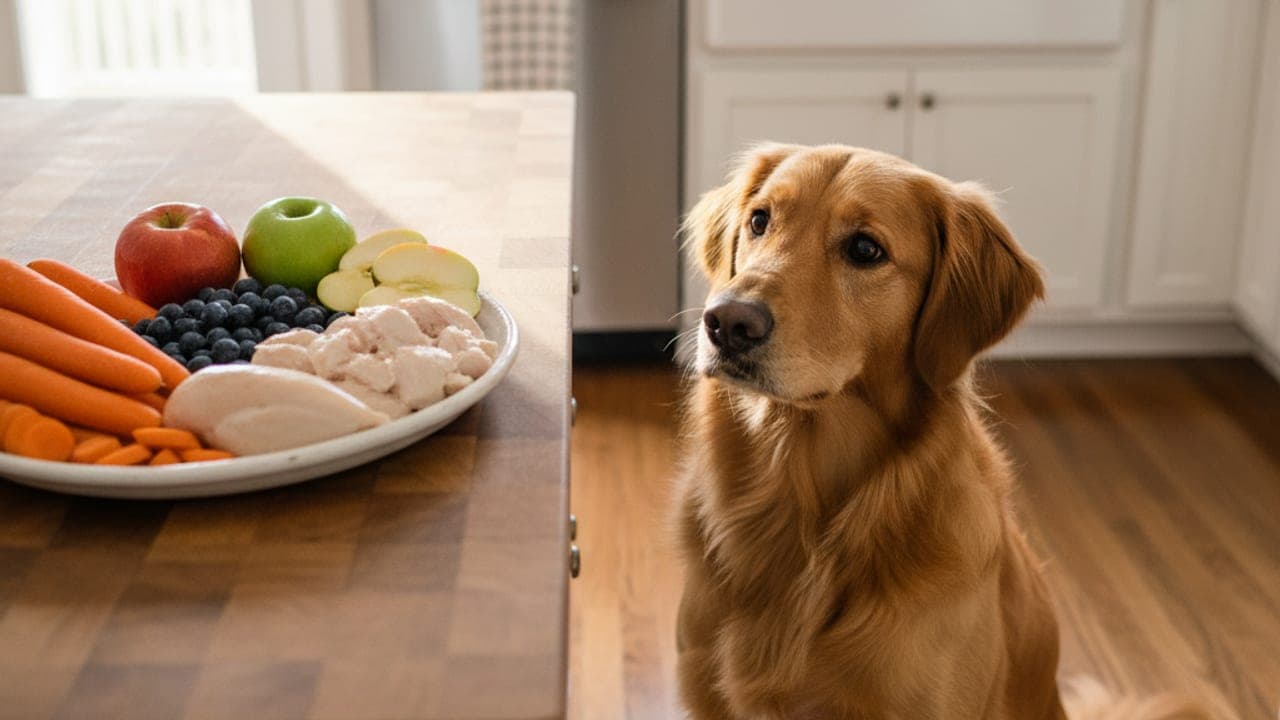
- Safe: carrots, blueberries, cooked chicken, rice, peanut butter (xylitol-free)
- Dangerous: grapes, chocolate, onions/garlic, xylitol, macadamia nuts
- Portion size matters — even safe foods can cause problems in large amounts
- Always check ingredient labels for xylitol (birch sugar) in peanut butter and snacks
- When in doubt, call ASPCA Poison Control: (888) 426-4435
Your dog is sitting at your feet with those impossibly earnest eyes, watching every forkful travel from your plate to your mouth. You want to share. She clearly wants you to share. But that little voice in the back of your head asks — is this actually safe for her?
The answer depends entirely on what is on your plate. Some human foods are perfectly healthy for dogs in moderation, while others can cause anything from an upset stomach to a life-threatening emergency.
Which Human Foods Are Safe for Dogs?
The following foods are generally safe and even nutritious for dogs when served plain and in appropriate portions.
Carrots
Raw or cooked, carrots are a crunchy, low-calorie snack that most dogs enjoy. They are high in beta-carotene, fiber, and vitamin A. Raw carrot sticks also provide a satisfying chew that can support dental health.
Serving tip: Cut into bite-sized pieces appropriate for your dog's size to prevent choking. Baby carrots work well for medium to large dogs.
Blueberries
These small, nutrient-dense berries are packed with antioxidants, fiber, and vitamins C and K. They make excellent training treats because of their small size and natural sweetness.
Serving tip: Fresh or frozen, served whole. Start with a few at a time to ensure your dog tolerates them.
Plain Cooked Chicken
Lean, boneless, skinless chicken is an excellent protein source and a staple of many bland diets recommended by veterinarians for dogs with upset stomachs. It is one of the most universally safe and palatable human foods for dogs.
Serving tip: Cooked thoroughly with no seasoning, oils, butter, garlic, or onion. Never feed raw chicken due to salmonella risk. Remove all bones — cooked bones splinter and can cause serious internal injuries.
Plain Cooked Rice
White rice is gentle on the digestive system and is often paired with chicken for dogs recovering from gastrointestinal issues. It provides digestible carbohydrates and can help firm up loose stools.
Serving tip: Plain white rice, fully cooked, with no added salt, butter, or sauces.
Peanut Butter (Xylitol-Free Only)
Most dogs love peanut butter, and it is a great vehicle for hiding medications or stuffing enrichment toys like Kongs. It provides protein and healthy fats.
Critical warning: Check the ingredients label every time. Some peanut butter brands contain xylitol (also listed as "birch sugar"), which is extremely toxic to dogs — even small amounts can cause liver failure and death. Choose peanut butter with only peanuts (and optionally salt) on the label.
Serving tip: One tablespoon for medium dogs, less for small dogs. Peanut butter is calorie-dense, so moderation matters.
Other Safe Foods in Moderation
- Watermelon (seedless, no rind) — hydrating summer treat
- Apples (no seeds or core) — crunchy with fiber and vitamin C
- Plain pumpkin (canned, not pie filling) — excellent for digestive health
- Sweet potatoes (cooked, plain) — rich in fiber and vitamins
- Green beans (cooked or raw, no seasoning) — low-calorie filler for overweight dogs
- Bananas — high in potassium, serve sparingly due to sugar content
- Eggs (fully cooked) — great protein source with biotin and selenium
Which Human Foods Are Dangerous for Dogs?
These foods range from mildly toxic to potentially fatal. Keep them out of reach at all times.
Chocolate
Chocolate contains theobromine and caffeine, both of which are toxic to dogs. Dark chocolate and baking chocolate are the most dangerous due to higher theobromine concentrations. Even milk chocolate can cause vomiting, diarrhea, rapid heart rate, and seizures in sufficient quantities.
Toxicity scale: Baking chocolate > dark chocolate > milk chocolate > white chocolate (minimal theobromine)
If ingested: Note the type and amount. Contact your vet or the ASPCA Animal Poison Control Center (888-426-4435) immediately.
Grapes and Raisins
Grapes and raisins can cause acute kidney failure in dogs, and the toxic dose varies unpredictably — some dogs are severely affected by a single grape while others show no symptoms. Because there is no way to predict individual sensitivity, all grapes and raisins should be treated as dangerous.
If ingested: Contact your vet immediately, even if your dog seems fine. Kidney damage may not show symptoms for 24-72 hours.
Onions and Garlic
All members of the allium family — onions, garlic, leeks, chives, shallots — contain compounds that damage red blood cells and can cause hemolytic anemia. The effect is cumulative, so even small amounts over time are harmful.
All forms are toxic: Raw, cooked, powdered, dehydrated, and in sauces or seasonings. Garlic is roughly 5 times more concentrated than onion.
Xylitol (Birch Sugar)
Xylitol is an artificial sweetener found in sugar-free gum, candy, some peanut butters, baked goods, toothpaste, and even some medications. In dogs, xylitol causes a rapid, dangerous drop in blood sugar (hypoglycemia) and can lead to liver failure.
Even small amounts can be fatal. This is one of the most dangerous household toxins for dogs.
If ingested: This is a true emergency. Contact your vet or poison control immediately — do not wait for symptoms.
Macadamia Nuts
Macadamia nuts cause weakness, vomiting, tremors, and hyperthermia in dogs. While rarely fatal on their own, the symptoms are distressing and the risk increases significantly when macadamias are combined with chocolate (a common combination in cookies and candy).
Other Foods to Avoid
- Avocado — contains persin, which can cause vomiting and diarrhea
- Alcohol — even small amounts can cause dangerous drops in blood sugar, blood pressure, and body temperature
- Cooked bones — splinter and can perforate the digestive tract
- Coffee and caffeine — similar toxicity to chocolate (theobromine family)
- Raw yeast dough — expands in the stomach and produces alcohol
- Nutmeg — contains myristicin, which causes hallucinations, elevated heart rate, and seizures in dogs
- Salt in large quantities — can lead to sodium ion poisoning
How Much Human Food Can You Safely Give Your Dog?
Even safe foods should follow the 10% rule: treats and human food should make up no more than 10% of your dog's daily caloric intake. The other 90% should come from a nutritionally complete dog food.
For a typical 50-pound dog eating 1,000 calories per day, that means about 100 calories from treats and extras. To put that in perspective:
- 1 medium carrot = ~25 calories
- 1 tablespoon peanut butter = ~95 calories
- 10 blueberries = ~8 calories
- 1 cup plain cooked chicken = ~230 calories (more than the full treat budget)
Dogs who are chronic beggars — Labrador Retrievers and Beagles are particularly talented at this — can quickly accumulate excess calories from well-meaning sharing. Track what goes into your dog's mouth across the entire household. Often, each family member thinks they are the only one giving treats.
What Should You Do If Your Dog Eats Something Toxic?
Stay calm and act quickly:
- Identify what was eaten and approximately how much.
- Note the time it was consumed.
- Call your vet or the ASPCA Animal Poison Control Center: 888-426-4435 (a consultation fee may apply). Pet Poison Helpline: 855-764-7661 is another option.
- Do not induce vomiting unless specifically instructed to by a professional. Some substances cause more damage coming back up.
- Do not give home remedies (milk, hydrogen peroxide without vet guidance, bread) — these can make the situation worse.
- Bring the packaging of whatever was ingested to the vet if possible.
Speed matters with toxin ingestion. Many poisonings are treatable if caught within the first 1-2 hours. Waiting to "see if symptoms develop" can turn a treatable situation into a critical one.
When in doubt, ask your vet. A quick phone call can determine whether you need an emergency visit or monitoring at home.
FAQ
Can dogs eat cheese?
Most dogs can eat small amounts of plain, low-fat cheese (mozzarella, cottage cheese) as an occasional treat. However, many dogs are lactose intolerant, so watch for digestive upset. High-fat cheeses can trigger pancreatitis in susceptible dogs. Start with a tiny amount to test tolerance.
Is it safe to give my dog raw vegetables?
Most raw vegetables are safe and even beneficial — carrots, green beans, cucumbers, and celery are popular options. Avoid raw potatoes (contain solanine) and raw corn on the cob (choking and obstruction hazard). Always cut vegetables to appropriate sizes for your dog.
Can dogs eat fish?
Cooked, boneless fish (salmon, whitefish, sardines) is excellent for dogs — rich in omega-3 fatty acids that support skin, coat, and joint health. Never feed raw salmon (risk of salmon poisoning disease) or fish with small bones. Avoid seasoned, breaded, or fried fish.
Why do some dogs seem fine after eating toxic foods?
Toxic reactions depend on the dog's size, the amount ingested, and individual sensitivity. A large Labrador Retriever who eats one grape may show no symptoms, while a smaller dog could face kidney failure from the same amount. The absence of immediate symptoms does not mean the food is safe — internal damage may be occurring silently.
Should I give my dog vitamins or supplements?
If your dog is eating a complete and balanced commercial dog food, additional supplements are generally unnecessary. Specific supplements (joint support, omega-3, probiotics) may benefit dogs with particular health conditions, but always consult your vet before adding supplements. Over-supplementation can cause toxicity, particularly with fat-soluble vitamins (A, D, E, K).
Find breed-specific dietary considerations in our dog breed guides or visit our care guides for nutrition advice tailored to your dog's life stage.
Mr Pet Lover Team
The Mr Pet Lover team is dedicated to providing warm, accurate, and practical pet care advice backed by veterinary research and real-world experience.
Related Articles
What Should I Feed My Cat? A Practical Guide to Cat Nutrition
Cats have unique dietary needs as obligate carnivores. Here is what your cat actually needs to thrive.

How to Start a Dog Breeding Business
Most guides to this business will tell you how to register an LLC. None of the six ranking guides we read in full will tell you that when the 2004 UK Kennel Club/BSAVA purebred dog health survey covered 22,005 litters from 13,141 bitches across 151 breeds, more than 80% of litters in Boston Terriers, Bulldogs and French Bulldogs were delivered by caesarean section.
Can Cats Eat This? The Complete Toxic & Safe Human-Foods List
A cat-specific list of which human foods are safe, which are risky, and which are an emergency — with the active risk and a clear vet-now trigger for each.