
Dog Walking Etiquette: 12 Rules Every Owner Should Follow
Not individually reviewed by a veterinarian. Read our editorial standards.
Last updated:
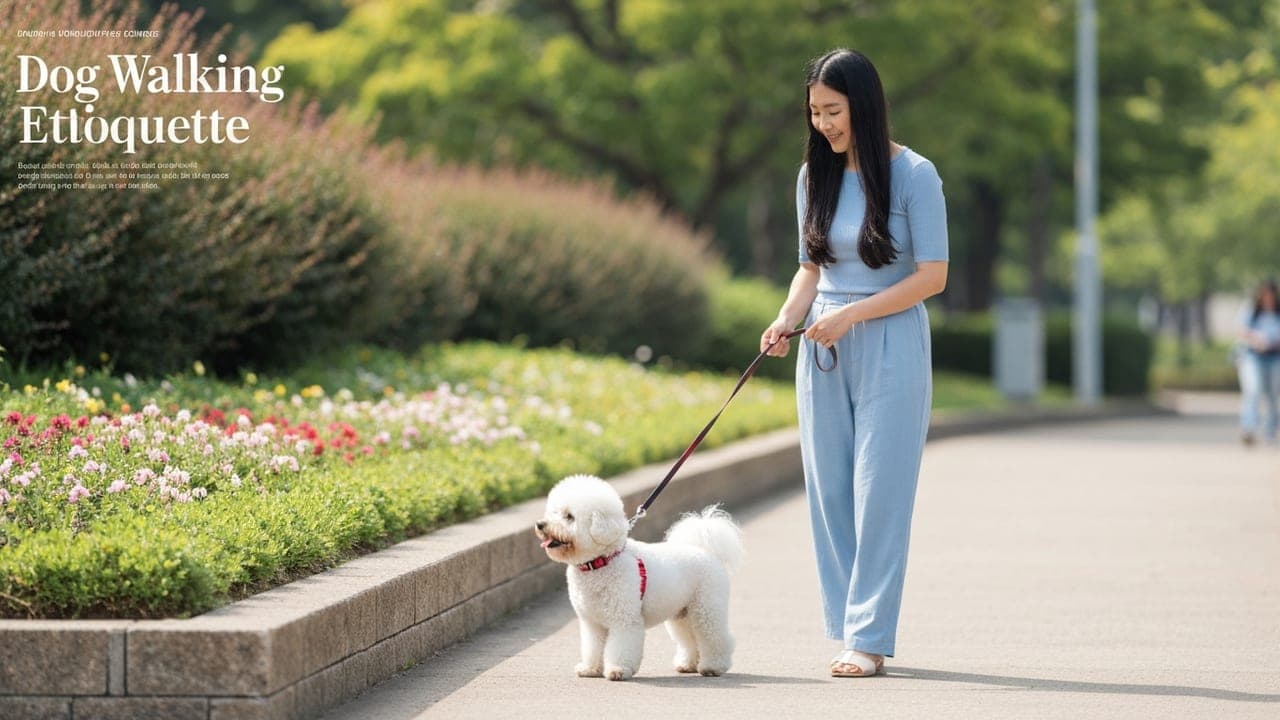
- Always ask before letting your dog approach another dog or person
- Keep your dog on a short leash in busy areas — retractable leashes cause accidents
- Pick up after your dog every single time — no exceptions
- Give reactive or fearful dogs extra space when passing
- Avoid walking during extreme heat — test pavement with your hand (5-second rule)
You're walking your dog on a narrow sidewalk when another dog approaches head-on, pulling toward yours. Both dogs are straining at their leashes, both owners are smiling nervously, and neither of you knows who should move first. Sound familiar?
Dog walking etiquette isn't about being uptight — it's about keeping every dog and every person safe and comfortable in shared spaces. Most conflicts between dog owners start with well-intentioned people who don't know the unwritten rules.
The Golden Rule of Dog Walking
Before we dive into specifics, here's the principle that governs everything else: your dog is your responsibility, and you cannot assume anything about other dogs. The friendliest-looking dog on the trail might be fearful, reactive, recovering from surgery, or in training. Always ask before allowing your dog to approach.
Leash Manners
Keep your dog on a leash in public unless you're in a designated off-leash area. This is both a safety rule and, in most municipalities, a legal requirement. Even if your dog has perfect recall, leash laws exist because other dogs don't.
Use an appropriate leash length. In crowded areas, keep your dog on a short leash (4–6 feet). Retractable leashes are controversial — they give dogs too much range in tight spaces and are difficult to retract quickly in emergencies. If you use one, keep it locked at a short length in busy areas.
Walk your dog on the side away from oncoming traffic and other pedestrians. This gives you a buffer zone to manage interactions. If you're on a sidewalk, walk your dog on the outside edge (closer to the road) so you're between your dog and approaching pedestrians.
For help with pulling, our loose leash walking guide covers training techniques that make walks enjoyable for both of you.
Greeting Other Dogs: The Right Way
Always ask the other owner first. "Is your dog friendly?" or "Can they say hello?" should happen before any nose-to-nose contact. Respect a "no" without taking it personally — there are many reasons an owner might decline.
Read both dogs' body language. Relaxed bodies, soft eyes, and play bows signal friendliness. Stiff posture, hard stares, raised hackles, or tucked tails signal discomfort. If either dog looks tense, redirect and move on.
Allow a brief, on-leash greeting (3–5 seconds), then move on. Extended leash greetings create tension because dogs feel restricted and can't use natural body language to negotiate space. Short greetings are safer greetings.
Avoid head-on approaches. Dogs naturally greet each other in an arc, approaching from the side. Walking directly toward another dog is confrontational in dog language. If possible, approach at an angle or let both dogs sniff while walking parallel.
Picking Up After Your Dog
This should go without saying, but it doesn't. Always pick up your dog's waste. Every time. Even if nobody is watching. Even on trails. Even if it's raining.
Carry more bags than you think you'll need. Biodegradable bags are a responsible choice. If your dog goes in a spot where bags aren't available and you've run out, mark the location mentally and come back with a bag.
Dog waste carries parasites, bacteria, and pathogens that contaminate water sources and soil. It's not "natural fertilizer" — it's a health hazard for other dogs, children, and local wildlife.
Right of Way on Trails and Sidewalks
Yield to pedestrians without dogs. People walking, jogging, or cycling have the right of way over people with dogs. Step to the side and hold your dog close as they pass.
On narrow trails, the dog handler moving downhill yields to the handler moving uphill. Going uphill requires more effort and has less visibility. The downhill handler has better sightlines and an easier time stopping.
Give reactive dogs space. If you see another handler stepping off the trail, shortening their leash, or moving behind a visual barrier, they're managing a reactive dog. Don't approach. Don't say "oh, he's friendly!" Give them the space they've asked for.
Cyclists and runners pass behind dogs, not in front. If you're the dog handler, try to position your dog so passing traffic goes behind him, where he's less likely to lunge at the movement.
Managing a Reactive Dog in Public
If your dog is reactive — lunging, barking, or growling at other dogs or people on walks — you're not a bad owner. Reactivity is common and manageable. But it does come with responsibilities:
Create distance proactively. When you see a trigger approaching, cross the street, step behind a car, or increase your buffer zone before your dog reacts.
Use visual barriers. A parked car, a hedge, or even your own body between your dog and the trigger can prevent a reaction.
Don't force greetings. Well-meaning people will say "my dog is friendly" and allow their dog to rush yours. You are allowed to say firmly: "My dog needs space" and walk away.
Consider a yellow leash or bandana. The Yellow Dog Project uses yellow accessories to signal that a dog needs space. It's not universally recognized, but it helps in dog-savvy communities.
Work with a trainer. Reactivity improves dramatically with professional counter-conditioning and desensitization protocols. This is one of the most worthwhile investments a dog owner can make.
Seasonal Walking Considerations
Summer: Walk during cooler hours (early morning, evening). Test pavement with your hand — if it's too hot for your palm for five seconds, it's too hot for paw pads. Carry water for your dog. Watch for signs of overheating: excessive panting, drooling, stumbling.
Winter: Protect paws from salt and de-icers with booties or paw wax. Wipe paws after walks to remove chemical residue. Short-coated breeds need jackets in cold weather. Watch for signs of hypothermia in small dogs.
Rainy days: Reflective gear matters for both you and your dog. Dry your dog's ears after rainy walks to prevent ear infections. Keep a towel by the door.
Spring and fall: Peak tick season. Check your dog thoroughly after every walk, paying special attention to ears, armpits, groin, and between toes.
A Labrador Retriever will happily walk in any weather, but not every breed shares that enthusiasm. Know your dog's limits and adjust accordingly.
Walking Multiple Dogs
Walking two or more dogs simultaneously requires additional etiquette:
Only walk as many dogs as you can physically control. If one dog lunges and pulls you off balance, you've exceeded your limit.
Use a coupler or walk dogs on the same side. Tangled leashes between two dogs is a recipe for fights.
Training comes first. Each dog should be reliable on a loose leash individually before you walk them together.
The Unwritten Rules
These aren't written in any ordinance, but they make the dog-walking world go round:
- If someone scoops their dog's poop, don't watch them. Look away. It's the polite thing.
- Don't let your dog approach someone else's dog while they're trying to sniff. Wait until the other dog finishes.
- If your off-leash dog runs up to a leashed dog and there's a conflict, it's your fault. Always.
- Don't feed other people's dogs treats without asking. Allergies, dietary restrictions, and training protocols vary.
- A head nod or smile when passing another dog walker is the universal acknowledgment. Use it.
The foundation of enjoyable walks starts with training. If your dog pulls, lunges, or barks at other dogs on walks, addressing those behaviors first makes etiquette much easier to follow. Our step-by-step guide on loose leash walking training breaks the process into manageable sessions that most dogs respond to within two weeks.
FAQ
What should I do if an off-leash dog approaches my leashed dog?
Stay calm. Position yourself between the approaching dog and your dog. In a firm voice, say "no" or "go home" to the approaching dog. If the dog is friendly and non-threatening, you can often redirect it back to its owner. If the dog is aggressive, pick up your small dog or move behind a barrier. Report chronic off-leash violators to local animal control.
Is it okay to let my dog pee on someone's lawn?
Legally, this varies by jurisdiction. Ethically, most dog owners consider it acceptable on the grass strip between the sidewalk and curb, but not on landscaped yards or gardens. Urine kills grass, so be mindful. Male dogs who mark every vertical object should be redirected to less manicured areas.
How long should a dog walk be?
Most adult dogs benefit from 30–60 minutes of walking per day, split into two sessions. Puppies need shorter, more frequent walks. Senior dogs may prefer shorter distances at a slower pace. The right length is when your dog seems satisfied but not exhausted.
Should dogs greet on leash or off leash?
Off-leash greetings (in appropriate enclosed areas) are generally safer because dogs can use natural body language and create distance if needed. On-leash greetings create artificial tension because dogs can't move freely. If greeting on leash, keep it short and watch both dogs carefully for signs of discomfort.
What do I do if my dog poops and I forgot bags?
Ask nearby dog walkers — most carry extras and are happy to share. In a pinch, use a large leaf, a piece of cardboard, or any available container. If you truly have nothing, note the location and return with a bag as soon as possible. Going back shows responsibility even when you weren't prepared.
Mr Pet Lover Team
The Mr Pet Lover team is dedicated to providing warm, accurate, and practical pet care advice backed by veterinary research and real-world experience.
Related Articles
How to Start a Dog Breeding Business
Most guides to this business will tell you how to register an LLC. None of the six ranking guides we read in full will tell you that when the 2004 UK Kennel Club/BSAVA purebred dog health survey covered 22,005 litters from 13,141 bitches across 151 breeds, more than 80% of litters in Boston Terriers, Bulldogs and French Bulldogs were delivered by caesarean section.
Can Dogs and Cats Live Together? A Practical Guide
Dogs and cats can absolutely coexist — with the right introductions, personality matching, and resource management. Here's how.
How to Puppy-Proof Your Home: A Room-by-Room Guide
Room-by-room puppy-proofing guide covering kitchen hazards, toxic plants, electrical cords, and a complete safety checklist.