
American Foxhound Care Guide
Virginia was assembling this hound before the United States existed. Packs put together in Virginia and Maryland from English, Irish and French imports became the American Foxhound, and George Washing
Reading Time
📖 9 min read
Guide Type
🐾 Breed-Specific
Last Updated
📅 Sep 10, 2026
Breed
🐶 American FoxhoundIn This Guide
Overview
Virginia was assembling this hound before the United States existed. Packs put together in Virginia and Maryland from English, Irish and French imports became the American Foxhound, and George Washington was one of the men who shaped it: he kept dozens of dogs at Mount Vernon and inspected the kennels morning and night, crossing the heavy French hounds sent to him by Lafayette with his lighter "Virginia hounds" in pursuit of what he described as a dog with "speed, sense, and brains" (American Kennel Club). The breed is Virginia's state dog.
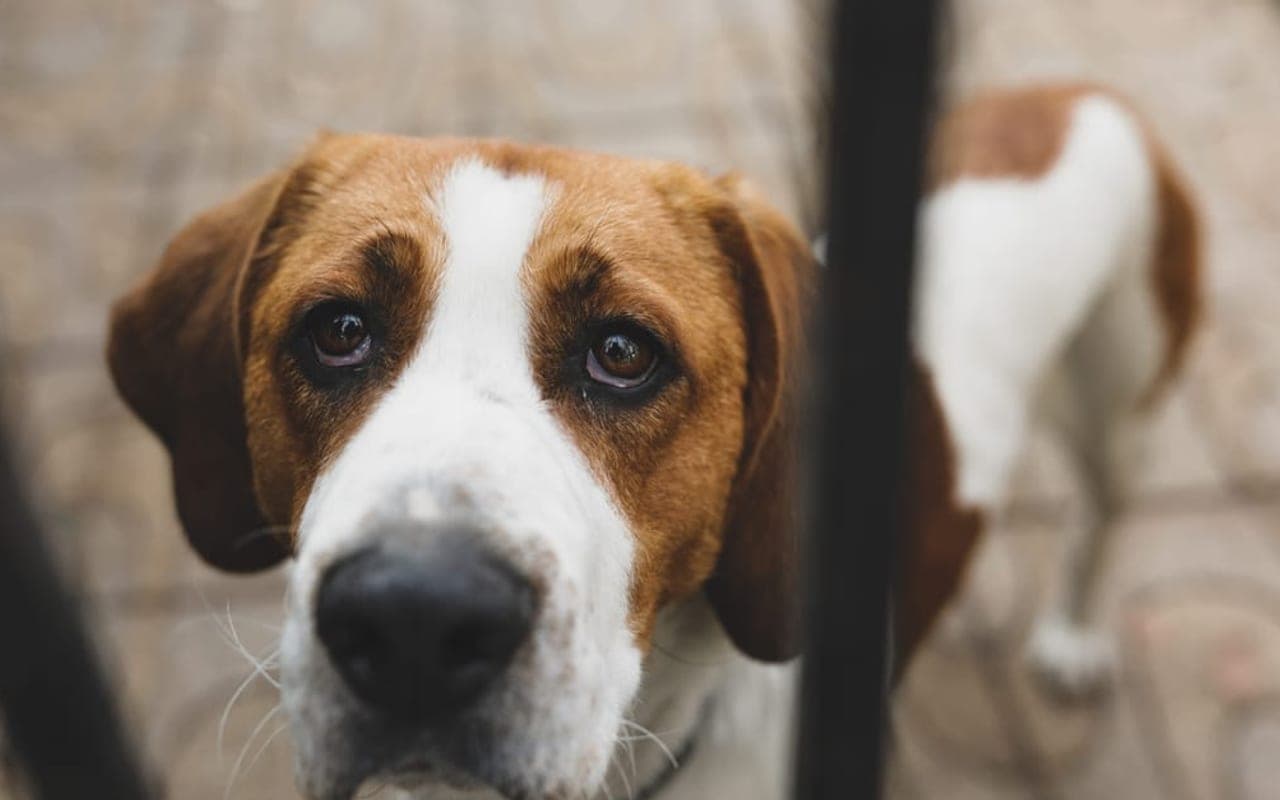
Hunting fox at speed over open country produced a taller, lighter, racier animal than the American coonhounds it gets confused with. The breed standard calls for dogs of 23 to 28 inches at the withers and bitches of 21 to 26, on straight, well-boned forelegs and strong hips and thighs "giving abundance of propelling power," with a chest deep for lung space but narrower in proportion to that depth than the English hound's (American Kennel Club). Adults usually weigh somewhere around 60 to 70 pounds (PetMD) — light for the height, because the work was galloping behind mounted hunts for hours, not close-quarters treeing.
The coat is close, hard and of medium length. Tricolour is the picture most people carry, but the standard permits any colour at all. The ears are set moderately low and are long enough to reach nearly to the tip of the nose (American Kennel Club).
The temperament reads as two different dogs. At home the American Foxhound is gentle, tolerant and easy company. In the field it is independent to the point of deafness, because a pack hound was selected to solve a line without waiting for instructions. Then there is the voice — a carrying, bell-like cry that hunters prize and neighbours seldom do. Between the voice, the mileage and the nose, one of America's oldest breeds remains one of its rarest as a house dog.
Exercise
The breed standard gives away the design brief. Of its 100 points, 35 are assigned to "Running Gear" — forelegs, hips, thighs, hind legs and feet — and the chest is asked to be deep for lung space (American Kennel Club). This is an animal engineered to gallop after a fox all morning while riders keep up on horseback. A twenty-minute street walk does not touch it.
Budget one to two hours of real exercise a day (PetMD), and make most of it fast and off-pavement: long trots, hikes over rough ground, a hard run in a fenced field, or scent games that put the nose to work. Tracking, lure coursing and nosework fit the wiring better than repetitive obedience drills (PetMD), because a hound bred to solve a line on its own initiative loses interest in exercises that only reward compliance.
Two rules follow from that same wiring. First, walk on lead and keep the boundary solid. Foxhounds were bred to work independently of a handler (PetMD), and a hound running a fresh line is not defying you — it is doing the thing it was selected for over three centuries. Recall that looks reliable in the garden can vanish the moment a scent crosses the path, so treat unfenced open ground as unsuitable and check your fencing at ground level for gaps and dig-outs, not just for height.
Second, plan for the voice before your neighbours have to. Washington compared his pack in cry to "the bells of Moscow" (American Kennel Club), an affectionate line about a sound that carries a very long way. A foxhound that is under-exercised, bored or left alone in a garden will use it, and no correction outperforms a hound that has already run. Company matters as much as mileage: this is a pack breed, and it settles far better alongside another dog and people at home than as a lone dog in an empty house.
Grooming
The standard describes exactly what you are maintaining: "a close, hard, hound coat of medium length" (American Kennel Club). No clipping or stripping, ever. It sheds year-round and harder for a few weeks in spring and autumn, so a weekly pass with a rubber curry or hound glove earns its place — it lifts dead hair before the sofa collects it and spreads skin oil along a coat too flat to move it alone. Bathe when the dog is genuinely filthy rather than on a schedule (PetMD).
The standard asks for ears set moderately low and long enough to reach "nearly, if not quite, to the tip of the nose," (American Kennel Club) — a shape that keeps scent near the nose and damp air inside the canal. Dogs with large, floppy ears are more prone to ear infections (VCA Animal Hospitals), so lift the leather weekly and dry underneath after swimming, rain or a morning in wet cover. Head-shaking, scratching, redness, a bad smell or a black or yellowish discharge mean an appointment, not a bottle from the cupboard: the cause has to be identified and the eardrum confirmed intact first, because some medications can cause hearing loss if the drum is ruptured (VCA Animal Hospitals).
Check nails fortnightly. A hound doing its mileage on grass and leaf litter gets almost none of the sanding a pavement dog's nails get, and the blood supply inside the nail advances as the nail grows — so an overgrown nail cannot be put right in one session, only taken back a little at a time over weeks until the quick retreats behind it. Brush teeth with a dog paste several times a week, because soft plaque hardens into tartar within days and only a veterinary clean shifts it after that.
Health
Read what follows as a way to notice problems early and ask sharper questions at the clinic; turning any of it into a diagnosis or a treatment belongs to the vet who has your dog in front of them.
A short documented problem list
The American Foxhound has a reputation as a durable working hound, and the published material is consistent with it. PetMD's veterinarian-reviewed profile lists only three conditions — hip dysplasia, thrombocytopathy and ear infections — with a life expectancy of 11 to 13 years (PetMD). That is a statement about what has been documented in a breed that stayed rare and largely in working hands, not a guarantee about any individual dog. It has a downside: many small-animal vets will never treat a Foxhound, so the owner supplies the breed context.
Hips
Hip dysplasia is on that list (PetMD). The joint forms as a poor fit between socket and femoral head, the surfaces wear unevenly and arthritis follows, often long before an owner reads it as pain. Watch for a hound slow to rise after sleep, taking stairs one at a time, bunny-hopping with both hind legs together, or quietly losing muscle over the rump. Raise them with a vet rather than filing them under old age: weight control, pain relief and physiotherapy achieve more before the joint is wrecked. Buying a puppy, ask for written hip screening on both parents, and keep a growing hound lean, since every extra pound loads a joint that already fits badly.
Thrombocytopathy: the one to mention before anaesthesia
Thrombocytopathy — a defect in how platelets work rather than how many there are — is listed among the breed's conditions on PetMD's veterinarian-reviewed profile (PetMD). The evidence deserves stating honestly: the MSD Veterinary Manual's account of inherited canine thrombopathia names Basset Hounds, Landseers and some spitz-type dogs, not the American Foxhound (MSD Veterinary Manual). Treat it as a risk flagged in breed literature rather than a settled breed-specific diagnosis, and tell your vet before anaesthesia, dentistry, spey or neuter, so they can judge whether pre-operative testing is warranted for your dog. Call sooner if bleeding is out of proportion to its cause: unexplained nosebleeds, gums bleeding for no reason, pinpoint bruising, or a cut that keeps reopening.
Ears, and the deep chest
Long, low-set ears lying against the head are what the standard requires (American Kennel Club), and floppy-eared dogs are more prone to ear infections (VCA Animal Hospitals). Weekly checks and drying after water do most of the prevention; diagnosis belongs to a vet, who must confirm the eardrum is intact before medicating (VCA Animal Hospitals).
Gastric dilatation and volvulus is not a documented Foxhound problem, but its conformation risk factor is a "deep/narrow thoracic conformation" plus a first-degree relative with a history (MSD Veterinary Manual), and the standard asks for a chest deep for lung space and narrow in proportion (American Kennel Club). Signs: nonproductive retching, hypersalivation, restlessness and a swelling, drum-tight abdomen, and outcomes worsen sharply with delay (MSD Veterinary Manual). Have the out-of-hours emergency number to hand before you need it.
Frequently Asked Questions
What should I tell a vet who has never treated an American Foxhound?
Two things. Before any anaesthetic or dental work, that thrombocytopathy — a platelet-function disorder — is flagged in breed-health references for this breed. And, if the dog ever presents with retching and a distending abdomen, that the chest is deep and narrow. Both change what gets checked first.
Can my Foxhound be tested for the platelet problem?
Ask your own vet rather than assuming. Platelet-function testing is not the routine clotting panel run before surgery, and whether it is worth doing depends on your dog's bleeding history and the procedure planned — a conversation for well before the day.
My hound keeps retching without bringing anything up. Can it wait until morning?
No. Nonproductive retching with restlessness, drooling and a swelling abdomen is the classic presentation of gastric dilatation and volvulus, delay worsens outcomes, and it needs emergency care that night (MSD Veterinary Manual).
How long do American Foxhounds live, and what tends to shorten it?
The published life expectancy is 11 to 13 years (PetMD). The realistic threats are less exotic than genetics: road accidents after a hound takes a line off lead, untreated arthritis that ends the exercise the breed needs, and creeping weight gain in a dog built to be lean.
Sources
This guide draws on the following published references. Each opens in a new tab so you can check it against what you have read here.
American Kennel Club
Official Standard for the American Foxhound(opens in a new tab)American Kennel Club
By George: A Founding Father and His American Foxhounds(opens in a new tab)PetMD
American Foxhound Dog Breed Health and Care(opens in a new tab)MSD Veterinary Manual
Platelet Disorders in Animals(opens in a new tab)MSD Veterinary Manual
Gastric Dilation and Volvulus in Small Animals(opens in a new tab)VCA Animal Hospitals
Ear Infections in Dogs (Otitis Externa)(opens in a new tab)
Affiliate disclosure: We may earn a commission from qualifying purchases. This doesn't affect our recommendations.
Recommended Products
American Foxhound Care Guide Book
Breed-focused reading and owner references for American Foxhound care, training, grooming, and health planning.
American Foxhound Food and Supplies
Helpful supplies for american foxhound dog supplies routines at home.
American Foxhound Grooming Tools
Helpful supplies for american foxhound grooming tools routines at home.
Get personalized pet care tips
Join our newsletter for breed-specific advice, care guides, and expert tips delivered weekly.
No spam, ever. Unsubscribe anytime.