
American Hairless Terrier Care Guide
A Rat Terrier that lost its coat The American Hairless Terrier began as one hairless puppy in a litter of Rat Terriers in the early 1970s. She was named Josephine, she went to Edwin and Willie Scott i
Reading Time
📖 8 min read
Guide Type
🐾 Breed-Specific
Last Updated
📅 Sep 10, 2026
In This Guide
Overview
A Rat Terrier that lost its coat
The American Hairless Terrier began as one hairless puppy in a litter of Rat Terriers in the early 1970s. She was named Josephine, she went to Edwin and Willie Scott in Louisiana, and she became the foundation of the breed (American Kennel Club). That origin explains the breed's split care needs: a Rat Terrier's working temperament in a body with no coat to protect it.
Two varieties, one breed
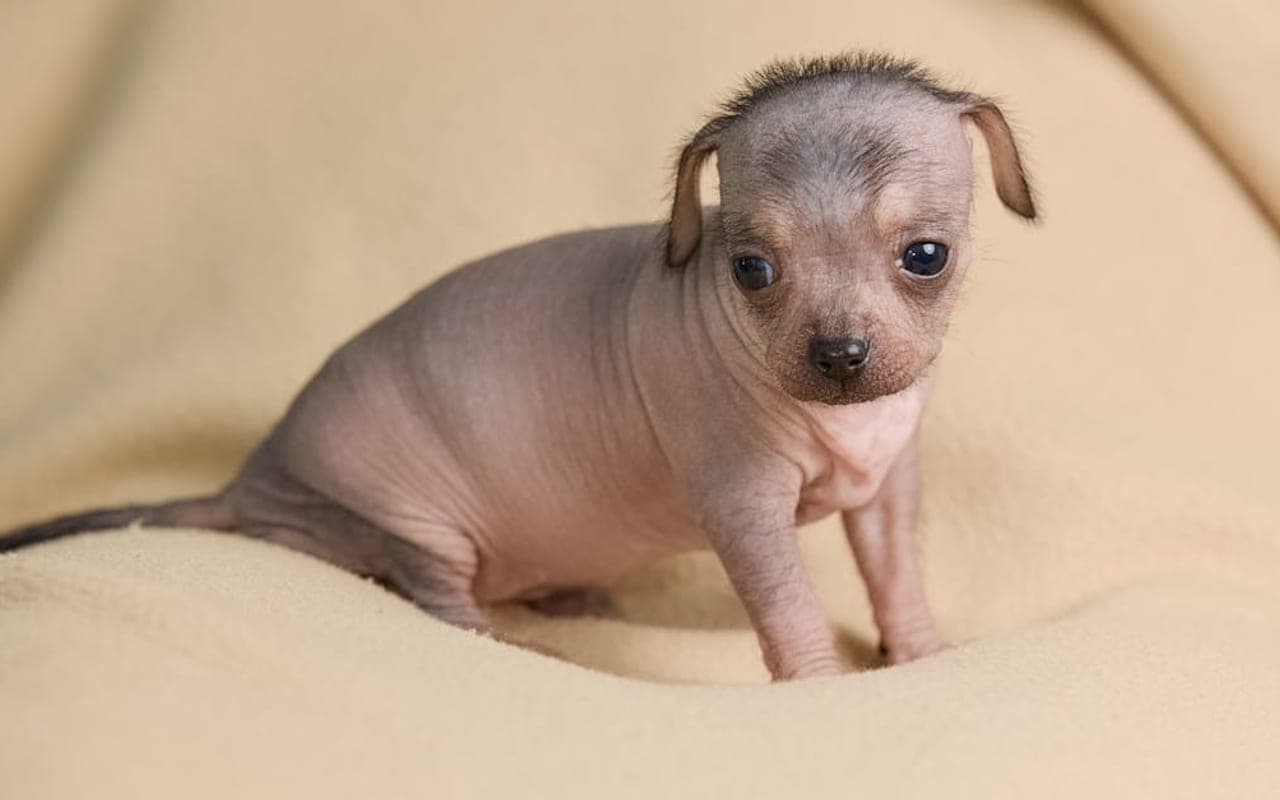
The breed comes in hairless and coated varieties. Coated dogs wear a short, smooth, dense coat with a sheen. Hairless puppies are born with a soft vestigial "birth coat" that thins away, leaving them essentially bare by roughly eight to ten weeks of age (American Kennel Club). A coated dog that carries the hairless gene is known within the breed as a Coated Carrier (American Kennel Club). Because the trait is recessive (Philosophical Transactions of the Royal Society B), two coated carriers can produce hairless pups. A mature hairless dog keeps its whiskers and eyebrow guard hairs, and may carry fine vellus hair; the skin itself is smooth and warm to the touch (American Kennel Club).
Build, colour and character
Ideal height is 12 to 16 inches at the withers, on a body slightly longer than it is tall. Any colour or combination of colours is allowed apart from merle and albinism, which is why so many of these dogs are patched, freckled or mottled rather than one flat shade (American Kennel Club). The breed standard asks for an energetic, alert, curious and intelligent dog that, given early socialisation and training, shows great affection for its owners and family.
The standard is candid about one limit: the breed's ancestors were bred to hunt rats and vermin and the instinct is intact, but the lack of a coat leaves the hairless variety unsuited to most hunting work (American Kennel Club). The drive stays; the protection does not.
Exercise
A working terrier's engine in an unprotected body
This is not a decorative lap dog that happens to be bald. The breed standard describes an energetic, alert and curious terrier descended from dogs bred to hunt rats and vermin, and PetMD is blunt that without regular exercise and mental stimulation these dogs develop undesirable and destructive behaviours. Boredom here is not a mood; it is a chewed skirting board.
What a day should contain
Aim for daily walks split across the cooler ends of the day, plus a session of real play — fetch, flirt pole, a scent game — and something that makes the dog think. Puzzle feeders, short training sets and hide-and-seek with a favourite toy all count, because a terrier that has solved a problem settles far better than one that has only been walked.
Prey drive sets the rules outdoors
The hunting instinct is intact even though the hairless variety is unsuited to the work itself (American Kennel Club). Treat that as a containment issue: lead on in open ground, and fencing that is genuinely secure at ground level, because a dog bred to follow vermin will follow vermin under a gap. Recall training is worth the effort, but it should never be the only thing standing between this dog and a road.
Temperature is a real constraint, not a footnote
Bare skin changes the timetable. Skip midday sun in summer — the skin burns, and shade plus a later walk costs nothing (American Kennel Club). In cold weather the dog needs a coat, because these dogs chill quickly once the temperature drops (PetMD). When neither is workable, move the session indoors: stairs, tug, trick training and food puzzles hold a terrier until the weather turns.
Grooming
Skin care instead of coat care
The hairless variety asks almost nothing of a brush and a great deal of everything else. A coat wicks oil away, buffers friction and blocks ultraviolet light; bare skin does none of that, so the owner takes those jobs on.
The bathing and moisturising routine
Weekly bathing in lukewarm water with a mild shampoo suits most hairless dogs, because sebum and grime sit on the surface with nothing to absorb them (PetMD). Moisturising matters for the same reason, since washing that often strips the skin — but ask a vet which product, rather than borrowing from the bathroom shelf, because anything applied ends up licked. Dry the dog properly instead of letting it air-dry cold.
Sun and cold are grooming tasks here
The skin of this breed is susceptible to sunburn, so cover the dog with protective clothing or sunscreen before a day out (American Kennel Club). Use a sunscreen your vet has approved for dogs — several ingredients common in human products are unsafe once licked off, so this is not a guess to make at the pharmacy. A light shirt is the simpler option on a long outing (PetMD). At the other end, these dogs get cold easily when the temperature drops and need a sweater or coat outdoors (PetMD).
Coated dogs, and the parts both varieties share
The coated variety needs only an ordinary short-coat routine: a weekly once-over to lift dead hair, and a bath when the dog is actually dirty. Whiskers stay on both varieties (American Kennel Club).
Nails, ears and teeth are the same job in both. Trim nails before they change how the dog stands, check ears at bath time, and brush teeth regularly — the standard calls for white, strongly developed teeth in a scissors bite, so there is normal dentition here to look after.
Health
What this breed's hairlessness gene does — and does not — do
Hairlessness here is a recessive trait linked to a variant of the SGK3 gene, and this is the only hairless breed in which the trait is recessive, so the homozygous state is not lethal (Philosophical Transactions of the Royal Society B). In the Chinese Crested, Xoloitzcuintli and Peruvian hairless dogs, hairlessness comes from a FOXI3 mutation causing canine ectodermal dysplasia — defects in teeth, nails and sweat glands, and commonly missing teeth. This breed does not carry it, and the same review calls the breed remarkably healthy.
So dental expectations should not be carried across from other hairless breeds. The standard asks for white, strongly developed teeth in a scissors bite (American Kennel Club) — normal dentition — though the standard does not fault missing pre-molars. Missing or malformed adult teeth are still worth raising with a vet rather than accepting as "normal for a hairless dog".
This breed is often called one of the few dogs that visibly perspires when hot, but that claim is repeated far more often than it is measured — a curiosity, not a cooling system.
Skin is where this breed's health lives
Skin is the defining care issue, because nothing sits between it and the world. It is susceptible to sunburn, so cover the dog with protective clothing or sunscreen before a day in the sun (American Kennel Club); dog-formulated sunscreen or clothing is the standard advice for hairless breeds outdoors (PetMD). Route the product choice through your vet, because several ingredients ordinary in human sunscreen are unsafe once licked off.
Repeated burns damage skin that cannot shade itself. These dogs may be prone to acne, and skin infections can call for medicated wipes or veterinary treatment (PetMD). Acne-type lesions and blocked, blackhead-like pores are common on bare canine skin, especially in adolescence. Most minor flare-ups settle; act on anything spreading, weeping, painful or slow to resolve, and on any lump or sore that will not heal.
Joints, eyes and heart
The national breed club's recommended screening is a patella evaluation, a hip evaluation and a cardiac exam (American Kennel Club) — what a responsible breeder should show you.
Patellar luxation — the kneecap no longer sitting properly in the joint — is a condition this breed is susceptible to (PetMD). Intermittent skipping on a back leg is the classic early sign and deserves a look, not a wait.
Primary lens luxation matters because it is heritable and testable. It is a breakdown of the ligaments suspending the lens, emerging in early adulthood, and can lead to uveitis and glaucoma — painful and sight-threatening if untreated (Orthopedic Foundation for Animals). This breed and the Rat Terrier it descends from are both tracked for it, and a DNA test identifies the mutation. PetMD places onset between three and eight years, with tearing and squinting among the signs.
Heart disease can develop with age, with coughing and fainting among the signs (PetMD) — which is why cardiac screening is on that list.
This is a long-lived breed: PetMD puts typical lifespan at 14 to 16 years. None of this is a diagnosis or a substitute for an exam, and a vet who knows your dog's skin at baseline is the most useful thing you can arrange.
Frequently Asked Questions
Does an American Hairless Terrier really need sunscreen?
Yes, if it will be out in the sun. The skin is susceptible to sunburn and the American Kennel Club advises protective clothing or sunscreen before a day outdoors. Ask your vet which product to use rather than a human one, since anything applied gets licked off.
Do American Hairless Terriers have the dental problems seen in other hairless breeds?
They are not associated with them. The missing and misshapen teeth of Chinese Cresteds and Xolos come from a FOXI3 ectodermal dysplasia mutation, while this breed's hairlessness is a separate recessive SGK3 trait (Philosophical Transactions of the Royal Society B) and its standard calls for a normal scissors bite. Routine dental care still applies.
How long do American Hairless Terriers live?
PetMD puts typical lifespan at 14 to 16 years. Skin monitoring, the recommended patella, hip and cardiac screening, and weight management keep those years good.
Is the coated variety easier to look after than the hairless one?
On skin, yes — an ordinary short coat does the protective work, so no sunscreen routine and no weekly bathing schedule. Everything else is identical, and a coated dog can still carry the hairless gene.
Sources
This guide draws on the following published references. Each opens in a new tab so you can check it against what you have read here.
American Kennel Club
Official Standard of the American Hairless Terrier(opens in a new tab)American Kennel Club
The Bald and Beautiful American Hairless Terrier(opens in a new tab)American Kennel Club
Terrier Group Health Testing Requirements(opens in a new tab)PetMD
American Hairless Terrier Dog Breed Health and Care(opens in a new tab)Orthopedic Foundation for Animals
Primary Lens Luxation(opens in a new tab)Philosophical Transactions of the Royal Society B
The bald and the beautiful: hairlessness in domestic dog breeds(opens in a new tab)
Affiliate disclosure: We may earn a commission from qualifying purchases. This doesn't affect our recommendations.
Recommended Products
American Hairless Terrier Care Guide Book
Breed-focused reading and owner references for American Hairless Terrier care, training, grooming, and health planning.
American Hairless Terrier Food and Supplies
Helpful supplies for american hairless terrier dog supplies routines at home.
American Hairless Terrier Grooming Tools
Helpful supplies for american hairless terrier grooming tools routines at home.
Get personalized pet care tips
Join our newsletter for breed-specific advice, care guides, and expert tips delivered weekly.
No spam, ever. Unsubscribe anytime.