
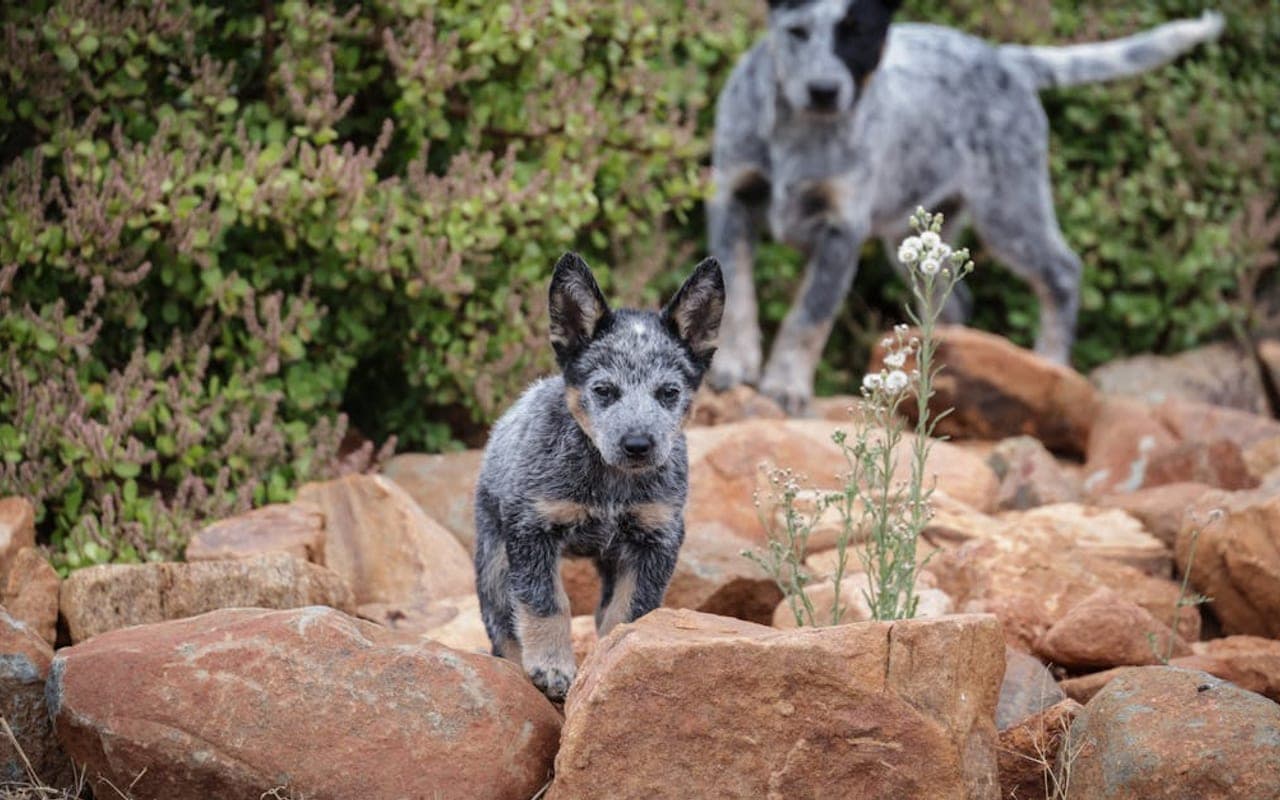
Australian Stumpy Tail Cattle Dog Care Guide
The Australian Stumpy Tail Cattle Dog at a glance The Australian Stumpy Tail Cattle Dog — "Stumpy" to the people who work them — is one of the oldest breeds developed on Australian soil, bred to drove
Reading Time
📖 8 min read
Guide Type
🐾 Breed-Specific
Last Updated
📅 Sep 10, 2026
In This Guide
Overview
The Australian Stumpy Tail Cattle Dog at a glance
The Australian Stumpy Tail Cattle Dog — "Stumpy" to the people who work them — is one of the oldest breeds developed on Australian soil, bred to drove cattle across long, punishing distances rather than to place in a show ring. Its signature trait is a natural bobtail: a Stumpy is born with a very short tail, under roughly 10 cm, or with almost none at all. That tail is inherited, not docked, and it is the fastest way to understand the breed.
It also causes the most common mix-up. A short-tailed heeler is often assumed to be an Australian Cattle Dog (Blue Heeler) with a docked tail, and that is wrong on both counts. The Stumpy is a separate breed, recognised in its own right since the mid-20th century, because the two diverged from shared Halls Heeler ancestry generations ago. Beyond the tail, the Stumpy tends to stand taller and squarer in profile — the breed standard describes a well-proportioned dog "rather square" in outline with a hard-bitten, rugged look — and it is generally more aloof and reserved than the Cattle Dog, which reads as standoffish rather than shy.
The coat comes in blue or red speckle only; the standard forbids the tan markings seen on the Australian Cattle Dog, treating them as evidence of cross-breeding. Temperament is pure stockdog: alert, watchful, hardy, independent-minded, and high in working drive. A Stumpy is loyal to its own people and courteous but cool with strangers. This is a genuine working animal that thinks for itself, not a low-maintenance companion breed, and it does best with an owner who respects that.
Exercise
Exercise and mental work for the Australian Stumpy Tail Cattle Dog
Be honest with yourself before you take one of these dogs home: the Stumpy is a working cattle dog with a large engine and a sharp mind, and it needs a real job, not a stroll. Bred to move stock across country all day, it has stamina that outlasts most owners and turns restless the moment it is under-worked.
Plan on substantial daily exercise — well beyond a lap of the block. Long walks are a floor, not a ceiling; the dog does better with running, hiking, cycling alongside a bike, or play that actually raises its heart rate. It also needs a task for its brain, because a Stumpy that only gets tired legs is still mentally bored. Dog sports suit the breed's wiring: herding trials where possible, but also agility, obedience, flyball, tracking, and scent work all give it the problem-solving outlet it was built for.
The mental piece is not optional, because this is where an unmet Stumpy goes wrong. These dogs herd by nipping at heels, and with no legitimate outlet that instinct turns onto joggers, cyclists, other pets, or children's ankles — not from malice but from a working drive with nowhere to go. The same frustration drives digging and barking. Channel it into training and jobs and the problem largely disappears.
Two practical rules follow. First, fence securely: a bored, athletic problem-solver finds the gap in a weak yard, and a loose heeler near roads or livestock is a serious risk. Second, do not size this breed to a low-activity home. A Stumpy left in a small apartment or alone in a yard all day is set up to fail. Match it to an active owner who wants a partner for real work and it thrives.
Grooming
Grooming the Australian Stumpy Tail Cattle Dog
The Stumpy was built for weather, not for maintenance. It carries a short, dense double coat — a weather-resistant outer layer over a softer undercoat, with a small ruff around the neck described in the breed standard. That construction sheds dirt and rain on its own, so grooming is genuinely low-effort for most of the year and you do not need professional trimming, clipping, or stripping.
A weekly once-over with a bristle brush or rubber curry is enough to lift loose hair, spread skin oils, and give you a routine moment to check the dog over. Twice a year, though, the Stumpy sheds its undercoat in earnest — typically in spring and autumn — and during those weeks brushing several times a week keeps the loose fluff off your floors and helps the new coat come through cleanly. Reach for an undercoat rake or deshedding tool in those windows because a bristle brush alone will not clear a blowing undercoat.
Bathe only when the dog is actually dirty. This is a naturally clean, low-odour coat, and over-bathing strips the oils that make it weather-resistant.
Because these are hard-driving working dogs, the non-coat basics matter more than the brushing. Check the ears weekly and wipe them if they look waxy, since active outdoor dogs pick up grass seeds and debris that can trigger infection. Trim the nails every few weeks — long nails change how the foot loads and can make a working dog sore. Brush the teeth several times a week with dog-safe paste, because dental disease is common in dogs and quietly painful. If a nail, ear, or skin problem looks worse than routine, have a vet look rather than treating it blind.
Health
Health of the Australian Stumpy Tail Cattle Dog
The Stumpy is, on the whole, a hardy and long-lived working breed. Sources such as PetMD put the typical lifespan at about 12 to 15 years — long for a dog of this size and drive — and most Stumpies stay sound well into their senior years. That said, the breed came through a severe population bottleneck last century — close to extinction before a national kennel-council rebuilding programme revived it — so its gene pool is comparatively small, which concentrates whatever hereditary conditions are present and is why screening matters here. The points below are risks a good owner watches for, not a forecast that your dog will fall ill, and none of this replaces a diagnosis from your own veterinarian.
Hearing: congenital deafness and BAER testing
The condition most specific to this type of dog is congenital sensorineural deafness — deafness a puppy is born with. Veterinary sources including PetMD list the Stumpy among breeds prone to it, and it can affect one ear or both. The link is to coat pigment: heeler-type breeds carry the heavily speckled, largely white-based coat pattern that veterinary medicine associates with pigment-related inner-ear deafness, and the Stumpy's ancestry even includes a blue merle Collie cross, so it sits in the group breeders watch. There is no cure, but there is a definitive test. The BAER test (brainstem auditory evoked response) confirms whether a dog hears in each ear — something you cannot judge by watching a bouncy, visually alert puppy. A one-ear-deaf dog usually lives a normal life and even fully deaf dogs do well with hand-signal training, so the value of testing is simply knowing early enough to train and manage the dog safely.
Eyes: progressive retinal atrophy and lens problems
Inherited eye disease is the second area to understand. Progressive retinal atrophy (PRA) is a group of conditions in which the retina's light-sensing rods and cones gradually break down; PetMD notes it has no cure and leads to worsening vision and eventual blindness. It progresses painlessly and is easy to miss early, which is why eye screening of breeding stock matters. PetMD also lists primary lens luxation, where the lens slips out of position and can cause a red, cloudy, painful eye; this can become an emergency, so sudden eye pain or cloudiness warrants a same-day vet visit. Ask what eye testing a litter's parents have had.
Joints: hip and elbow dysplasia
Like most active medium breeds, the Stumpy can carry hip dysplasia and elbow dysplasia — developmental faults where the joint does not form tightly, leading over time to osteoarthritis. PetMD describes signs such as limping, stiffness after exercise, reluctance to jump, and shifting weight off the back legs. It matters more in a working dog because the joints take a pounding, so keep a growing puppy lean, avoid forced high-impact exercise before the skeleton matures, and choose breeders who hip- and elbow-score their dogs. A persistent limp deserves a vet's assessment, not a shrug about age.
Keeping a Stumpy healthy
None of this changes the everyday plan: routine vet checkups and vaccinations, year-round parasite prevention, dental care, and a diet that keeps the dog lean, because excess weight worsens every joint problem above. Get the basics right and buy from a breeder who screens, and the Stumpy rewards you with many healthy working years.
Frequently Asked Questions
Is the Australian Stumpy Tail Cattle Dog just a Blue Heeler with a docked tail?
No. The Stumpy is born with its short tail — a natural bobtail, not docked — and is a separate breed from the Australian Cattle Dog (Blue Heeler): it tends to stand squarer and act more aloof, comes in blue or red speckle, and carries no tan markings.
Should a Stumpy puppy be BAER tested for deafness?
Ideally yes. The breed is prone to congenital deafness that can affect one or both ears and cannot be judged by watching a lively puppy. The BAER test confirms hearing in each ear, so ask whether a breeder tests their litters; a deaf or one-ear-deaf dog can still live well with suitable training.
How long do Australian Stumpy Tail Cattle Dogs live?
Roughly 12 to 15 years, which is long for an active working dog. Keeping it lean, well-exercised, and current on veterinary and dental care gives the best chance at a full lifespan.
What inherited conditions should a Stumpy breeder screen for?
Breeders should BAER-test hearing, screen eyes for progressive retinal atrophy and lens luxation, and score hips and elbows for dysplasia. Because the breed has a small gene pool, this screening is where the real risks are caught.
Sources
This guide draws on the following published references. Each opens in a new tab so you can check it against what you have read here.
Dogs Australia (ANKC)
Australian Stumpy Tail Cattle Dog Breed Standard(opens in a new tab)American Kennel Club
Australian Stumpy Tail Cattle Dog - Dog Breed Information(opens in a new tab)Wikipedia
Australian Stumpy Tail Cattle Dog(opens in a new tab)PetMD
Australian Stumpy Tail Cattle Dog Breed Health and Care | PetMD(opens in a new tab)PLOS ONE / NCBI PMC
Congenital Sensorineural Deafness in Australian Stumpy-Tail Cattle Dogs Is an Autosomal Recessive Trait That Maps to CFA10(opens in a new tab)
Affiliate disclosure: We may earn a commission from qualifying purchases. This doesn't affect our recommendations.
Recommended Products
Australian Stumpy Tail Cattle Dog Care Guide Book
Breed-focused reading and owner references for Australian Stumpy Tail Cattle Dog care, training, grooming, and health planning.
Australian Stumpy Tail Cattle Dog Food and Supplies
Helpful supplies for australian stumpy tail cattle dog dog supplies routines at home.
Australian Stumpy Tail Cattle Dog Grooming Tools
Helpful supplies for australian stumpy tail cattle dog grooming tools routines at home.
Get personalized pet care tips
Join our newsletter for breed-specific advice, care guides, and expert tips delivered weekly.
No spam, ever. Unsubscribe anytime.