
Borzoi Care Guide
The wolf-courser of the Russian nobility The Borzoi was not bred to be a pet, and almost everything about the dog still says so. In Russia it was developed to course fox, boar and hare, and most famou
In This Guide
Overview
The wolf-courser of the Russian nobility
The Borzoi was not bred to be a pet, and almost everything about the dog still says so. In Russia it was developed to course fox, boar and hare, and most famously wolf — the job behind its old English name, the Russian Wolfhound (American Kennel Club). Hunters rode out with hounds held leashed in carefully matched pairs or trios; when a wolf broke from cover the nearest rider slipped his dogs, and they galloped it down and tumbled it to the ground for the huntsman (American Kennel Club). This was aristocratic sport on an enormous scale: Russia's nobles had kept Borzoi in the hundreds and even thousands since the time of Ivan the Terrible (American Kennel Club).
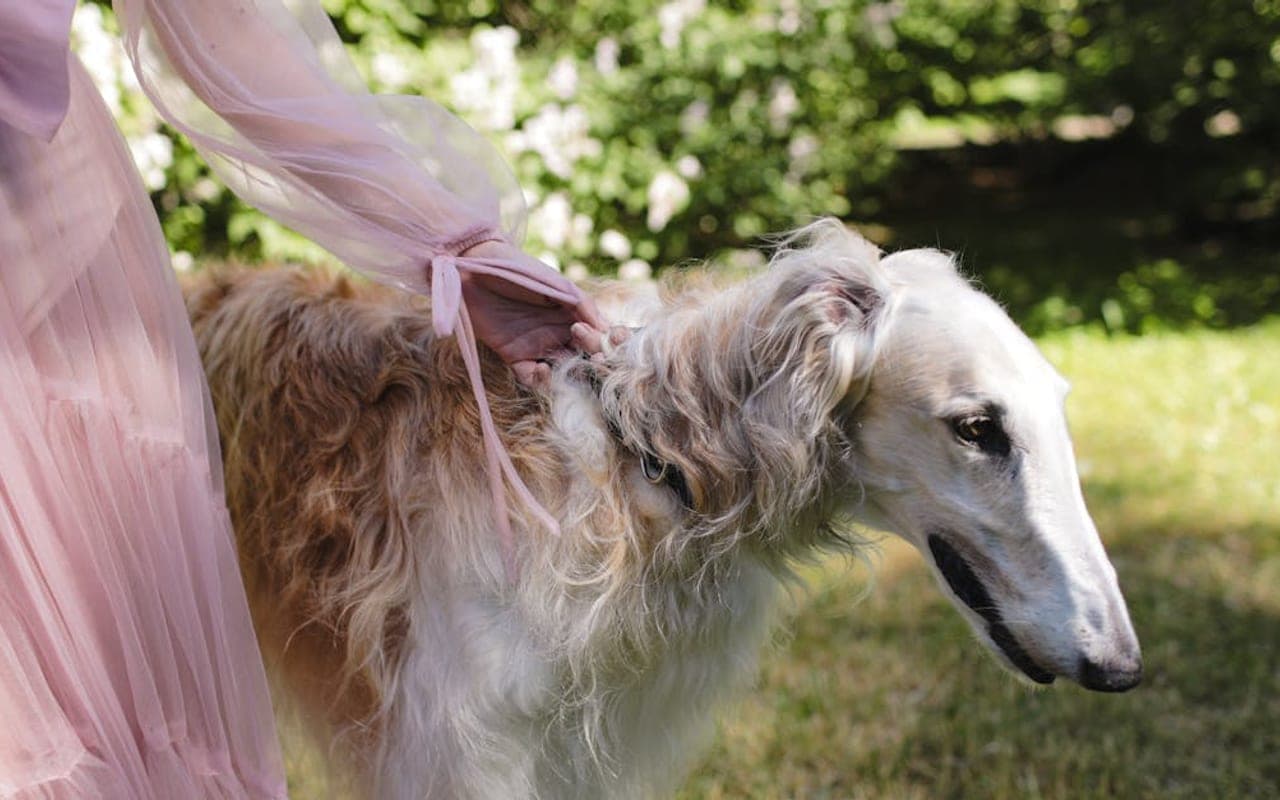
That history built a very particular animal. A Borzoi is genuinely large — males stand around 28 inches at the shoulder and weigh roughly 75 to 105 pounds, females around 26 inches and 60 to 85 pounds (PetMD) — but the weight is stretched over a long, narrow, deep-chested frame rather than packed into a heavy one. The head is long and chiselled, the silhouette curved over the loin, and the silky coat falls in flat or wavy lengths, with a thick frill standing out around the neck and feathering down the tail, chest and back of the legs.
Indoors, the same dog is startlingly low-key. Borzoi are affectionate with their own families and settle well into a predictable daily rhythm of feeding and exercise, but they are an intelligent and independent breed that can be stubborn, and they need patience and consistency rather than drilling (Borzoi Club of America). They are quiet company — undemonstrative, self-contained, more inclined to fold onto a sofa and watch the room than to demand anything of it. Anyone wanting a biddable, eager-to-please dog is usually happier with another breed.
Exercise
What a coursing hound actually needs
A Borzoi needs to gallop, and it needs somewhere safe to do it. This is a dog built to overtake a wolf across open country (American Kennel Club), and the body still expects that work: hard, flat-out running in bursts, then rest. The Borzoi Club of America frames the routine simply: running in a safe, fenced yard, daily lead walking, or both.
What a Borzoi is not is an endurance partner. Coursing was decided in a minute or two of pursuit, not over miles, so this is a poor choice of running or cycling companion. Left to set its own pace, a Borzoi does more for itself in one wide arc across a field than in an hour of forced trotting.
Prey drive, fencing and the road
The Borzoi Club of America is unambiguous that it is never advisable to let a Borzoi run loose, especially near busy roads. The reason is not disobedience: these dogs were bred to chase and catch game, and any small animal that runs may trigger that response — a Borzoi may be reliable with the household cat indoors and behave completely differently towards it outdoors (Borzoi Club of America). Once a chase starts on a dog this fast, a recall arrives too late to matter, so keep the lead on anywhere a running dog could reach traffic and treat fencing as the real safety system, tall and solid enough for a hound this size.
Rest, bedding and the thin-skinned build
Sighthounds carry roughly 17 percent body fat against about 35 percent in an average dog (Clinician's Brief), and on a frame this large that thin padding sits directly over hips, elbows and hocks. Lying on hard floors invites pressure sores and calluses over those points, so deep, soft bedding is a health measure, not a luxury. Expect it to be used: after a real run, most Borzoi are famously inert indoors.
Grooming
Managing a long silky coat
The Borzoi coat is silky rather than woolly, lying flat or in loose waves, with the length concentrated in three places: the standing frill around the neck, the feathering on the tail and the backs of the legs, and the softer hair behind the ears. Those are also the three places that mat. PetMD suggests brushing at least two or three times a week with a firm bristle brush, and the Borzoi Club of America makes the same point from the practical end — going over the dog every day or so lifts loose hair and dirt before it becomes work.
Shedding is seasonal on top of a year-round background: the Borzoi Club of America describes males shedding annually and females shedding after a season, and PetMD notes a heavy annual shed over that constant low-level loss. Do not clip the coat down to manage it. Nothing in routine Borzoi grooming calls for shaving, and the coat is the dog's insulation and weather protection — which matters more on a breed carrying very little body fat than it would on a stockier dog.
Nails and ears
The nail problem here is a visibility problem. Borzoi feet carry their own feathering, and hair growing between and over the toes hides the nail tips, so the nails get long without ever looking long. Part the foot hair and check every couple of weeks rather than trusting a glance, because the first sign of a badly overgrown nail is often a torn one after a hard turn on grass.
The ears fold back against that heavy neck frill, so the ear opening spends most of its life under a warm layer of hair rather than out in the air. Lift the fold and look while you brush: grass seeds and grit collect there, and a dog this stoic will not tell you.
Health
Two health profiles at once
Most of what a Borzoi owner watches for follows from one fact: sighthound physiology on a very large, deep-chested frame. PetMD gives a typical lifespan of 9 to 14 years, shorter than the small sighthounds. Read the sections below as a screening list to work through with a vet who knows the breed, not as a verdict on your own dog.
Anaesthesia: say "sighthound" before anything is booked
The Borzoi Club of America states plainly that Borzoi are more sensitive to anaesthesia than other dogs, and PetMD describes them as slower to recover from general anaesthesia or heavy sedatives because of their lean muscle and low body fat.
Clinician's Brief sets out the physiology: sighthounds metabolise drugs more slowly than the average dog, carry roughly 17 percent body fat against about 35 percent, and are prone to hypothermia under anaesthesia, so warming matters; it also advises avoiding thiobarbiturates in favour of other induction agents. None of this is an owner's decision. The job is simply to say "this is a sighthound" when booking anything involving sedation.
Bloat and GDV: the risk that comes with the deep chest
Gastric dilatation and volvulus is where a Borzoi's size stops being cosmetic. PetMD names bloat as one of the most common health concerns in the breed: the stomach fills with gas, food and fluid and then twists, cutting off the blood supply. The Borzoi Club of America is unambiguous that immediate veterinary care is essential.
Commit the picture to memory now, because there is no time to look it up later: PetMD lists restlessness, stretching into a "praying mantis" position with the front end down, a distended stomach, dry heaving that brings nothing up, and heavy drooling. A dog showing these needs an emergency clinic now, not an appointment tomorrow; call ahead. Overfeeding is one factor PetMD names, so measured portions beat one bolted meal, and your vet can advise what else suits a deep-chested dog this size.
The heart: screened for good reason
A retrospective multicentre study in Frontiers in Veterinary Science (2023) examined 152 Borzoi seen by cardiologists and reported dilated cardiomyopathy in about 10 percent of the 131 dogs echoed, myxomatous mitral valve disease in about 9 percent, tricuspid valve dysplasia as the commonest congenital finding, and ventricular arrhythmias in about 19 percent. Read those figures carefully: these were dogs referred to cardiologists, not a random sample of pet Borzoi, and the authors urge caution in classifying valve dysplasia without clear anatomical abnormality. What it supports is the practice, not a forecast for your dog: ask a breeder whether the parents are cardiac screened, and your vet whether a workup is warranted.
Thyroid results need breed context
A low T4 on a routine panel is not by itself hypothyroidism. Today's Veterinary Practice notes that healthy dogs of sighthound breeds have lower T4 concentrations than other breeds, and that a T4 below the reference range is not on its own diagnostic: confirmation needs free T4 and TSH alongside history and examination. Raising the breed when results are discussed protects a healthy Borzoi from treatment it does not need.
Eyes and joints
PetMD also lists progressive retinal atrophy, a gradual loss of sight as the retina degenerates, alongside hip and elbow dysplasia and osteochondritis dissecans, where joint cartilage separates from bone. More specific to this breed, the European College of Veterinary Ophthalmologists names the Borzoi — with the Border Collie and Flat-Coated Retriever — among the breeds with a genetic predisposition to chorioretinopathy, sometimes called working-dog retinopathy, and sets out a scheme in which a suspicious finding is re-examined at twelve months. That is worth naming when you book an eye examination, because it is the finding an examiner would be looking for in a Borzoi specifically. Ask a breeder about eye and joint evaluations on both parents, and take intermittent lameness in a young Borzoi seriously.
Day to day the work is unglamorous: keep the dog lean, keep vaccination and parasite prevention current, brush the teeth, and keep annual examinations even in quiet years.
Frequently Asked Questions
Why does a vet need to know a Borzoi is a sighthound before anaesthesia?
Because sighthound physiology changes how the drugs behave. Borzoi are described as more sensitive to anaesthesia and slower to recover from it, owing to lean muscle and low body fat, and sighthounds lose heat quickly under it. Saying so at booking lets the clinic set protocol, dosing and warming in advance.
My Borzoi's belly looks swollen and he keeps retching without bringing anything up — what now?
Yes — the deep chest and large frame put this breed in the higher-risk group. Watch for restlessness, stretching with the front end down in a "praying mantis" posture, a swollen abdomen, unproductive dry heaving and heavy drooling. Any of these is an emergency: go straight to a veterinary clinic.
Do Borzoi need heart screening?
Worth discussing with your vet. A 2023 multicentre study of Borzoi seen by cardiologists reported dilated cardiomyopathy, mitral valve disease, tricuspid valve dysplasia and ventricular arrhythmias in the breed, and cardiac evaluation is advised for sighthounds before anaesthesia.
How long do Borzoi live?
About 9 to 14 years. Like other very large breeds they are shorter-lived than the small sighthounds, which is a reason to keep them lean and to keep annual examinations going through middle age rather than waiting for symptoms.
Sources
This guide draws on the following published references. Each opens in a new tab so you can check it against what you have read here.
American Kennel Club
Borzoi History: Behind the Breed's Hunting Heritage(opens in a new tab)Borzoi Club of America
Ownership and Care of the Borzoi(opens in a new tab)PetMD
Borzoi Dog Breed Health and Care(opens in a new tab)Clinician's Brief
Special Considerations for Breed-Specific Anesthesia(opens in a new tab)Frontiers in Veterinary Science
A multicenter, retrospective study of cardiac disease in Borzoi dogs(opens in a new tab)Today's Veterinary Practice
Canine Hypothyroidism: Diagnosis and Treatment(opens in a new tab)European College of Veterinary Ophthalmologists
ECVO Manual, Chapter 6 Guidelines (2024) — hereditary eye disease schemes, incl. chorioretinopathy in the Borzoi(opens in a new tab)
Affiliate disclosure: We may earn a commission from qualifying purchases. This doesn't affect our recommendations.
Recommended Products
Borzoi Care Guide Book
Breed-focused reading and owner references for Borzoi care, training, grooming, and health planning.
Borzoi Food and Supplies
Helpful supplies for borzoi dog supplies routines at home.
Borzoi Grooming Tools
Helpful supplies for borzoi grooming tools routines at home.
Get personalized pet care tips
Join our newsletter for breed-specific advice, care guides, and expert tips delivered weekly.
No spam, ever. Unsubscribe anytime.