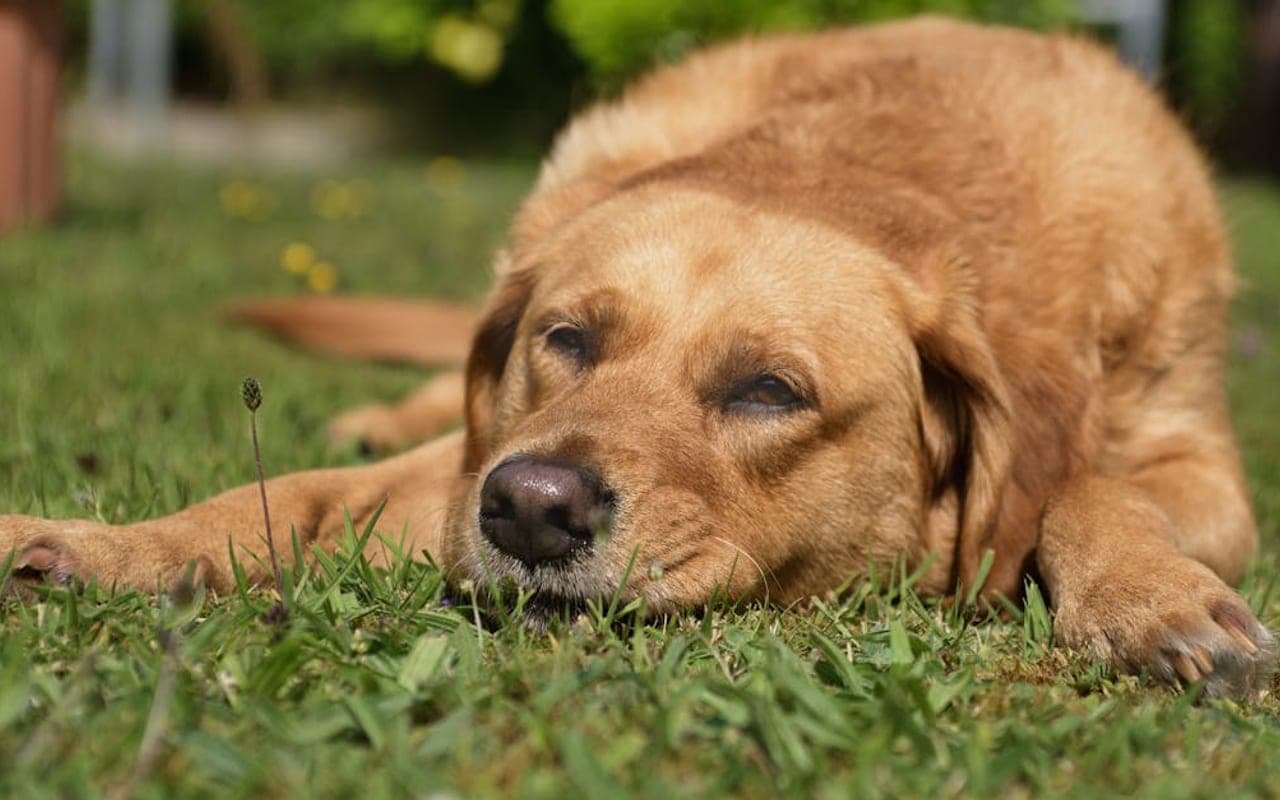
Broholmer Care Guide
Very few Broholmers exist. The Danish breed club's 2019 breeding strategy puts it at about 1,200 living dogs worldwide, in a closed gene pool: Broholmers registered abroad all descend from Danish dogs
In This Guide
Overview
Very few Broholmers exist. The Danish breed club's 2019 breeding strategy puts it at about 1,200 living dogs worldwide, in a closed gene pool: Broholmers registered abroad all descend from Danish dogs, so an import brings no new blood [2]. The breed has already been rebuilt once. The FCI standard records that it became almost extinct after the Second World War and has been revived since around 1975 by a group of enthusiasts supported by the Danish Kennel Club [1]; the United Kennel Club's standard gives the same outline [7].
The FCI standard gives males a height of about 75 cm and a weight of 50 to 70 kg, and females about 70 cm and 40 to 60 kg [1]. Our breed record lists a lifespan of 8 to 10 years.
What makes this breed harder than its calm reputation suggests is buying one well. In a population this small, the parents' registered health and behaviour results are the main evidence you have, and the Danish registration rules list exactly which results to ask for. For appearance and background, see the Broholmer breed page, and for other breeds, browse the care guide library.
Daily Care
The standard describes the Broholmer you are hoping for: calm, good tempered, friendly, yet watchful, with great self-confidence [1]; the UKC standard calls the breed friendly and calm but ever watchful [7]. The breed club says most Broholmers today match that [2].
Not every line matches it. The club knows of lines in which many related dogs are restless, hyperactive, sometimes very noisy and easily stressed, behaviour it calls unacceptable for a dog this size [2]. It reports that such dogs are normally not picked up by the mental assessment, which often goes well for them; the behaviour shows instead at shows, on walks and at other events [2]. Within six months in 2017 and 2018, three young Broholmers were euthanised over behaviour problems of this kind [2]. So a passed mental assessment on the parents is necessary but not enough. Meet the parents, and related dogs if you can, in an everyday setting, and ask the breeder how the line behaves on walks and at shows.
A dog of 40 to 70 kg [1] has to be manageable on a lead and at the door, so start lead manners and calm greetings while the puppy is still small. Build the health checks into the routine: ears and skin at each grooming session, and a watch for limping through the first year. For a male, check at nine months that both testicles have descended, the age DKK uses to define cryptorchidism [2].
Nutrition
Feed for slow, steady growth: wrong feeding and rapid growth are two of the hip dysplasia risks the club names [4], and it ties the breed's OCD predisposition to its growth pattern [5]. Ask your vet to set portions for a giant-breed puppy and to check body condition at each visit, rather than feeding to the bag's chart alone.
Split the day's food into more than one meal. ACVS lists one large meal fed once daily among the factors associated with GDV, alongside a deep chest [8], and the Broholmer standard calls for a broad, deep chest [1]. The warning signs are listed under bloat in the health section.
Diet also appeared in the club's skin examinations, so if your Broholmer has a skin problem, ask your vet whether the diet supplies enough essential fatty acids [2].
Exercise
The amount of exercise matters for the joints: the club says a dog genetically predisposed to hip dysplasia is most at risk of developing it if it is exposed to excessive exercise, alongside wrong feeding or rapid growth [4]. The club does not say how much exercise counts as excessive. Treat a limp at any age as a reason to see your vet.
None of the breed sources used here gives a daily exercise time in minutes, so this guide does not state one. In an adult or older dog, watch the hind end: stiffness getting up, or sitting down quickly when it stops, are among the HD signs the club lists [4], and the club reports spondylosis in younger dogs too [2].
Grooming
The FCI standard describes the coat as short and close lying with an undercoat, in yellow or red (each with or without a black mask) or black, with white markings on the chest, feet and tail tip allowed [1]. None of the breed sources used here gives a grooming method or a weekly grooming time, so this guide does not state one.
Whenever you groom, use the session for the checks the club's survey points to. The ears hang close along the cheeks [7], and ear problems were the most-reported item in the 2012 review [2], so look inside both ears each time and note redness, smell or head shaking. Then check for itching, bald patches and red paws, all items owners reported in that review [2].
If you do find a skin problem, ask for a proper skin work-up before your dog is labelled allergic; the club's skin examinations found far more feed-related problems than allergy [2].
Health
The figures below come from the Danish breed club's own X-ray statistics and surveys, not from a peer-reviewed study, alongside the health requirements the Danish Kennel Club (DKK) sets for registering a litter. They come mostly from the club's 2019 breeding strategy unless another source or date is given, and they are the club's own records for the breed.
- Hip dysplasia (HD). Of 774 dogs X-rayed over the ten years in the club's 2019 report, 62.9% were HD A, 20.7% B, 11.9% C, 3.6% D and 0.9% E [2]. On the club's scale, A is free and E is severe; D and E dogs are not recommended for breeding [4]. The club gives HD a heritability of 0.25 and names wrong feeding, excessive exercise and rapid growth as environmental risks for a predisposed dog [4]. Signs it lists include difficulty getting up, a swaying rear end, and sitting down quickly when not moving [4]. X-rays count only from 18 months of age [4].
- Elbow dysplasia (ED). Of 770 dogs X-rayed over the same period, 71.3% were ED 0, 21.4% ED 1, 4.4% ED 2 and 2.9% ED 3 [2]. The club says it has focused on elbows as well as hips for many years, because the breed's heavy front carries a considerable part of its weight [2].
- Osteochondrosis (OCD). The club states that the Broholmer is predisposed to OCD by its size and growth pattern alone [5]. It most often appears in young dogs, often from four to five months and usually before nine to ten months, most often in the shoulder and usually on both sides [5]. A lame dog usually needs surgery, the outlook after shoulder surgery is good, and untreated OCD carries a high risk of arthritis in that joint [5]. There is no breed statistic, because OCD X-rays are not required [5]. A growing puppy that limps should be seen by your vet, not waited out.
- Aortic stenosis (SAS). In 2013, three young, unrelated Broholmers were found to have severe aortic stenosis [3]. That led to Project Broholmer Heart with Copenhagen University; 72 dogs took part, and the conclusion was that heart disease occurs in the breed but the breed is not acutely affected [3]. The club cautions that with a small, closely related gene pool, cases could rise if breeders do not act in time [3]. Since 1 January 2021, a heart status registered with DKK has been a breeding recommendation; scans count from 18 months, and dogs graded 3 or 4 should not be bred [3].
- Bloat (GDV). The club reports that stomach torsion is seen intermittently in the breed, without giving a rate [2]. The American College of Veterinary Surgeons (ACVS) lists factors associated with GDV in dogs generally, including a deep chest and one large meal fed once daily [8]. Early signs include an anxious look or looking at the belly, drooling, a swelling abdomen, and retching without producing anything, and ACVS says a dog showing them should be seen immediately [8]. It notes that a preventive gastropexy can often be done during spay or neuter surgery, which is worth discussing with your vet [8].
- Skin and ears. In the club's 2012 health review (188 replies), 59 owners reported ear problems such as fungus, redness or inflammation, 40 some itching, 30 fur loss beyond normal shedding, and 26 a diagnosed allergy [2]. When a veterinary skin specialist working with the club examined 40 dogs, 18 had skin problems put down to a lack of essential fatty acid oil in their feed, 9 had epidermal cysts, and 2 had allergy [2]. The specialist's view, as the club reports it, was that many dogs are diagnosed with allergy on a slender basis, and that a vet with skin expertise should make the diagnosis [2].
- Spine. The club reports more younger Danish Broholmers being diagnosed with spondylosis, says Danish dogs are not routinely X-rayed for it, and calls its own statistics inadequate; Finnish data are the main record [2]. Degenerative myelopathy (DM) has not been found in the breed, according to the same report [2].
- Cryptorchidism. The club's database records 113 cryptorchid males over the years, with more in some lines than others [2]. DKK counts a male as cryptorchid if a testicle is still missing from the scrotum at nine months [2].
This is general information, not a diagnosis. Always consult your veterinarian for medical decisions about your dog.
Costs
Before you pay for a puppy, confirm that the parents' screening has been done and registered. DKK registers a litter only if both parents had, before mating, an official HD status of A or B (a C dog only with an A partner), an elbow status of 0 or 1, a mental assessment done after ten months of age, and a show grading of at least Very Good after 24 months or an approved club exterior description [6]. For the higher-tier pedigree, DKK also recommends a combined parental HD index of at least 200 and a registered heart status for both parents [6]. Ask for each by name; every one is a registered result.
Frequently Asked Questions
How big does a Broholmer get?
The FCI standard gives males a height of about 75 cm and a weight of 50 to 70 kg, and females about 70 cm and 40 to 60 kg.
What health results should a Broholmer breeder show me?
For a DKK-registered litter, both parents need official HD A or B (C only with an A partner), elbow status 0 or 1, a mental assessment after ten months, and a show grading or club exterior description after 24 months. DKK also recommends a combined HD index of at least 200 and a registered heart status.
Are Broholmers prone to hip dysplasia?
Of 774 dogs X-rayed over ten years in the breed club's 2019 report, 62.9% were HD A and 0.9% were HD E. D and E dogs are not recommended for breeding.
Do Broholmers get bloat?
The breed club reports stomach torsion intermittently in the breed but gives no rate. The breed's deep chest is one associated factor, so split food into more than one meal a day and learn the warning signs listed in the health section.
Are Broholmers calm dogs?
The standard calls for a calm, friendly, watchful dog, and the club says most match it. It also warns that some lines are restless and noisy, so meet the parents before you commit.
Sources
This guide draws on the following published references. Each opens in a new tab so you can check it against what you have read here.
United Kennel Club (UKC)
United Kennel Club (UKC) — Danish Broholmer Breed Standard(opens in a new tab)Broholmerselskabet (Danish breed club under DKK), RAS v1.0, 2019
Broholmerselskabet (Danish breed club under DKK), RAS v1.0, 2019 — Race Specific Breeding Strategy for the Broholmer (English)(opens in a new tab)Broholmerselskabet
Broholmerselskabet — Aortastenose (SAS) og hjertescanning(opens in a new tab)Broholmerselskabet
Broholmerselskabet — Hoftledsdysplasi (HD) samt HD-index(opens in a new tab)Broholmerselskabet
Broholmerselskabet — Osteochondrose/OCD(opens in a new tab)Dansk Kennel Klub (DKK) Hundeweb
Dansk Kennel Klub (DKK) Hundeweb — Avlsrestriktioner og avlsanbefalinger: Broholmer(opens in a new tab)Fédération Cynologique Internationale (FCI
Fédération Cynologique Internationale (FCI-Standard N° 315, 16.05.2025) — FCI-Standard N° 315 Broholmer(opens in a new tab)American College of Veterinary Surgeons
American College of Veterinary Surgeons — Gastric Dilatation-Volvulus(opens in a new tab)
Affiliate disclosure: We may earn a commission from qualifying purchases. This doesn't affect our recommendations.
Recommended Products
Broholmer Care Guide Book
Breed-focused reading and owner references for Broholmer care, training, grooming, and health planning.
Broholmer Food and Supplies
Helpful supplies for broholmer dog supplies routines at home.
Broholmer Grooming Tools
Helpful supplies for broholmer grooming tools routines at home.
Get personalized pet care tips
Join our newsletter for breed-specific advice, care guides, and expert tips delivered weekly.
No spam, ever. Unsubscribe anytime.