
Canaan Dog Care Guide
A Landrace That Was Collected, Not Constructed Most modern breeds were assembled from other breeds. The Canaan Dog was gathered from open country. The American Kennel Club's history of the breed recor
In This Guide
Overview
A Landrace That Was Collected, Not Constructed
Most modern breeds were assembled from other breeds. The Canaan Dog was gathered from open country. The American Kennel Club's history of the breed records that Rudolphina Menzel, an Austrian psychologist and dog trainer who escaped Nazi Austria in 1938, found conventional European guarding breeds struggling in the desert climate and turned instead to the semi-wild pariah dogs living on the fringes of settlements and alongside Bedouin herders. She went into the Negev, drew adult dogs in with food, took whole litters, and built a working programme from that stock. The AKC dates Israeli Kennel Club recognition to 1953, FCI recognition to 1966, and AKC recognition to 1997, and points to a dog cemetery at Ashkelon holding the remains of more than 1,300 Canaan-like dogs as evidence of how long the type has lived in the region. It is Israel's national dog.
Built Square, Built Moderate
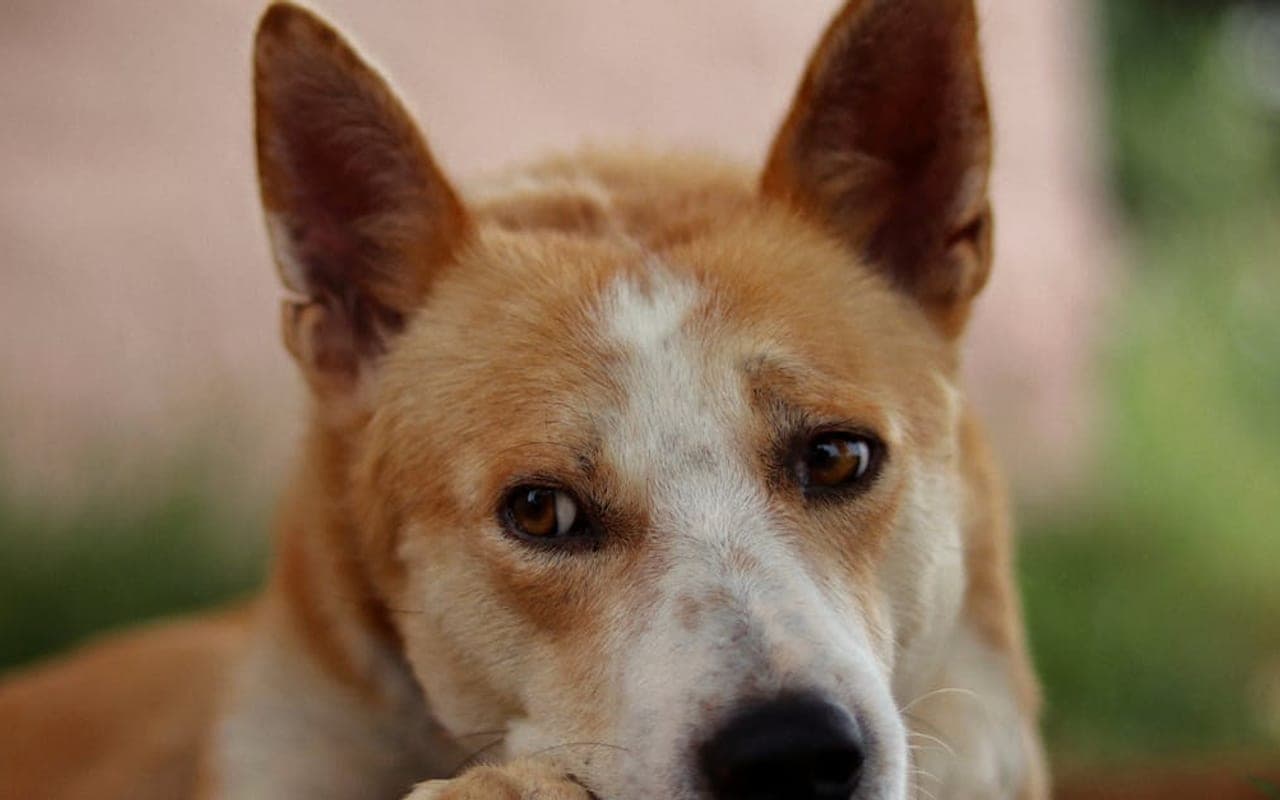
The AKC breed standard asks for a square, medium dog, "moderate and balanced without extremes": 20 to 24 inches at the withers for males and 19 to 23 for females, roughly 45 to 55 pounds and 35 to 45 pounds respectively. The head is wedge-shaped, the ears erect and set low, the brush tail high-set and curled over the back when the dog is confident, and the coat straight, harsh and flat-lying over a soft undercoat.
The Temperament You Are Actually Signing Up For
The same standard is blunt about character: alert, vigilant, devoted and docile with family, "reserved and aloof with strangers," highly territorial, "very vocal, persistent." The Canaan Dog Club of America adds that these dogs are clever, confident and territorial enough to end up running a household whose owners never established themselves, which is why the club treats early training and socialisation as the non-negotiable part of ownership rather than an optional extra.
Exercise
Roughly an Hour, but the Hour Has Conditions
PetMD puts the Canaan Dog's requirement at about an hour of daily activity — walks, hikes, jogging, agility — and notes that unlike some herding breeds they settle and nap afterwards rather than churning. The Canaan Dog Club of America calls them rugged, agile and apparently tireless, a good match for hikers and runners. About an hour is the working figure — the Canaan Dog Club of America notes the breed does not need an excessive amount of exercise, though the AKC standard prizes "a brisk and tireless trot covering more ground than expected."
Fencing Is Equipment, Not a Preference
Two traits from the AKC breed standard set the management rules: the breed is "highly territorial" and "very vocal, persistent." A dog selected for centuries to patrol a boundary and announce anything crossing it will patrol yours. Secure, solid fencing matters because a territorial primitive dog that can see and reach a fence line will work it, and because off-lead recall competes with a strong drive to chase what moves. Give the barking somewhere legitimate to go — structured walks, scent games, training sessions — rather than leaving the dog alone in a garden to invent one.
Mental Work and Very Early Socialisation
PetMD warns that Canaan Dogs need substantial mental stimulation to head off outlets like excessive barking or digging, so short daily training beats a weekend hike. The Canaan Dog Club of America is direct that early training and socialisation are key, and that a passive owner will simply be managed by the dog. Front-load socialisation in puppyhood — many people, surfaces, dogs and settings, all calm and paid — because in a primitive breed, wariness is a designed feature that hardens with age, not a training error you can undo later.
Grooming
A Coat Engineered by Climate
The American Kennel Club standard describes a double coat with a straight, harsh, flat-lying outer layer of medium length, longer at the ruff, tail, withers and back of thigh, over an undercoat that is soft and short with "density varying with climate." That clause is the whole grooming story: a working desert coat that thickens and thins with the season rather than growing continuously, so it needs managing, not styling.
Weekly Brushing, Then Two Hard Weeks a Year
PetMD describes the breed as needing little grooming beyond brushing several times weekly to keep shedding under control, and notes that bathing is rarely required unless the dog is visibly dirty. A weekly pass with a slicker brush and an undercoat rake covers most of the year, because a flat-lying harsh coat sheds dirt on its own and does not mat the way a soft or curly coat does.
The exception is the seasonal coat change, when the undercoat releases in quantity. Brush daily through those stretches, outdoors, because loosened undercoat left sitting in the coat is what turns into clumps behind the ears and in the trousers.
The AKC standard also calls trimming that alters the dog's natural appearance undesirable, so resist tidying a Canaan Dog with clippers.
Ears, Nails and Teeth
Erect, low-set, broad-based ears sit open to the air and stay drier than drop ears, but they still collect dust, so check them weekly and wipe only where you can see. Trim nails every few weeks, because an overlong nail changes how a square, moderately angulated dog loads its feet on hard ground. Brush teeth several times a week and let your vet decide whether a professional cleaning is due.
Health
The Honest Starting Point
The Canaan Dog's list of documented problems is genuinely short. The Israel Canaan Dog Club of America states it plainly: "Thanks to the rigors of natural selection, the Canaan Dog is a very healthy breed." That is a claim about a population that lived free in a harsh environment for centuries before anyone bred it for looks, where dogs carrying serious hereditary faults did not reproduce.
Low burden is not zero burden: a small gene pool concentrates a fault quickly once screening stops. PetMD, which quotes the British Canaan Dog Society describing them as one of the healthiest breeds around, names three conditions: hip dysplasia, progressive retinal atrophy, and patellar luxation. Longer lists online add hypothyroidism and epilepsy; PetMD's health section does not, and I could not locate a breed-specific source for either, so they are not asserted here.
Hips
Hip dysplasia is a malformation of the hip joint that develops as a dog grows and can cause pain and arthritis later on. It matters here because it is screenable before puppies exist: radiographic hip evaluation of both parents is the most useful thing to ask a breeder for, since a dysplastic hip cannot be undone once a puppy has it — only managed. Keeping an adult lean is the other half: a dog the AKC standard calls "moderate and balanced without extremes" was not built to carry surplus weight.
Eyes
Progressive retinal atrophy deserves the most attention: silent early, untreatable late. VCA Animal Hospitals describes PRA as a group of degenerative diseases of the retina's photoreceptor cells, inherited in most breeds as an autosomal recessive trait, with the late-onset form usually appearing between three and nine years old. Owners notice night blindness first — hesitancy in dim rooms or outdoors after dark — then pupils that stay more dilated than normal and eyes that reflect light unusually brightly. VCA is explicit that there is no effective treatment and that antioxidant supplements have shown no measurable effect, leaving only prevention and early detection. Certified eye examinations by a board-certified veterinary ophthalmologist catch early changes, and DNA testing from a cheek swab or blood sample exists for many forms of PRA. Ask for eye clearances on the parents rather than assuming a hardy landrace is exempt.
Knees, and the Unglamorous Rest
Patellar luxation — a kneecap slipping out of its groove — completes PetMD's list. It often shows as an intermittent skip in the gait rather than lameness, so mention any hop or hitch to your vet instead of waiting for a limp.
Otherwise lifespan is decided by ordinary care. PetMD gives a life expectancy of 12 to 15 years, long for this size. Lean body condition, dental care, parasite prevention, current vaccinations and annual wellness exams — more frequent in old age — are what turn that potential into an actual fifteen-year-old dog. None of this replaces veterinary judgement: any sudden change in vision, gait, weight or appetite is a reason to book an appointment, not to search a symptom list.
Frequently Asked Questions
Is the Canaan Dog genuinely a healthy breed, or is that just breed-club optimism?
There is a mechanism behind it. The Israel Canaan Dog Club of America attributes the breed's health to "the rigors of natural selection," and PetMD names only hip dysplasia, progressive retinal atrophy and patellar luxation — a short list by pedigree-dog standards, but never a guarantee for one puppy.
What health screening should a responsible Canaan Dog breeder show me?
Ask for evaluations on both parents covering the three conditions PetMD associates with the breed: radiographic hip evaluation, a certified eye examination, and a knee assessment for patellar luxation. VCA Animal Hospitals notes those eye exams are done by board-certified veterinary ophthalmologists. A breeder without paperwork is asking you to take the breed's reputation on trust alone.
How long do Canaan Dogs live?
PetMD gives a life expectancy of 12 to 15 years. Reaching the upper end is care rather than luck: keeping the dog lean, staying current on dental care and preventives, and annual veterinary exams.
What would I notice first if my dog were developing progressive retinal atrophy?
According to VCA Animal Hospitals, night blindness usually comes first — the dog turns nervous in the dark or reluctant to enter dim spaces — followed by pupils more dilated than normal and eyes that reflect light unusually. Those signs have other causes too, so book a veterinary eye exam rather than concluding anything at home.
Sources
This guide draws on the following published references. Each opens in a new tab so you can check it against what you have read here.
American Kennel Club
Official Standard of the Canaan Dog(opens in a new tab)American Kennel Club
Canaan Dog History: Behind Israel's Native Dogs(opens in a new tab)Canaan Dog Club of America
Canaan Dog Breed Information(opens in a new tab)Israel Canaan Dog Club of America
Canaan Dogs: Introducing the Israel Canaan Dog Club of America(opens in a new tab)PetMD
Canaan Dog Breed Health and Care(opens in a new tab)VCA Animal Hospitals
Progressive Retinal Atrophy in Dogs(opens in a new tab)
Affiliate disclosure: We may earn a commission from qualifying purchases. This doesn't affect our recommendations.
Recommended Products
Canaan Dog Care Guide Book
Breed-focused reading and owner references for Canaan Dog care, training, grooming, and health planning.
Canaan Dog Food and Supplies
Helpful supplies for canaan dog dog supplies routines at home.
Canaan Dog Grooming Tools
Helpful supplies for canaan dog grooming tools routines at home.
Get personalized pet care tips
Join our newsletter for breed-specific advice, care guides, and expert tips delivered weekly.
No spam, ever. Unsubscribe anytime.