
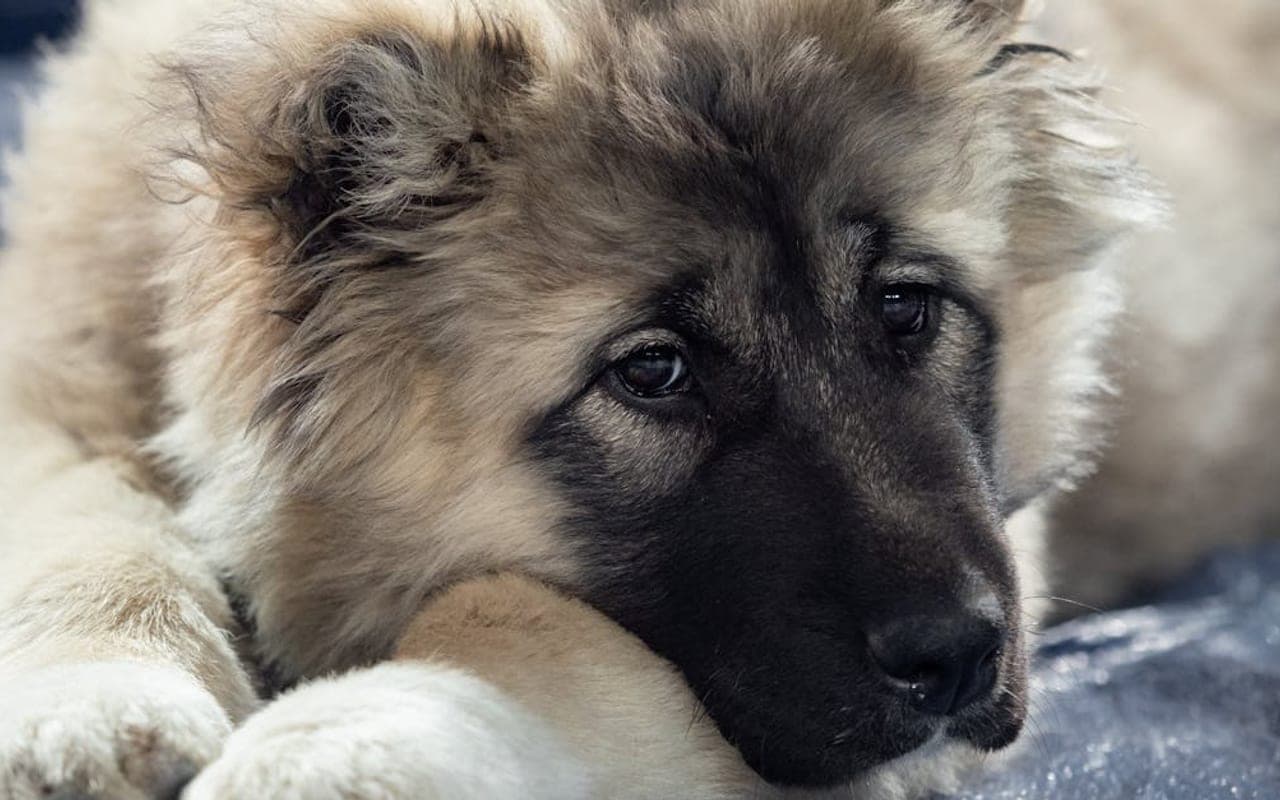
Caucasian Shepherd Dog Care Guide
The single most important fact for anyone caring for a Caucasian Shepherd Dog is sobering: in the largest UK study of canine longevity to date — more than half a million dogs across 155 breeds, publis
Reading Time
📖 8 min read
Guide Type
🐾 Breed-Specific
Last Updated
📅 Sep 9, 2026
In This Guide
Overview
The single most important fact for anyone caring for a Caucasian Shepherd Dog is sobering: in the largest UK study of canine longevity to date — more than half a million dogs across 155 breeds, published in Scientific Reports and led by Dogs Trust (2024) — the Caucasian Shepherd Dog had the shortest median life expectancy of any breed measured, 5.4 years, against an overall purebred median of 12.7 years. That figure is not a verdict on any individual dog, but it reframes what care means for this breed. Every routine in this guide exists to push against that statistic: protect the joints, keep weight off, screen early, and take giant-breed emergencies seriously.
This is a giant livestock-guardian breed — commonly 100–170 lb — bred over centuries in the Caucasus to face predators alone. Two things follow from that. First, the body carries giant-breed orthopedic load for life, so weight and controlled growth matter more than almost anything else you can influence. Second, the temperament is independent and territorial by design, so daily care includes managing a powerful guardian, not only grooming and feeding one. This guide covers care that is specific to the breed. It does not repeat the breed's history, temperament background, or how to find a breeder — those live on the Caucasian Shepherd Dog breed page; for care guides on other breeds, see the care guide library.
Daily Care
Daily care for a Caucasian Shepherd is as much management as maintenance. Build a predictable routine — meals at set times, a morning and evening walk, a quick daily check of eyes, ears, feet, and coat, and a calm end-of-day settle. Predictability steadies a guardian breed otherwise wired to appraise anything new as a potential threat.
Two realities are specific to this breed's size and temperament. First, containment must be genuinely secure: a 100–170 lb territorial dog needs fencing and gates that match its strength, and controlled introductions to visitors rather than an open door. Second, socialization is a lifelong daily habit, not a puppy phase — ongoing, positive exposure to people and situations is what keeps a protective giant manageable in a modern household. Fold a few minutes of calm handling and training into each day; on a dog this powerful, everyday manners are a safety feature.
Nutrition
Feed to protect joints and control growth — that is the whole nutritional strategy for this breed. Per VCA Animal Hospitals' guidance on large and giant breeds, giant-breed puppies must be fed a diet formulated for large-breed growth, because the calcium-to-phosphorus ratio and energy density of ordinary puppy or adult food can drive the too-fast growth that causes developmental orthopedic disease. Veterinarians specifically discourage free-feeding giant-breed puppies; instead, offer measured meals several times a day and monitor body condition — advice the American Kennel Club's large-breed nutrition guidance echoes.
In adulthood, aim for a lean body condition for life, because every extra pound accelerates the joint disease this breed is prone to. In practice, that means feeding to the dog rather than to the bag: treat the feeding chart as a starting point, weigh or measure meals rather than free-pouring, and re-check body condition every couple of weeks. A dog at a healthy weight has ribs you can feel without pressing, a visible waist when viewed from above, and an abdominal tuck from the side; if those disappear, cut the daily ration — treats included, kept to a small share of daily calories — before the extra weight loads the joints. Because of GDV risk, split the daily ration into smaller meals rather than one large one, keep the dog calm around mealtimes, and skip elevated feeders (Cornell). If you are ever unsure, your veterinarian can score body condition in under a minute and set a target weight.
Exercise
A Caucasian Shepherd needs moderate, steady exercise — not the high-mileage regimen a working sporting breed demands. Two controlled walks a day plus room to patrol is a realistic baseline for a healthy adult. The priority is low-impact activity that spares the joints: this breed's orthopedic risk means repetitive high-impact exercise, forced running, and jumping are best avoided, especially during growth.
Giant-breed puppies are the critical case. Their skeletons mature slowly, and over-exercising a puppy — long forced walks, stairs, jumping in and out of vehicles — is linked to developmental joint disease. Keep puppy exercise short, self-paced, and on soft ground. Mental work matters as much as physical: this is a thinking guardian breed, and structured training, scent games, and a clear role around the home settle it far better than exercise alone.
Grooming
The Caucasian Shepherd carries a dense double coat that comes in short, medium, and long varieties, so your workload depends on the individual dog. Long-coated dogs need brushing several times a week and often daily attention around the ears, the feathering on the hind legs, and the rear, where mats form fastest. Short- and medium-coated dogs are usually maintained with a thorough weekly brush-out.
Whatever the coat length, plan for two heavy seasonal sheds a year, when a de-shedding tool and more frequent sessions keep the undercoat from matting against the skin. Keep the unglamorous basics on a fixed schedule: nail trims every few weeks (giant dogs load their feet heavily), weekly ear checks, and regular tooth brushing. On a dog this size, a mat or an overgrown nail is not cosmetic — it changes how the dog moves and can hide a skin infection.
Health
Health care for this breed is best organized by what actually threatens it, in rough order of how much your daily decisions move the outcome.
- Shortened lifespan is the headline risk. The 2024 Dogs Trust / Scientific Reports study placed the breed's median lifespan at 5.4 years — the lowest of 155 breeds. The study does not isolate a single cause, but giant size is the strongest known driver: in the same Dogs Trust analysis, large breeds carried roughly a 20% higher risk of a shorter life than small breeds. Genetics you cannot change; the levers below are the ones that separate a dog reaching the top of the range from one that does not.
- Hip and elbow dysplasia. As a giant breed, the Caucasian Shepherd is prone to hip and elbow dysplasia and related joint disease. The Caucasian Shepherd Club of America's guidance, cited in PetMD's veterinary breed profile, is that these dogs should be kept lean their entire lives to reduce joint load. Ask a breeder for hip and elbow screening on the parents, and keep body condition on the lean side of normal — you should be able to feel the ribs under a thin layer of fat and see a waist from above.
- Gastric dilatation-volvulus (GDV, "bloat"). This is the emergency every owner of a giant, deep-chested breed must be able to recognize. Per Cornell University's Riney Canine Health Center, GDV occurs when the stomach fills with gas and twists on itself; it is rapidly life-threatening and often follows a large meal or heavy drinking around exercise. Learn the signs — a distended abdomen, unproductive retching, restlessness, pale gums — and treat them as a same-hour emergency. Evidence-based prevention: feed smaller meals, avoid heavy exercise right around eating, and do not use elevated bowls, which are now associated with increased GDV risk. Ask your veterinarian whether preventive gastropexy is appropriate; Cornell reports it lowers the risk of recurrence to as little as 3–5%.
- Entropion (inward-rolling eyelid). Entropion is listed as a breed concern in PetMD's veterinary profile, and it is a hereditary condition well documented in large and giant breeds — VCA Animal Hospitals lists predisposed breeds including the Great Dane and Neapolitan mastiff. The eyelid rolls inward so the lashes rub the cornea; per VCA, affected dogs typically squint, tear excessively (epiphora), and may develop a mucoid discharge, and left untreated it can cause corneal ulcers. The correction is surgical — a small section of eyelid skin is removed — and it is usually done once the dog reaches adult size at six to twelve months. Watch a growing puppy for squinting or a persistently weepy eye and raise it with your veterinarian early.
- Obesity as a multiplier. Excess weight worsens every item above — it accelerates joint disease, complicates anesthesia in an already large patient, and shortens life. For this breed, weight control is not cosmetic; it is the most accessible lever you have.
This is general information, not a diagnosis. Always consult your veterinarian for medical decisions about your dog.
Costs
Budget for a Caucasian Shepherd the way you would for any giant breed: the purchase price is the smallest number you will spend. Food costs scale with body mass, and a 100–170 lb dog on a quality large-breed formula is a real monthly line item. Veterinary care runs higher too — medication is dosed by weight, and anesthesia, imaging, and hospitalization all cost more for a giant patient.
Plan for this breed's specific risk profile: parent hip and elbow screening when buying a puppy, a veterinary conversation about preventive gastropexy (which sharply reduces GDV mortality, per Cornell), an eye check if you see any squinting or tearing given the entropion risk, and — most important — a genuine emergency reserve or pet insurance, because GDV surgery and orthopedic care are exactly the large, sudden bills this breed is prone to. Treat preventive spending — screening, lean-weight food, dental care — as the cheapest insurance available against the far larger costs of joint disease and emergencies later.
Frequently Asked Questions
How long do Caucasian Shepherd Dogs live?
In the 2024 Dogs Trust study published in Scientific Reports, covering more than half a million dogs across 155 breeds, the Caucasian Shepherd Dog had the shortest median life expectancy of any breed measured, 5.4 years, against an overall purebred median of 12.7 years. The study does not isolate a single cause, but giant size is the strongest known driver. The care levers that matter most are protecting the joints, keeping weight off, and screening early.
How much exercise does a Caucasian Shepherd Dog need?
This breed needs moderate, steady exercise, not the high-mileage regimen a working sporting breed demands. Two controlled walks a day plus room to patrol is a realistic baseline for a healthy adult, with a priority on low-impact activity that spares the joints. Giant-breed puppies are the critical case: keep their exercise short, self-paced, and on soft ground, and avoid long forced walks, stairs, and jumping while the skeleton matures.
How much grooming and shedding should I expect with a Caucasian Shepherd Dog?
The Caucasian Shepherd carries a dense double coat that comes in short, medium, and long varieties, so the workload depends on the individual dog. Long-coated dogs need brushing several times a week and often daily attention around the ears, hind-leg feathering, and rear; short- and medium-coated dogs are usually kept with a thorough weekly brush-out. Plan for two heavy seasonal sheds a year, plus nail trims every few weeks, weekly ear checks, and regular tooth brushing.
What health problems are Caucasian Shepherd Dogs prone to, and what is bloat?
As a giant breed the Caucasian Shepherd is prone to hip and elbow dysplasia, entropion (inward-rolling eyelid), and gastric dilatation-volvulus, or bloat. Per Cornell, GDV occurs when the stomach fills with gas and twists, is rapidly life-threatening, and often follows a large meal or heavy drinking around exercise; learn the signs such as a distended abdomen, unproductive retching, and pale gums, and treat them as a same-hour emergency. Cornell reports preventive gastropexy can lower recurrence risk to as little as 3 to 5 percent.
How should I feed a Caucasian Shepherd Dog?
Feed to protect joints and control growth. Per VCA, giant-breed puppies must be fed a diet formulated for large-breed growth, because ordinary food can drive the too-fast growth that causes developmental orthopedic disease, and veterinarians discourage free-feeding them. In adulthood aim for a lean body condition for life, and because of bloat risk split the daily ration into smaller meals, keep the dog calm around mealtimes, and skip elevated feeders, which are now associated with increased GDV risk.
Sources
This guide draws on the following published references. Each opens in a new tab so you can check it against what you have read here.
American Kennel Club
Best Dog Food for Large Breeds(opens in a new tab)Dogs Trust
Longevity of UK Dog Breeds (Scientific Reports 2024)(opens in a new tab)Cornell University College of Veterinary Medicine
Gastric Dilatation Volvulus (GDV) or Bloat(opens in a new tab)VCA Animal Hospitals
Nutritional Considerations for Large and Giant Breed Dogs(opens in a new tab)PetMD
Caucasian Shepherd Dog Breed Health and Care(opens in a new tab)VCA Animal Hospitals
Entropion in Dogs(opens in a new tab)
Affiliate disclosure: We may earn a commission from qualifying purchases. This doesn't affect our recommendations.
Recommended Products
Caucasian Shepherd Dog Care Guide Book
Breed-focused reading and owner references for Caucasian Shepherd Dog care, training, grooming, and health planning.
Caucasian Shepherd Dog Food and Supplies
Helpful supplies for caucasian shepherd dog dog supplies routines at home.
Caucasian Shepherd Dog Grooming Tools
Helpful supplies for caucasian shepherd dog grooming tools routines at home.
Get personalized pet care tips
Join our newsletter for breed-specific advice, care guides, and expert tips delivered weekly.
No spam, ever. Unsubscribe anytime.