
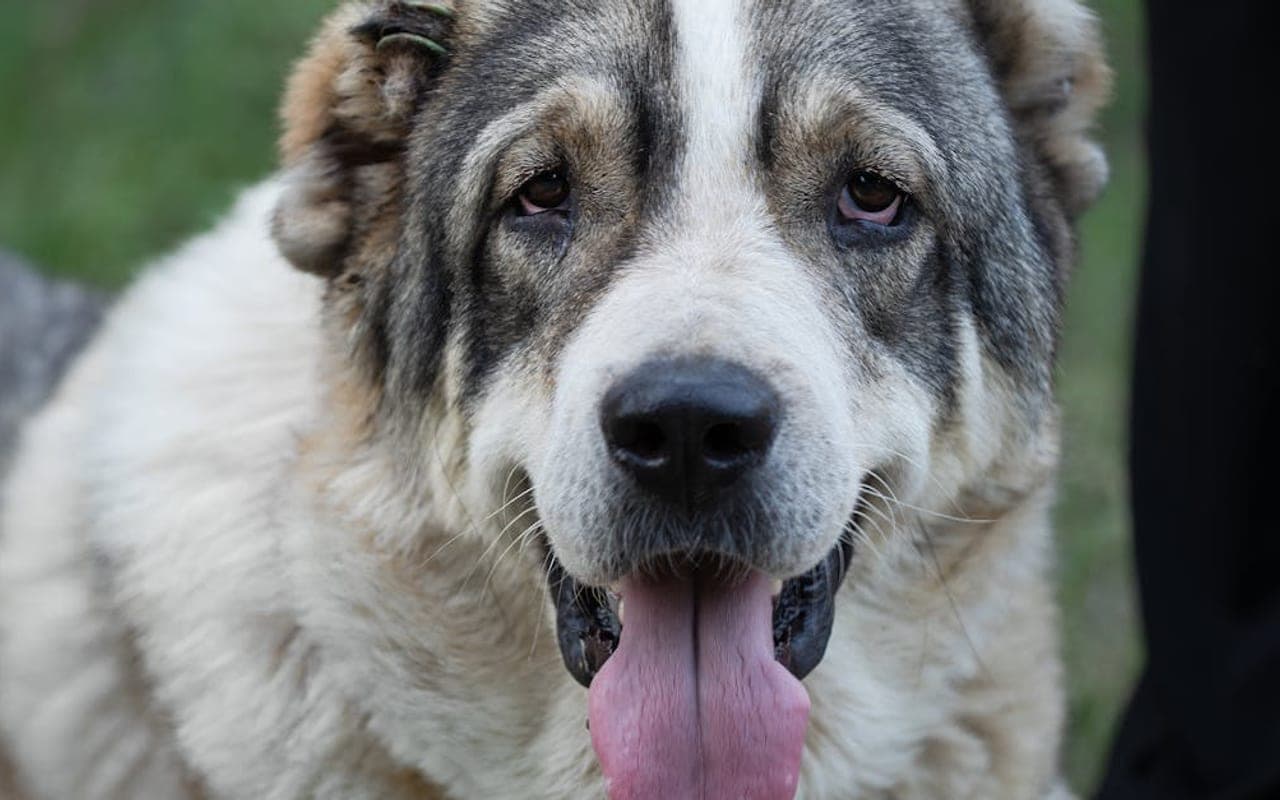
Central Asian Shepherd Dog Care Guide
The Central Asian Shepherd Dog at a glance The Central Asian Shepherd Dog — also called the Alabai or Central Asian Ovcharka — is one of the oldest working dogs alive, and it was never really "designe
Reading Time
📖 9 min read
Guide Type
🐾 Breed-Specific
Last Updated
📅 Sep 10, 2026
In This Guide
Overview
The Central Asian Shepherd Dog at a glance
The Central Asian Shepherd Dog — also called the Alabai or Central Asian Ovcharka — is one of the oldest working dogs alive, and it was never really "designed." According to the Fédération Cynologique Internationale, the breed took shape through natural selection over more than four thousand years across a vast territory reaching from the Caspian Sea to China and from the southern Urals to Afghanistan. That matters for owners today because almost every trait you will live with was forged by the steppe itself: brutal winters, scorching summers, scarce food, and wolves. The dog in front of you is a landrace, not a line-bred show creation.
Its historic job explains its build and its mind. The FCI notes the breed was used mainly to guard livestock, caravans, and the owner's dwelling, and the American Kennel Club describes a dog that is "self-assured, balanced, quiet, proud and independent" with a natural instinct of territory and fearlessness toward large predators. This is a livestock-guardian temperament rather than a herding or sporting one: calm and conserving of energy when nothing threatens, decisive and immovable when something does.
Physically it is large to giant and powerful. The AKC lists males standing roughly 25.5 to 27.5 inches and weighing about 88 to 110 pounds, with many individuals larger; the FCI sets a minimum height of 70 cm for males and 65 cm for females. The double coat comes in two recognised varieties — a short guard coat of about 3 to 5 cm and a longer version of about 7 to 10 cm that forms a mane, feathering, and a fuller tail.
Because so little human shaping went into the breed, expect independence, strong territorial judgement, and a dog that decides for itself. Those are features, not faults — but they make early, extensive socialization and honest containment non-negotiable rather than optional.
Exercise
Exercise and containment for a Central Asian Shepherd Dog
The energy profile surprises people who expect a giant working dog to need running. The American Kennel Club describes lower energy paired with high endurance, and PetMD puts the breed in the medium range for daily activity — a fit with its history as a guardian that conserves energy for hours, then acts when a threat appears. The goal is steady, moderate exercise, not exhaustion.
A good daily baseline is one or two unhurried leashed walks plus free time in a secure yard. Keep walks on lead in public spaces, because this territorial guardian assesses strangers and other dogs on its own terms, and a leash keeps those judgement calls yours to manage. This is emphatically not a jogging or cycling companion — a heavy guardian built for endurance-at-a-walk should not be pushed into sustained running, which stresses a giant-breed dog's joints for no benefit.
Containment is where owners cannot cut corners. Give this dog tall, strong, secure fencing, because its territorial instinct turns an unfenced property into ground it will patrol and defend — against neighbours, delivery workers, and passing dogs. Solid fencing set deep enough to resist digging protects the public and protects the dog from the consequences of doing exactly what it was bred to do. An invisible or electric fence is not appropriate, because it neither stops an intruder entering the territory nor reliably holds a dog this driven.
Feed the mind alongside the body. Scent games, food puzzles, structured obedience, and a clear routine give an intelligent, independent dog somewhere to put its attention, lowering the odds of nuisance guarding and boredom.
Above all, start socialization early and make it extensive. The AKC calls early socialization and puppy classes crucial for this breed, because a confident, well-exposed Central Asian Shepherd learns to tell a normal situation from a real threat — and that discernment, built young, is the most valuable thing you can give a dog this protective.
Grooming
Grooming a Central Asian Shepherd Dog
This is a weather-hardy double coat built for the open steppe, and it asks for consistency rather than skill. The Fédération Cynologique Internationale recognises two coat varieties: a short guard coat of roughly 3 to 5 cm over the whole body, and a longer variety of about 7 to 10 cm that forms a mane, feathering behind the ears and on the backs of the legs, and a fuller tail. On both, the head and front of the legs stay short and dense. Knowing which coat your dog carries tells you where mats form: the long variety needs extra attention at the mane, breeches, and tail, because those furnishings trap debris and tangle where the short coat never will.
Week to week, a thorough brushing is enough. PetMD describes the breed as fairly low-maintenance to groom and recommends periodic brushing that steps up during shedding. Use a brush that reaches the dense undercoat, not just the surface guard hairs, because the undercoat is where loose fluff and oils build up.
Plan around two heavy seasonal sheds. Like other double-coated cold-climate breeds, the Central Asian Shepherd blows its undercoat in spring and autumn, and daily brushing through those weeks keeps loose undercoat off the dog — packed dead undercoat holds moisture against the skin and invites irritation.
Do not trim, clip, or shave the coat. That double coat is the breed's own climate control, insulating against heat and cold alike, so shaving removes protection and can change how it regrows. Bathe only when the dog is genuinely dirty, since frequent bathing strips its natural weatherproofing oils.
Round out the routine with the basics the AKC flags: regular nail trimming, dental care, and ear checks. The ears earn a real look because drop ears hold warmth and moisture, and PetMD lists ear infections among conditions seen in this breed — catching redness or odour early beats treating an established infection.
Health
Health of the Central Asian Shepherd Dog
The most important health fact about this breed is also the reason it exists. Because the Central Asian Shepherd was shaped by natural selection over thousands of years rather than intensive line-breeding for looks, it has a reputation as a hardy dog with a comparatively light hereditary-disease burden. PetMD describes it as "generally healthy dogs thanks to their natural development" and puts typical lifespan at 10 to 15 years — long for a dog this size. That resilience is real but not a guarantee, and "generally healthy" is not "problem-free." The sections below separate the concerns actually tied to the breed from the general risks of any large, deep-chested dog.
Conditions noted in the breed
The clearest documented concern is hip dysplasia, a developmental malformation of the hip joint that can lead to pain and arthritis. PetMD recommends that breeders screen for it, which is why a puppy's health starts with its parents rather than the puppy. The Orthopedic Foundation for Animals maintains hip and elbow evaluations for breeding dogs, and asking to see those results on both parents is the most useful question a buyer can ask, because dysplasia is strongly hereditary.
PetMD also lists ear infections, which turn up because the breed's drop ears trap warmth and moisture — a maintenance issue you stay ahead of with routine checks. It further names dystrophic epidermolysis bullosa (DEB), a rare inherited skin-fragility disorder; it is uncommon, but it is another reason to buy from breeders who health-test their lines.
General giant-breed risks to be aware of
Beyond anything breed-specific, size alone brings risks to understand as awareness, not as a prediction for your dog.
Bloat, or gastric dilatation-volvulus (GDV), is the one true emergency: the stomach fills with gas and can twist on itself, cutting off blood flow, and large deep-chested dogs are the classic candidates. It moves fast and is life-threatening, so a distended or hard belly, unproductive retching, restlessness, or drooling in a big dog warrants an immediate emergency-veterinary visit rather than waiting. Many owners of at-risk breeds discuss preventive options with their vet.
Joint health deserves the same forward planning. Because giant-breed puppies grow fast and carry heavy adult frames, an appropriate large- or giant-breed puppy diet and avoiding overfeeding and forced high-impact exercise while the skeleton develops give the joints their best start, since rapid growth and excess weight both load immature joints. Keeping an adult lean matters for the same reason: every extra pound rides on the same hips and elbows.
Recognition and where the data comes from
The breed's status shapes how much formal health data exists. The American Kennel Club records the Central Asian Shepherd Dog in its Foundation Stock Service — the register for breeds still building toward full recognition — while the Fédération Cynologique Internationale recognises it under Standard No. 335 as a livestock-guardian and watchdog breed. Because it stays uncommon outside its home regions, breed-specific health statistics are thinner than for popular breeds, one more reason to lean on a health-testing breeder.
None of the above is a diagnosis, and no article replaces an exam. Use it to ask better questions — of a breeder before you buy, and of your veterinarian, who should set the vaccination, parasite-prevention, dental, and screening schedule for your individual dog.
Frequently Asked Questions
Is the Central Asian Shepherd Dog a healthy breed?
It has a strong reputation for hardiness. PetMD calls it generally healthy thanks to its natural development and lists a typical lifespan of 10 to 15 years, long for a dog this size — likely a result of being shaped by natural selection rather than intensive line-breeding. Even so, "generally healthy" is not "problem-free," so screening and routine veterinary care still matter.
What health problems should Central Asian Shepherd owners watch for?
The clearest breed-associated concern is hip dysplasia, which is why PetMD recommends screening breeding dogs; PetMD also notes ear infections from the drop ears and a rare inherited skin disorder, dystrophic epidermolysis bullosa. As a large deep-chested dog it also carries the general giant-breed risks of bloat and joint strain. Your veterinarian is the right person to assess your dog.
Are Central Asian Shepherds prone to bloat?
Bloat, or gastric dilatation-volvulus, is a risk for large deep-chested dogs as a group, so treat it as awareness rather than a certainty. It is a fast-moving emergency: a swollen or hard belly, unproductive retching, restlessness, or heavy drooling warrants an immediate emergency-veterinary visit. Ask your vet whether preventive steps suit your dog.
How can I protect my Central Asian Shepherd's joints?
Feed an appropriate large- or giant-breed diet, keep your dog lean, and avoid forced high-impact exercise while a puppy is still growing, because rapid growth and excess weight both overload developing joints. Buying from a breeder who screens hips and elbows through the Orthopedic Foundation for Animals further improves the odds, since hip dysplasia is partly hereditary.
Sources
This guide draws on the following published references. Each opens in a new tab so you can check it against what you have read here.
American Kennel Club
Central Asian Shepherd Dog - Dog Breed Information (AKC Foundation Stock Service)(opens in a new tab)Wikipedia
Central Asian Shepherd Dog (Alabai) - breed overview and characteristics(opens in a new tab)PetMD
Central Asian Shepherd Dog Breed Health and Care(opens in a new tab)NCBI PubMed Central
Nonsense variant in COL7A1 causes recessive dystrophic epidermolysis bullosa in Central Asian Shepherd dogs(opens in a new tab)VCA Animal Hospitals
Bloat: Gastric Dilatation and Volvulus in Dogs(opens in a new tab)
Affiliate disclosure: We may earn a commission from qualifying purchases. This doesn't affect our recommendations.
Recommended Products
Central Asian Shepherd Dog Care Guide Book
Breed-focused reading and owner references for Central Asian Shepherd Dog care, training, grooming, and health planning.
Central Asian Shepherd Dog Food and Supplies
Helpful supplies for central asian shepherd dog dog supplies routines at home.
Central Asian Shepherd Dog Grooming Tools
Helpful supplies for central asian shepherd dog grooming tools routines at home.
Get personalized pet care tips
Join our newsletter for breed-specific advice, care guides, and expert tips delivered weekly.
No spam, ever. Unsubscribe anytime.