
Chow Chow Care Guide
The Chow Chow at a glance Few dogs give themselves away the moment they open their mouth, but the Chow Chow does: it carries a blue-black tongue, a trait the American Kennel Club names as essential to
In This Guide
Overview
The Chow Chow at a glance
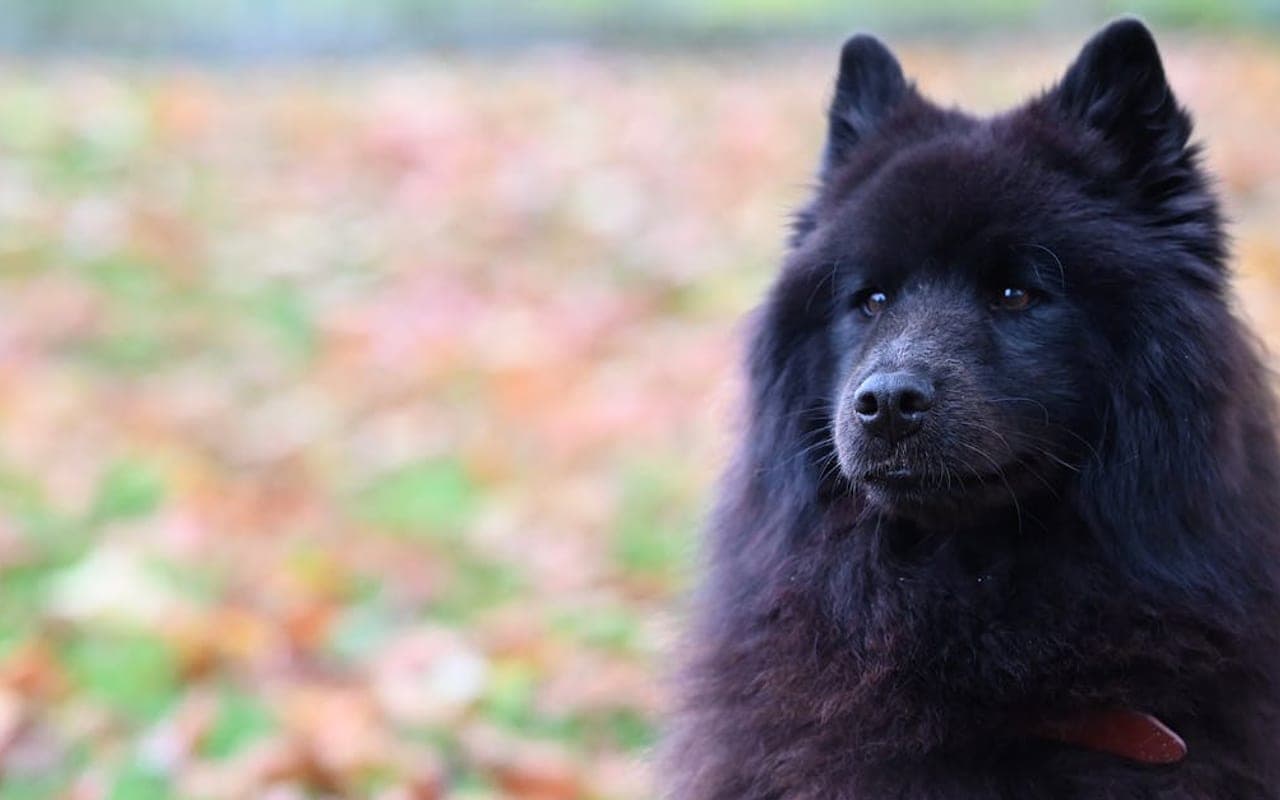
Few dogs give themselves away the moment they open their mouth, but the Chow Chow does: it carries a blue-black tongue, a trait the American Kennel Club names as essential to true Chow type alongside the breed's scowling expression and stilted gait. This is an all-purpose dog of ancient China, and centuries of that history show in a build the AKC describes as a muscular, deep-chested aristocrat wrapped in a lion-like mane.
The coat and the mane
The Chow comes in two coat types, and knowing which you have changes daily care. The rough coat is the familiar one: an abundant, dense, straight, offstanding outer layer over a soft, thick, woolly undercoat, with the mane heaviest around the neck and shoulders. The smooth coat is still a double coat but lies close to the body without the standout ruff. Both are working double coats built for a cold Chinese climate, which is why heat management matters so much for this breed.
That distinctive gait
Watch a Chow walk and you will notice a short, stiff, almost stilted step. It is not a fault or an injury. Per the AKC breed standard, the hind legs carry very little angulation, so the hock sits directly beneath the hip, and that straight-legged structure produces the stilted gait unique to the breed.
Temperament
Deep-set eyes give the Chow its brooding look and, the standard notes, limited peripheral vision, so approaching one head-on and letting it see you helps. Temperamentally the breed is dignified, serious-minded and aloof rather than exuberant, often more cat-like and independent than eager to please, and typically devoted to one or two chosen people. That reserve is normal Chow character, not a flaw to train out, and it shapes how you socialise, handle and exercise the dog.
Exercise
Exercising a Chow Chow
The Chow is a moderate-energy companion, not an endurance athlete, so match the workload to the dog. A couple of steady daily walks and some calm play generally suit it, because this is a dignified, deliberate breed built for measured movement rather than long-distance running or repetitive fetch.
Heat is the real limit
The single biggest constraint on a Chow's exercise is temperature. PetMD notes that Chows are more likely to overheat because of their thick double coat combined with a short snout, a shortened muzzle that makes cooling by panting less efficient than in a long-nosed dog. Walk in the cool of early morning or evening, avoid the hottest part of the day entirely, and carry water. Because heavy panting, drooling, stumbling or a dog that wants to stop and lie down can signal dangerous overheating, cut the outing short and get your Chow into shade and cool air rather than pushing on. VCA warns a Chow should never be left outdoors in warm weather.
Training an independent mind
Chows are independent and aloof by nature, so training rewards patience over drilling. Keep sessions short, calm and consistent, and start socialisation early while the dog is young, because a reserved breed that learns to accept new people and dogs gradually is far easier to walk and handle than one flooded with strangers later.
Contain it securely
Give a Chow a securely fenced area rather than open freedom. The breed's deep-set eyes limit peripheral vision, and its loyalty runs to a chosen few rather than to every stranger, so a reliable boundary and a lead in open spaces protect both your dog and the people it meets.
Grooming
Grooming a Chow Chow
The Chow's profuse double coat is the whole job here, because a coat this dense mats from the inside out where you cannot see it. PetMD advises brushing a Chow roughly every other day to prevent matting and control shedding, and on a rough-coated Chow that means working right down to the skin.
Where mats actually form
Tangles gather where the outer coat is thickest and friction is highest: the lion-like ruff around the neck, behind and inside the ears, the trousers on the back legs, the armpits and the feathering behind the front legs. Line-brush these zones, lifting the coat in sections and brushing from the skin outward, because a surface brush glides over the topcoat and leaves a felted layer of undercoat packed underneath, invisible until it tightens into a mat.
The seasonal blow-out
A Chow does not shed at a steady trickle; the soft undercoat releases in heavy seasonal moults, often twice a year. During a blow-out, brush more often and more thoroughly to clear the loose wool, because dead undercoat left in place traps moisture against the skin and is where the worst mats set.
Never shave to the skin
It is tempting to clip a Chow down in summer, but do not shave a double coat to the skin. That coat insulates against heat as well as cold and shields the skin from sun, and shaving can leave it patchy or coarse as it regrows. Keep the dog cool through brushing and shade instead.
Face, folds and ears
The Chow's heavy head carries deep facial folds and small, deep-set eyes, so wipe the creases and keep them dry, because trapped moisture and debris irritate skin already crowded against the eye. Check ears regularly and keep them clean and dry, since a heavy coat and folded ear hold the warmth and moisture that let problems build unseen. Any redness, odour or persistent rubbing is a reason to call your veterinarian rather than treat it blind.
Health
Chow Chow health
The Chow's dramatic looks come bundled with a specific set of health risks, and the face is where several of them start. Knowing the breed's concerns helps you spot trouble early, but none of what follows is a diagnosis; a veterinarian who can examine your dog is the only person who can tell you what is wrong and what to do about it. Most sources, including VCA and PetMD, put the Chow Chow's life expectancy at roughly 8 to 12 years.
Entropion: the eye problem to know first
If you learn one Chow health issue, make it entropion. The breed's deep-set eyes and heavy facial folds predispose it to eyelids that roll inward, so the lashes and haired skin drag across the surface of the eye. PetMD and VCA both list entropion among the breed's typical concerns, and PetMD describes the eyelid rolling inward and irritating the eye.
Why it matters: that constant abrasion is painful and can scratch the cornea, leading to ulcers, infection and, if left unaddressed, scarring that clouds vision. Owners often see squinting, a watery eye, pawing at the face and a dog that keeps one eye partly shut. Because the friction is mechanical, entropion frequently needs surgical correction to turn the lid back out, and it often shows up while the dog is still young. Any squinting or persistent tearing is a same-week reason to see your veterinarian.
Other eye conditions
The Chow's eyes stay a lifelong watch point beyond entropion. VCA names progressive retinal atrophy, an inherited disease that gradually degrades the retina and vision. PetMD adds glaucoma, a painful rise in eye pressure that is an emergency when it strikes suddenly; cataracts, a clouding of the lens; and distichiasis, where extra lashes grow toward the eye and irritate it much as entropion does. A red, cloudy or suddenly painful eye warrants urgent veterinary attention.
Joints: hips, elbows and knees
Chows are a heavy, straight-legged breed, and the orthopedic list reflects it. PetMD names hip dysplasia, elbow dysplasia and patellar luxation (a kneecap that slips out of place). Hip and elbow dysplasia are developmental: the joint forms abnormally, grows unstable, and tends toward arthritis and pain as the dog ages, with limping or stiffness after activity as common early signs. This is why responsible breeders screen breeding stock through programmes such as the Orthopedic Foundation for Animals, and why keeping a Chow lean matters, because every extra kilogram loads joints that may already be compromised.
The shortened muzzle, heat and anesthesia
The Chow has a shortened muzzle, and while it is not as extreme as a flat-faced Pug or Bulldog, that shorter airway still has consequences. PetMD attributes the breed's tendency to overheat to the combination of a thick double coat and a short snout, because a shorter nose cools air less efficiently when the dog pants. VCA adds that, like any short-nosed breed, the Chow does not tolerate anesthesia well, worth raising with your vet before any procedure.
Hormones and other concerns
Hypothyroidism, an underactive thyroid, appears on both the VCA and PetMD lists; it can show as lethargy, weight gain and coat changes and is typically managed with lifelong medication once diagnosed by testing. PetMD also flags diabetes and, less commonly, serious problems including gastric (stomach) cancer and bloat, the sudden stomach-twisting emergency known as gastric dilatation-volvulus. You cannot diagnose these at home, so know your dog's normal and treat a sudden change in appetite or energy, a distended abdomen or unproductive retching as a reason to call a professional promptly. Regular check-ups, a lean body condition, dental care and parasite prevention round out sensible Chow care.
Frequently Asked Questions
Why is entropion such a common concern in Chow Chows?
The breed's deep-set eyes and heavy facial folds make it prone to eyelids that roll inward, so the lashes rub the surface of the eye. PetMD and VCA both list entropion as a typical Chow concern. It is painful, can scar the cornea, and often needs surgical correction, so have any squinting or persistent tearing checked by a veterinarian.
How long do Chow Chows usually live?
Sources including VCA and PetMD put the Chow Chow's life expectancy at about 8 to 12 years. Regular veterinary care, keeping the dog lean to protect its joints, and prompt attention to eye and breathing problems all support a full lifespan, but only your vet can assess your individual dog.
Do Chow Chows overheat easily?
Yes. PetMD attributes their tendency to overheat to a thick double coat combined with a short snout, which makes cooling by panting less efficient. Exercise in the cool of the morning or evening, provide shade and water, and never leave a Chow outdoors in warm weather, as VCA advises.
What joint problems affect the breed?
PetMD names hip dysplasia, elbow dysplasia and patellar luxation. Hip and elbow dysplasia are developmental joint conditions that can lead to arthritis and pain, which is why reputable breeders screen through programmes such as the Orthopedic Foundation for Animals and why a lean weight helps. Discuss screening and any limping with your veterinarian.
Sources
This guide draws on the following published references. Each opens in a new tab so you can check it against what you have read here.
Affiliate disclosure: We may earn a commission from qualifying purchases. This doesn't affect our recommendations.
Recommended Products
Chow Chow Care Guide Book
Breed-focused reading and owner references for Chow Chow care, training, grooming, and health planning.
Chow Chow Food and Supplies
Helpful supplies for chow chow dog supplies routines at home.
Chow Chow Grooming Tools
Helpful supplies for chow chow grooming tools routines at home.
Get personalized pet care tips
Join our newsletter for breed-specific advice, care guides, and expert tips delivered weekly.
No spam, ever. Unsubscribe anytime.