
Cirneco dell’Etna Care Guide
The Sicilian rabbit hound from the slopes of Etna The Cirneco dell'Etna is an ancient hunting hound native to Sicily — medium-sized in both standards, though small enough beside the breeds it is mista
Reading Time
📖 10 min read
Guide Type
🐾 Breed-Specific
Last Updated
📅 Sep 10, 2026
Breed
🐶 Cirneco Dell EtnaIn This Guide
Overview
The Sicilian rabbit hound from the slopes of Etna
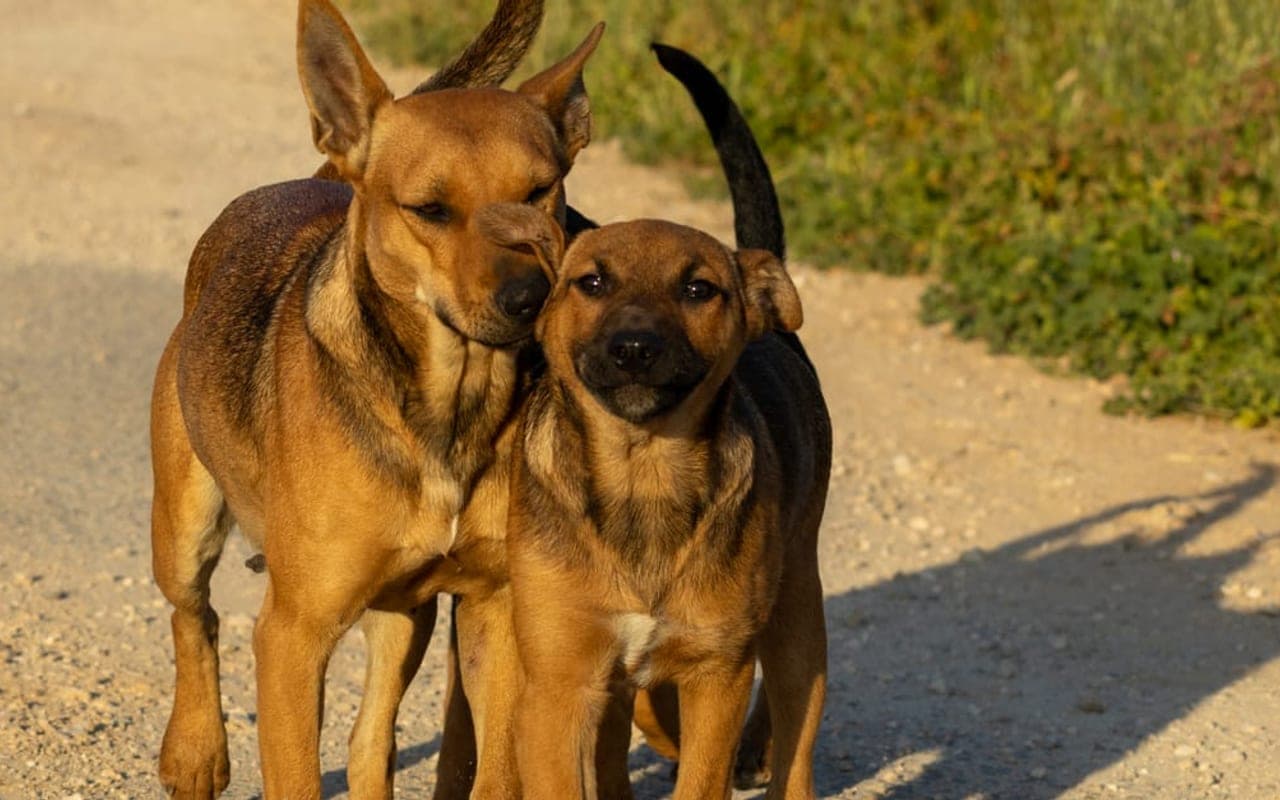
The Cirneco dell'Etna is an ancient hunting hound native to Sicily — medium-sized in both standards, though small enough beside the breeds it is mistaken for — found across the island, but concentrated in the country around the active volcano Mount Etna (Cirneco dell'Etna Club of America). The FCI breed standard places it in Group 5, spitz and primitive types, among the primitive hunting dogs, and states its purpose plainly: a hunting dog used in particular for wild rabbit (FCI Standard No. 199, published by ENCI).
Size is the first thing to get right, because photographs of this breed are constantly mistaken for the Pharaoh Hound. The FCI standard puts males at 46-50 cm at the withers and 10-13 kg, bitches at 44-48 cm and 8-10 kg — a hound you can pick up, not a leggy coursing dog. The Cirneco dell'Etna Club (UK), which sets the two breeds side by side, calls the Cirneco the notably smaller of the pair and notes numerous points where the two ideals diverge. FCI allows a 2 cm tolerance either side and disqualifies only heights beyond that; the American club's standard gives dogs 18 to 20 inches and bitches 17 to 19, and treats heights outside those ranges as a disqualification.
The frame is square, lean and light-boned under a close-lying coat that ranges from fine to slightly coarse — smooth on head, ears and legs, semi-long and flat over body and tail — in fawn of any shade, sometimes broken with white. The ears are the signature: triangular, thick-cartilaged at the base, carried rigidly erect.
What separates the Cirneco from its lookalikes is how it hunts. The standard is explicit that this is a nose dog first: sight is used only to pick the best position, hearing to catch the rabbit's movement as it bolts to ground, and it is the strong, fine sense of smell that lets the dog follow the line and take the quarry. It was built for punishing ground, working the lava fields on Etna's flanks, springing rock to rock. Temperament follows the job: the AKC standard records a strong, lively, independent temperament that is gentle and affectionate, and the FCI standard describes a dog of great temperament, unyielding in its work, affectionate, always alert and very attached to its owner (FCI Standard No. 199, published by ENCI).
Exercise
Real work for a working hound
The AKC standard published by the Cirneco dell'Etna Club of America calls it a keen hunter, adaptable to difficult terrain, that hunts by scent, sight and hearing, and the FCI standard has it working the lava fields on Etna's slopes, springing rock to rock with certainty (FCI Standard No. 199, published by ENCI). Its natural gait is short lively steps or a fast, elastic trot: an animal built to keep going over bad ground. Plan real daily exercise: brisk walking plus a genuine chance to open up off-lead somewhere safe, because a hound bred to cover rough country for hours will not settle on a lap of the block.
Fencing and prey drive
Take the fence seriously, because the standard names the job precisely: this dog's specific talent is scenting the line and hunting wild rabbit and other small animals, fur and feather alike. That drive does not switch off in a suburb, so keep a Cirneco on lead anywhere cats, rabbits, poultry or squirrels are in play, and treat recall as unreliable the moment a line is picked up. Household cats and small pets need managed introductions, not assumptions.
Containment must allow for a dog that leaps rock to rock for a living. Assume it jumps and scrambles better than its size suggests: check fence height, remove anything beside it that becomes a launch pad, and close gaps at ground level.
Heat, cold and outlets
The UK club records a breed rigorously selected by nature for its ability to work for hours in the heat without food and water (Cirneco dell'Etna Club (UK)) — a description of what Sicilian hunting dogs endured, not a standard to hold a pet to: carry water on every warm-weather outing. Heat tolerance is also not cold tolerance, and the same lean, thinly coated build offers no winter protection. Adjust the season, not the dog.
For structured outlets, follow the standard's account of the hunting style: scent work and tracking match a hound whose specific talent the FCI standard defines as scenting the line, over a gait it describes as short lively steps or a fast, elastic trot.
Grooming
A coat that asks for almost nothing
The Cirneco's coat lies flat: smooth on head, ears and legs, semi-long — roughly 2.5 cm — but close to the skin over body and tail (FCI Standard No. 199, published by ENCI), with no feathering, and ranging from fine to slightly coarse (AKC breed standard, Cirneco dell'Etna Club of America). Nothing on this dog is long enough to mat, so a weekly pass with a rubber curry or hound glove lifts the loose hair and spreads skin oil down the coat.
Bathe when the dog is genuinely dirty rather than on a calendar. The standard describes the skin as fine and close-fitting everywhere, and thin skin under a thin coat strips of oil easily, so over-washing costs more than the dirt does.
That same specification is why cold, not coat care, is the real management job. A close 2.5 cm jacket, no feathering, light bone and little covering fat leave almost no insulation, and a breed shaped for Sicilian heat has no reserve for a wet northern winter. Use a fitted coat below freezing and keep outdoor time short in cold rain.
Nails and ears
Nails come with an unusual advantage: the standard calls for nails in brown or flesh-pink, never black, so the quick shows through and you can trim closer than on a black-nailed dog. The catch is abrasion — this hound evolved wearing its feet down on lava and rock, and one living on lawn and carpet gets none of it, so nails lengthen quietly and change how the toes load. Check fortnightly.
Ears are lower-maintenance than a drop-eared hound's: carried rigidly erect, they stay open to the air and do not trap the moisture behind most ear infections. But an upright funnel collects grass seed and grit, so look inside after a walk through long grass or scrub.
Health
What the record actually says about Cirneco health
This section describes risk and what is on record — it cannot examine your dog, and every decision below belongs to a vet who can.
The summary is unusual for a pedigree breed: there is little to report, and both breed clubs say so. The Cirneco dell'Etna Club of America calls it an extremely hardy breed, free from inherited health problems. The Cirneco dell'Etna Club (UK) is stricter — no supported veterinary evidence exists that any condition affecting the breed is, or is believed to be, hereditary. Read that precisely: nothing has been established, which is not proof that nothing exists.
Two things plausibly produce that record. The breed was shaped by function, not looks — the FCI standard defines it by a working job, hunting wild rabbit over Etna's lava fields, and penalises faults by how far they harm the dog's health or ability to work (FCI Standard No. 199, published by ENCI). It is also rare outside Sicily, so the short list partly reflects how few have been studied.
Claims you will see that are not established
Breed-summary sites sometimes attach a generic list of hound and small-dog conditions to the Cirneco. No source in this guide's register supports one, and the UK club's stated position is the opposite: it considers there is no cause for concern regarding health issues in the breed. A breeder may screen hips and eyes by choice; that is not the same as the breed carrying those diseases.
The anaesthesia question, framed honestly
Owners are often told a lean hound needs a modified anaesthetic plan. The reasoning is real: sighthounds carry roughly 17% body fat against about 35% in an average dog, raising hypothermia risk, and clear some injectable drugs more slowly. But that literature is written around the greyhound and does not cover the Cirneco (Clinician's Brief), which the FCI classes as a primitive hunting dog, not a sighthound. So raise it as a body-type conversation, not a breed finding: tell your vet this is a small, very lean, low-fat hound and let them judge whether warming or dosing changes suit. Pre-anaesthetic work is how risk is actually assessed: VCA Animal Hospitals notes that pre-surgical physical examination, preoperative blood and urine tests and radiographs may detect clinical and sub-clinical conditions that could increase anaesthetic risk, including heart, liver and kidney disease (VCA Animal Hospitals).
Where routine care carries the weight
With no breed-specific panel to follow, ordinary preventive medicine carries the load: the vaccination and parasite schedule your vet sets for your region, an annual exam so changes are caught by comparison rather than by crisis, and real dental care, which is easier to keep on top of than to catch up on. Watch body condition: the standard describes clean, dry musculature on light bone, so extra weight puts a Cirneco further from its healthy shape than the same gain would a stockier dog.
The Cirneco dell'Etna Club (UK) gives a lifespan of 13 to 15 years, at the long end for a purebred dog, though figures vary and no breed guarantees an individual outcome. Sudden weakness or collapse, repeated unproductive retching, a distended abdomen, breathing difficulty or a changed eye are urgent veterinary calls, not things to research.
Frequently Asked Questions
Two breed clubs say this dog has no inherited diseases — can that really be true?
It is what both state. But the UK club's wording is that no supported veterinary evidence of hereditary conditions exists — nothing established, rather than nothing existing. The breed is rare, so far less data sits behind that than behind a common breed.
With no health-testing panel to ask about, what should I be asking a breeder?
Ask what screening they do anyway and why, how long their previous dogs lived and what they died of, and how closely related sire and dam are — inbreeding matters most in a small population. A breeder who volunteers the disappointments tells you more than a certificate.
My vet has never anaesthetised a Cirneco — what should I flag before a dental?
Say plainly that this is a small, very lean, low-body-fat hound, and ask whether that changes their warming or dosing plan. The sighthound anaesthesia literature is built around greyhounds and does not cover the Cirneco, so this is a body-type discussion, not a breed protocol. Pre-anaesthetic exam and bloodwork measure the real risk.
How do I tell a normal Cirneco shiver from something worth a vet visit?
Context separates them. Shivering in cold or wet weather that stops once the dog is warm and dry is what a thin-coated, low-fat breed does. Shivering indoors at a comfortable temperature, or with lethargy, lameness or appetite loss, is not thermal and should be seen.
Sources
This guide draws on the following published references. Each opens in a new tab so you can check it against what you have read here.
Cirneco dell'Etna Club of America
Breed - 100% Pure Cirneco(opens in a new tab)Ente Nazionale della Cinofilia Italiana (ENCI)
FCI Standard N. 199 - Cirneco dell'Etna(opens in a new tab)Cirneco dell'Etna Club (UK)
About The Breed - Cirneco dell'Etna Club(opens in a new tab)Clinician's Brief
Special Considerations for Breed-Specific Anesthesia(opens in a new tab)VCA Animal Hospitals
Anesthesia for Dogs(opens in a new tab)
Affiliate disclosure: We may earn a commission from qualifying purchases. This doesn't affect our recommendations.
Recommended Products
Cirneco dell’Etna Care Guide Book
Breed-focused reading and owner references for Cirneco dell’Etna care, training, grooming, and health planning.
Cirneco dell’Etna Food and Supplies
Helpful supplies for cirneco dell’etna dog supplies routines at home.
Cirneco dell’Etna Grooming Tools
Helpful supplies for cirneco dell’etna grooming tools routines at home.
Get personalized pet care tips
Join our newsletter for breed-specific advice, care guides, and expert tips delivered weekly.
No spam, ever. Unsubscribe anytime.