
Croatian Sheepdog Care Guide
The Croatian Sheepdog at a Glance The Croatian Sheepdog (Hrvatski ovčar) is a compact, black-coated herder bred to move sheep and cattle across the Slavonian plains of eastern Croatia. A manuscript he
Reading Time
📖 8 min read
Guide Type
🐾 Breed-Specific
Last Updated
📅 Sep 10, 2026
Breed
🐶 Croatian SheepdogIn This Guide
Overview
The Croatian Sheepdog at a Glance
The Croatian Sheepdog (Hrvatski ovčar) is a compact, black-coated herder bred to move sheep and cattle across the Slavonian plains of eastern Croatia. A manuscript held in the archives of the Archdiocese of Đakovo, dated 1374, describes a "canis pastoralis croaticus" valued for keeping flocks of farm animals, making the breed one of the oldest to sit behind a written record, as noted in accounts cited by the Fédération Cynologique Internationale and the United Kennel Club.
Size and Build
This is a medium dog built for stamina rather than bulk. The Fédération Cynologique Internationale standard (No. 277, Group 1: Sheepdogs and Cattledogs) places males at 45–50 cm and females at 43–48 cm at the withers, usually 13–20 kg. The light frame is functional, because the breed's job was to trot and dart around livestock all day, and a heavier dog could not sustain that pace across open ground.
Coat and Colour
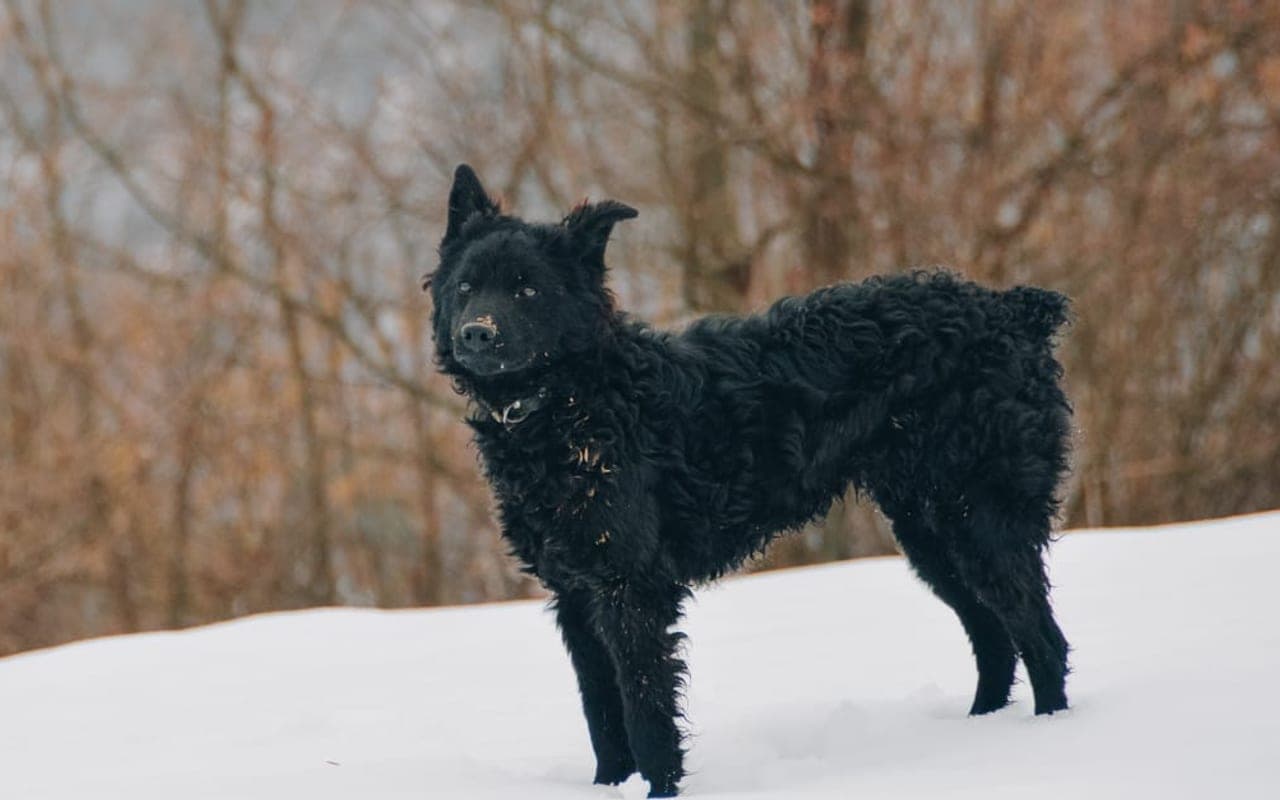
The defining feature is the coat. It is short and smooth on the face, ears and lower legs, but wavy or curly and roughly 6–14 cm long over the body, and — per the Fédération Cynologique Internationale standard — always black, with only small white markings on the throat, chest or toes tolerated. That short face set against a curlier body is the silhouette that tells the breed apart from other black herding dogs.
Temperament
Croatian Sheepdogs are alert, energetic and quick to learn, traits the United Kennel Club standard ties directly to a strong herding drive. They tend to attach intensely to one handler and stay reserved with strangers, which is watchdog inheritance rather than nervousness. That devotion makes them highly trainable and eager to work, but it also means they want a job and a person to do it with, so they thrive on partnership and struggle when left to their own devices.
Exercise
Exercise Needs of a Working Herder
The Croatian Sheepdog was bred to cover ground around livestock from dawn to dusk, so its energy and endurance sit at the high end for a medium dog, and a gentle stroll will not touch it. Plan on well over an hour of real activity a day — brisk walking, off-lead running, fetch, and trotting alongside a bike — because a body built for all-day droving needs a real outlet before it will settle indoors.
Give the Brain a Job
Physical exercise on its own is not enough, because this is one of the more intelligent and biddable herders, and an under-worked mind turns to trouble. It shines at dog sports that pair movement with problem-solving: agility, obedience, rally, flyball, and herding trials or treibball, where the instinct finally has a legal target. Twenty minutes of training, scent games or a food puzzle after a walk tires the dog as much as another mile.
Managing the Herding Instinct
Denied an outlet, that instinct leaks out in ways owners dislike: barking, and nipping or "heeling" at running children, joggers and other pets, because a herder that cannot move stock will try to move whatever else is moving. This is unemployed drive, not aggression. Redirect it early into a recall game or fetch toy and teach a reliable "that's enough," because a vocal, herdy dog is far easier to live with once it has a legitimate job.
Space and Security
A securely fenced area is worth stressing, because an agile, ground-covering dog with a chase reflex will follow a bolting cat or a thrown ball into a road. These dogs adapt to a smaller home if genuinely exercised, but they are poorly suited to long stretches left alone and idle, which is when the barking and nipping start.
Grooming
Coat Care for the Croatian Sheepdog
The Croatian Sheepdog is genuinely undemanding to groom, and that follows from the coat itself: a weather-resistant double coat that is short on the face, ears and lower legs and only wavy-to-curly over the body. Because there is no long, silky furnishing to knot, a thorough brushing once or twice a week is usually enough to lift dead undercoat and stop the curl tangling behind the ears and on the rear "trousers."
Shedding and the Seasonal Moult
Expect a low, steady shed year-round and two heavier moults, typically spring and autumn, when the soft undercoat releases in quantity. Brush more often through those weeks — every day or two — because raking the loose undercoat out promptly keeps it from packing into the curl and cuts what ends up on your floor. A slicker brush paired with an undercoat rake suits this texture far better than a bristle brush.
Bathing
Bathe only when the dog is actually dirty, because the coat carries natural oils that shed dry mud on their own and frequent shampooing strips them out. Many pets go months between full baths. Let the coat air-dry so the natural wave and curl settle back, rather than forcing it straight with heat.
Ears, Nails and Teeth
Routine care beyond the coat matters more for this breed. Check and wipe the ears weekly, because even short ear hair traps grass seed and moisture that can seed infections. Trim nails every few weeks, since a dog exercised on soft ground will not wear them down and overlong nails splay the toes. Brush the teeth several times a week with canine toothpaste, because a small, active breed still builds tartar that a vet otherwise has to scale off under anaesthetic.
Health
How Healthy Is the Croatian Sheepdog?
The honest picture is a reassuring one. The Croatian Sheepdog is a hardy working landrace with a comparatively short list of documented hereditary problems. Centuries of selection for function rather than appearance, from a broad working population, produced a sound and athletic dog, and the Fédération Cynologique Internationale and United Kennel Club breed descriptions present a robust herder rather than one defined by disease. Most reach a good age for their size, commonly around 13–14 years. None of that means "no vet care" — it means the focus is prevention and screening, not managing one breed-defining illness.
Joints: Screen, Do Not Assume
As with any active medium herding dog, hip dysplasia is worth awareness even though it is not a hallmark of the breed. It is a malformation of the hip joint that can lead to pain and arthritis over time, and because it is partly heritable, the practical response is screening rather than worry. The Orthopedic Foundation for Animals (OFA) and equivalent hip-scoring schemes evaluate breeding dogs by radiograph so affected lines are not passed on. Patellar (kneecap) luxation, where the kneecap slips out of its groove and causes a skipping lameness, is the other joint issue named for small-to-medium active dogs, and a vet can check for it during a routine physical. Asking a breeder for hip and knee results on both parents is the single most useful thing a buyer can do to lower a puppy's risk.
Eyes
Routine eye health belongs on the checklist for any herding breed. No well-documented, breed-specific blinding disease is established in the Croatian Sheepdog, but general problems such as cataracts can appear in any dog, so a periodic exam by a veterinary ophthalmologist is worthwhile. The American College of Veterinary Ophthalmologists (ACVO) runs the eye-screening scheme responsible breeders use, and an early exam catches change before it affects the dog day to day. Report any cloudiness, redness, or bumping into things to your vet.
Bloat and the Active-Dog Basics
Some breed references also mention gastric dilatation-volvulus, or "bloat," a sudden and life-threatening twisting of the stomach treated as an emergency across many active dogs. Because it can kill within hours, the owner's job is recognition, not treatment: a swollen abdomen, unproductive retching, heavy drooling and restlessness call for an immediate emergency-vet trip. As a precaution, many owners avoid one enormous daily meal and hard exercise right after eating. This is general awareness, not a claim of unusual prevalence in the breed.
Weight, Teeth and Working Wear
The most effective everyday health tools are the unglamorous ones. Keep the dog lean, because every extra kilogram loads the very joints you are trying to protect, and a working-bred dog gains weight quickly when its exercise is cut back. Stay current on dental care, parasite prevention and core vaccination on your vet's schedule. Dogs used hard in sport or on stock also pick up strains and worn foot pads, so check feet and gait after big days out. Any persistent limp, cough, weight change, or shift in behaviour is a reason to book a visit — this guide flags the risks worth watching, and only a veterinarian can diagnose or treat your individual dog.
Frequently Asked Questions
Is the Croatian Sheepdog a healthy breed?
Broadly yes. It is a hardy working landrace with a comparatively low documented hereditary burden and a typical lifespan of around 13–14 years, so care centres on prevention — lean weight, screening and routine vet checks — rather than managing a single breed-defining disease.
What health screenings matter most for a Croatian Sheepdog?
Prioritise a hip evaluation through the Orthopedic Foundation for Animals or an equivalent scheme, a veterinary patella (kneecap) check, and a periodic eye exam under the American College of Veterinary Ophthalmologists scheme; ask any breeder for parent results.
How long do Croatian Sheepdogs live?
Most live roughly 13–14 years, a good span for a medium dog, and keeping them lean and well exercised gives the joints the best chance of staying sound into old age.
Does the Croatian Sheepdog have breed-specific genetic diseases like some Collies do?
No well-documented breed-specific genetic disease is established for it, and you should not assume conditions from other herding breeds apply here; discuss any DNA or health testing with your own vet rather than transferring another breed's risks onto this one.
Sources
This guide draws on the following published references. Each opens in a new tab so you can check it against what you have read here.
Fédération Cynologique Internationale (FCI)
FCI Standard No. 277 — Croatian Shepherd Dog (Hrvatski ovcar)(opens in a new tab)United Kennel Club (UKC)
Breed Standards: Croatian Sheepdog(opens in a new tab)American Kennel Club (AKC)
Croatian Sheepdog - Dog Breed Information(opens in a new tab)Orthopedic Foundation for Animals (OFA)
About Us — Orthopedic Foundation for Animals (hip dysplasia and inherited disease screening)(opens in a new tab)VCA Animal Hospitals
Hip Dysplasia in Dogs(opens in a new tab)
Affiliate disclosure: We may earn a commission from qualifying purchases. This doesn't affect our recommendations.
Recommended Products
Croatian Sheepdog Care Guide Book
Breed-focused reading and owner references for Croatian Sheepdog care, training, grooming, and health planning.
Croatian Sheepdog Food and Supplies
Helpful supplies for croatian sheepdog dog supplies routines at home.
Croatian Sheepdog Grooming Tools
Helpful supplies for croatian sheepdog grooming tools routines at home.
Get personalized pet care tips
Join our newsletter for breed-specific advice, care guides, and expert tips delivered weekly.
No spam, ever. Unsubscribe anytime.