
Cyprus Care Guide
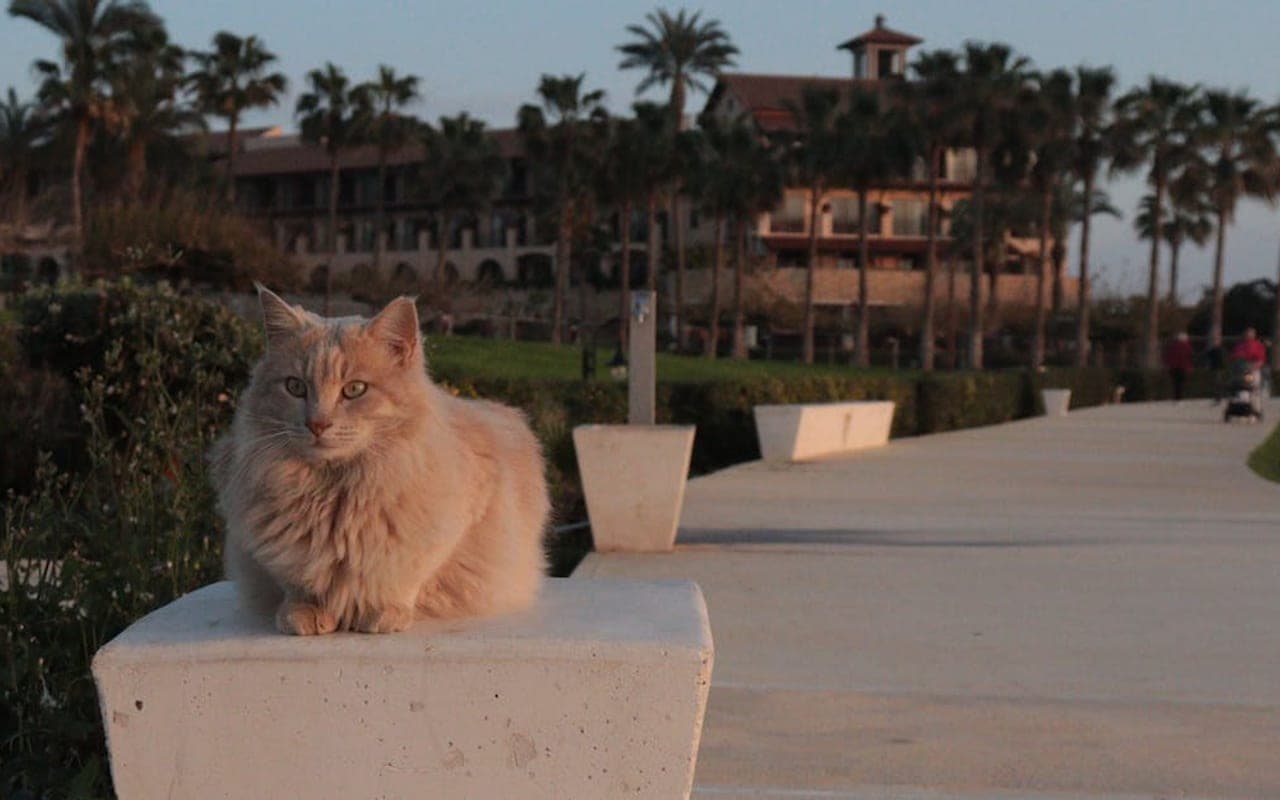
The Cyprus Cat (Aphrodite / Aphrodite Giant) The Cyprus cat is a large, slow-growing natural landrace that developed with little human shaping across the Troodos mountains and lowland villages. The is
In This Guide
Overview
The Cyprus Cat (Aphrodite / Aphrodite Giant)
The Cyprus cat is a large, slow-growing natural landrace that developed with little human shaping across the Troodos mountains and lowland villages. The island also sits at the start of the human-cat story: at the Neolithic site of Shillourokambos near Limassol, archaeologists uncovered a cat buried beside a person around 9,500 years ago with offerings — the oldest known evidence that people and cats lived together, as reported by National Geographic and in the 2004 study in the journal Science. But be precise: there is no evidence that the modern Aphrodite descends directly from that Neolithic cat. The ~9,500-year-old burial marks how long cats and people have coexisted on the island, not an unbroken bloodline. What Cyprus offers is one of the longest continuous records anywhere of cats living alongside humans.
Registries treat the breed as young and newly formalized rather than invented. The World Cat Federation fully recognizes it as Aphrodite's Giant; The International Cat Association granted preliminary new-breed status in 2017 under the name Aphrodite; and the World Cat Congress regulates its breeding, permitting crosses only between the two coat-length varieties — a short-haired line and a semi-long-haired line, both carrying a somewhat thick, weather-ready coat.
TICA describes large, muscular, large-boned cats — males roughly 6.8 to 8.2 kg, females about 4.5 to 6.4 kg — on back legs set slightly longer than the front, a frame built for climbing. It is also famously slow to mature: TICA notes three to five years to reach full size, so an Aphrodite keeps a kitten's body and appetite well past its first birthday. The temperament is the draw — affectionate, socially demanding, and often called dog-like for the way these cats follow their people from room to room. Plan for a cat that wants your company, not one that merely tolerates it.
Exercise
Built to Climb, Not to Lounge
The Cyprus cat evolved as a working mountain cat, so its body is built for movement: muscular and large-boned, with back legs set slightly longer than the front — a frame TICA connects to strong jumping and climbing. Such a cat does not settle easily into a flat, sleepy indoor life, and an under-exercised Aphrodite redirects that energy into furniture, midnight sprints, or weight gain. Give the drive a deliberate outlet.
Prioritize vertical space, because a climbing breed reads height as territory and safety, not luxury. A tall, sturdy cat tree that holds 7 to 8 kg without wobbling, two wall shelves, and a high perch let the cat do what its body is for — and they must be sturdy, because an Aphrodite landing at full weight will pull down anything flimsy.
Feed the hunter with play, not just food. Run two short interactive sessions a day with a wand toy or a ball on a track, because a chase-pounce-catch sequence drains the predatory energy boredom otherwise turns destructive, and this social breed plays better with a person than alone. End each session with a "catch" so the cat gets the payoff of a completed hunt. Puzzle feeders add mental work, which tires a smart cat as thoroughly as physical play does.
Because the Aphrodite is intensely social and dislikes long stretches alone, enrichment doubles as company: if the household is out for long days, a second compatible pet often suits this dog-like cat better than solitude. If a normally active Cyprus cat goes quiet, hides, or stops jumping to its perches, treat that as a possible early sign of illness and call your vet, because a hardy cat masks pain until it is significant.
Grooming
Coat Care for the Two Coat Lines
The Cyprus cat comes in a short-haired and a semi-long-haired line, and the semi-long coat sets your routine, because its longer guard hairs and softer underlayer trap loose hair and can knot behind the ears, in the armpits, and along the "trousers" of the back legs where the coat sits thickest. Comb that line two or three times a week with a stainless steel comb, because a comb reaches the underlayer a bristle brush skates over, then work a slicker through the plumed tail so it does not clump. The short-haired line is low-effort — a weekly pass with a comb or a rubber curry mitt lifts dead hair — but not no-effort, because even a short, thick coat sheds.
This is a mountain-island coat, so expect seasonal shedding rather than a year-round trickle: heavier drops in spring and autumn as the coat changes weight. Comb daily through those weeks, because hair you catch is hair the cat does not swallow into a hairball.
Keep the rest of the routine deliberately boring, because a calm baseline is what lets you notice trouble. Check the ears for dark, waxy buildup and wipe only the visible outer ear with a vet-approved cleaner — never push a cotton bud into the canal, because that risks packing debris deeper or injuring the ear. Trim the nail tips every couple of weeks, because a climbing cat this heavy drives real force through its claws. Introduce grooming young and pair it with a treat, because this slow-maturing cat is strong, and one that accepts handling at one is far easier to comb at fifteen. If the coat suddenly mats, turns dull, or the cat stops grooming one area, treat that as a health signal and raise it with your vet.
Health
Health: A Hardy Landrace That Still Needs Routine Prevention
The honest headline for the Cyprus cat is reassuring: it is a natural landrace shaped by survival rather than narrow selective breeding, and neither the breed descriptions from The International Cat Association nor the World Cat Federation records single out a signature inherited disease. It is generally described as durable, with few of the genetic complications of heavily line-bred pedigrees. That is good news, not a free pass: "no known breed-specific disease" means the ordinary feline risks are the ones that will shape this cat's life, and those are largely preventable. Because the science on this landrace is thin, be skeptical of any source that names a precise breed-specific condition or statistic for the Aphrodite; there is no established veterinary literature behind one.
Feed for a cat that grows for years, not months
The Aphrodite is famously slow to mature — TICA notes three to five years to reach full size — so its feeding does not snap to the usual "switch to adult food at twelve months" timetable. Keep a growing Aphrodite on a complete, life-stage-appropriate diet through its extended adolescence, because a cat still building frame and muscle needs the calories of active growth, and ask your vet when to transition. Do not let "big breed" become "overweight cat," though: owners routinely mistake fat for size. Measure portions, because free-feeding a food-motivated giant is the fastest route to obesity, which drives diabetes, joint strain, and urinary disease.
The everyday risks that matter most
Three ordinary problems deserve real attention. Dental disease is near-universal in cats past three and painful long before it shows, so start tooth-brushing while the cat is young and have your vet check the mouth at every visit, because a cat hides oral pain until it stops eating. Obesity is the second, because it quietly multiplies every other risk. The third, feline lower urinary tract disease (FLUTD), carries a true emergency: a male cat straining in the litter box, crying, or passing little or no urine may have a urethral blockage, which can turn fatal within a day or two — an immediate, same-hour veterinary emergency. A blocked cat needs a vet now, not wait-and-see. Support urinary health with plenty of fresh water, wet food, and enough clean litter trays, because dilute urine and low stress reduce flare-ups.
Prevention that earns its keep
Keep core vaccinations and parasite control — fleas, ticks, worms — current on your vet's schedule, because prevention is cheaper and safer than treatment. See a vet yearly, and twice a year as the cat ages, because a hardy cat is also a stoic one that masks illness until it is advanced. Watch for and report early changes — appetite, thirst, litter-box habits, weight, activity, new lumps — because you see the cat daily and the vet does not. Everything here is general care information, not a diagnosis; your own veterinarian, who can examine your cat, is the right source for any decision about its health.
Frequently Asked Questions
Is the Cyprus cat a healthy breed?
It is a natural landrace, and registries such as The International Cat Association describe a hardy cat with no signature inherited disease. That is not a guarantee, though — ordinary risks like dental disease, obesity, and urinary problems still apply, so routine vet care matters as much as for any cat.
Why does my Aphrodite still look and act like a kitten after a year?
Because in physical terms it still is one. This breed matures slowly, and TICA notes it can take three to five years to reach full size. Keep it on a growth-appropriate diet through that extended adolescence and ask your vet when to switch to adult food.
What health emergency should Cyprus cat owners know about?
A urinary blockage. If a male cat strains in the litter box, cries, or passes little or no urine, that can signal a life-threatening obstruction that may become fatal within a day or two. Treat it as an immediate, same-hour veterinary emergency and do not wait to see whether it clears on its own.
How do I keep a cat this big from becoming overweight?
Measure meals instead of free-feeding, because these cats are naturally large and food-motivated and owners easily mistake fat for frame. Keep them active with climbing and daily play, and let your vet assess body condition, because obesity drives diabetes, joint strain, and urinary disease.
Sources
This guide draws on the following published references. Each opens in a new tab so you can check it against what you have read here.
Wikipedia
Cyprus cat (Aphrodite) - landrace overview, TICA and WCF recognition(opens in a new tab)Catster
Aphrodite (Cyprus) Cat Breed: Info, Pictures, Temperament & Traits(opens in a new tab)Snuffalo
Is the Cyprus Cat Right for You? Pros, Cons & Personality(opens in a new tab)Mascotarios
Cyprus cat - Characteristics and character(opens in a new tab)Cornell University College of Veterinary Medicine
Cornell Feline Health Center(opens in a new tab)
Affiliate disclosure: We may earn a commission from qualifying purchases. This doesn't affect our recommendations.
Recommended Products
Cyprus Care Guide Book
Breed-focused reading and owner references for Cyprus care, training, grooming, and health planning.
Cyprus Food and Supplies
Helpful supplies for cyprus cat supplies routines at home.
Cyprus Grooming Tools
Helpful supplies for cyprus grooming tools routines at home.
Get personalized pet care tips
Join our newsletter for breed-specific advice, care guides, and expert tips delivered weekly.
No spam, ever. Unsubscribe anytime.