
Ocicat Care Guide
The Ocicat looks like a small wild cat, but its care has very little to do with that look. Most of an Ocicat's needs are social: every breed club cited here describes a cat that wants company and cope
In This Guide
Overview
The Ocicat looks like a small wild cat, but its care has very little to do with that look. Most of an Ocicat's needs are social: every breed club cited here describes a cat that wants company and copes less well than some breeds with long hours alone [1][4][5], so a household that is out all day should plan for that first, before food, grooming or toys.
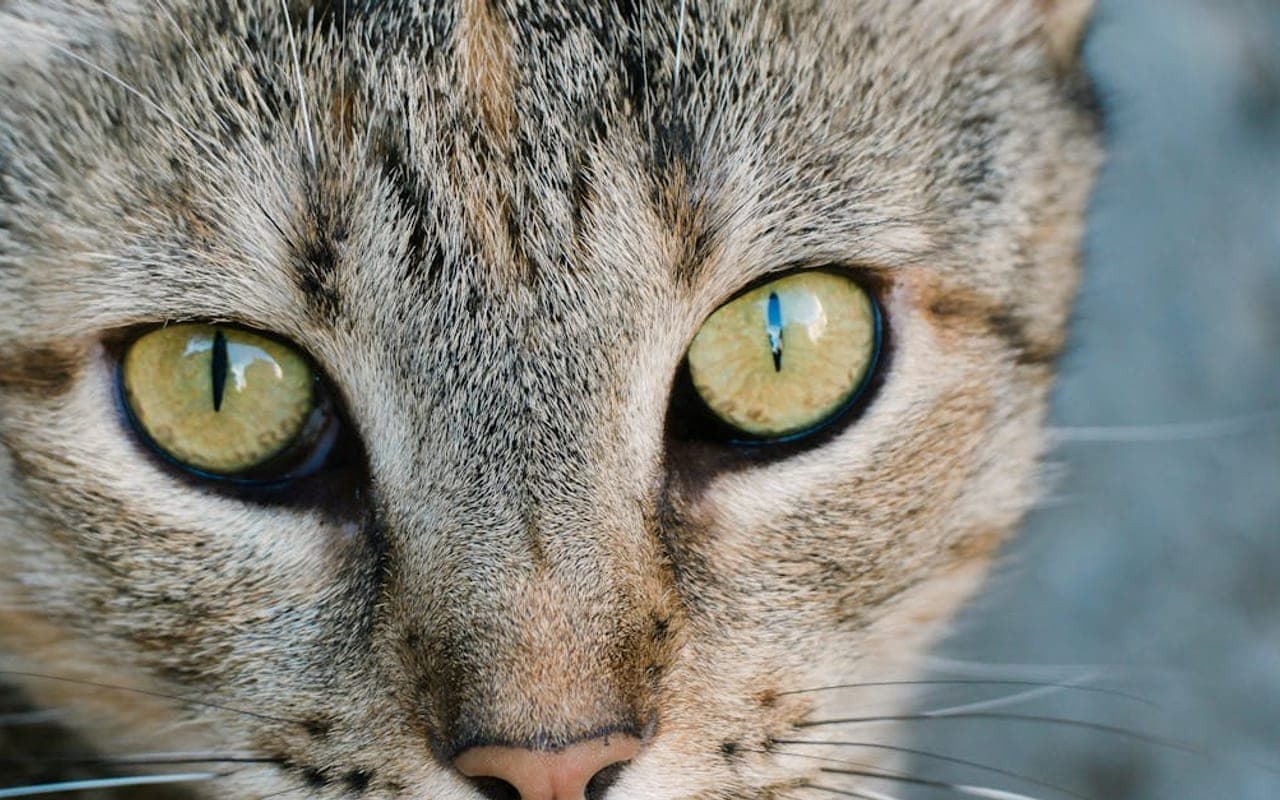
The wild look is a coat pattern, not a wild temperament. CFA calls the Ocicat a totally domestic feline [2]. The CFA standard describes "a medium to large cat with substantial bone and muscle development, yet with an athletic appearance" [3]. Expect an adult weight of 2.7 to 6.4 kg, a height of 23 to 30 cm, and a lifespan of 12 to 14 years. The standard adds that females are generally smaller than males [3].
The coat is the easy part. The GCCF calls it a "low maintenance coat which needs no special attention" [4]. The harder part is keeping an active, trainable cat occupied with you. That makes it a rewarding companion for a household that is home and willing to play. It is a poor fit for a household that wants a cat to sleep through an empty day. For the breed's appearance and background, see the Ocicat breed page. This guide covers day-to-day care. For other breeds, browse the care guide library.
Daily Care
Company is the care demand to plan around, though the breed clubs differ on how strong it is. FIFe's breed profile says the Ocicat "dislikes being alone intensely, actively seeks the company of its humans, and happily follows them everywhere, vocally demanding affection" [5]. CFA's breed profile is more moderate: Ocicats "are neither clingy nor demanding" and "value human interaction but do not crave it constantly", but they are not happy being left to themselves for long periods [1]. The GCCF says they are not demanding, yet less suited than some breeds to being left alone [4]. These are the clubs' descriptions of the breed, not measured rates, and individual cats will differ. If your household is empty for most of the day, think about a second compatible pet or a daily routine that includes real time spent with the cat, not just being in the same room.
Expect a cat that talks. FIFe calls the Ocicat vocal in demanding affection, but says its voice is considerably quieter and gentler than the Siamese's [5]. The GCCF describes it as confident and outgoing with visitors [4], so plan on it coming to the door rather than hiding when guests arrive.
Proof your home for a cat that opens things. Both FIFe and CFA say the breed can open doors, and FIFe adds drawers [2][5]. Put child-proof latches on cupboards and drawers that hold cleaning products, medicines, sewing kits or anything else a cat should not reach.
Nutrition
The Ocicat has no special dietary needs. CFA's article on the breed says it needs no special diet [2]. The one breed point to know is that the standard says an Ocicat "should have surprising weight for its size" [3], so a well-muscled cat may weigh more than it looks; ask your vet how to judge its body condition by feel rather than by the scale alone. If you train with food, take the rewards from its measured daily ration.
Exercise
An Ocicat's exercise is mostly play with you, not time spent on its own. FIFe says the Ocicat can be walked on a lead, fetches and responds to its name [5]. CFA describes Ocicats that fetch "in a 'dog-like' manner" and learn tricks [2]. Those abilities are the routine.
If your cat brings a toy back, short fetch games are a ready-made workout; stop while it is still keen. Reward-based trick or name-recall sessions of a few minutes give it something to solve. For lead walking, introduce the harness indoors first and let the cat set the pace, take it outside only somewhere quiet and safe, and never leave a cat tied up unattended.
No source cited here gives a daily exercise figure in minutes for the Ocicat, and none describes what an under-exercised or under-occupied Ocicat does, so we do not give a number or predict a behavior. Plan your time around the clubs' descriptions of how much it wants your company.
Do not plan for this to taper off. FIFe notes the Ocicat stays lively and playful into old age [5]. A senior Ocicat may need shorter sessions, softer landings and lower climbing routes, but age alone is not a reason to drop its play time. If an older cat stops playing, raise that with your vet rather than putting it down to age.
Grooming
The CFA standard describes a short, satiny coat with banded hairs and thumbprint-shaped spots [3]. The GCCF says brushing is not essential, though many Ocicats enjoy being brushed [4]. CFA notes the breed does not need excessive grooming, and reports that many show exhibitors praise a chamois cloth for bringing up the coat's shine [2]. None of these sources gives a weekly grooming time or a shedding cycle for the breed, so we do not offer one; brushing is optional, and a chamois wipe is for shine rather than coat health.
If your cat enjoys being brushed, use those minutes to look at its ears and teeth as well, so that handling becomes routine. That is worth starting early. CFA advises handling Ocicat kittens from an early age [2], and a cat that is used to being touched is much easier to examine, medicate and groom for the rest of its life.
Health
No breed-wide prevalence study for the Ocicat was found for hypertrophic cardiomyopathy, dental disease, renal amyloidosis or obesity. You may see the breed linked to these conditions elsewhere. We could not find a source that measures how often they occur in Ocicats, so we do not give figures for them. Below are three conditions where the research cited here names the Ocicat. Each finding comes from a specific sample, not a census of the breed.
- Pyometra in unspayed females. Pyometra is a bacterial infection of the uterus [8]. A study of Swedish insurance data covering 1999 to 2006 placed the Ocicat among the breeds with an incidence rate above 60 cats per 10,000 cat-years at risk [8]. The average across all insured cats in that study was about 17 [8]. The median age at diagnosis was 4 years, and the risk rose sharply after age 7 [8]. This matters only if you keep an intact female, for example a cat kept for breeding. If you do, discuss spaying and its timing with your vet. Treat any sign of illness in an intact female as a reason to call the vet promptly rather than to wait and see.
- Pyruvate kinase (PK) deficiency. PK deficiency is an inherited form of hemolytic anemia, passed on as an autosomal recessive trait [6]. The signs described in the study include lethargy, weakness, weight loss and jaundice [6]. In a 2012 survey from UC Davis, all 69 Ocicats tested were normal for the PK variant, and none were carriers [6]. The authors still recommend that breeds derived from Abyssinian crosses, "such as the Ocicat," be tested [6]. In practice that means a simple question for the breeder: have both parents been DNA-tested for PK deficiency, and can you see the results? A clear result in a survey sample is not a result for your kitten's parents.
- Retinal degeneration (rdAc). The rdAc variant of the CEP290 gene causes a recessive inherited retinal degeneration [7]. Because the trait is recessive [7], a cat needs two copies of the variant to be affected. A 2010 survey across many breeds found the variant in Ocicats [7]. Of 18 North American Ocicats tested, 15 were normal, 3 were carriers and none were affected, an allele frequency of 0.083 [7]. Of 3 European Ocicats tested, 2 were carriers [7]. These are very small samples and do not tell you how common the variant is across the breed. They do show it is present. Because rdAc is recessive, the authors recommend testing in the breeding population [7]. Ask the breeder for rdAc (CEP290) DNA results for both parents.
Beyond these three, keep a short note of your cat's weight, appetite and litter box habits, so that you can spot a change and tell your vet when it started.
🩺 When to See Your Vet
Call your veterinarian promptly if your Ocicat becomes lethargic or weak, or develops yellowing of the gums, skin or the whites of the eyes. These are among the signs described for PK deficiency [6], and they need a vet's assessment whatever the cause. An unspayed female who seems unwell also needs prompt attention.
Costs
These are the Ocicat-specific cost drivers to plan around:
- DNA testing before you buy. Ask for both parents' PK deficiency and rdAc (CEP290) results [6][7]. A breeder who has already tested saves you from facing these questions later.
- Spaying. If you keep an intact female, the pyometra findings [8] are a reason to decide on spaying early. Emergency treatment for an illness in an intact female is an unplanned cost.
- Company. For a cat less suited than some breeds to being left alone [1][4], a second pet or paid pet-sitting during long absences may be part of the budget, not an extra.
- Harness and toys. If you plan to use the lead walking and fetching the clubs describe [2][5], budget for a well-fitted harness and toys it can carry back.
- Home-proofing. Child-proof latches for cupboards and drawers, for a cat that opens them [5].
- Grooming. Minimal, since the coat needs no special attention [4].
Frequently Asked Questions
Can an Ocicat be left alone all day?
Not ideally. The clubs differ on how strongly it minds, but all describe a cat that does better with company, so plan for a second pet or daily one-to-one play time if you work long hours away from home.
What health tests should I ask an Ocicat breeder about?
DNA results for both parents for pyruvate kinase deficiency and for the rdAc (CEP290) retinal degeneration variant.
Sources
This guide draws on the following published references. Each opens in a new tab so you can check it against what you have read here.
Federation Internationale Feline (FIFe)
Federation Internationale Feline (FIFe) — Breed Profile OCI - Ocicat(opens in a new tab)BMC Veterinary Research (Grahn et al., 2012; UC Davis)
BMC Veterinary Research (Grahn et al., 2012; UC Davis) — Erythrocyte pyruvate kinase deficiency mutation identified in multiple breeds of domestic cats(opens in a new tab)The Veterinary Journal (Menotti
The Veterinary Journal (Menotti-Raymond et al., 2010; NCI-Frederick) — Widespread retinal degenerative disease mutation (rdAc) discovered among a large number of popular cat breeds(opens in a new tab)Theriogenology (Hagman et al., 2014; Swedish University of Agricultural Sciences / Agria)
Theriogenology (Hagman et al., 2014; Swedish University of Agricultural Sciences / Agria) — Incidence of pyometra in Swedish insured cats(opens in a new tab)The Cat Fanciers' Association (CFA)
The Cat Fanciers' Association (CFA) — Ocicat breed profile(opens in a new tab)The Cat Fanciers' Association (CFA)
The Cat Fanciers' Association (CFA) — Ocicat article(opens in a new tab)The Cat Fanciers' Association (CFA)
The Cat Fanciers' Association (CFA) — Ocicat breed standard(opens in a new tab)Governing Council of the Cat Fancy (GCCF)
Governing Council of the Cat Fancy (GCCF) — Ocicat breed page(opens in a new tab)
Affiliate disclosure: We may earn a commission from qualifying purchases. This doesn't affect our recommendations.
Recommended Products
Ocicat Care Guide Book
Breed-focused reading and owner references for Ocicat care, training, grooming, and health planning.
Ocicat Food and Supplies
Helpful supplies for ocicat cat supplies routines at home.
Ocicat Grooming Tools
Helpful supplies for ocicat grooming tools routines at home.
Get personalized pet care tips
Join our newsletter for breed-specific advice, care guides, and expert tips delivered weekly.
No spam, ever. Unsubscribe anytime.