Danish-Swedish Farmdog Care Guide
The Danish-Swedish Farmdog is small, about 30 to 39 cm at the shoulder and 7 to 12 kg (roughly 15 to 26 lb), with a usual lifespan of 11 to 13 years. Its size makes it look like an easy house dog. The
Reading Time
📖 10 min read
Guide Type
🐾 Breed-Specific
Last Updated
📅 Nov 17, 2026
In This Guide
Overview
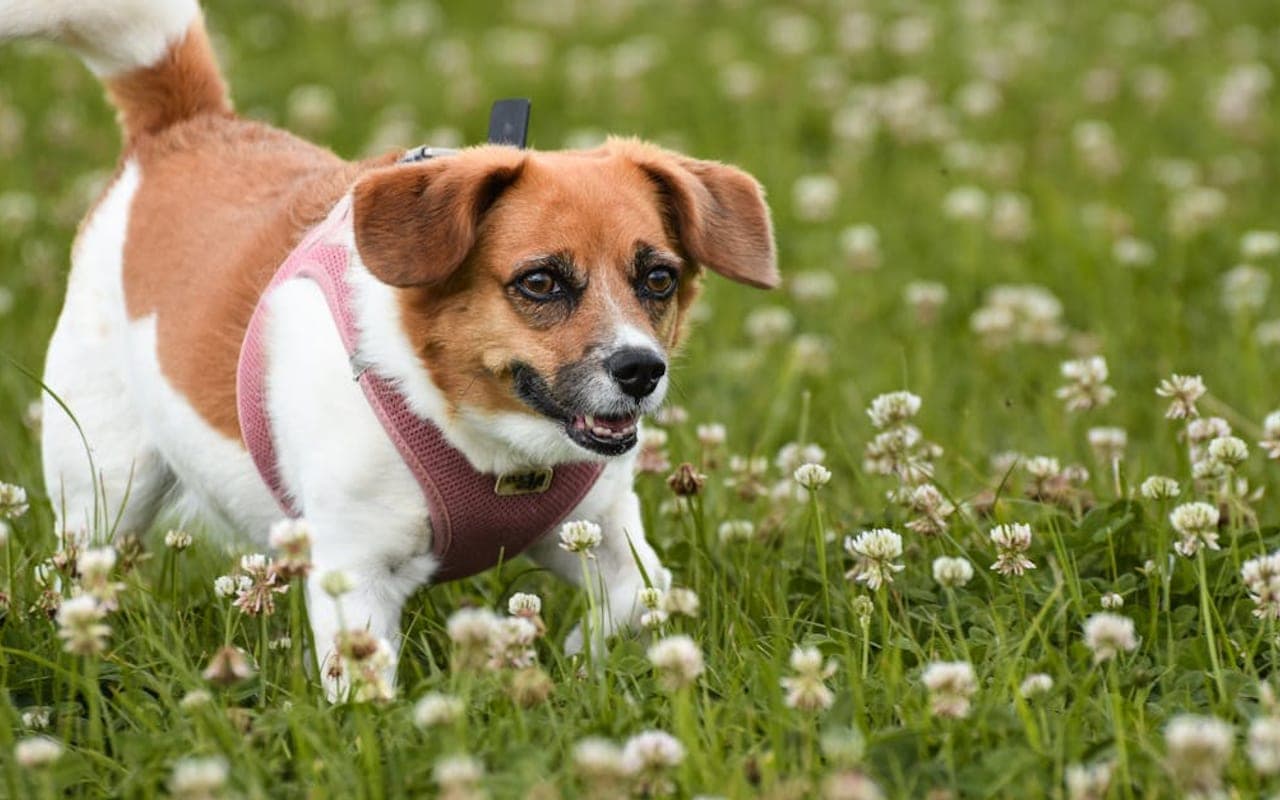
The Danish-Swedish Farmdog is small, about 30 to 39 cm at the shoulder and 7 to 12 kg (roughly 15 to 26 lb), with a usual lifespan of 11 to 13 years. Its size makes it look like an easy house dog. The Swedish breed club's breeding strategy describes a demanding, energetic dog that needs a lot of physical and mental activity, even though it looks small and "cute" [2]. The Swedish Kennel Club says the same in plainer terms: despite being small, it is an active breed and needs some form of regular stimulation [3].
Much of the breed's care follows from its old job. These dogs were kept on farms in Denmark and southern Sweden to control vermin and to watch the yard [3]. The club notes that the dog was bred to kill rats and that it barks to warn [2]. If you have pet rabbits, guinea pigs or rats, or neighbours who object to an alert bark, weigh that before you commit.
The breed club's summary of Swedish insurance data finds the breed over-represented only for upper urinary tract and digestive problems [2]. For the breed's background and history, see the Danish-Swedish Farmdog breed page; this guide covers day-to-day care. For other breeds, browse the care guide library.
Daily Care
The FCI standard sums up the temperament in three words: alert, attentive and lively [1]. It also lists aggression and excessive shyness as disqualifying faults [1], and the club describes an overly reserved dog as atypical [2]. That is the target for your socialisation. You want a dog that notices a stranger, may be slightly wary [3], and then settles. Barking at strangers must never turn into aggression [2].
Despite its earlier name, Skånsk Terrier [3], the breed is classed by the FCI as a pinscher (Group 2, Section 1.1), not a terrier [1]. The FCI standard notes that the breed matures late [1], so do not judge a young dog's stamina or focus as finished. Keep sessions short and frequent.
Alert barking. The RAS describes the dog as an alert barker but otherwise quiet [2]. Teach a "thank you, that's enough" cue early, and reward the dog for coming back to you after it has given the warning.
Territory on the move. The breed quickly treats places as territory, including a picnic spot or a training field, and alerts there too [2]. Practise settling on a mat in new places, at a distance from passers-by, before the dog has the chance to rehearse guarding.
Small pets. The breed was bred to kill rats and can be hard to accustom to small animals [2]. If you have rabbits, guinea pigs or other rodents, keep them physically separate and never leave the dog alone with them. Do not assume a calm first meeting will last.
Recall. Recall is a safety skill for this breed, not an extra. Train it in a fenced area first, and use a long line in open country until it is solid.
At home, expect a dog that wants to be close to you once its work is done [2].
Nutrition
There is no breed-specific feeding study for the Danish-Swedish Farmdog.
The Agria data shows vomiting, diarrhoea and other digestive problems at 9% above the all-breed average [2]. That is a modest difference, not a known digestive disorder, but it is a good reason to change foods gradually over several days rather than switching overnight, and to keep a note of what upsets your dog's stomach.
Notice if your dog starts drinking more than usual. If your vet diagnoses a urinary condition, follow the diet they prescribe rather than general advice.
Exercise
There is no published minutes-per-day exercise figure for the breed. Between work sessions the Farmdog is a lap dog [2]. It seeks out warmth, such as a patch of sun or a spot under the duvet [2]. So plan for real activity, and a dog that rests well afterwards.
The club says the dog enjoys working both physically and mentally [2]. Think short training sessions and walks on varied ground, and build up distance and difficulty gradually.
The breed's high rate of accidents and bites, including being hit by vehicles [2], means freedom has to be earned. Run the dog off lead only where you have a recall you trust and no road close by, and because that risk includes snake bites [2], keep it on a lead in long grass.
Grooming
The FCI standard describes the coat as short and smooth, harsh on the body [1]. The colour is predominantly white with patches [1]. That makes coat care light. There is no published weekly grooming-time figure for the breed.
Nails deserve more attention than the coat, because claw injuries are one of the breed's raised insurance risks [2]. Look over the feet after a run across stubble, rocks or woodland, check for a split or torn nail and tender toes, and keep nails short enough that they do not catch. Get a puppy used to having its feet handled early, so that nail care stays quick and calm as an adult.
Teeth are the other place to look. A few cases of amelogenesis imperfecta, a defect that leaves enamel thin and discoloured, are known in the breed [2]. If your dog's tooth enamel looks thin or discoloured [2], mention it at the next vet visit.
Health
The Swedish breed club's breeding strategy (RAS, version 4, 2021) summarises Agria Sweden's insurance data for 2011 to 2016, which covered between 2,500 and 4,200 insured dogs of the breed each year, plus the club's own member surveys [2]. Read the figures below as Swedish insurance and survey data, not a global rate.
The headline. In the Agria data, the breed's total illness and injury risk was 89% of the average for all breeds, and its mortality risk was 45% of the all-breed figure [2]. The club's own summary opens with the line that the Danish-Swedish Farmdog is a healthy breed [2].
Genetic background. A 2021 study of inbreeding across dog breeds in Canine Medicine and Genetics placed the Danish-Swedish Farmdog among the landrace breeds with the lowest inbreeding [4]. The UC Davis release on that study describes a founding population of about 200 dogs and notes that Agria's Swedish data ranks the breed among the healthiest [5]. A 2013 genetic study of five Danish breeds, which genotyped 18 Danish-Swedish Farmdogs, found relatively high genetic diversity and linked it to a larger number of founders, the breed's near-extinction and reconstruction, and the club's open studbook [6]. Low inbreeding is a measured fact about the population. It does not mean an individual puppy cannot inherit a condition, so the screening below still matters.
Accidents and bites. The "snake / insect bite" category was 150% above the all-breed relative risk, claw injuries were 25% higher, and the RAS reports that the breed is often hit by vehicles [2]. The club links this to the dog's curiosity [2].
Upper urinary tract disease. In the RAS, the general category of upper urinary tract disease is the one cause of death in the breed with both high frequency and raised risk, at 25% above the all-breed figure; the narrower specific cause recorded as "upper urinary tract, unspecified" ran 60% above it [2]. Visits for increased thirst and urination (polyuria/polydipsia) ran 5% above average [2]. If your dog starts drinking or urinating more than usual, get it checked rather than waiting.
Cystinuria. The club suspects the breed's form is type III, which, according to the RAS, affects only intact adult males [2]. None of the DNA-testable cystinuria variants were found in affected Farmdogs, so no available DNA test screens for it [2]. If you own an intact male, watch especially closely for the urinary signs above. Do not accept a breeder's "cystinuria tested" claim as meaning anything for this breed.
Primary lens luxation (PLL). PLL is an autosomal recessive condition linked to the ADAMTS17 gene, and a validated DNA test exists for the breed [2]. The RAS records five affected dogs found in Finland in 2015 and 68 carriers identified since [2]. It describes first signs often appearing around 20 months, with full luxation usually at 3 to 8 years [2]. Ask the breeder for both parents' PLL DNA results. The RAS describes PLL as very painful and a cause of blindness [2].
Short legs and discs (CDDY). The FGF4 variant known as CDDY is present in the breed [2]. Even so, Swedish insurance and survey data show no raised risk of disc herniation, and the club manages the variant by avoiding breeding low-set, short-legged dogs, keeping to the standard's 9:10 height-to-length proportion [2]. A CDDY carrier result on a pedigree is worth knowing about, but in this breed the data does not point to a disc problem.
Legg-Perthes disease. It occurs only sporadically in the breed, with onset at about 5 to 12 months [2].
Amelogenesis imperfecta. A few cases are known, with thin, discoloured tooth enamel, and there is no validated test [2].
Hips and knees. The RAS reports a lower than average risk of locomotor problems in the breed, says clinical hip problems are rare, and found that SKK's hip dysplasia programme had no measurable effect across 25 years of data [2]. In the club's member surveys, patellar luxation was reported in 2.8% of dogs in 2003 to 2011 (462 dogs) and 3.6% in 2014 to 2019 (169 dogs), and allergy in 4.5% and 3.6% [2]. These are self-reported surveys of club members, not veterinary records.
This is general information, not a diagnosis. Always consult your veterinarian for medical decisions about your dog.
Costs
The first spending decision is the puppy's paperwork. Ask for both parents' PLL DNA results [2]. There is no DNA test for the breed's form of cystinuria [2], so there is nothing to pay for there. Be wary of any seller charging extra for one.
The short, smooth coat [1] keeps grooming costs low. The breed's accident record [2] makes secure fencing, a long line for recall training, and a plan for emergency care after a bite or road accident the most useful places to put money. For an intact male, budget for possible urinary investigations [2]. Training classes or a dog sport cover the breed's need for regular mental stimulation [3] and help with alert barking and recall.
Frequently Asked Questions
Is the Danish-Swedish Farmdog a terrier?
No. It was once called the Skånsk Terrier, but the FCI classes it as a pinscher, in Group 2, Section 1.1. The Swedish Kennel Club describes it as a Pinscher-Fox Terrier type that probably derives from crosses between the Pinscher and the Fox Terrier.
Can a Danish-Swedish Farmdog live with rabbits or guinea pigs?
It can be difficult. The Swedish breed club notes that the dog was bred to kill rats and is harder to accustom to small animals. Keep small pets separate and never leave them unsupervised together.
Is there a DNA test for cystinuria in this breed?
No. The breed club suspects the form seen in Farmdogs is type III, which affects intact adult males, and none of the testable variants were found in affected dogs. Watch for urinary signs instead.
What health tests should I ask a breeder about?
Ask for both parents' PLL (primary lens luxation) DNA results, as a validated test exists for the breed. It is also reasonable to ask whether either parent has had Legg-Perthes or enamel problems.
Do Danish-Swedish Farmdogs bark a lot?
They bark to warn you and quickly treat new places as territory, but the Swedish breed club describes them as otherwise quiet. Early training to stop barking on cue helps.
Sources
This guide draws on the following published references. Each opens in a new tab so you can check it against what you have read here.
Fédération Cynologique Internationale (FCI)
Fédération Cynologique Internationale (FCI) — FCI-Standard N° 356 Dansk-Svensk Gårdshund (Danish-Swedish Farmdog), 06.05.2019(opens in a new tab)Svenska Kennelklubben / Rasklubben för dansk
Svenska Kennelklubben / Rasklubben för dansk-svensk gårdshund (RDSG) — Rasspecifik avelsstrategi (RAS) för Dansk-Svensk Gårdshund, version 4, 2021-05-07(opens in a new tab)Svenska Kennelklubben (Nordic Kennel Union breed page)
Svenska Kennelklubben (Nordic Kennel Union breed page) — Danish-Swedish Farmdog(opens in a new tab)Canine Medicine and Genetics (Bannasch et al., 2021), via PubMed Central
Canine Medicine and Genetics (Bannasch et al., 2021), via PubMed Central — The effect of inbreeding, body size and morphology on health in dog breeds(opens in a new tab)ScienceDaily (UC Davis release on Bannasch et al. 2021)
ScienceDaily (UC Davis release on Bannasch et al. 2021) — Most dog breeds highly inbred(opens in a new tab)Journal of Animal Science (Pertoldi et al., 2013)
Journal of Animal Science (Pertoldi et al., 2013) — Genetic profiling of five Danish dog breeds(opens in a new tab)
Affiliate disclosure: We may earn a commission from qualifying purchases. This doesn't affect our recommendations.
Recommended Products
Danish-Swedish Farmdog Care Guide Book
Breed-focused reading and owner references for Danish-Swedish Farmdog care, training, grooming, and health planning.
Danish-Swedish Farmdog Food and Supplies
Helpful supplies for danish-swedish farmdog dog supplies routines at home.
Danish-Swedish Farmdog Grooming Tools
Helpful supplies for danish-swedish farmdog grooming tools routines at home.
Get personalized pet care tips
Join our newsletter for breed-specific advice, care guides, and expert tips delivered weekly.
No spam, ever. Unsubscribe anytime.