
Dwarf Hotot Care Guide
Dwarf Hotot Care Overview This guide gives you a practical plan for living with a Dwarf Hotot, the tiny 2-to-3-pound pure-white rabbit whose only marking is a thin black band of 'eyeliner' around each
In This Guide
Overview
Dwarf Hotot Care Overview
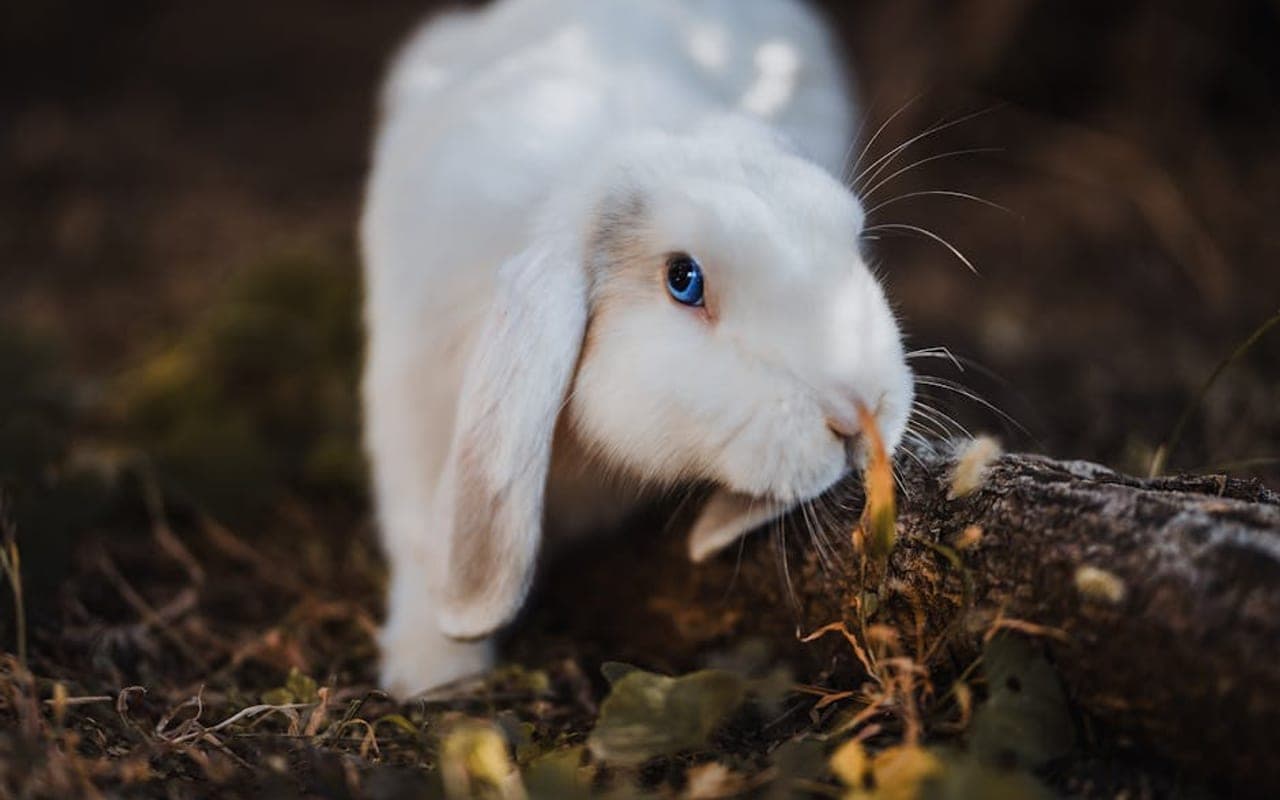
This guide gives you a practical plan for living with a Dwarf Hotot, the tiny 2-to-3-pound pure-white rabbit whose only marking is a thin black band of 'eyeliner' around each eye. Two facts should shape almost every care decision, and both come from the dwarfing gene the breed carries. The first is dental. VCA Animal Hospitals notes that malocclusion may have a hereditary or congenital component especially in dwarf or lop-eared rabbits, and that these breeds are overrepresented for dental disease — so a lifelong hay-first diet is less a recommendation than the core of keeping this rabbit healthy and out of surgery. The second is fragility and size: at 2 to 3 pounds this rabbit has almost no thermal mass and overheats above about 26°C/80°F, startles easily, has a delicate spine, and dislikes being picked up, so gentle handling and a cool, calm home are not optional extras. The cute look also hides a personality — Dwarf Hotots are alert, curious, and bold for their size, often more opinionated than a lap pet, which makes them entertaining but not passive. And the commitment is long: 8 to 12 years of daily care, free-roam exercise, and a rabbit-savvy exotics vet. One more honest point belongs up front: the dwarfing gene means breeding two carriers produces non-viable 'peanut' kits, which is why you buy from a knowledgeable breeder, not a backyard litter. This guide walks through the daily routine, diet, exercise, grooming, health, and real costs behind that distinctive little face.
Daily Care
Daily Routine
A Dwarf Hotot's day runs on routine, and at this size the routine is also your early-warning system. Each morning, top up unlimited grass hay — the single most important thing you do all day, and doubly so for a dwarf whose crowded teeth depend on constant chewing — refresh water in a heavy ceramic bowl rather than a sipper bottle, which rabbits drink from more readily, and put down a packed portion of washed leafy greens. Scoop the litter box, because a clean box keeps a rabbit reliably litter-trained. Then watch for a minute: a healthy Dwarf Hotot is alert, eating, and producing plenty of round droppings. The two things you check every single day are appetite and droppings, because a tiny body has very little reserve — a Dwarf Hotot that stops eating or passing droppings for 12 hours is a same-day emergency, not a wait-and-see. In the evening, open the enclosure for the main free-roam session, refresh hay again, and do a quick hands-on check: the rear end for soiling, the eyes around the dark band for discharge or irritation, and the front teeth for overgrowth. In warm weather, add a heat check — feel the ears and make sure the room is cool, because a 2-to-3-pound rabbit overheats fast and quietly. Handle gently and low to the ground, since a drop from height can fracture this small spine.
Nutrition
Feeding a Dwarf Hotot
Get the diet right and you prevent most of the health problems in this guide — and in a dwarf breed, the diet is the dental plan. The proportions matter: roughly 80 percent of what a Dwarf Hotot eats should be unlimited grass hay — timothy, orchard, or meadow — because the long, abrasive chewing it forces is what wears the continuously growing molars down — and in a breed already overrepresented for dental disease, that wear is the whole preventive strategy. On top of the hay, feed a daily packed portion of varied leafy greens (romaine, cilantro, parsley, dandelion greens; rotate them to avoid excess of any one mineral), and only a tablespoon or so of plain timothy-based pellets for a rabbit this small. Skip muesli-style mixes entirely: rabbits selectively eat the sugary bits and leave the fibrous pellet, which in a dwarf drives dental disease especially hard, plus obesity. Treats are fruit-sized and rare — a sliver of banana or apple, never daily, because sugar disrupts the gut flora and a small gut has little margin. Fresh water must always be available. Alfalfa hay is for kits under about six months only; switch adults to grass hay, as alfalfa's calcium and calories cause bladder sludge and weight gain in a grown Dwarf Hotot.
Exercise
Exercise & Enrichment
A Dwarf Hotot is small but lively, and a small body is not a reason for a small life: confinement causes obesity, boredom, and muscle loss, and a bold, curious breed like this one gets frustrated quickly when it is bored. The little size does not shrink the exercise requirement — treat the enclosure as a home base and give a minimum of 3 to 4 hours of supervised free-roam time every day in a rabbit-proofed room or pen. 'Rabbit-proofed' is literal — cover or block electrical cords, since a chewed cord can electrocute or burn, and remove toxic houseplants and anything you mind being gnawed, because chewing is a need, not a vice. Give this spirited breed reasons to think and move: cardboard castles and tunnels, a digging box of shredded paper or hay, foraging and toss-and-chew toys, and changes of scenery rotated weekly to suit its curiosity. A content, well-exercised Dwarf Hotot 'binkies' — a happy mid-air leap and twist — which is the clearest sign you have the enrichment right. Exercise also doubles as health monitoring: a rabbit that suddenly stops moving, hunches, or grinds its teeth is telling you something is wrong, and in a tiny body that signal needs acting on quickly.
Grooming
Grooming
Grooming a Dwarf Hotot is light, and the attention belongs at the eyes and teeth more than the coat. The short, dense white fur needs only a weekly brush to remove loose hair, stepping up to every few days during the heavy seasonal molts, when swallowed fur can contribute to gut slowdown — brushing during a molt is preventive, not cosmetic. Never bathe a rabbit; full immersion terrifies them and can cause fatal shock, and the coat is hard to dry. Spot-clean a soiled rear with a damp cloth instead, and a white coat makes any staining or soiling easy to catch early. The eyes deserve routine attention: check the area around the signature dark band weekly for discharge, watering, or redness, since persistent eye trouble warrants a vet, and the eye-band itself is a coat-pattern trait that does not affect vision. Trim nails every four to six weeks — overgrown nails change how a small rabbit sits and can snag and tear. And look at the front teeth while you groom, because in this crowded dwarf face misalignment or overgrowth is the thing you most want to catch early: a hay-and-vet problem now, surgery later if missed.
Health
Health
The Dwarf Hotot's defining health risk is dental malocclusion, where the continuously growing teeth grow misaligned and overlong. VCA Animal Hospitals places dwarf and lop-eared rabbits among the breeds overrepresented for dental disease and notes a hereditary or congenital component; the day-to-day driver, in any rabbit, is still a low-fibre diet. Prevention is dietary (unlimited grass hay forces the wearing chew) and detection is routine — watch for drooling, weight loss, dropped food, or reduced appetite, and have a rabbit-savvy vet check the back teeth yearly. The other conditions every owner should know follow from the tiny body. GI stasis, where the gut slows or stops, is a true emergency in a rabbit with almost no reserve — any 12-hour loss of appetite or droppings is a same-day vet trip. Heat stroke is a real danger: at 2 to 3 pounds the Dwarf Hotot cannot sweat and overheats above about 26°C/80°F, so provide shade, airflow, and frozen water bottles in summer and never house it in direct sun. Uterine cancer in unspayed does is common past three to four years, which makes spaying preventive medicine. One breed-specific genetics note for anyone considering breeding: pairing two dwarf-gene carriers produces non-viable 'peanut' kits, so leave breeding to knowledgeable keepers. Crucially, line up an exotics or rabbit-savvy veterinarian before you bring a Dwarf Hotot home — most general-practice vets do not treat rabbits, and in a small rabbit's emergency you do not want to be searching.
Costs
The Real Cost of a Dwarf Hotot
The purchase price is the smallest number in rabbit ownership, and treating it as the budget is the classic first-time mistake. A Dwarf Hotot typically runs 30 to 100 dollars or more, with a well-marked, even eye-band from a reputable ARBA breeder commanding the higher end, because the breed is judged on the precision of that marking — and buying from a knowledgeable breeder rather than a casual litter also avoids the 'peanut' genetics problem. The setup costs more than the rabbit: even a small breed needs a roomy enclosure or exercise pen (small size is not a small cage), a heavy water bowl, a litter box and rabbit-safe litter, hay racks, and starter toys, adding up to roughly 150 to 300 dollars before you account for the pens and cord covers to rabbit-proof a room. Then there is the ongoing bill. A dwarf eats less than a large rabbit, so unlimited hay, fresh greens, a little pellet, and litter come to roughly 30 to 55 dollars a month, more for premium hay delivered. The cost that surprises people is veterinary, and it does not scale down with the rabbit: rabbits need an exotics vet, which means a higher first-visit fee, a one-time spay or neuter usually in the 150 to 400 dollar range (which prevents cancer and behavior problems), and an emergency fund, because GI stasis or dental work — a real likelihood in this dental-prone breed — can run into the hundreds quickly. Budget for the vet, not just the cute price, and a Dwarf Hotot is an affordable companion.
Frequently Asked Questions
What would actually disqualify a Dwarf Hotot on the show table?
More than most buyers expect. The judging guidance published by the American Dwarf Hotot Rabbit Club treats any break in the eye band, a missing band, or heavy feathering of colour into the longer surrounding fur as a disqualification, along with a stray coloured spot anywhere on the body, ears over 2.75 inches, a dewlap on a doe, and marbling in the eye. ARBA also caps the breed at three pounds. Ask to see the rabbit handled and its ears checked before you pay show prices.
Are Dwarf Hotots actually bitey?
The breed picked up a reputation as the jaws of the rabbit world in its early ARBA years, and the club's own judging guidance calls that a misconception, arguing serious breeders bred the trait out and that today's Dwarf Hotot is no more likely to bite than most other breeds. Temperament still varies by individual and by handling history, so meet the specific rabbit and watch how it reacts to hands before you commit.
Is a Dwarf Hotot more prone to dental disease just because it is small?
Not simply because it is small. The VCA veterinary reference says malocclusion can have a hereditary or congenital component especially in dwarf or lop-eared rabbits, and that those breeds are overrepresented; the study that identified the rabbit dwarf allele describes a shortened snout from altered craniofacial development. No veterinary source we checked names the Dwarf Hotot itself. The species-level driver is still a low-fibre diet, and UK primary-care records put dental disease at 15.4 percent of pet rabbits. Check the incisors weekly.
What is a peanut kit, and why should a buyer care?
The dwarf allele behind the breed's size is a deletion at the HMGA2 gene, and it is recessive lethal. The genetics paper that identified it describes homozygous kits, called peanuts, as having a swollen head and tiny ears, viable up to birth but typically dead within a few days. Pairing two true dwarfs therefore loses about a quarter of each litter that way. Ask any breeder how they pair their stock, and treat a vague answer as a reason to walk.
Does a two-pound rabbit need less space than a big one?
No, and that is species-level rather than breed-specific. The RWAF's minimum for pet rabbits is one continuous enclosure measuring 3m by 2m and a metre tall, the height being what lets a rabbit jump and binky, and the charity is explicit that one kept on its own needs that same footprint rather than half of it. It also has to be open around the clock, not unlocked for a daily session. Measure the floor you can permanently give up before you commit.
Sources
This guide draws on the following published references. Each opens in a new tab so you can check it against what you have read here.
ARBA
Dwarf Hotot — recognised breed entry(opens in a new tab)American Rabbit Breeders Association (ARBA)
Dwarf Hotot — Recognized Breeds(opens in a new tab)American Dwarf Hotot Rabbit Club (ADHRC)
Judging the Dwarf Hotot: The Eyes of the Fancy (Roger A. Cota, ARBA Judge)(opens in a new tab)Rabbit Welfare Association & Fund (RWAF)
Space Recommendations for Pet Rabbits(opens in a new tab)PDSA
Dental problems in rabbits(opens in a new tab)House Rabbit Society
Rabbit Diet & Nutrition(opens in a new tab)Genetics (Genetics Society of America), via PubMed Central
Dwarfism and Altered Craniofacial Development in Rabbits Is Caused by a 12.1 kb Deletion at the HMGA2 Locus(opens in a new tab)Veterinary Record (British Veterinary Association), via PubMed Central
Dental disease in rabbits under UK primary veterinary care: Clinical management and associated welfare impacts(opens in a new tab)Merck Veterinary Manual
Diet for Rabbits(opens in a new tab)VCA Animal Hospitals
Dental Disease in Rabbits(opens in a new tab)Merck Veterinary Manual
Routine Health Care of Rabbits(opens in a new tab)Merck Veterinary Manual
Skin Disorders of Rabbits(opens in a new tab)
Get personalized pet care tips
Join our newsletter for breed-specific advice, care guides, and expert tips delivered weekly.
No spam, ever. Unsubscribe anytime.