
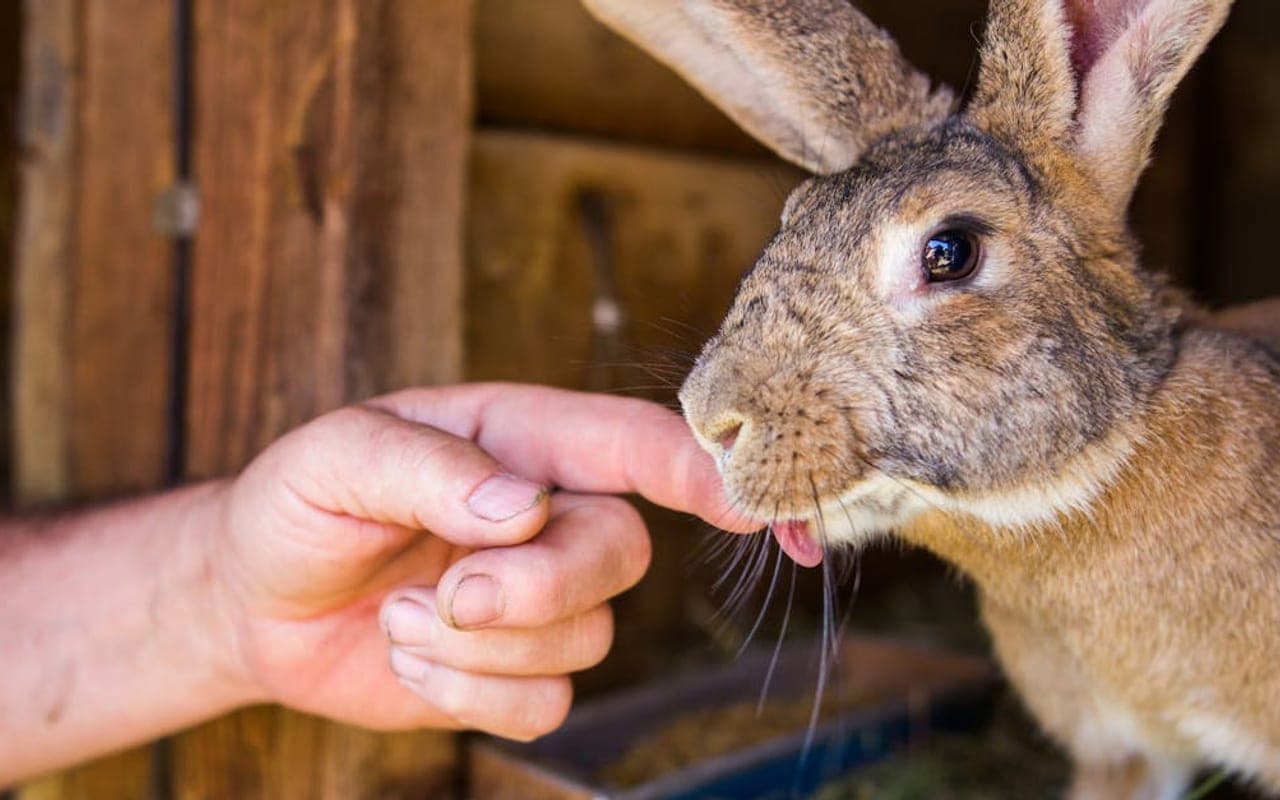
Flemish Giant Care Guide
Flemish Giant Care Overview This guide gives you a realistic plan for living with a Flemish Giant, the largest of the recognized rabbit breeds and a 4.5-to-6.8-kilogram animal whose sheer size dictate
In This Guide
Overview
Flemish Giant Care Overview
This guide gives you a realistic plan for living with a Flemish Giant, the largest of the recognized rabbit breeds and a 4.5-to-6.8-kilogram animal whose sheer size dictates everything else. The single fact that should shape every care decision is that this is not a scaled-up pet rabbit — its weight drives the housing, the feed bill, the vet care, the way you lift it, and even how long it lives. The 'gentle giant' reputation is largely earned, because a well-socialized Flemish is typically calm, docile, and tolerant of handling, but that temperament is conditional on space and gentle raising, and a frightened giant is powerful enough to injure a handler or itself with a single kick. The honest caveats are size-driven and serious. Lifespan is short for a rabbit, roughly 5 to 8 years, because the large frame strains the heart and joints, so the long commitment most rabbits ask of you is here compressed into fewer, costlier years. The enclosure most owners picture is far too small, jumps need to become sturdy ramps to spare the joints, and solid padded flooring is essential to keep that body weight from ulcerating the hocks. Food, litter, and vet costs all scale up, and finding an exotics vet comfortable handling a giant takes planning. None of this changes the core rabbit reality — a prey animal that hides illness, needs a hay-first diet and free-roam exercise, and treats any appetite loss as urgent. Source one from an ARBA-registered breeder or a rabbit rescue, budget honestly before the dramatic size does the deciding for you, and go in understanding that a gentle giant is still a major commitment in a smaller-than-average lifespan. This guide covers the routine, diet, exercise, grooming, health, and real costs.
Daily Care
Daily Routine
A Flemish Giant's day runs on the same routine as any rabbit, scaled to the animal. Each morning, top up unlimited grass hay — the single most important thing you do all day — and refresh water in a heavy bowl, remembering that a giant drinks far more than a small rabbit, so a larger or second vessel is sensible. Put down a generous helping of washed leafy greens, then scoop the litter box, which on a giant is a bigger, messier job that needs staying on top of. Spend a couple of minutes watching, because the two things you check every single day are appetite and droppings: a Flemish that stops eating or passing droppings for 12 hours is a same-day emergency, and in a large gut, GI stasis moves fast. Build a breed-specific check into the routine — run a hand under the hind feet for early redness on the hocks, since all that weight concentrates pressure there, and watch for stiffness or reluctance to move that can signal the joint strain a heavy frame is prone to. When you handle the rabbit at all, support the hindquarters fully with both hands, because a giant that kicks against an unsupported lift can fracture its own spine. In the evening, open the pen for the main free-roam session and refresh hay again. The daily look matters most in a prey animal that masks illness until it is advanced.
Nutrition
Feeding a Flemish Giant
Get the diet right and you prevent most of the health problems in this guide — and with a giant, you also keep the feed bill honest. The proportions are the same as any rabbit: roughly 80 percent of the diet should be unlimited grass hay — timothy, orchard, or meadow — because the long, abrasive chewing it forces is what wears the continuously growing molars down and keeps the large gut moving. A Flemish simply eats more of it, so plan for a real hay budget rather than an afterthought. On top of that, feed a generous daily helping of varied leafy greens (romaine, cilantro, parsley, dandelion greens, rotated to avoid excess of any one mineral) and a measured portion of plain timothy-based pellets scaled to the rabbit's size, not offered free-choice — overfeeding pellets puts on weight that a giant's joints and hocks cannot afford. Skip muesli-style mixes entirely, because rabbits selectively eat the sugary parts and leave the fiber, which drives dental disease and obesity. Treats are small and occasional, a thin slice of fruit and never daily, since sugar disrupts the gut flora. Fresh water must always be available and in larger volume than a small rabbit needs. Alfalfa hay suits kits under about six months and nursing does; switch adults to grass hay, as alfalfa's calcium and calories cause bladder sludge and weight gain in a grown giant.
Exercise
Exercise & Enrichment
A Flemish Giant needs room to move, and confinement is a serious health problem in a breed this heavy: a caged giant develops obesity, muscle loss, and the pressure sores its weight already encourages. Provide a very large home-base pen. The RSPCA's minimum of 3m by 2m and 1m high is written for two medium-sized rabbits, so for the largest breed of all treat it as a floor rather than a target, and add several hours of supervised free-roam every day in a rabbit-proofed space. 'Rabbit-proofed' is literal — cover or block electrical cords, because a chewed cord can electrocute or burn, and remove toxic houseplants and anything you mind being gnawed. Two breed-specific rules change the setup. First, give sturdy ramps rather than high ledges or jumps, because a 6-to-9-kilogram body landing from height stresses the hips, spine, and knees and accelerates the arthritis giants are prone to. Second, keep the whole area off bare hard floors and slippery tile, adding soft mats, because the weight that drives sore hocks is on those feet whenever the rabbit rests or moves. Give reasons to move with oversized tunnels and toss-and-chew toys built to a giant's scale. Exercise doubles as health monitoring: a Flemish that suddenly stops moving, hunches, breathes hard, or grinds its teeth loudly is telling you something is wrong and needs a vet.
Grooming
Grooming
Grooming a Flemish Giant is straightforward most of the year — the short, dense normal coat needs only a weekly brush to remove loose hair, stepping up to every few days during the heavy seasonal molts, when swallowed fur can contribute to gut slowdown and brushing becomes genuinely preventive rather than cosmetic. The challenge is scale rather than coat type: there is simply more rabbit to go over, and a giant is heavy to position, so groom on a stable, padded surface at a comfortable height and support the body throughout. Never bathe a rabbit; full immersion terrifies them and can cause fatal shock, and a giant's dense coat is slow to dry — spot-clean a soiled rear with a damp cloth and correct its dietary cause instead. Trim nails every four to six weeks, because overgrown nails change how a heavy rabbit sits and worsen both joint strain and sore hocks. Use grooming time as a full inspection: part the coat to check the skin, run your hands over the body for lumps, and — the breed-specific step — turn the rabbit gently to check the soles of the hind feet for the early redness that warns of pressure sores under all that weight.
Health
Health
The Flemish Giant's health risks all trace back to its size. Sore hocks, or ulcerative pododermatitis, lead the list — the heavy body presses the heels onto hard or wire flooring until the fur wears through and the skin ulcerates, so prevention means thick solid padding, deep soft bedding, dry clean housing, weight control, and weekly hock checks that catch redness before infection sets in. Heart disease and cardiac strain are part of why the breed lives only 5 to 8 years, since a very large frame asks more of the cardiovascular system; book annual vet checks and watch for lethargy, reduced exercise tolerance, labored breathing, or pale gums. Arthritis and joint disease follow from carrying 6 to 9 kilograms, so use ramps instead of jumps, soft non-slip flooring, and strict weight control, and watch for stiffness. GI stasis — the gut slowing or stopping — moves fast in a large gut, and any 12-hour loss of appetite or droppings is a same-day emergency. Uterine cancer is common in unspayed does over about three years old, so spaying is preventive medicine. Crucially, line up an exotics vet who is comfortable handling a giant before you bring one home, and remember that transporting a 7-kilogram rabbit safely to that vet is itself a two-hands-and-a-carrier job to plan for.
Costs
The Real Cost of a Flemish Giant
The purchase price is the smallest number in giant-rabbit ownership, and treating it as the budget is the classic first-time mistake — with this breed, the mistake is expensive. A Flemish Giant from a reputable breeder or a rescue typically runs 50 to 150 dollars, but everything after that scales with the animal. The setup is the first shock: a 4-by-6-foot home-base pen, sturdy ramps, a large litter box, heavy bowls, and proper solid padded flooring to protect the hocks easily reach 250 to 500 dollars or more, because giant-scale equipment costs more than small-rabbit gear and the soft flooring is non-negotiable here, not an upgrade. Then there is the ongoing bill. A giant eats and drinks in proportion to its size, so unlimited hay, a generous greens and pellet ration, and far more litter come to roughly 70 to 130 dollars a month, well above a small rabbit. The cost that surprises people most is veterinary. Rabbits need an exotics vet; a one-time spay or neuter on a large rabbit sits at the higher end, often 250 to 500 dollars, and an emergency fund is essential because GI stasis, heart or joint problems, or a neglected sore hock can run into the hundreds quickly — and giant-rabbit surgery and anesthesia carry their own added risk and cost. Budget for the size before the size decides for you.
Sources
This guide draws on the following published references. Each opens in a new tab so you can check it against what you have read here.
ARBA
Flemish Giant — recognised breed entry(opens in a new tab)House Rabbit Society
Rabbit Diet & Nutrition(opens in a new tab)Merck Veterinary Manual
Diet for Rabbits(opens in a new tab)Merck Veterinary Manual
Skin Disorders of Rabbits(opens in a new tab)Merck Veterinary Manual
Routine Health Care of Rabbits(opens in a new tab)
Get personalized pet care tips
Join our newsletter for breed-specific advice, care guides, and expert tips delivered weekly.
No spam, ever. Unsubscribe anytime.