
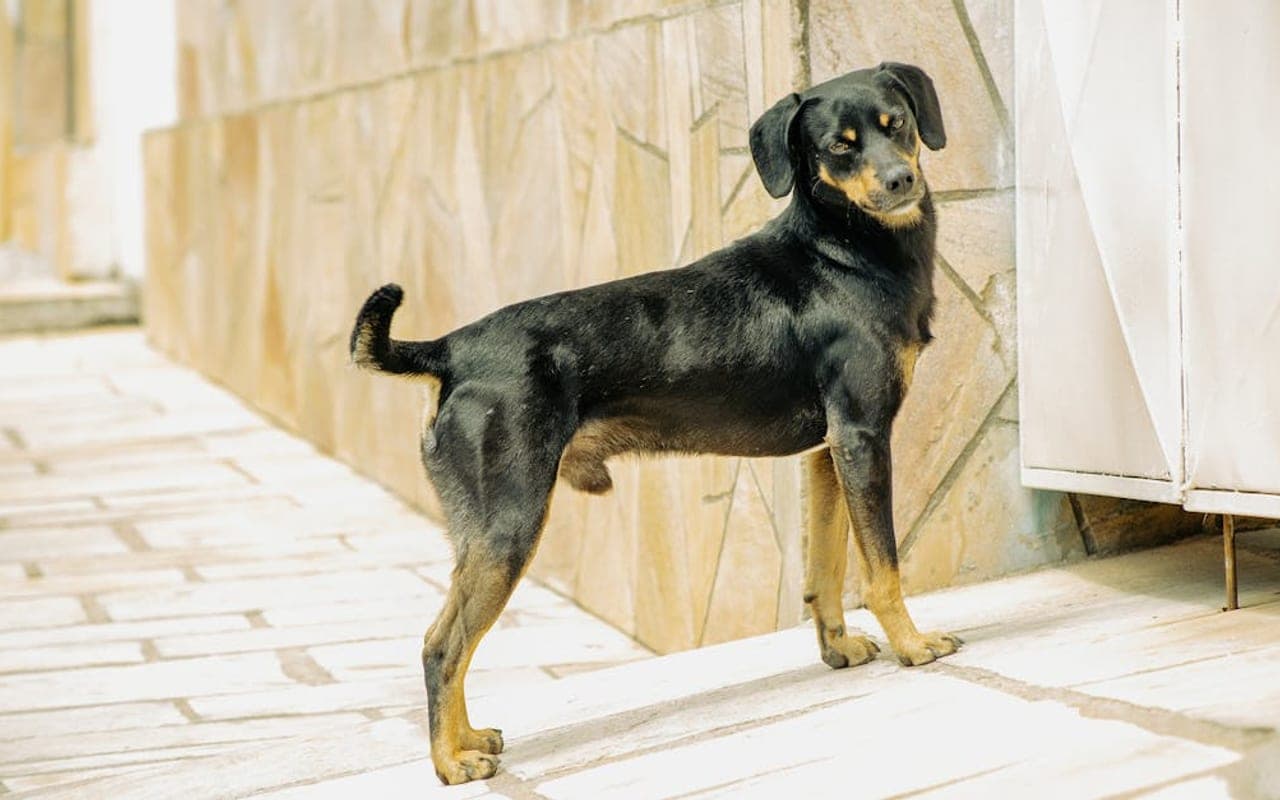
German Pinscher Care Guide
The German Pinscher is a medium-sized working dog — roughly 17 to 20 inches at the shoulder and 25 to 45 pounds, with a lifespan of about 12 to 14 years, per PetMD's veterinary breed profile. The shor
In This Guide
Overview
The German Pinscher is a medium-sized working dog — roughly 17 to 20 inches at the shoulder and 25 to 45 pounds, with a lifespan of about 12 to 14 years, per PetMD's veterinary breed profile. The short, wash-and-wear coat makes this look like a low-effort breed. It is not. The thing most new owners underestimate is the engine underneath: this is an original rat-catcher, bred to work independently and hunt small, fast-moving animals, and both traits show up every single day.
Two consequences follow. First, the prey drive is real, so off-leash recall near squirrels, cats, or small dogs is unreliable and a secure fenced yard is not optional — PetMD calls a fence essential for this breed. Second, the same intelligence that makes the German Pinscher quick to learn also makes it quick to decide your instruction is negotiable; the independent streak turns training into a genuine project rather than a weekend chore. A German Pinscher who is under-worked does not sulk quietly. It redecorates, barks, and looks for a way over the fence.
This guide covers care that is specific to owning one. It does not repeat the breed's history or how to choose a puppy — those live on the German Pinscher breed page; for care guides on other breeds, see the care guide library.
Daily Care
Daily care for a German Pinscher is mostly about direction, not maintenance. This is a lively, highly intelligent dog that is eager to please but carries an independent streak, so training has to be consistent to stick (PetMD). The difficulty is not that the breed is slow — it is that a clever dog with its own opinions will test an inconsistent handler. Short, positive, daily training sessions beat occasional long ones, and early, ongoing socialization tempers the alert, terrier-edged temperament into good manners around people and other animals.
Build the day around a predictable rhythm: a morning workout, a mental task or training block, and calm downtime. Fold enrichment into ordinary moments — a puzzle feeder at breakfast, a short scent game, a new trick — because for this breed a job is a welfare need, not a luxury. And make containment genuinely secure every day: a bored, driven German Pinscher will find the weak point in a fence or gate, so the fence is part of daily care, not a one-time purchase.
Nutrition
Feed to the dog in front of you, not to the number on the bag. The single most useful skill is scoring body condition — a measure of fat stores your veterinarian assesses at every visit and you can learn to check at home (WSAVA). You want to feel the ribs under a thin cover, see a waist from above, and see a tuck from the side; when those disappear, cut the ration before the weight settles on the joints.
Measured meals matter more here than portion size alone. Recall the feeding study above: controlled meals roughly halved the rate of hip dysplasia in growing puppies compared with free-feeding (VCA). So skip the always-full bowl. Feed a puppy several small measured meals a day and an adult two meals a day (PetMD), weigh or measure the food rather than free-pouring, and keep treats to a small share of daily calories. A lean German Pinscher is not a cosmetic goal — it is the cheapest orthopedic protection you can buy, and WSAVA's body-condition and diet-history tools give you a repeatable way to hold the line.
Exercise
This is where German Pinscher ownership is won or lost. The breed needs vigorous daily exercise plus mental work — brisk walks, real play, and problem-solving toys or training — not a single stroll around the block (PetMD). Budget a genuine hour a day across two or more sessions for a healthy adult, and treat the mental half as non-negotiable: a smart working dog that gets its body tired but not its brain is still a bored dog.
The failure mode is specific and predictable. An under-exercised German Pinscher becomes destructive, vocal, and an accomplished escape artist, which is exactly why the fenced yard matters. Because the prey drive is strong, keep the dog on a long line in open areas and rely on secure fencing rather than a reliable recall around small animals (PetMD). One caution during growth: keep a puppy off repetitive high-impact activity like long jumps and hard landings, because that load feeds the joint disease above (VCA).
Grooming
The German Pinscher's coat is the easiest thing about the breed. It is short, dense, and smooth, and a weekly brush with a bristle brush or grooming mitt — five to ten minutes — lifts the dead hair and keeps it shining (PetMD). Baths are occasional, roughly every six to eight weeks or when the dog is actually dirty, using a gentle shampoo (PetMD). Over-bathing a short coat like this strips the skin oils for no benefit.
Do not let the low coat workload fool you into skipping the unglamorous basics. Trim nails about monthly, check the ears weekly for redness, debris, or odor that signal infection, and brush the teeth regularly. On a working dog that spends its day moving, an overgrown nail or an untreated ear is a functional problem, not a cosmetic one.
Health
Start with an honest limit: there is no large-scale, breed-wide prevalence study that tells you how often these conditions occur in German Pinschers specifically. What is documented is which hereditary concerns are recognized in the breed — named in PetMD's DVM-authored profile — and what the underlying conditions do. Ranked by how much your decisions move the outcome:
- Von Willebrand disease (Type I). PetMD lists von Willebrand disease as a hereditary concern in the German Pinscher. It is the most common inherited bleeding disorder in dogs: a deficiency of von Willebrand factor, the protein that helps platelets stick together and seal broken vessels, so affected dogs have normal platelets but cannot clot properly (VCA). Many dogs never show a sign; others bleed from the nose, gums, or urine, and — the reason this matters most — bleed dangerously after trauma or surgery (VCA). Per Cornell, Type I is recessively inherited, so a DNA test on the parents tells you the risk before you ever have a puppy. The practical move: know your dog's status before any surgery, including a routine spay or neuter, so your veterinarian can plan for it (a bleeding-time test, desmopressin or plasma on hand) and avoid drugs like NSAIDs that worsen bleeding (Cornell, VCA).
- Hip dysplasia. PetMD names hip dysplasia as a breed concern. It is a deformity that develops when the ball and socket of the hip grow at unequal rates, leaving a loose joint that grinds into arthritis (VCA). Genetics load the gun, but growth and weight pull the trigger — and here is a number worth remembering: in a controlled study VCA cites, puppies fed as much as they wanted developed hip dysplasia about two-thirds of the time, versus only about one-third when fed measured meals. You cannot change the genes, but you can feed to a lean body condition, keep a growing puppy off high-impact jumping, and hold adult weight down for life (VCA).
- Inherited eye disease. PetMD lists both cataracts and corneal dystrophy in the German Pinscher. A cataract is an increasing opacity of the lens; the most common cause in dogs is inherited disease, and while a small cataract barely affects sight, vision impairment becomes apparent around 60% opacity and a fully opaque lens means blindness in that eye — cataracts can be surgically removed to restore vision (VCA). Corneal dystrophy, per PetMD, is an inherited condition in which crystals form on the cornea and there is no treatment. Watch a young dog for cloudiness or bumping into things and raise it with your veterinarian early; an annual eye check is cheap insurance for a breed with two documented eye concerns.
This is general information, not a diagnosis. Always consult your veterinarian for medical decisions about your dog.
Costs
Budget for a German Pinscher in three layers. The first is the ordinary running cost of a medium, active dog — quality food, routine veterinary visits, parasite prevention, nails and dental care. The second is this breed's specific screening: a von Willebrand DNA or bleeding-time test so surgery is planned safely, and regular eye checks given the documented cataract and corneal-dystrophy risk. Ask a breeder whether the parents were screened for hips, eyes, and von Willebrand disease before you take a puppy.
The third layer is the one owners skip and regret: cover for the unexpected, whether that is pet insurance or a savings buffer you set up before you need it. Hip-disease surgery, and the careful surgical planning a clotting disorder demands, are exactly the sort of bills this breed's health profile points to and exactly the sort that arrive without warning. The preventive spending — measured feeding to hold a lean weight, early screening, annual eye and dental checks — is money that buys down those larger bills before they land.
Frequently Asked Questions
How big does a German Pinscher get?
The German Pinscher is a medium-sized working dog, roughly 17 to 20 inches at the shoulder and 25 to 45 pounds, with a lifespan of about 12 to 14 years per PetMD's veterinary breed profile. Despite the short, wash-and-wear coat that makes it look low-effort, it is an original rat-catcher bred to work independently and hunt small, fast-moving animals. Both the prey drive and the independent streak show up every single day.
How much exercise does a German Pinscher need?
The breed needs vigorous daily exercise plus mental work, not a single stroll around the block. Budget a genuine hour a day across two or more sessions for a healthy adult, and treat the mental half as non-negotiable, since a smart working dog that gets its body tired but not its brain is still bored. An under-exercised German Pinscher becomes destructive, vocal, and an accomplished escape artist, which is why a secure fenced yard matters. During growth, keep a puppy off repetitive high-impact activity like long jumps and hard landings.
Is a German Pinscher easy to train?
It is a lively, highly intelligent dog that is eager to please but carries an independent streak, so training has to be consistent to stick. The difficulty is not that the breed is slow; a clever dog with its own opinions will test an inconsistent handler and decide your instruction is negotiable. Short, positive, daily training sessions beat occasional long ones, and early, ongoing socialization tempers the alert, terrier-edged temperament into good manners around people and other animals.
What are the main health concerns in German Pinschers?
There is no large-scale breed-wide prevalence study, but PetMD's profile names several recognized hereditary concerns. Von Willebrand disease Type I, the most common inherited bleeding disorder in dogs, matters most because affected dogs can bleed dangerously after trauma or surgery, so knowing your dog's status before any surgery lets your vet plan for it. Hip dysplasia is also named, along with inherited eye disease including cataracts and corneal dystrophy, making an annual eye check cheap insurance for the breed.
How much grooming does a German Pinscher's coat need?
The coat is the easiest thing about the breed. It is short, dense, and smooth, and a weekly brush with a bristle brush or grooming mitt for five to ten minutes lifts the dead hair and keeps it shining. Baths are occasional, roughly every six to eight weeks or when the dog is actually dirty, since over-bathing a short coat strips the skin oils for no benefit. Do not skip the basics, though: trim nails about monthly, check the ears weekly, and brush the teeth regularly.
Sources
This guide draws on the following published references. Each opens in a new tab so you can check it against what you have read here.
PetMD (veterinary
PetMD (veterinary-reviewed; author Georgina Ushi, DVM) — *German Pinscher Dog Breed Health and Care* (breed size 17–20 in / 25–45 lb, lifespan 12–14 years; hip dysplasia, cataracts, corneal dystrophy and von Willebrand disease named as breed concerns; grooming, exercise and feeding guidance)(opens in a new tab)VCA Animal Hospitals
VCA Animal Hospitals — *Von Willebrand's Disease in Dogs* (deficiency of von Willebrand factor; platelets cannot attach; clinical signs; prolonged bleeding after surgery; bleeding-time testing before spay/neuter)(opens in a new tab)Cornell University College of Veterinary Medicine, Riney Canine Health Center
Cornell University College of Veterinary Medicine, Riney Canine Health Center — *Von Willebrand Disease* (most common inherited canine bleeding disorder; Type I recessively inherited; pre-surgical management with desmopressin/plasma; avoid NSAIDs)(opens in a new tab)VCA Animal Hospitals
VCA Animal Hospitals — *Hip Dysplasia in Dogs* (unequal growth of ball and socket; genetic disease modified by diet/growth/exercise; free-fed vs measured-meal puppy study ~two-thirds vs ~one-third; weight control and avoiding high-impact activity)(opens in a new tab)VCA Animal Hospitals
VCA Animal Hospitals — *Cataracts in Dogs* (opacity of the lens; most common cause is inherited disease; vision impairment around 60% opacity, blindness when complete; surgical removal restores vision)(opens in a new tab)World Small Animal Veterinary Association (WSAVA)
World Small Animal Veterinary Association (WSAVA) — *Global Nutrition Guidelines* (body condition score as a measure of fat stores assessed at every visit; muscle condition score, diet-history form and nutritional-assessment tools)(opens in a new tab)
Affiliate disclosure: We may earn a commission from qualifying purchases. This doesn't affect our recommendations.
Recommended Products
German Pinscher Care Guide Book
Breed-focused reading and owner references for German Pinscher care, training, grooming, and health planning.
German Pinscher Food and Supplies
Helpful supplies for german pinscher dog supplies routines at home.
German Pinscher Grooming Tools
Helpful supplies for german pinscher grooming tools routines at home.
Get personalized pet care tips
Join our newsletter for breed-specific advice, care guides, and expert tips delivered weekly.
No spam, ever. Unsubscribe anytime.