
Giant Schnauzer Care Guide
The Giant Schnauzer was built to work — first driving cattle, later serving in police and protection roles — and that job history sets the terms of ownership. This is a powerful, high-drive dog of rou
In This Guide
Overview
The Giant Schnauzer was built to work — first driving cattle, later serving in police and protection roles — and that job history sets the terms of ownership. This is a powerful, high-drive dog of roughly 55–85 lb with a mind that needs a task and a coat that needs genuine skill to keep. The warning most new owners underestimate: a Giant Schnauzer left under-exercised and under-occupied does not switch off and relax. It finds its own work — patrolling, guarding, chewing, barking at every arrival — almost never what you had in mind. PetMD's veterinary profile is blunt that these dogs "don't do well in apartments or in homes where people aren't home much."
Three things set this breed's care apart from other large dogs, each covered below: a working brain that has to be tired every day, a harsh wire coat that must be hand-stripped rather than shaved, and a deep-chested giant-breed frame that brings particular orthopedic and cancer risks. For the breed's origins, temperament background, and how to choose a puppy, see the Giant Schnauzer breed page; other breeds are covered in the care guide library. What follows is only the day-to-day and lifetime care that is particular to this dog.
Daily Care
The through-line of life with a Giant Schnauzer is structure. This is an intelligent, territorial guardian, and a dog wired that way does best when the day has a shape it can predict: set mealtimes, reliable exercise, training folded in, and clear rules about who comes and goes. Predictability quiets the background vigilance that otherwise runs all day in a guarding breed.
Socialization and handling stay on the daily list for life, not only through puppyhood — a powerful protection breed needs ongoing calm exposure to people, dogs, and new situations to stay reliable, and a few minutes of training a day is a safety investment, not a hobby. Pair that with a quick physical once-over: given the toe-cancer risk, check the feet and nails, clear debris from the beard, and note the skin and coat — where the hair changes that hint at thyroid trouble often show first. With a guardian this strong and this stoic, the problems you notice in a daily once-over are the ones that never get the chance to become serious ones.
Nutrition
Feeding a Giant Schnauzer is really two problems at two stages of life. In puppyhood, the aim is controlled growth. VCA Animal Hospitals explains that large and giant breed puppies "can grow quickly in just a few months," and if overfed "they will likely grow faster, and their skeleton may not grow at the same rate, leading to developmental orthopedic diseases." So a large-breed puppy formula with controlled calcium, portioned meals — VCA suggests "at least 4 small meals for puppies" — and a lean puppy build are what protect the joints described above. Overfeeding a giant puppy is not generosity; it is a skeletal risk.
In adulthood, hold the dog at a lean, steady weight; carrying excess load onto hips that may already be imperfect is one of the few arthritis accelerants an owner fully controls. Portion by measured amount rather than a topped-up bowl, and let body condition — not the label's serving guide — set the number: aim for a 4–5 on the 9-point body condition scale, meaning a visible waist and ribs easy to find by touch. Keep treats to a small share of the day's calories. And because of the bloat risk, split the ration across at least two calm sittings and avoid raised feeders and hard exercise around mealtimes.
Exercise
A Giant Schnauzer needs a genuine daily job, and the requirement is higher than casual owners assume. PetMD puts it at "at least 40-60 minutes of exercise and play every day," and for this breed that time has to work the mind as well as the body.
The failure mode is specific and repeatable. A Giant Schnauzer that does not get enough physical and mental work turns destructive and vocal: it will guard the house against the mail carrier, take apart whatever it can reach, and drill in habits hard to unwind later. Split the daily requirement deliberately — physical output through a brisk walk, a run, or structured fetch, and thinking work through obedience, scent games, trained tasks, or a puzzle feeder. Through the first year, keep the impact low, with no forced distance running or repetitive jumping on a still-growing giant-breed skeleton, while still working the brain hard.
Grooming
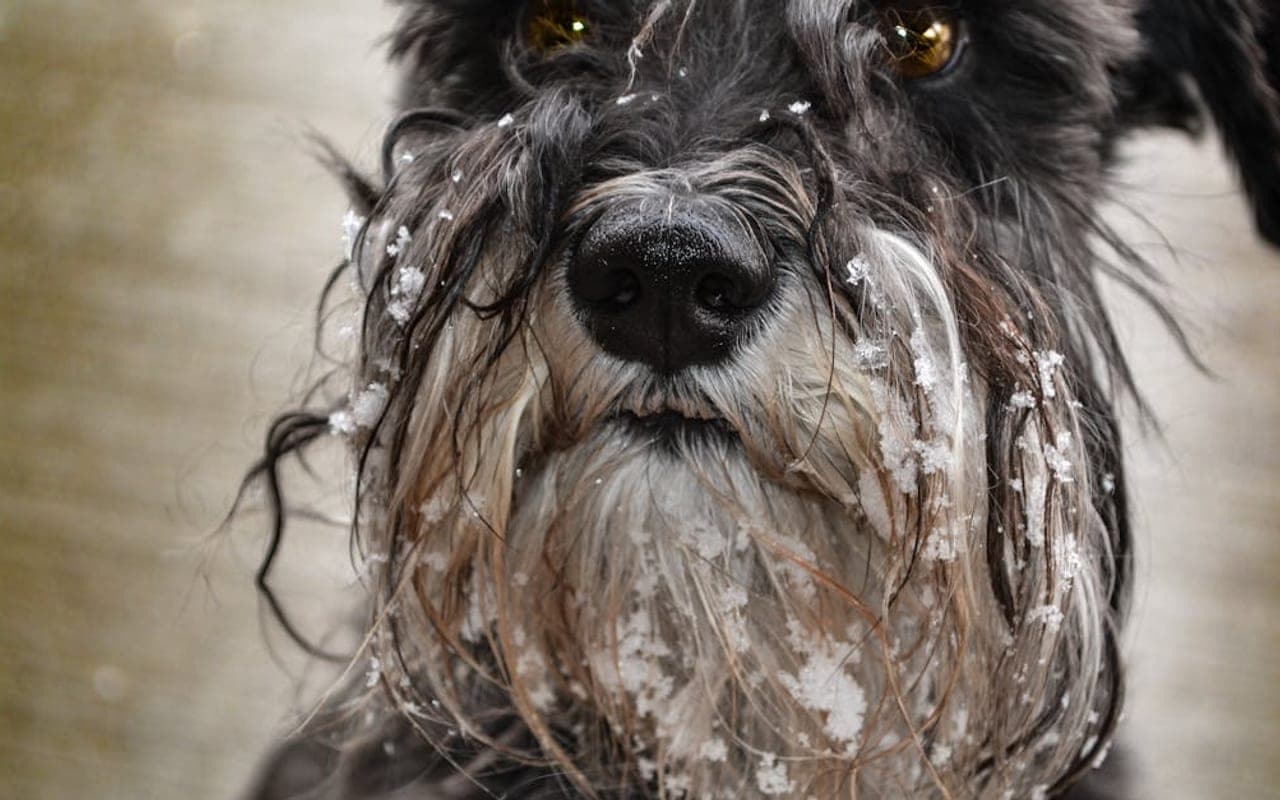
This is where the Giant Schnauzer asks more than most large dogs, and where the most expensive owner mistake gets made — at the groomer, not at home. The breed wears a wiry double coat: a harsh outer layer over a soft undercoat, finished with the signature beard and eyebrows. That harsh texture is functional, and it is preserved by pulling out dead hair, not by cutting it. PetMD is direct that "every few months, your dog will need to be professionally groomed, where the coat will be stripped out," and warns that "shaving or clipping the coat can damage the texture, leading to more matting."
Every owner eventually faces the same fork. Hand-stripping keeps the correct harsh texture and is the standard for coat health, but it is slow, skilled work, and groomers price it that way. Clipping is cheaper and quicker, yet over time it softens the coat — and a softened coat mats faster and loses its weather resistance, which is why a clipped Giant Schnauzer often needs more routine brushing, not less. Whichever route you take, the at-home work is fixed: brush the body a few times a week, and comb the beard and leg furnishings more often, because food, water, and mud gather there and knot up first. Plan on a professional session every few months regardless.
Health
The Giant Schnauzer carries one health risk that is close to a breed signature — and it is not the one most owners expect.
Squamous cell carcinoma of the toe (digital SCC). Of all dog breeds, the Giant Schnauzer has the strongest documented predisposition to cancer of the nail bed. A 2022 study in The Canadian Veterinary Journal reported an odds ratio of 56.7 for Giant Schnauzers developing subungual squamous cell carcinoma — the highest of any breed measured, well above Standard Schnauzers (20.3) or Rottweilers (7.0). A separate 2023 comparative study in Animals looked at 227 Giant Schnauzers with digital SCC and found the forelimbs affected 70% of the time, with an added predisposition in males. This turns into a simple daily habit: check the toes. A swollen digit, a lifted or missing nail, constant licking of one toe, or a sore that will not heal is not a minor nail problem in this breed — it warrants a veterinary exam and often a biopsy — catching this cancer while it sits on one digit keeps the treatment options open.
Hip dysplasia. Per PetMD's veterinary profile, "hip dysplasia is a developmental disease common in many large-breed dogs, including the Giant Schnauzer." The joint forms imperfectly, and the friction becomes arthritis over the years — sooner in a dog carrying extra weight. Two levers sit within your control: buy from parents with screened hips, and hold the dog at a lean weight for life so the joint is never loaded harder than it was built to bear. No breed-wide prevalence figure exists for hip dysplasia in Giant Schnauzers specifically, so treat "prone to it" as a reason to screen and monitor, not a measured rate.
Hypothyroidism. This breed is prone to an underactive thyroid, and the mechanism is worth knowing because it is autoimmune. VCA Animal Hospitals states that "lymphocytic thyroiditis is the most common cause of hypothyroidism and is thought to be an immune-mediated disease" — the dog's own immune system erodes the hormone-producing tissue. Watch for the cluster VCA describes: "weight gain without an increase in appetite," lethargy, and "dry, dull hair with excessive shedding," usually surfacing in middle age. The good news: it is manageable, not curable. VCA notes it "is treated with oral administration of thyroid replacement hormone," a daily tablet for the rest of the dog's life, after which most dogs return to normal.
Bloat (gastric dilatation-volvulus). As a deep-chested large breed, the Giant Schnauzer falls in the risk group for GDV, which Cornell's Riney Canine Health Center describes as "a life-threatening condition that occurs suddenly when the stomach fills with air, fluid, or food, becomes distended, and twists on itself." Learn the signs in advance: a bloated abdomen, "non-productive retching or attempting to vomit with no production," restlessness and pacing, and pale gums. This is a same-hour surgical crisis — Cornell is unambiguous that "without medical and surgical intervention, GDV is fatal." Prevention with evidence behind it: divide the daily food into several smaller meals, limit activity right after eating, and skip raised bowls, which Cornell now advises against. Ask your veterinarian whether a preventive gastropexy is worthwhile; Cornell reports it "reduces the risk of recurrence to as low as 3–5 percent."
Costs
Owning a Giant Schnauzer is a standing set of costs, not a single upfront number, and two of them run larger than new owners expect. The first is grooming: a coat that should be hand-stripped every few months by a skilled groomer is a recurring bill for the life of the dog, and skipping it degrades the coat rather than the cost. The second is food — feeding a dog of this frame a quality large-breed diet is a real monthly line, and it does not shrink with age.
Veterinary spending tracks the breed's specific risks. Budget for verified hip results from the breeder before you commit to a puppy, a conversation with your vet about preventive gastropexy given the bloat risk, and — importantly here — prompt work-up of any toe or nail abnormality, since digital squamous cell carcinoma is common enough here that biopsy and toe amputation are realistic line items, not remote ones. A giant patient also costs more for routine anesthesia, imaging, and hospitalization because of size. The spending that pays off best is preventive: screening, lean-weight feeding, dental care, and the standing grooming budget all cost far less than the joint disease or advanced cancer they help you avoid or catch early. A dedicated veterinary fund or insurance absorbs the shock of the emergencies this breed is prone to.
Frequently Asked Questions
How much exercise does a Giant Schnauzer need?
PetMD puts it at least 40 to 60 minutes of exercise and play every day, and for this breed that time has to work the mind as well as the body. Split the requirement between physical output like a brisk walk, run, or structured fetch and thinking work through obedience, scent games, trained tasks, or a puzzle feeder. A Giant Schnauzer that does not get enough physical and mental work turns destructive and vocal, guarding the house and taking apart whatever it can reach. Through the first year, keep the impact low with no forced distance running or repetitive jumping.
Why can't you shave a Giant Schnauzer's coat?
The breed wears a wiry double coat, a harsh outer layer over a soft undercoat, and that harsh texture is functional and preserved by pulling out dead hair rather than cutting it. PetMD warns that shaving or clipping the coat can damage the texture, leading to more matting; a softened, clipped coat mats faster and loses weather resistance. Every few months the dog needs professional grooming where the coat is stripped out. At home, brush the body a few times a week and comb the beard and leg furnishings more often, since food, water, and mud gather and knot there first.
What is the biggest health risk for a Giant Schnauzer?
Squamous cell carcinoma of the toe, or digital SCC, is close to a breed signature. Of all dog breeds, the Giant Schnauzer has the strongest documented predisposition to cancer of the nail bed, with a 2022 study reporting an odds ratio of 56.7, the highest of any breed measured. A 2023 study of 227 Giant Schnauzers found the forelimbs affected 70% of the time, with an added predisposition in males. This makes checking the toes a daily habit: a swollen digit, a lifted or missing nail, constant licking of one toe, or a sore that won't heal warrants a veterinary exam and often a biopsy.
Does a Giant Schnauzer do well in an apartment?
PetMD's veterinary profile is blunt that these dogs don't do well in apartments or in homes where people aren't home much. This is a powerful, high-drive working dog bred to drive cattle and later serve in police and protection roles, and a Giant Schnauzer left under-exercised and under-occupied finds its own work by patrolling, guarding, chewing, and barking at every arrival. Life with one is built on structure: set mealtimes, reliable exercise, training folded in, and clear rules about who comes and goes, which quiets the background vigilance that otherwise runs all day.
How should I feed a Giant Schnauzer to protect its joints?
Feeding is really two problems at two stages. In puppyhood the aim is controlled growth, because large and giant breed puppies can grow quickly and if overfed their skeleton may not keep pace, leading to developmental orthopedic diseases, so use a large-breed puppy formula with controlled calcium and portioned meals, at least 4 small meals for puppies. In adulthood, hold the dog at a lean, steady weight around 4 to 5 on the 9-point body condition scale. Because of bloat risk, split the ration across at least two calm sittings and avoid raised feeders and hard exercise around mealtimes.
Sources
This guide draws on the following published references. Each opens in a new tab so you can check it against what you have read here.
PetMD (veterinary
PetMD (veterinary-reviewed by Emily A. Fassbaugh, DVM) — *Giant Schnauzer Dog Breed Health and Care* (hip dysplasia in the breed; wiry double coat stripped every few months; shaving/clipping damages texture and increases matting; 40–60 minutes daily exercise; poor fit for apartments)(opens in a new tab)Aupperle
Aupperle-Lellbach H, Heidrich D, Conrad D, Beitzinger C, Masala N, Klopfleisch R, Müller T — *Comparative Study of Digital Squamous Cell Carcinoma in Giant, Standard, and Miniature Schnauzers*, *Animals* (Basel), 2023;13(12):1990 (227 Giant Schnauzers studied; forelimbs affected in ~70%; predisposit(opens in a new tab)Chiu O, Wilcock BP, Wilcock AE, Edwards AM
Chiu O, Wilcock BP, Wilcock AE, Edwards AM — *Breed predilections and prognosis for subungual squamous cell carcinoma in dogs*, *The Canadian Veterinary Journal*, 2022;63(11):1129–1134 (Giant Schnauzers odds ratio 56.7 — highest of the breeds measured; Standard Schnauzers 20.3; Rottweilers 7.0)(opens in a new tab)VCA Animal Hospitals
VCA Animal Hospitals — *Hypothyroidism in Dogs* (lymphocytic thyroiditis as the most common, immune-mediated cause; signs including weight gain without increased appetite, lethargy, dry dull coat with excessive shedding; lifelong oral thyroid-replacement treatment)(opens in a new tab)Cornell University College of Veterinary Medicine, Riney Canine Health Center
Cornell University College of Veterinary Medicine, Riney Canine Health Center — *Gastric Dilatation-Volvulus (GDV) or "Bloat"* (definition; deep-chested large breeds at highest risk; warning signs; fatal without surgery; smaller meals, limited post-meal activity, avoid raised bowls; gastropexy lower(opens in a new tab)VCA Animal Hospitals
VCA Animal Hospitals — *Nutritional Considerations for Large and Giant Breed Dogs* (rapid puppy growth and developmental orthopedic disease from overfeeding; controlled calcium; at least 4 small meals for puppies rather than free-feeding)(opens in a new tab)
Affiliate disclosure: We may earn a commission from qualifying purchases. This doesn't affect our recommendations.
Recommended Products
Giant Schnauzer Care Guide Book
Breed-focused reading and owner references for Giant Schnauzer care, training, grooming, and health planning.
Giant Schnauzer Food and Supplies
Helpful supplies for giant schnauzer dog supplies routines at home.
Giant Schnauzer Grooming Tools
Helpful supplies for giant schnauzer grooming tools routines at home.
Get personalized pet care tips
Join our newsletter for breed-specific advice, care guides, and expert tips delivered weekly.
No spam, ever. Unsubscribe anytime.