
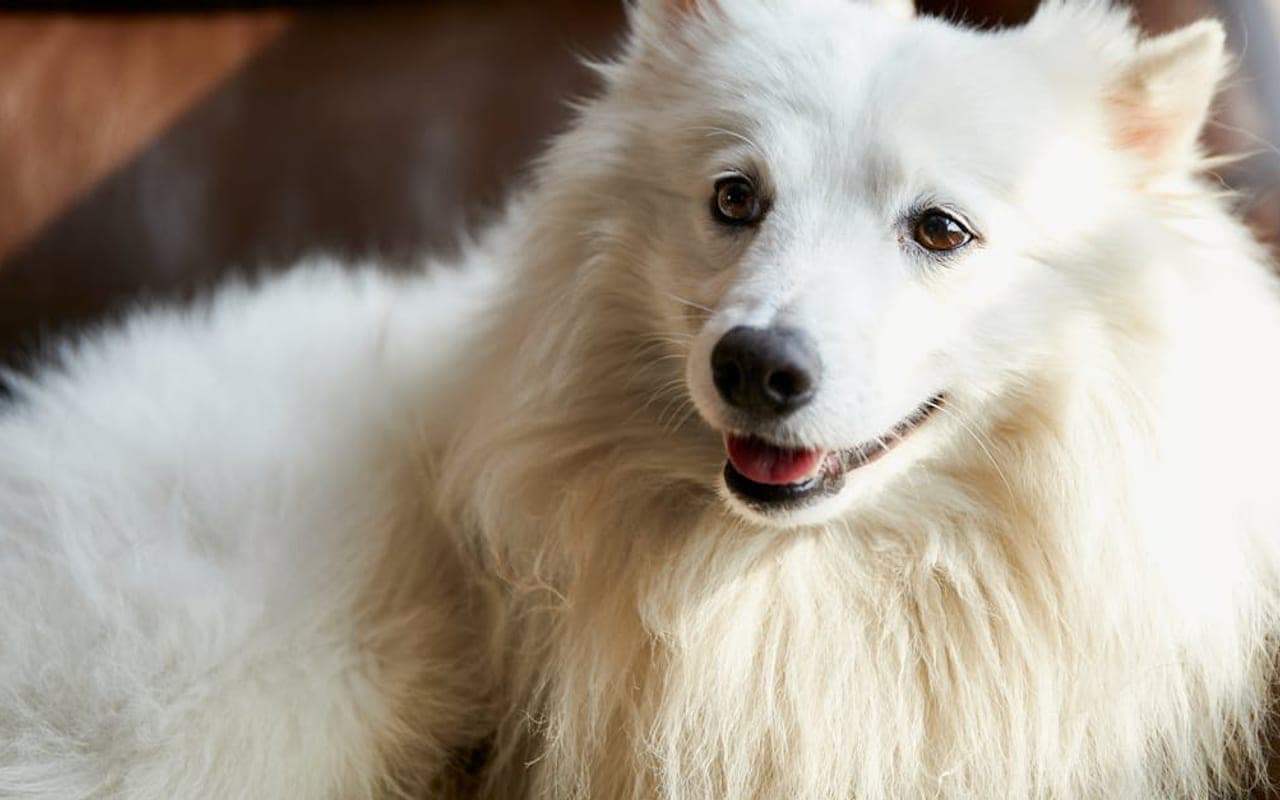
Japanese Spitz Care Guide
Owning a Japanese Spitz is easier than the dramatic white coat suggests, and that is the trap. People see a miniature Samoyed and brace for a grooming marathon; the real commitments sit elsewhere. Thi
In This Guide
Overview
Owning a Japanese Spitz is easier than the dramatic white coat suggests, and that is the trap. People see a miniature Samoyed and brace for a grooming marathon; the real commitments sit elsewhere. This is a small, bright, people-oriented companion that wants to be in the room with you, not left in a yard, and it will tell you loudly when it is bored. Plan for a dog that is emotionally high-maintenance and physically modest: daily company and a bit of training work matter more than mileage or a fancy clipping schedule.
Two things will shape most of your care decisions. The coat is a stand-off double coat that stays surprisingly clean day to day but blows out heavily twice a year, so your grooming effort is seasonal, not constant. And because this is a small breed, the health risks that matter are the small-dog risks — knees, teeth, and a handful of inherited conditions — rather than the big-breed joint and bloat problems. The sections below stay on care you actively deliver. For the breed's background, temperament in depth, size standard, and where the Japanese Spitz came from, use the Japanese Spitz breed page; to compare routines across other breeds, browse the care guide library.
Daily Care
Build the day around company and a couple of quick health habits, and this breed largely runs itself. The Japanese Spitz is genuinely people-focused and does not do well as a background dog; a predictable rhythm of walks, meals, play, and shared downtime keeps it settled and heads off the boredom barking that gets these dogs surrendered. If your household is empty ten hours a day with no plan for the dog, this is the wrong breed for you — an honest fit problem worth naming before you commit.
Beyond company, teeth and eyes are what you actually put on the schedule. Daily tooth brushing with a dog-formulated paste is the single most effective defense against the early dental disease this breed is prone to (VCA); a few minutes a day now prevents extractions later. And because the coat is bright white, tear staining and eye discharge show immediately, so a quick daily wipe of the eye area keeps staining down and lets you spot a squint or a weepy eye early. Fold both into a short evening once-over — teeth, eyes, ears, feet — and problems surface while they are still small.
Nutrition
Feed a quality complete diet formulated for small breeds and, once your dog matures, move it off puppy food to a lower-calorie adult formula around a year of age to head off creeping weight gain (PetMD). Portion by body condition, not by the number on the bag, because bag charts assume an average dog and this breed's fluffy outline hides real weight change well. The check that matters: run your hands down the flank and you should locate each rib with light pressure, and looking down at your standing dog the body should pull in behind the ribcage into a clear waist. The WSAVA nutrition guidelines use exactly this hands-on body-condition check that your vet performs at every visit; a 4 to 5 on the 9-point scale is the target.
Meal timing has a small-breed wrinkle. Adults do well on two meals a day, morning and evening, but young puppies should be fed three times daily, because very small pups can drop into hypoglycemia if meals are spaced too far apart (PetMD). Keep treats to a small slice of daily calories — on a dog this size, a few extra biscuits is a meaningful fraction of the day's intake, and every spare pound lands on knees that are already the breed's weak point.
Exercise
This is a moderate-energy companion, not an endurance athlete. Roughly 30 to 60 minutes of activity a day covers a healthy adult (PetMD) — a couple of walks, some fetch, and a bit of off-lead play in a secure space. The joints tolerate normal small-dog activity well; the thing to respect is the knees, so let the dog set the pace and don't force repetitive high-impact jumping, especially on and off furniture.
Where this breed gets people into trouble is mental, not physical. A Japanese Spitz that is under-stimulated and left alone too long does not get calmer — it gets vocal and clingy, and nuisance barking is the classic complaint. Short training sessions, food puzzles, and including the dog in household life do as much as a second walk. Treat the daily walk as the floor and the mental work as the part that actually keeps the peace.
Grooming
The good news first: for most of the year this coat is low-effort. The Japanese Spitz has an outer coat that repels dirt as it dries, so a muddy dog often looks presentable again within hours and rarely smells "doggy." A thorough brush once or twice a week keeps the standing coat healthy and lifts loose hair before it mats behind the ears and in the trousers on the back legs.
Then twice a year the bill comes due. This breed blows its undercoat in heavy seasonal molts, and during those weeks you are brushing daily with an undercoat rake to clear the dead fluff before it packs against the skin. Skip it and you get matting and skin irritation, not just tumbleweeds on the floor. Bathe only when genuinely needed — over-bathing strips the coat's self-cleaning quality. Round out the routine with nail trims every few weeks and regular tooth brushing, which for this breed is medical care, not grooming polish.
Health
Start with an honest limitation: the Japanese Spitz is uncommon, and there is no breed-wide prevalence study telling you how often any single disorder strikes it. What exists is solid data on the risks that concentrate in small dogs generally, plus a short list of inherited conditions documented specifically in this breed. Both are more useful than the vague "generally healthy" line most profiles stop at.
Luxating patella (slipping kneecap) is the risk to watch. In a study of 210,824 dogs at English veterinary practices, patellar luxation was diagnosed in 1.30% of dogs overall — but it clusters hard in small breeds, and dogs under 10 kg carried 2.4 times the odds of dogs in the 10–20 kg range (PMC). The Japanese Spitz sits squarely in that under-10-kg group. Its closest relative on the list, the Pomeranian, had the single highest rate measured at 6.5%. The tell is a brief "skipping" hitch: a hind leg lifts for a step or two, then the dog carries on as if nothing happened (Cornell, VCA). Grades run 1 to 4; mild cases are managed with lean body weight, joint supplements, and controlled exercise, while severe or persistently lame knees may need surgery (Cornell). Keeping this dog slim is the cheapest thing you can do for its knees.
Dental disease arrives early and is nearly universal in small dogs. More than 80% of dogs over three years old already have active dental disease, and small breeds are hit hardest because a normal set of teeth is crowded into a small jaw (VCA). PetMD's veterinary profile notes the Japanese Spitz specifically tends to build up calculus and gingivitis young. Untreated, this is not just bad breath — it progresses to painful gums, loose teeth, and infection. Home brushing is the intervention that actually works (see daily care).
A few inherited conditions are documented in the breed. Per PetMD's DVM-reviewed profile, the Japanese Spitz can carry muscular dystrophy, with affected puppies typically showing signs at 10 to 12 weeks of age, and Factor VII deficiency, an inherited clotting disorder. These are uncommon and largely a breeder-screening issue rather than something you manage day to day, but they are worth asking a breeder about directly and worth flagging to your vet if a young puppy tires or bleeds abnormally.
This is general information, not a diagnosis. Always talk to your veterinarian about medical decisions for your dog.
Costs
The predictable spending on a Japanese Spitz is modest by dog standards: a small dog eats small portions, and its low routine grooming means you can maintain the coat at home if you learn to handle the seasonal molt. Budget for the ordinary line items — quality small-breed food, annual veterinary visits, vaccines, parasite prevention, and dental supplies you will use daily.
Where the money can spike is the knees and the mouth. A grade 3 or 4 patellar luxation that needs surgical correction is a four-figure procedure, and neglected dental disease turns into extractions and anesthesia that dwarf the cost of a toothbrush and a tube of paste. Both are the specific reasons to keep this dog lean, brush its teeth, and set aside a dedicated veterinary fund or carry insurance from the start. Preventive spending here is not optional polish — it is the cheapest version of care this breed will ever get.
Frequently Asked Questions
Is the Japanese Spitz a good companion for a busy household that is out all day?
No. The Japanese Spitz is genuinely people-focused and does not do well as a background dog; it wants to be in the room with you and will tell you loudly when it is bored. A household empty ten hours a day with no plan for the dog is an honest fit problem, because under-stimulation leads to the nuisance barking that gets these dogs surrendered. Plan for a dog that is emotionally high-maintenance rather than physically demanding.
How much grooming and shedding should I expect from a Japanese Spitz?
For most of the year the coat is low-effort: the outer coat repels dirt as it dries, so a muddy dog often looks presentable within hours, and a thorough brush once or twice a week keeps it healthy. Twice a year, though, the breed blows its undercoat in heavy seasonal molts, and during those weeks you brush daily with an undercoat rake. Bathe only when genuinely needed, since over-bathing strips the coat's self-cleaning quality.
How much exercise does a Japanese Spitz need?
It is a moderate-energy companion, not an endurance athlete, and roughly 30 to 60 minutes of activity a day covers a healthy adult. The joints tolerate normal small-dog activity, but respect the knees by not forcing repetitive high-impact jumping on and off furniture. The bigger issue is mental: short training sessions, food puzzles, and including the dog in household life do as much as a second walk to prevent vocal, clingy behavior.
What health problems is the Japanese Spitz prone to?
The risk to watch is luxating patella (slipping kneecap), which clusters in small breeds; dogs under 10 kg, where the Japanese Spitz sits, carry 2.4 times the odds of dogs in the 10 to 20 kg range. Dental disease also arrives early, since more than 80% of dogs over three already have active dental disease and small crowded jaws are hit hardest. PetMD also documents muscular dystrophy, with signs typically at 10 to 12 weeks, and Factor VII deficiency, an inherited clotting disorder.
What should I feed a Japanese Spitz?
Feed a quality complete diet formulated for small breeds, and around a year of age move the dog off puppy food to a lower-calorie adult formula to head off creeping weight gain. Adults do well on two meals a day, but young puppies should be fed three times daily, because very small pups can drop into hypoglycemia if meals are spaced too far apart. Portion by body condition rather than the bag, since the fluffy outline hides real weight change and every spare pound lands on the knees.
Sources
This guide draws on the following published references. Each opens in a new tab so you can check it against what you have read here.
PetMD (veterinary
PetMD (veterinary-reviewed by Michelle Diener, DVM) — *Japanese Spitz Dog Breed Health and Care* (patellar luxation, muscular dystrophy with signs at 10–12 weeks, Factor VII deficiency, early dental calculus/gingivitis, low seasonal grooming, 30–60 min exercise/day, 10–14 year lifespan, adult twice-(opens in a new tab)O'Neill DG, et al.
O'Neill DG, et al. — *The epidemiology of patellar luxation in dogs attending primary-care veterinary practices in England* (Canine Genetics and Epidemiology; overall prevalence 1.30% across 210,824 dogs; Pomeranian 6.5%; dogs <10 kg carry 2.4× the odds; median age at diagnosis 4.0 years)(opens in a new tab)Cornell University College of Veterinary Medicine, Riney Canine Health Center
Cornell University College of Veterinary Medicine, Riney Canine Health Center — *Patellar Luxation* (more common in small breeds, skipping gait, grades 1–4, conservative vs surgical treatment)(opens in a new tab)VCA Animal Hospitals
VCA Animal Hospitals — *Luxating Patella in Dogs* (intermittent skipping lameness, grade 1–4 assessment, conservative management including maintaining ideal weight)(opens in a new tab)VCA Animal Hospitals
VCA Animal Hospitals — *Dental Disease in Dogs* (over 80% of dogs over age three have active dental disease; small breeds more prone due to small jaw and crowded teeth; daily tooth brushing as best prevention)(opens in a new tab)WSAVA
WSAVA — *Global Nutrition Guidelines / Body Condition Score tools* (nutritional assessment at every visit; body condition score as a measure of fat stores; ideal 4–5 on the 9-point scale; obesity a growing problem)(opens in a new tab)
Affiliate disclosure: We may earn a commission from qualifying purchases. This doesn't affect our recommendations.
Recommended Products
Japanese Spitz Care Guide Book
Breed-focused reading and owner references for Japanese Spitz care, training, grooming, and health planning.
Japanese Spitz Food and Supplies
Helpful supplies for japanese spitz dog supplies routines at home.
Japanese Spitz Grooming Tools
Helpful supplies for japanese spitz grooming tools routines at home.
Get personalized pet care tips
Join our newsletter for breed-specific advice, care guides, and expert tips delivered weekly.
No spam, ever. Unsubscribe anytime.