
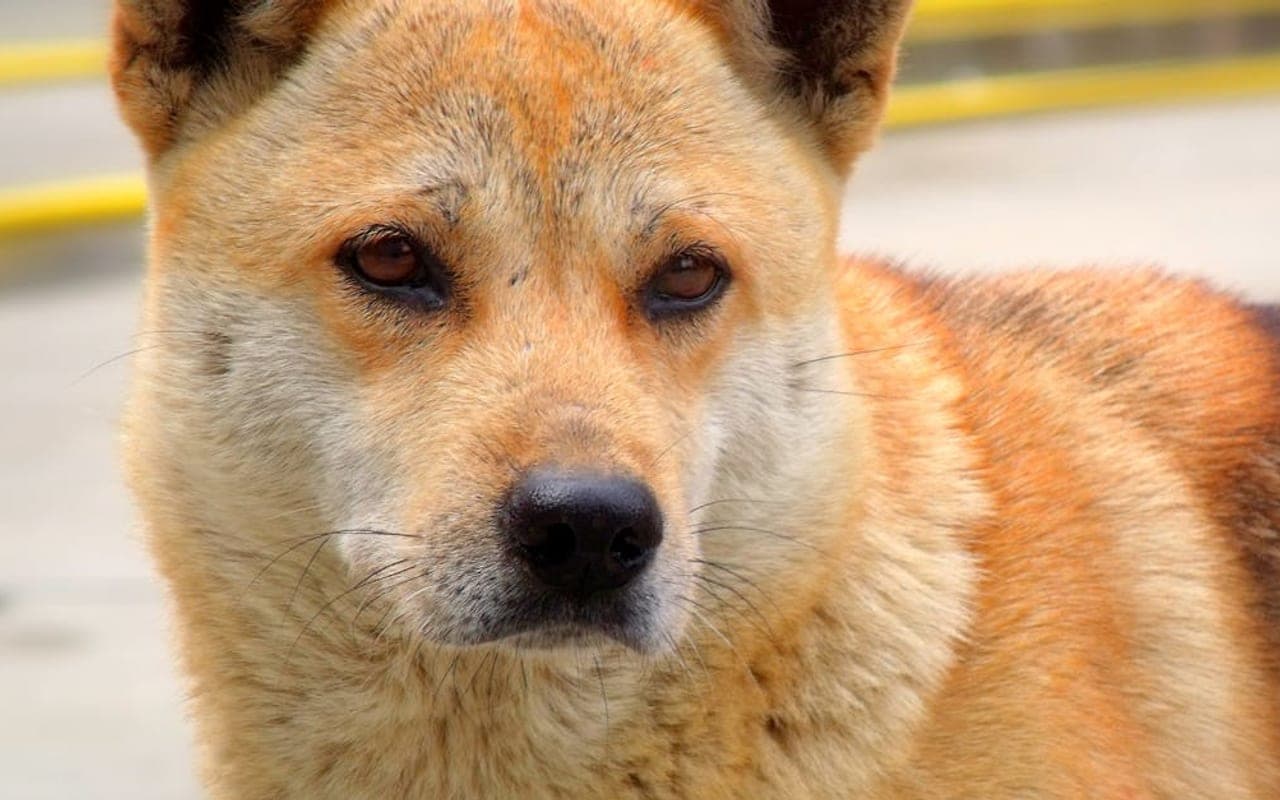
Jindo Care Guide
Caring for a Jindo means caring for a hunting dog that was never bred to defer to a handler. The breed is a landrace from Jindo Island in South Korea, shaped by generations of catching game and guardi
In This Guide
Overview
Caring for a Jindo means caring for a hunting dog that was never bred to defer to a handler. The breed is a landrace from Jindo Island in South Korea, shaped by generations of catching game and guarding a home rather than by a written standard, and that origin sets the whole care routine. Expect a clean, self-sufficient dog that PetMD describes as "alert, courageous, and loyal," is "inherently suspicious" of outsiders, and often attaches to a single person. Expect, too, a dog whose recall you cannot rely on outdoors, because the same source notes that "hunting and sporting breeds, such as the Jindo, have strong prey drives that can go beyond play."
New owners tend to underestimate two things. One is containment: a dog this driven to chase reads a fence and a gate as an obstacle to work around, so secure, escape-proof boundaries are a daily requirement, not a one-time purchase. The other is how thin the breed's medical record is, covered below — there is far less breed-specific evidence for the Jindo than for a popular pedigree, so good care leans on close observation rather than a checklist of known odds. This guide stays on the practical care of the dog you already have. For the breed's background, appearance, and origins, see the Jindo breed page; for guides to other breeds, browse the care guide library.
Daily Care
The daily rhythm that suits a Jindo is built around its temperament, not against it. This is a "one-person" dog, in PetMD's words, that is "inherently suspicious" of strangers — wonderful loyalty, but it means the wider world has to be introduced deliberately and repeatedly. Make calm, positive exposure to new people, dogs, and places a standing part of the routine well past puppyhood; a Jindo that meets the world only rarely tends to decide the world is a threat.
Training asks for a particular kind of patience. An independent hunting breed does not work for praise the way a biddable retriever does, so short, motivating, reward-based sessions beat long drills, and recall in particular should be built early and never fully trusted around live prey. Containment is the other daily non-negotiable: check that gates latch, fences have no gaps at the bottom, and the yard offers nothing to launch from, because a determined Jindo will test every one of those. Introduce visitors on the dog's terms rather than through an open front door. On a dog this loyal and this driven, everyday structure is what turns a strong-willed hunter into a steady housemate.
Nutrition
Feed a Jindo to hold a lean, athletic build, and let the dog's body — not the number on the bag — set the portion. Run your hands over the ribs weekly: they should be simple to find under a little covering, with a clear tuck at the waist when you look down from above. If that outline softens, trim the daily ration, treats included, before extra weight settles in.
Weight watching earns its keep in this breed for a specific reason. Because unexplained weight gain is an early sign of the hypothyroidism the parent club flags, a Jindo that starts rounding out despite steady meals is telling you something — pair the diet adjustment with a vet visit rather than assuming it is only calories. Split the day's food into two measured meals rather than leaving a bowl down, which keeps portions honest and gives you a daily read on appetite. Any diet change should be gradual, over about a week, to spare the stomach.
Exercise
A Jindo is not a low-energy apartment dog dressed up as one. PetMD is blunt that the breed is "unlikely to be content with a couple of short walks a day" and "does best when they can join active families who spend a lot of time outdoors." Plan on real daily exercise — brisk walks, hikes, structured play — plus problem-solving to occupy an intelligent hunting mind.
The catch is the prey drive, and it governs how you exercise this dog. Because the chase instinct "can go beyond play" (PetMD), off-leash freedom in an unfenced space is a genuine risk: a squirrel, a cat, or a jogging deer can pull a Jindo across a road before recall registers. Use a long line in open areas and reserve true off-leash running for a securely fenced space you trust. The failure mode when a Jindo is under-exercised and under-stimulated is not merely a restless dog — it is a bored escape artist that turns its intelligence toward the fence, the latch, or the dug hole under the gate. Physical work and mental work together are what keep that from happening.
Grooming
The Jindo wears a double coat: a coarse outer layer of guard hairs over a soft, insulating underlayer. Day to day it is low effort. PetMD notes Jindos "keep themselves very clean, shed moderately, and can usually get by on being brushed once or twice a week," and the breed's cat-like tidiness means baths are infrequent.
The exception is the seasonal coat change, and it is dramatic. A veterinary dermatology practice explains that "dogs with double coats typically shed during the spring and fall to adjust to upcoming temperatures," dropping the dense underlayer in bulk over a few weeks. During these blows the once-or-twice-a-week routine is not enough; you will need an undercoat rake most days to clear the loosened wool before it packs into mats against the skin, where it traps moisture and invites irritation. Do not solve a heavy shed by shaving the dog down. As the American Kennel Club's grooming guidance puts it, shaving "does damage the topcoat and can increase the chances of skin issues or sunburn," and it strips the undercoat "that insulates the dog in winter, keeps their skin dry, and allows room for air to reach the skin." The right tools are a slicker brush, a comb, and an undercoat rake — not clippers. Round out grooming with the unglamorous basics: nails trimmed every few weeks, ears checked weekly, teeth brushed daily.
Health
Start with what is genuinely unknown. The Korean Jindo Dog Association of America, the breed's parent club in the United States, does not point to a formal breed-wide health survey or peer-reviewed prevalence study for the Jindo, and it cautions that even the Embark DNA markers reported in some dogs "still need to be validated on Korean Jindo Dogs to rule out false positives." So no honest guide can tell you the percentage of Jindos affected by a given disease. What follows is what the parent club and a veterinarian-reviewed profile actually name, plus the general canine problems that reach any dog.
Two conditions are named by both the parent club and PetMD's veterinarian-reviewed profile. The first is hypothyroidism, an underactive thyroid gland. VCA Animal Hospitals defines it as "a condition of inadequate thyroid hormone levels that leads to a reduction in a dog's metabolic state," and notes it "generally affects middle-aged dogs (average of 6–7 years of age)." Watch for the pattern VCA lists: "weight gain without an increase in appetite," "lethargy (tiredness) and lack of desire to exercise," and "dry, dull hair with excessive shedding." The parent club adds a Jindo-specific wrinkle worth knowing — in this breed hypothyroidism "tends to manifest itself with aggression and poor skin and coat," so a formerly steady dog turning short-tempered deserves a thyroid blood test, not a training program alone. The condition is manageable but permanent: per VCA, "this drug must be given for the rest of the dog's life," with monitoring bloodwork roughly twice a year.
The second named condition is discoid lupus erythematosus (DLE), which VCA calls "an autoimmune disease that affects the skin." Affected dogs "typically develop erosions, ulcers, and de-pigmented areas (light discoloration of the skin) around the nose," and — the practical part for owners — "ultraviolet (UV) light appears to worsen DLE and the condition is more common in sunny climates." If your Jindo develops crusting or a loss of that pebbled black texture on the nose, get it looked at, and in the meantime limit midday sun on the muzzle. The parent club lists allergies, seizures, and luxated patella as problems it has seen but does not yet count as confirmed breed issues; treat that list as a reason to mention early signs to your vet, not as a diagnosis.
Then there is the problem no breed escapes: dental disease. VCA reports that "over 80% of dogs over the age of three have active dental disease," driven by plaque that "thickens and mineralizes, resulting in tartar." A Jindo's clean, low-odor reputation can hide gum disease building under the gumline, so keep to the same defense VCA recommends for any dog — "daily tooth brushing using a toothpaste that is specifically formulated for dogs." This is general information, not a diagnosis; your veterinarian should make the medical calls for your individual dog.
Costs
Budget for a Jindo around the routine of an active, generally hardy dog, with a few line items this breed makes more likely. The predictable ongoing costs are the same for most medium dogs: quality food, annual wellness visits, parasite prevention, and the grooming tools to get through two heavy coat blows a year — an undercoat rake and a slicker brush earn their place.
Plan also for the costs tied to what this breed actually faces. If a Jindo develops hypothyroidism, treatment is lifelong daily medication plus monitoring bloodwork about twice a year (VCA), so it becomes a permanent, if modest, recurring expense rather than a one-off. Skin conditions such as DLE can mean dermatology workups and ongoing management. Dental care is not optional given how common gum disease is in dogs over three (VCA), so factor in home brushing supplies and periodic professional cleanings under anesthesia. And treat secure containment as part of the cost of ownership, not an extra: for a dog this capable of escaping, fencing that genuinely holds is money spent on the dog's safety. As with any dog, an emergency fund or pet insurance is the cheapest way to face a large unexpected bill on your own terms.
Frequently Asked Questions
What is the Jindo's temperament, and is it good with strangers?
The Jindo is a hunting landrace that was never bred to defer to a handler. PetMD describes it as alert, courageous, and loyal, inherently suspicious of outsiders, and it often attaches to a single person. That loyalty means the wider world has to be introduced deliberately and repeatedly, so calm, positive exposure to new people, dogs, and places should be a standing part of the routine well past puppyhood, and visitors are best introduced on the dog's terms.
How much exercise does a Jindo need, and can it be let off leash?
A Jindo is not a low-energy apartment dog; PetMD says it is unlikely to be content with a couple of short walks a day and does best joining active families who spend a lot of time outdoors. Plan on brisk walks, hikes, and structured play plus problem-solving for an intelligent hunting mind. Because the chase instinct can go beyond play, use a long line in open areas and reserve true off-leash running for a securely fenced space, or a squirrel or deer can pull the dog across a road before recall registers.
How much does a Jindo shed and how should I groom the coat?
The Jindo wears a double coat and is low effort day to day; PetMD notes Jindos keep themselves very clean, shed moderately, and can usually get by on brushing once or twice a week, with infrequent baths. The exception is the dramatic seasonal coat change, when the dog drops its dense underlayer over a few weeks and you will need an undercoat rake most days to clear the loosened wool before it mats. Do not shave the dog down, as that damages the topcoat and strips the insulating undercoat.
What health problems is the Jindo prone to?
There is no formal breed-wide health survey or prevalence study for the Jindo, so no honest figure exists for how often a disease strikes. The parent club and PetMD both name hypothyroidism, which in this breed tends to manifest with aggression and poor skin and coat, so a formerly steady dog turning short-tempered deserves a thyroid blood test. They also name discoid lupus erythematosus, an autoimmune skin disease that causes erosions and de-pigmentation around the nose and is worsened by UV light. Dental disease, which affects over 80% of dogs past age three, is the problem no breed escapes.
How should I feed a Jindo?
Feed a Jindo to hold a lean, athletic build and let the dog's body, not the number on the bag, set the portion; run your hands over the ribs weekly and trim the ration if the outline softens. Split the day's food into two measured meals rather than leaving a bowl down, which keeps portions honest and gives a daily read on appetite. Make any diet change gradual, over about a week, and treat unexplained weight gain as a possible early sign of hypothyroidism worth a vet visit.
Sources
This guide draws on the following published references. Each opens in a new tab so you can check it against what you have read here.
American Kennel Club (grooming expert advice)
American Kennel Club (grooming expert advice) — *How Should You Groom a Double-Coated Dog?* (double coat structure; shaving "does damage the topcoat and can increase the chances of skin issues or sunburn" and strips the undercoat "that insulates the dog in winter, keeps their skin dry, and allows ro(opens in a new tab)Korean Jindo Dog Association of America (breed parent club)
Korean Jindo Dog Association of America (breed parent club) — *Health* (breed considers DLE and hypothyroidism present; hypothyroidism in the Jindo "tends to manifest itself with aggression and poor skin and coat"; allergies, seizures, and luxated patella reported but unconfirmed as breed issues; Em(opens in a new tab)VCA Animal Hospitals
VCA Animal Hospitals — *Hypothyroidism in Dogs* (definition "a condition of inadequate thyroid hormone levels"; onset "average of 6–7 years of age"; signs including "weight gain without an increase in appetite," "lethargy... and lack of desire to exercise," "dry, dull hair with excessive shedding"; (opens in a new tab)PetMD (veterinarian
PetMD (veterinarian-reviewed; written by Sarah Mouton Dowdy, MA, reviewed by Tiffany Tupler, DVM, CBCC-KA) — *Jindo Dog Breed Health and Care* (temperament "alert, courageous, and loyal" and "inherently suspicious" (PetMD relaying the KJAA); "one-person" dogs; strong prey drive that "can go beyond p(opens in a new tab)VCA Animal Hospitals
VCA Animal Hospitals — *Dental Disease in Dogs* ("over 80% of dogs over the age of three have active dental disease"; plaque "thickens and mineralizes, resulting in tartar"; prevention via "daily tooth brushing using a toothpaste that is specifically formulated for dogs")(opens in a new tab)Animal Friends Dermatology (veterinary dermatology practice)
Animal Friends Dermatology (veterinary dermatology practice) — *When and Why Do Dogs Shed the Most?* ("dogs with double coats typically shed during the spring and fall to adjust to upcoming temperatures"; dense woolly undercoat beneath a topcoat of guard hairs)(opens in a new tab)VCA Animal Hospitals
VCA Animal Hospitals — *Discoid (Cutaneous) Lupus Erythematosus* ("an autoimmune disease that affects the skin"; "erosions, ulcers, and de-pigmented areas... around the nose"; "ultraviolet (UV) light appears to worsen DLE and the condition is more common in sunny climates")(opens in a new tab)
Affiliate disclosure: We may earn a commission from qualifying purchases. This doesn't affect our recommendations.
Recommended Products
Jindo Care Guide Book
Breed-focused reading and owner references for Jindo care, training, grooming, and health planning.
Jindo Food and Supplies
Helpful supplies for jindo dog supplies routines at home.
Jindo Grooming Tools
Helpful supplies for jindo grooming tools routines at home.
Get personalized pet care tips
Join our newsletter for breed-specific advice, care guides, and expert tips delivered weekly.
No spam, ever. Unsubscribe anytime.