Lapponian Herder Care Guide
The Lapponian Herder (Lapinporokoira) is a Finnish reindeer-herding spitz, and its official breed standard gives a short temperament description: "Docile, calm, friendly, energetic and willing to work
Reading Time
📖 10 min read
Guide Type
🐾 Breed-Specific
Last Updated
📅 Nov 17, 2026
Breed
🐶 Lapponian HerderIn This Guide
Overview
The Lapponian Herder (Lapinporokoira) is a Finnish reindeer-herding spitz, and its official breed standard gives a short temperament description: "Docile, calm, friendly, energetic and willing to work. Barks readily when working." [1] You are taking on an energetic working dog with a voice, so plan for both from the first week.
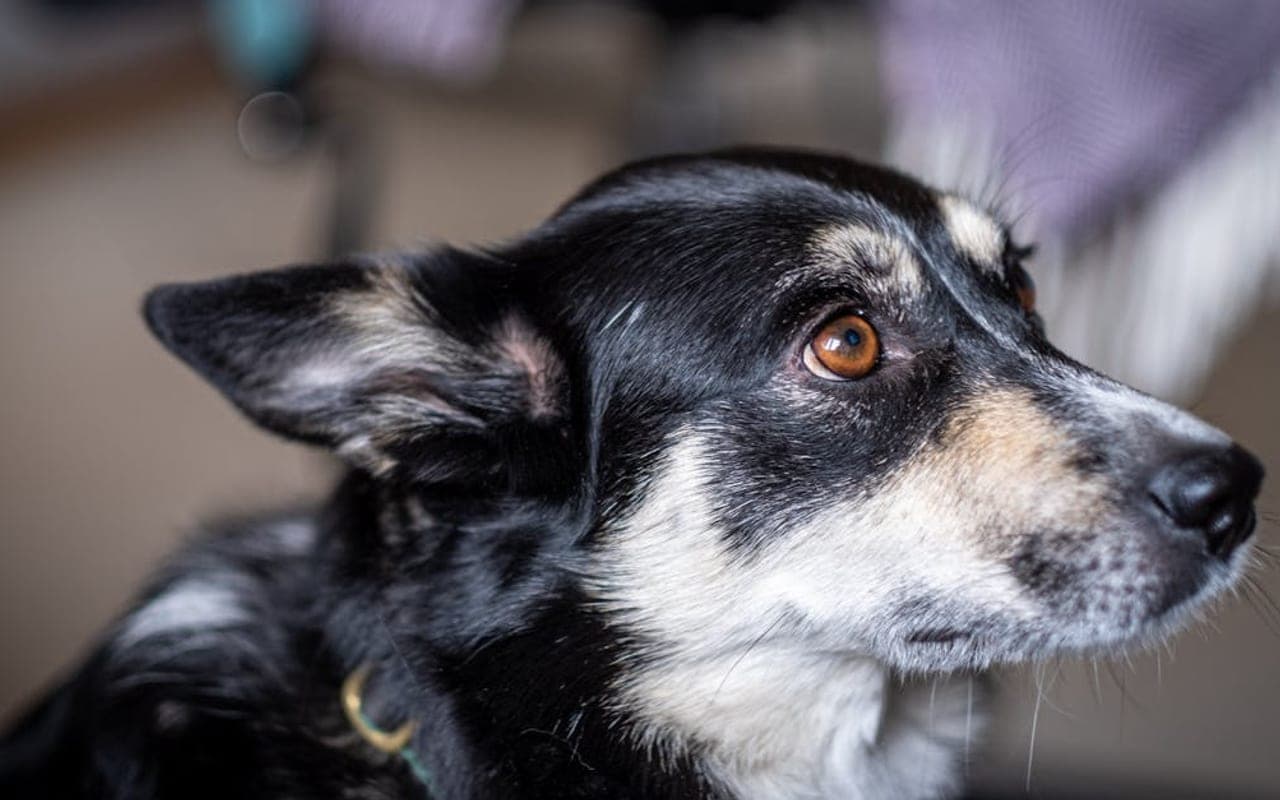
The Fédération Cynologique Internationale (FCI) lists the breed's utilization simply as "Reindeer herder" and places it in Group 5, Section 3, the Nordic watchdogs and herders [1]. The standard describes a medium-sized herding spitz that is clearly longer than it is tall, with strong bone and muscle [1]. It gives an ideal height at the withers of 51 cm for males and 46 cm for females, each with a tolerance of ±3 cm [1]. That works out to the 43–54 cm range our breed record holds. Our breed record lists a weight of 27–30 kg and a lifespan of 10–14 years.
The harder part of owning this breed is the bark. It is written into the standard as part of how the dog works, not listed as a fault [1]. If you live with close neighbours or under noise rules, expect barking as part of daily life and plan your routine around it, rather than hoping training will remove it. For the breed's background and appearance, see the Lapponian Herder breed page. For other breeds, browse the care guide library.
Daily Care
Temperament with people. A large Finnish study of aggressive behaviour in purebred dogs found that "the breeds with the lowest odds of aggressive behaviour were Labrador Retriever, Golden Retriever, and Lapponian Herder" [8]. The FCI standard lists aggressive or overly shy dogs as a disqualifying fault [1]. This is a population finding, not a promise about one puppy, and early, positive exposure to visitors, other dogs and everyday noise still matters.
Training. The Finnish anxiety survey of 13,700 pet dogs, which included 294 Lapponian Herders, found inattention reported most often in mixed-breed dogs, Finnish Lapponian Dogs and Lapponian Herders. It was rarely reported in Spanish Water Dogs and Border Collies [9]. The authors suggest that, because these breeds are often regarded as "hard to train", owners "may rate dogs not easily motivated by food or petting as inattentive" [9]. In practice, keep sessions short, end before the dog loses focus, and train in quiet places before busy ones.
Barking. Since the standard treats barking during work as breed-typical [1], set realistic goals. Teach a "quiet" cue and reward silence, and limit the triggers you can control, such as a view of the street. Don't aim for a silent dog.
Breed identity. The Lapponian Herder and the Finnish Lapphund share an origin. Researchers note that the original Sámi reindeer-herding dogs "have been artificially split into two breeds based on their coat type" [10]. A 2024 study of historic dog furs notes that both breeds, along with the Swedish Lapphund and the Elkhounds, have similar histories, and that "the five breeds can therefore be assumed to belong to the same general population" [11]. Under the FCI history, the two were registered as one breed in the 1950s and the Lapponian Herder was recognised separately on 10.12.1966 [1]. If you are comparing the two, the coat is the documented point of separation. Don't assume other differences.
Nutrition
Use body condition, not a target number on the scale. The standard's own picture of the right body is a dog that is muscular with strong bone but "must not give the impression of being heavy", with a belly that is "only gently tucked up" and a body depth of about half the height at the withers [1]. Through the dense coat, run your hands over the ribs rather than relying on how the dog looks. No breed-specific feeding amount is published, so start from the guidance on your chosen complete food and adjust it by what your hands find.
Match the food to the work. A dog that trains or herds most days and one that has a quiet week need different amounts, so review portions when the routine changes rather than feeding the same quantity all year. Weigh the dog every few weeks and record it alongside your rib check, since a thick coat can hide gradual gain. If you use food as a training reward, take those treats out of the day's ration. Ask your veterinarian before changing the diet of a puppy or an older dog.
Exercise
The FCI standard calls the breed "energetic and willing to work", and says "the trot is tireless" [1]. Its registered job is herding reindeer [1], and the Sámi people used dogs of this type for that work [10]. Royal Canin's profile describes the breed as "basically working dogs" whose herding background and energy make them "very well suited to various sporting disciplines", and lists it as a dog that "enjoys training" [12]. No breed-specific figure for daily exercise minutes is published.
Build the week around that working background. Steady trotting on walks and hikes suits a dog with a tireless trot [1]. Herding trials, obedience, rally, agility and nosework give it a job to do as well as distance, and they sit well with a breed that enjoys training [12]. Because the breed "barks readily when working" [1], expect noise during active play and choose places where that is acceptable. A home with secure outdoor space helps, but it does not replace time spent working and moving with you.
Grooming
The FCI standard describes the coat in terms of function: it is "suitably adapted for the arctic climate" [1]. The outer coat is "of medium length or long, straight, rather erect and harsh", over an undercoat that is "fine and dense" [1]. The hair is often longer and more profuse on the neck, chest and backs of the thighs [1]. The standard also describes profuse hair inside the ears and feet that are covered with dense hair on all sides, including underneath [1]. The standard lists a "soft, wavy or lying coat" and a "lacking undercoat" as faults, so the dense undercoat is part of breed type, not a grooming problem to remove [1]. Royal Canin's breed profile rates the breed as needing "moderate grooming" [12].
In practice, that means working with the coat rather than against it. Brush in sections, parting the harsh outer hair so the brush or comb reaches the fine undercoat at the skin, because a coat that looks tidy on top can still hold loose undercoat underneath. Work through the longer, more profuse hair on the neck, chest and backs of the thighs [1] in the same section-by-section way. Never clip or shave the coat short: the standard treats a lacking undercoat as a fault, and the coat is what suits the dog to cold weather [1]. Check the dense hair on and under the feet after walks for ice, burrs and grit, and look inside the ears, where the standard describes profuse hair, for debris [1]. When the dog is dropping more undercoat than usual, brush more often until it settles. No breed-specific weekly grooming time or shedding calendar is published for the Lapponian Herder, so let the amount of loose hair in the brush set your schedule.
Health
The genetic studies below document prcd-PRA and cmr3 as disease in this breed [4]. For Pompe disease and the POU1F1 dwarfism variant, they report carriers in Lapponian Herders but no affected dogs [3][6].
- Progressive rod–cone degeneration (prcd-PRA). A 2010 genetics paper notes that the Lapponian Herder "is known to also be affected by progressive rod–cone degeneration (prcd)", which it calls "the most common retinal degeneration in dogs" and says occurs in more than 20 breeds [4]. The University of Sydney's OMIA database lists the Lapponian Herder among the breeds documented for this disorder [5].
- Canine multifocal retinopathy 3 (cmr3). The same 2010 study identified BEST1 gene mutations, P463fs and G489V, that segregate with retinal disease in this breed [4].
- Pompe disease (glycogen storage disease type II). A 2013 study traced Pompe disease in Lapphunds to a nonsense mutation in the acid α-glucosidase (GAA) gene [2]. OMIA records the authors' statement that they "identified carriers from Lapponian Herders although no affected cases have been reported in this breed" [3]. So in the Herder this is a carrier-screening issue, not a common illness [3].
- Pituitary dwarfism (POU1F1 variant). A 2021 study linked an intronic variant in the POU1F1 gene, c.605-3C>A, to pituitary dwarfism in the Karelian Bear Dog [6]. When roughly 8,000 dogs from 207 breeds were screened, carriers turned up at low frequency "only in Lapponian Herders, a related breed" [6].
- Cataracts. A 2025 study of Northern breeds associated common variants in the CPT1A gene with posterior polar subcapsular cataract [7]. In Lapponian Herders (15 bilateral cases and 68 controls) it found only a weak association, which for one of the variants ran in the opposite direction to the one seen in the Siberian Husky, and the authors note this result could be due to chance given the numbers tested [7]. They also describe these variants as unsuitable for preventive DNA testing [7]. It is a case-control study and gives no prevalence figure for the breed. Regular eye examinations still make sense in a breed where inherited retinal disease is documented.
The FCI standard also sets breeding expectations that matter to buyers. It states that "only functionally and clinically healthy dogs, with breed typical conformation should be used for breeding", and that males should have two normal testicles fully descended [1].
Costs
The paperwork worth asking for before you commit is the parents' genetic test results and eye examination records. Parental results tell you the possible outcomes for a litter, not the genotype of one puppy. For a recessively inherited disorder such as Pompe disease [2], only a puppy whose parents both tested clear is known to be clear without a test of its own.
Frequently Asked Questions
How big does a Lapponian Herder get?
The FCI standard gives an ideal height of 51 cm for males and 46 cm for females, with a tolerance of ±3 cm. That is a range of 43–54 cm. Our breed record lists 27–30 kg, though the standard sets no weight.
Do Lapponian Herders bark a lot?
Barking during work is part of the breed standard. Plan for it, teach a quiet cue, and pick a home and exercise areas where some barking is acceptable.
Is the Lapponian Herder aggressive?
In a large Finnish study, it was one of the three breeds with the lowest odds of aggressive behaviour. The FCI standard disqualifies aggressive or overly shy dogs. Socialisation still matters for every puppy.
Which DNA tests should I ask a breeder about?
Ask about prcd-PRA, multifocal retinopathy 3 (cmr3), Pompe disease (GSD II) and the POU1F1 pituitary dwarfism variant. Research documents prcd-PRA and cmr3 as disease in this breed. For Pompe disease and the POU1F1 variant, studies have found carriers in Lapponian Herders but report no affected dogs. Also ask for eye examination records.
What is the difference between a Lapponian Herder and a Finnish Lapphund?
Both come from the Sámi reindeer-herding dogs and were registered as one breed until 1966. Researchers describe the split as based on coat type. The Herder's standard calls for a medium-length or long, harsh outer coat.
Sources
This guide draws on the following published references. Each opens in a new tab so you can check it against what you have read here.
Royal Canin
Royal Canin — Lapponian Herder breed profile(opens in a new tab)OMIA
OMIA — Online Mendelian Inheritance in Animals (University of Sydney) — Glycogen storage disease II in Canis lupus familiaris(opens in a new tab)Molecular Vision (Zangerl et al., 2010)
Molecular Vision (Zangerl et al., 2010) — Assessment of canine BEST1 variations identifies new mutations and establishes an independent bestrophinopathy model (cmr3)(opens in a new tab)OMIA
OMIA — Online Mendelian Inheritance in Animals — Progressive rod-cone degeneration, PRCD-related in dog(opens in a new tab)Human Genetics (2021), University of Helsinki canine genetics group
Human Genetics (2021), University of Helsinki canine genetics group — Intronic variant in POU1F1 associated with canine pituitary dwarfism(opens in a new tab)PLoS ONE (2025)
PLoS ONE (2025) — Common variants in the CPT1A gene are associated with cataracts in Northern breeds of domestic dog(opens in a new tab)Scientific Reports (Mikkola et al., 2021), University of Helsinki
Scientific Reports (Mikkola et al., 2021), University of Helsinki — Aggressive behaviour is affected by demographic, environmental and behavioural factors in purebred dogs(opens in a new tab)Scientific Reports (Salonen et al., 2020), University of Helsinki
Scientific Reports (Salonen et al., 2020), University of Helsinki — Prevalence, comorbidity, and breed differences in canine anxiety in 13,700 Finnish pet dogs(opens in a new tab)Canine Medicine and Genetics (2020)
Canine Medicine and Genetics (2020) — Variation in breeding practices and geographic isolation drive subpopulation differentiation (Lapphund)(opens in a new tab)Fédération Cynologique Internationale (FCI), Standard N° 284
Fédération Cynologique Internationale (FCI), Standard N° 284 — Lapponian Herder (Lapinporokoira) breed standard(opens in a new tab)PLoS ONE (Seppälä et al., 2013), University of Helsinki
PLoS ONE (Seppälä et al., 2013), University of Helsinki — A nonsense mutation in the acid α-glucosidase gene causes Pompe disease in Finnish and Swedish Lapphunds(opens in a new tab)Molecular Biology and Evolution (2024)
Molecular Biology and Evolution (2024) — Historic dog Furs Unravel the Origin and Artificial Selection of Modern Nordic Lapphund and Elkhound dog Breeds(opens in a new tab)
Affiliate disclosure: We may earn a commission from qualifying purchases. This doesn't affect our recommendations.
Recommended Products
Lapponian Herder Care Guide Book
Breed-focused reading and owner references for Lapponian Herder care, training, grooming, and health planning.
Lapponian Herder Food and Supplies
Helpful supplies for lapponian herder dog supplies routines at home.
Lapponian Herder Grooming Tools
Helpful supplies for lapponian herder grooming tools routines at home.
Get personalized pet care tips
Join our newsletter for breed-specific advice, care guides, and expert tips delivered weekly.
No spam, ever. Unsubscribe anytime.