
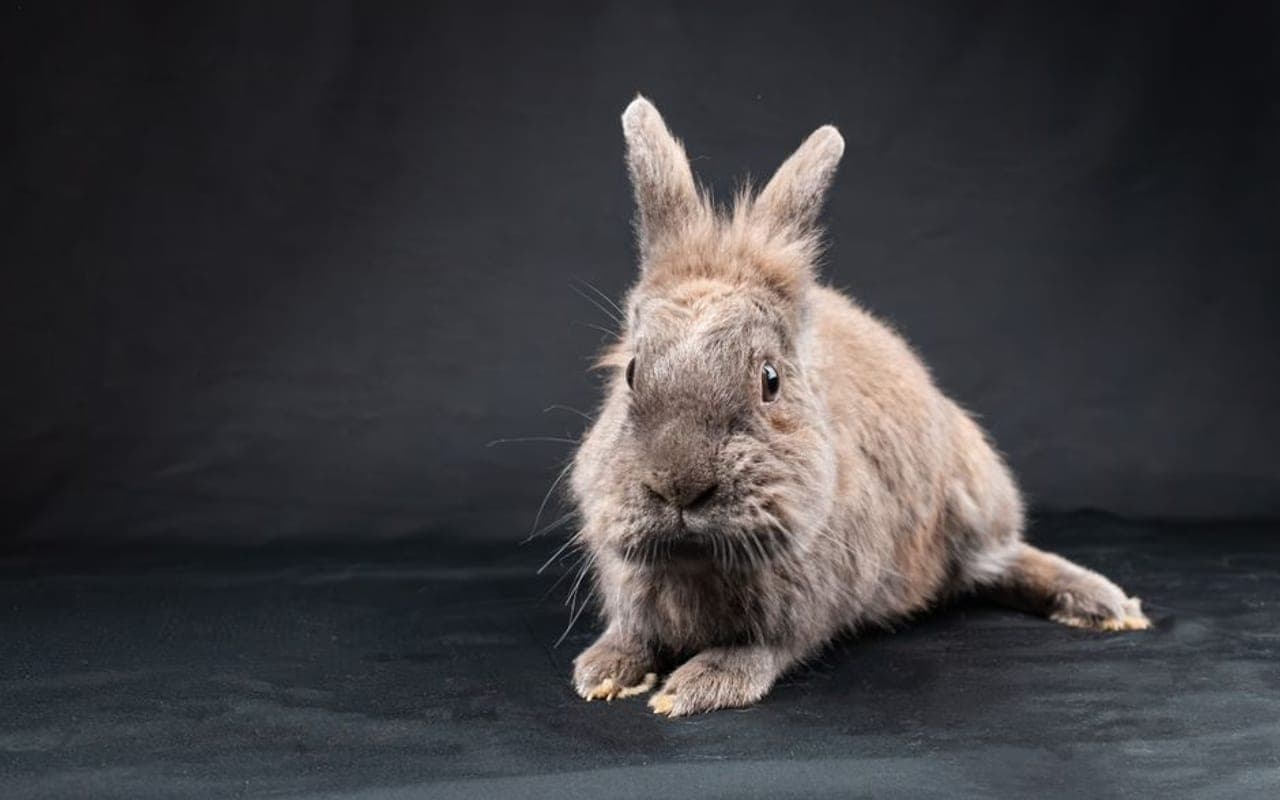
Netherland Dwarf Care Guide
Netherland Dwarf Care Overview This guide gives you a practical plan for living with a Netherland Dwarf, the smallest commonly kept rabbit breed at roughly 0.9 to 1.1 kg, about 2 to 2.5 pounds. Two fa
In This Guide
Overview
Netherland Dwarf Care Overview
This guide gives you a practical plan for living with a Netherland Dwarf, the smallest commonly kept rabbit breed at roughly 0.9 to 1.1 kg, about 2 to 2.5 pounds. Two facts shape every care decision and you should internalize both before the toy-like face wins the argument. The first is the dwarf gene that makes the breed tiny: it alters craniofacial development, and dental malocclusion is the breed's defining health problem — though the mechanism usually given for it does not hold up (see Health). That is why an unlimited grass-hay diet here is not a recommendation but the spine of keeping the rabbit alive and out of the vet's chair. The second is the temperament. Netherland Dwarfs are bright, energetic, and curious, but they are also more skittish and independent than the placid larger breeds, and an under-socialized one may nip when frightened or cornered. They reward patient, low-handling, floor-level interaction and punish the constant carrying that small children want to do, which makes them a poor match for young kids despite the baby face. The size brings real fragility on top of all that: a 2-pound body overheats fast above roughly 26°C, is easily injured by a fall or a squeeze, and carries almost no metabolic reserve, so a missed meal becomes a crisis far sooner than in a bigger rabbit. The standard obligations still apply too, a 7-to-10-year commitment, a prey animal that hides illness, daily free-roam exercise, neutering, and a rabbit-savvy exotics vet on call. Go in understanding the dental burden and the cautious temperament and the Netherland Dwarf is a charming, lively companion; go in expecting a cuddly toy and both of you will be disappointed. This guide walks through the daily routine, diet, exercise, grooming, health, and real costs so you can give it the first version of that life.
Daily Care
Daily Routine
A Netherland Dwarf's day runs on a simple routine, and getting it consistent is what keeps a fragile, low-reserve animal stable. Each morning, top up unlimited grass hay first, because for a dwarf this is both the gut fuel and the primary defence against malocclusion. Refresh water in a heavy ceramic bowl, which rabbits drink from more readily than a sipper bottle, and put down a packed cup of washed leafy greens. Scoop the litter box, since a clean box is what keeps a neutered dwarf reliably litter-trained. Then spend a few minutes simply watching, because the two things you check every single day are appetite and droppings: a 2-pound rabbit that stops eating or stops passing droppings for 12 hours is a same-day emergency, not a wait-and-see, as it has so little metabolic reserve that GI stasis turns critical fast. In the evening, open the enclosure for the main free-roam session, refresh hay again, and do a quick hands-on check of the rear end for soiling and the front teeth for misalignment or overgrowth. Keep handling gentle, infrequent, and floor-based, because grabbing a skittish dwarf from above triggers the nip; let it come to you. None of this takes long, but skipping it is how small problems in a tiny prey animal become large ones.
Nutrition
Feeding a Netherland Dwarf
Get the diet right and you prevent most of the health problems in this guide, and for a dwarf the diet does double duty as dental therapy. The proportions matter: the PDSA puts around 85 percent of a rabbit's diet as hay and grass — timothy, orchard or meadow — because the long side-to-side chewing it forces is what wears the continuously growing molars down and keeps the gut moving. On top of that, feed a packed cup of varied leafy greens daily, romaine, cilantro, parsley, and dandelion greens, rotated to avoid boredom and excess of any one mineral, and only a small measured portion of plain high-fibre timothy-based pellets for a rabbit this small. The PDSA's measure is one tablespoon of nuggets a day, or twice a day for a rabbit over 3.5 kg — feed more and they eat less hay, which the PDSA links to overgrown teeth and gut stasis. Skip muesli-style mixes entirely, because rabbits selectively eat the sugary bits and leave the fibrous pellet, which drives both dental disease and obesity. Because a 2-pound rabbit has almost no metabolic reserve, never let it go without food, and treat a skipped meal as a warning rather than a quirk. Treats are fruit-sized and occasional, a thin slice of banana or apple and never daily, because sugar disrupts the gut flora. Alfalfa hay is for kits under about 6 months and nursing does only; switch adults to grass hay, since alfalfa's calcium and calories cause bladder sludge and weight gain in a grown dwarf.
Exercise
Exercise & Enrichment
A Netherland Dwarf is small but emphatically not sedentary, and confinement is a genuine welfare and health problem: a rabbit kept permanently in a hutch develops obesity, weak bones, sore hocks, and boredom-driven behavior. The old small-cage model is outdated, so plan for real floor space: the RSPCA recommends a living space no smaller than 3m by 2m and 1m high for two medium-sized rabbits, and the Rabbit Welfare Association & Fund is explicit that this footprint must be available at all times rather than for limited periods, with daily supervised free-roam on top of it, in a rabbit-proofed room or a large exercise pen. Rabbit-proofing is literal: cover or block electrical cords, because a chewed cord can electrocute or burn, and remove toxic houseplants and anything you mind being gnawed, since chewing is a need rather than a vice. Give an energetic, curious dwarf real reasons to move, cardboard castles and tunnels, a digging box of shredded paper or hay, and a few toss-and-chew toys, rotated weekly so the space stays interesting to a bright animal that bores easily. A content, well-exercised dwarf binkies, the happy mid-air leap and twist that tells you the enrichment is right. Exercise also doubles as health monitoring: a rabbit that suddenly stops moving, hunches, or grinds its teeth is signalling that something is wrong.
Grooming
Grooming
Grooming a Netherland Dwarf is light most of the year, and the real attention goes to the teeth rather than the short coat. The dense fur needs only a weekly brush to remove loose hair, stepping up to every few days during the heavy seasonal molts, when swallowed fur can contribute to a gut slowdown that a low-reserve dwarf tolerates poorly, so molt-season brushing is genuinely preventive, not cosmetic. Never bathe a rabbit, because full immersion terrifies them and can cause fatal shock, and a tiny body chills dangerously when wet; spot-clean a soiled rear with a damp cloth instead. Trim nails every 4 to 6 weeks, since overgrown nails change how the rabbit sits and worsen sore hocks. The dental check is the part that matters most for this breed: while you groom, look at the front teeth for misalignment or overgrowth, because incisor and molar problems are common in rabbits and dwarf breeds are overrepresented for dental disease (VCA Animal Hospitals), and caught early they are a hay-and-vet matter rather than surgery. Keep all of this gentle and brief, as a skittish dwarf restrained too long will struggle and can injure its fragile spine.
Health
Health
The Netherland Dwarf's defining health risk is dental malocclusion. VCA Animal Hospitals allows an inherited or congenital component, naming dwarf and lop-eared rabbits as overrepresented for dental disease — but the crowding explanation usually attached to it does not survive testing: a study of 435 pedigree rabbits found no dental abnormalities associated with a shorter, more brachycephalic head shape, and reported the odds of cheek teeth step or wave mouth rising as head shapes lengthened. Its conclusion was that conformation appears less important than husbandry factors. Molars and incisors misalign and overgrow in rabbits generally, and diet is the lever you actually control. In longer-faced breeds. Prevention is dietary, unlimited grass hay, and detection is routine, watch for drooling, a wet chin, weight loss, or a dropped appetite, and have a rabbit-savvy vet check the back teeth at least yearly, because many dwarfs still need periodic tooth-trims despite a perfect diet. Overgrown incisors are the visible form, needing professional trimming rather than home filing. The other conditions every owner should know: GI stasis, where the gut slows or stops, which in a tiny rabbit with little reserve turns critical fast, so any 12-hour loss of appetite or droppings is a same-day emergency; head tilt or torticollis, a sudden twisting of the head from an inner-ear infection or the parasite E. cuniculi that needs prompt diagnosis; heat stroke, because a 2-pound body overheats fast above roughly 26°C; and uterine adenocarcinoma in unspayed does, common after about age three, which is why spaying before age two is preventive medicine. Line up an exotics or rabbit-savvy vet before you bring the rabbit home, because most general practices do not treat rabbits and an emergency is the wrong time to start searching.
Costs
The Real Cost of a Netherland Dwarf
The purchase price is the smallest number in rabbit ownership, and treating it as the budget is the classic first-time mistake. A Netherland Dwarf from a reputable breeder or a rescue typically runs 30 to 75 dollars, but the setup costs more: a roomy enclosure or exercise pen sized for free-roam, a heavy water bowl, a litter box and rabbit-safe litter, hay racks, and starter toys add up to roughly 150 to 300 dollars before you account for the pens and cord covers to rabbit-proof a room. Then there is the ongoing bill. Unlimited hay, fresh greens, a small measured amount of pellets, and litter come to roughly 40 to 70 dollars a month, more for premium hay delivered. The cost that surprises people, and the one that hits this breed harder, is veterinary. A dwarf needs an exotics vet, which means a higher first-visit fee, a one-time spay or neuter usually in the 150 to 400 dollar range that prevents cancer and behavior problems, and an emergency fund, because GI stasis or dental work can run into the hundreds quickly. The dwarf face makes recurring dental care a realistic line item rather than a rare event, so many owners budget for periodic tooth-trims across the rabbit's 7-to-10-year life. Budget for all of that and a Netherland Dwarf is an affordable companion; budget only for the rabbit itself and the first vet emergency becomes a crisis.
Frequently Asked Questions
What is a Netherland Dwarf "peanut", and can I safely breed two dwarfs together?
A peanut is a kit born carrying two copies of the dwarf allele. The Genetics research by Carneiro and colleagues records these homozygotes as undersized against their littermates, marked out by a swollen head with minute ears, carried to term but dead inside a few days. Two true dwarfs put together make that a question of odds rather than luck, so settle the pairing on paper first, and hand any newborn showing that head-and-ear signature to a rabbit-experienced vet instead of hand-rearing it.
Does the Netherland Dwarf's flat face actually cause its dental problems?
Less directly than the breed's reputation implies. VCA Animal Hospitals does allow an inherited component behind malocclusion, naming dwarf and lop-eared rabbits as the breeds carrying more than their share of dental disease. Set against that, an examination of 435 rabbits spanning 49 breeds turned up no dental abnormality tied to a shorter, flatter skull, and ranked husbandry above conformation as what actually prevents it. Read the breed as a prompt to inspect the mouth often, not a verdict already delivered.
My Netherland Dwarf is heavier than the standard allows. Is it a false dwarf?
Possibly, and that is a show question before it is a health one. The ARBA standard caps the breed at a maximum weight of 2.5 pounds and prizes its brachycephalic head. Rabbits carrying one copy of the dwarf allele show the type buyers pay for, described in the Genetics work as a disproportionately larger head relative to the body, small ears and a short snout. Littermates without that copy grow bigger and longer in the face, so weigh and study head and ear length before money changes hands.
Can I house a Netherland Dwarf in a smaller setup because the rabbit itself is small?
No, and the rule here is species-level rather than breed-level. RWAF and the RSPCA both put the floor at 3m by 2m by 1m high for a pair, with shelter and running room counted as one block, and RWAF adds that the rabbit needs it around the clock, not for a booked exercise hour. The breed twist is only that a two-pound animal slips into gaps a Flemish Giant could never reach, so finish rabbit-proofing before the first release.
How much hay does a Netherland Dwarf really need if hay is the dental defence?
More than most owners put down. The PDSA sets hay and grass at around 85 percent of the diet and measures the daily target as a bundle at least as big as the rabbit itself, which for a two-pound animal looks deceptively modest and still has to be replenished all day. The 435-rabbit examination arrived at the same place from the opposite direction, recommending good-quality long-stem hay or grass offered ad libitum. Refill when the rack empties, not when the clock says so.
Sources
This guide draws on the following published references. Each opens in a new tab so you can check it against what you have read here.
ARBA
Netherland Dwarf — recognised breed entry(opens in a new tab)American Rabbit Breeders Association (ARBA)
Netherland Dwarf(opens in a new tab)PDSA
Feeding your rabbits(opens in a new tab)House Rabbit Society
Rabbit Diet & Nutrition(opens in a new tab)RSPCA
Rabbit environment and housing advice(opens in a new tab)Rabbit Welfare Association & Fund (RWAF)
Space recommendations for pet rabbits(opens in a new tab)Genetics (Genetics Society of America / Oxford Academic)
Dwarfism and Altered Craniofacial Development in Rabbits Is Caused by a 12.1 kb Deletion at the HMGA2 Locus(opens in a new tab)VCA Animal Hospitals
Dental Disease in Rabbits(opens in a new tab)PubMed Central (PMC11987845)
Dental abnormalities and their associations in 435 pet and show rabbits(opens in a new tab)Merck Veterinary Manual
Diet for Rabbits(opens in a new tab)Merck Veterinary Manual
Routine Health Care of Rabbits(opens in a new tab)Merck Veterinary Manual
Skin Disorders of Rabbits(opens in a new tab)
Get personalized pet care tips
Join our newsletter for breed-specific advice, care guides, and expert tips delivered weekly.
No spam, ever. Unsubscribe anytime.