
Pharaoh Hound Care Guide
The Kelb tal-Fenek: Malta's rabbit hound On the terraced rubble walls of the Maltese countryside, the Pharaoh Hound earned its real name — Kelb tal-Fenek, literally "rabbit dog." For centuries this wa
In This Guide
Overview
The Kelb tal-Fenek: Malta's rabbit hound
On the terraced rubble walls of the Maltese countryside, the Pharaoh Hound earned its real name — Kelb tal-Fenek, literally "rabbit dog." For centuries this was a working farmer's hound, the national hound of Malta, sent out mostly at dusk and night to flush and course rabbits across broken limestone ground, and that job shaped everything about it. Unusually for a hound, the Kelb tal-Fenek hunts as a whole-sensory animal: it marks quarry by sight, follows it by scent, and pinpoints movement by sound with those large, mobile, upright ears. It is not simply a sighthound that happens to have a nose.
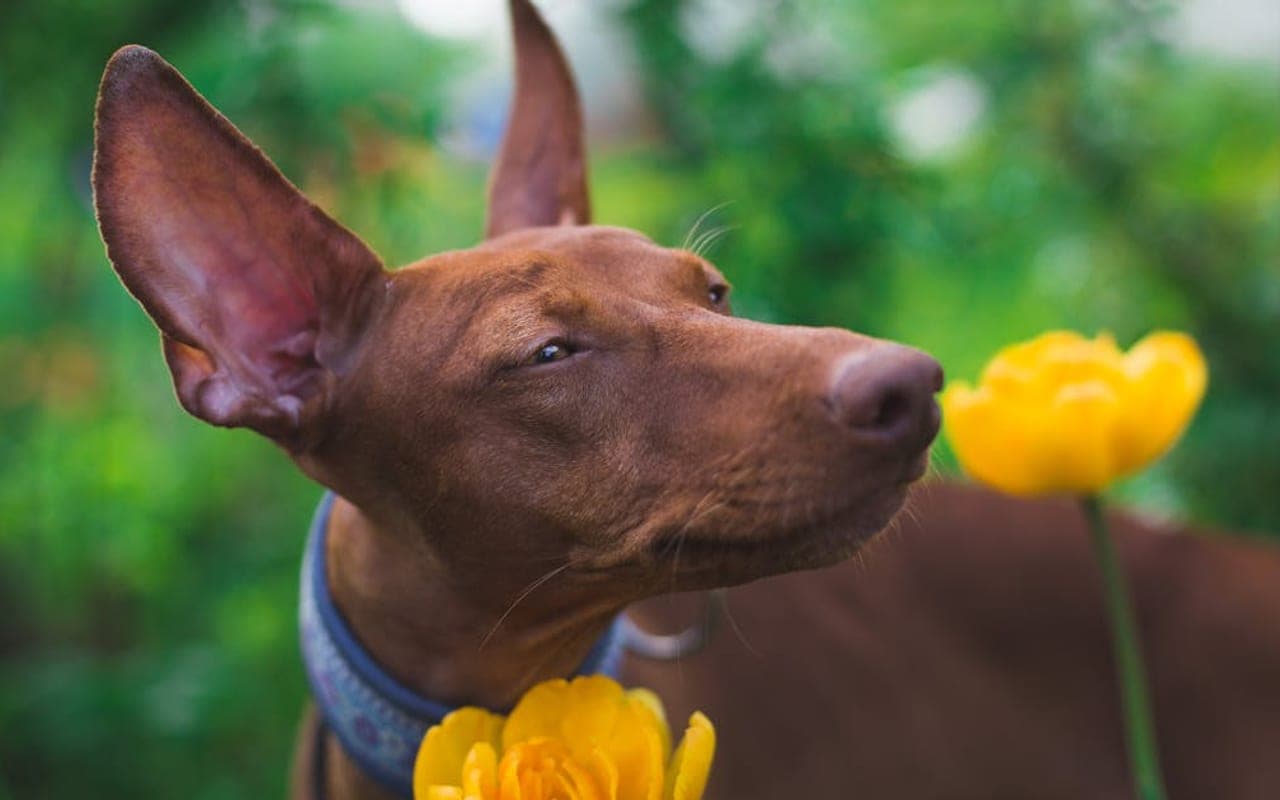
The look is lean and ancient-seeming — a sleek, glossy coat in shades of tan to rich chestnut, sometimes with small white markings, over a rangy, athletic frame built for sprinting and quick turns. The eyes are amber and deepen in tone with the coat, and the whole dog reads as alert and faintly aristocratic.
Two traits set the breed apart. When a Pharaoh Hound is excited or happy, its nose and the insides of its ears flush a warm rose — the famous "blush," which owners learn to read as a mood signal. Many also "smile," pulling the lips back in what looks unmistakably like a grin during greetings.
Temperament follows the working history: intelligent, athletic, and independent enough to think for itself on a hunt, yet genuinely affectionate and closely bonded at home. This is also a sensitive dog that reads a household's tone closely — which matters for how you train it, exercise it, and care for its lean, thin-skinned body.
Exercise
Exercise: a sprinter whose switch won't turn off
A Pharaoh Hound is a coursing athlete, and a bored one turns destructive and anxious. Plan on real daily exercise — brisk walks plus, crucially, chances to run flat-out — because this is a body built to accelerate and turn, and a leash-only life leaves that engine idling.
Give it a place to truly run
The best outlet is hard galloping in a fully fenced, secure area. Fencing matters because a Pharaoh Hound in full flight is fast, single-minded and effectively deaf to recall — that is sighthound wiring, not disobedience. A tall, solid fence protects the dog from bolting into a road, since a lean hound at a dead sprint covers ground far quicker than a person can react.
Prey drive is not optional
Bred to chase small animals, the breed locks onto rabbits, squirrels, cats and anything else that flees. Near roads, wildlife or small pets, keep the dog on lead, because once the chase instinct fires it overrides training every time. A long-line lets you allow sniffing and semi-freedom without gambling on a recall the dog cannot reliably give.
Train the mind, gently
This is a sensitive, intelligent breed that shuts down or grows evasive under harsh, punitive handling. Use short, upbeat, reward-based sessions, and add mental work — scent games, food puzzles, lure coursing, trick training — because a Pharaoh Hound tires as much from problem-solving as from mileage, and a mentally satisfied one is far calmer indoors. Match the intensity to the weather, too: with so little insulation, hard running is safest in mild conditions.
Grooming
Grooming the short, fine coat
The Pharaoh Hound is close to wash-and-wear. The coat is short, fine and glossy with no undercoat, so a weekly once-over with a rubber curry, grooming mitt or soft bristle brush lifts the modest loose hair and spreads skin oils to keep the shine. Baths are rare — only when the dog is genuinely dirty — because the coat sheds dirt well and frequent bathing strips the skin.
That same thin, low-insulation coat is why grooming this breed is really about protection, not primping.
Cold: this dog needs a coat
With no undercoat and very little body fat, a Pharaoh Hound loses heat fast and gets uncomfortable in cool, damp or windy weather. A well-fitted coat covering the chest and belly before walks in cold conditions is not a fashion choice — it is because the breed has no built-in insulation, and shivering on a walk means the dog is already too cold. Indoors is where this dog sleeps, year-round.
Skin and sun
The skin is thin and, on pale points like the nose and belly, lightly pigmented, so it scrapes, chaps and sunburns more easily than a thick-coated breed's. Use a pet-safe sunscreen on exposed pink skin before long sun exposure, and check the coat for nicks after rough off-lead running.
Nails, teeth, ears
Trim nails every few weeks so they never click on the floor, because overgrown nails change the gait and stress the toes. Brush the teeth several times a week to slow tartar, since dental disease is one of the most common problems in any breed. Wipe the large, open ears when they look waxy, because their upright, airy shape still collects grit from all that outdoor running.
Health
A genuinely hardy breed
Among purebred dogs, the Pharaoh Hound stands out for how little tends to go wrong with it. It carries a comparatively light load of inherited disease and a typical lifespan of about 12 to 14 years (American Kennel Club); most of what owners manage comes from its lean, thin-skinned build, not a long list of breed illnesses. Nothing below is a diagnosis — what you notice belongs in front of your own veterinarian.
What responsible screening covers
The national breed club, alongside the American Kennel Club, recommends a small, specific panel for breeding dogs: a hip evaluation, a patella (kneecap) evaluation, and an ophthalmologist eye examination (American Kennel Club; Pharaoh Hound Club of America). Ask a breeder to show these results for both parents, because a clear panel is the best predictor a puppy avoids the breed's few heritable problems.
Joints: hips and knees
Hip dysplasia — a poorly fitted hip joint that can lead to pain and arthritis — occurs at low but real rates, which is why the hip screen through OFA or PennHIP scoring exists. Patellar luxation, where a kneecap slips out of its groove, is likewise inherited and worth the club-recommended patella check, because a slipping kneecap can cause an intermittent limp and predispose the knee to further injury. Keeping the dog lean protects both joints.
Eyes
Progressive retinal atrophy (PRA), a gradual degeneration of the retina that starts as night blindness, is the eye condition the ophthalmologist exam and available DNA testing target (PetMD). It is uncommon here, but because it is progressive and inherited, screening breeding stock keeps a line clear.
The lean-hound cautions
Anesthesia
As with other lean, low-body-fat sighthounds, Pharaoh Hounds are commonly described as more sensitive to certain anesthetic and sedative drugs, tending to metabolize some of them more slowly and wake more gradually (veterinary anesthesia guidance for sighthound-type breeds). The practical step: tell your veterinary team the dog is a sighthound-type before any planned sedation or surgery, so the protocol and dosing can be adjusted in advance — a conversation for the clinic, not something to manage yourself.
Cold and sun
The thin coat and low body fat that make this a fine athlete leave it poorly insulated, so in cold or wet weather it chills quickly and a coat and indoor sleeping are welfare basics, not pampering. The thin, lightly pigmented skin over pale points also burns in strong sun, where a pet-safe sunscreen helps.
Feeding and the deep chest
Like many deep-chested, athletic dogs, a Pharaoh Hound is best fed in smaller portions rather than one bolted meal, with hard exercise kept away from mealtimes, because calm feeding is a low-cost hedge against digestive upset. If the abdomen ever looks distended or the dog retches unproductively and seems distressed, treat it as an emergency and call a vet immediately.
The everyday picture
Keep the dog lean, keep vaccinations and parasite prevention current, keep the teeth clean, and stay alert to the joint, eye and lean-build points above. A hardy constitution is not a reason to skip routine check-ups, because early quiet changes are exactly what a yearly exam catches.
Frequently Asked Questions
Is the Pharaoh Hound a healthy breed?
Yes. It is regarded as one of the hardier purebred dogs, with a comparatively small load of inherited disease and a lifespan of roughly 12 to 14 years. The priorities are joint and eye screening in breeding lines and the practical care its lean, thin-skinned build needs.
What health tests should a Pharaoh Hound breeder have done?
The national breed club and the American Kennel Club recommend a hip evaluation, a patella (kneecap) evaluation, and an ophthalmologist eye examination on breeding dogs. Ask to see these results for both parents, because documented clear screening is the strongest signal that a puppy avoids the breed's few heritable problems.
Why does my vet need to know it is a sighthound before surgery?
Lean, low-body-fat sighthounds are commonly described as more sensitive to some anesthetic and sedative drugs, metabolizing them more slowly and recovering more gradually. Telling the clinic the dog is a sighthound-type in advance lets them tailor the protocol — a discussion for your veterinarian, not something to manage at home.
Does a Pharaoh Hound really need a coat in winter?
Yes. The short coat has no undercoat and the body carries very little fat, so the dog chills quickly in cold, damp or windy weather. A well-fitted coat over the chest and belly before cold-weather walks, plus sleeping indoors year-round, keeps it comfortable — and shivering means it is already too cold.
Sources
This guide draws on the following published references. Each opens in a new tab so you can check it against what you have read here.
American Kennel Club
Pharaoh Hound Dog Breed Information(opens in a new tab)The Royal Kennel Club
Pharaoh Hound | Breeds A to Z(opens in a new tab)Pharaoh Hound Club of America
FAQ — Pharaoh Hound Club of America(opens in a new tab)PetMD
Pharaoh Hound Dog Breed Health and Care(opens in a new tab)VCA Animal Hospitals
Pharaoh Hound | VCA Animal Hospitals(opens in a new tab)Clinician's Brief
Breed-Specific Anesthesia Considerations in Dogs(opens in a new tab)
Affiliate disclosure: We may earn a commission from qualifying purchases. This doesn't affect our recommendations.
Recommended Products
Pharaoh Hound Care Guide Book
Breed-focused reading and owner references for Pharaoh Hound care, training, grooming, and health planning.
Pharaoh Hound Food and Supplies
Helpful supplies for pharaoh hound dog supplies routines at home.
Pharaoh Hound Grooming Tools
Helpful supplies for pharaoh hound grooming tools routines at home.
Get personalized pet care tips
Join our newsletter for breed-specific advice, care guides, and expert tips delivered weekly.
No spam, ever. Unsubscribe anytime.