
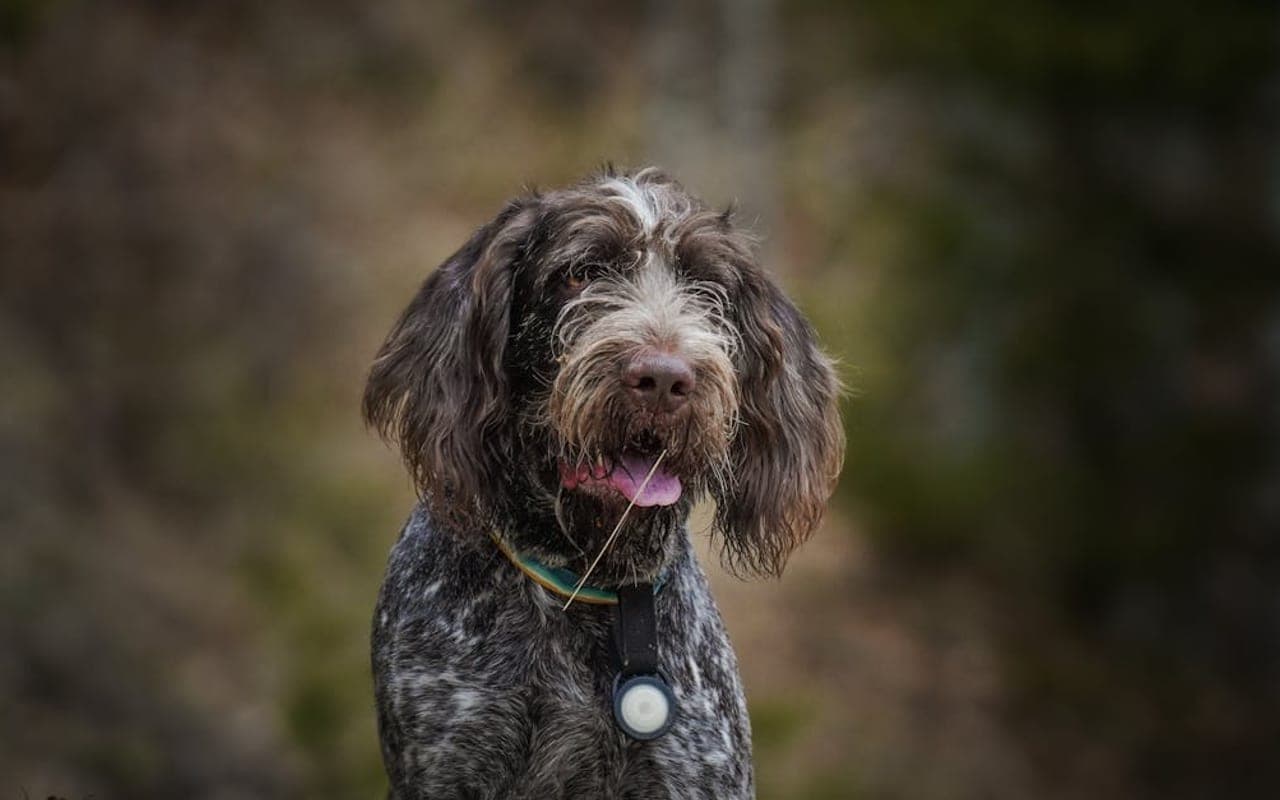
Pudelpointer Care Guide
A German gundog built from a Poodle and a Pointer The Pudelpointer is a versatile German hunting dog created on purpose, not by accident. Beginning around 1881, German hunters — guided by the writer a
In This Guide
Overview
A German gundog built from a Poodle and a Pointer
The Pudelpointer is a versatile German hunting dog created on purpose, not by accident. Beginning around 1881, German hunters — guided by the writer and hunting-dog authority who used the pen name Hegewald (Baron von Zedlitz) — set out to fuse the water-loving, trainable, weather-coated Poodle with the keen nose and staunch pointing instinct of the English Pointer. Over the first roughly 30 years, breeders drew on a small number of Poodles and a much larger group of Pointers to fix the traits they wanted, founding a breed register in 1892 and the first club in 1897. The breed reached North America in 1956 through Bodo Winterhelt, who helped guard its working standard for decades.
The result is a medium-to-large gundog, generally around 21-26 inches tall and roughly 44-66 pounds, usually liver, chestnut or occasionally black. Its signature is a rough, hard, close-lying and weather-resistant coat, often finished with a beard and eyebrow furnishings that shrug off cold water and thorny cover. This is a true "versatile" dog: bred to point upland birds, to track, and to retrieve on both land and water.
Temperament follows function. The Pudelpointer is typically calm and self-controlled in the home but intensely driven in the field — eager to please, highly trainable, and happiest with a real job to do. That biddability makes it a joy to train, but the strong hunting and retrieving drive is the whole point of the breed. A Pudelpointer that hunts, or gets a demanding substitute for hunting, thrives; one left idle will not.
Exercise
Exercise and a job worth doing
Be honest with yourself before choosing this breed: the Pudelpointer is not a low-energy pet. It was built to hunt all day across field, wood and water, and that engine does not switch off in a suburban backyard. Veterinary breed guidance points to on the order of two hours of real activity every day just to keep a Pudelpointer physically and mentally satisfied.
Physical exercise is only half of it. Because this dog is bred to point, track and retrieve, it needs work for its head as much as its legs. Retrieving games, water retrieves and swimming, scent and tracking games, structured obedience, and dog sports such as NAVHDA-style versatile hunting tests give the breed the problem-solving it craves. A Pudelpointer that hunts is in its element; one that cannot hunt needs a demanding substitute, or the drive turns into restlessness, chewing and nuisance behavior.
Practical needs follow from that drive. Provide securely fenced space — a strong hunting instinct means a bored Pudelpointer will happily follow a scent over the horizon — and keep it leashed or under reliable control near roads and wildlife. This breed rewards owners who train early and often; the same biddability that makes it a superb gundog makes it easy to shape when you give it an outlet. Match the dog to an active life and it is a steady, willing partner.
Grooming
Caring for the wiry, weather-resistant coat
The Pudelpointer's coat is a working tool. Breed standards describe a rough, hard, close-lying jacket of medium length over a dense undercoat, usually with a beard and bushy eyebrow furnishings — the whole point of that texture is to shed cold marsh water and turn away briars and thorny cover. Coat type can vary from wiry to rougher or occasionally smoother, with the harsh, wiry version most typical.
Day-to-day care is low-maintenance. A weekly brushing removes debris and loose hair and keeps the facial furnishings from matting; a bath is needed only when the dog is dirty or smelly. Pudelpointers shed seasonally rather than year-round, and most do not need professional clipping.
Where the wiry coat differs from a smooth breed is stripping. Many owners hand-strip or pluck out the old, dead coat, most often in spring as the winter jacket blows, and some tidy the ear fringes for a sleeker look. Hand-stripping here is largely about keeping the coat functional and neat rather than a strict requirement — brushing does most of the work.
Round out grooming with the basics every active dog needs: check and gently dry the ears after swimming or wet field work to discourage moisture-related infections, trim nails before they click on the floor, and brush the teeth regularly.
Health
Health and wellness
The Pudelpointer is widely regarded as a robust, genetically sound working breed — a reputation earned by German breeders who selected hard for soundness and function rather than for looks. Many breed overviews put the average lifespan around 14 years (PetMD). Because the breed pool is comparatively small and performance-focused, the list of well-documented conditions is short. The responsible approach is to understand a few genuine risks, buy from health-testing breeders, and keep up with routine veterinary care — this is about managing risk, not predicting disease, and any specific concern in your own dog belongs with your veterinarian.
The condition most consistently named for the breed is hip dysplasia, an inherited malformation of the hip joint that can lead to pain and arthritis as the dog ages (PetMD). Reputable breeders screen breeding stock for hip health, so ask to see hip evaluations for both parents. Veterinary sources also list primary (idiopathic) epilepsy — recurrent seizures with no identifiable underlying cause — among the conditions seen in the breed (PetMD).
Owners of any deep-chested dog should also be aware of gastric dilatation-volvulus (GDV), or bloat, in which the stomach fills with gas and can twist — a sudden, life-threatening emergency. Large size, a deep and narrow chest, fast eating, older age, and having a first-degree relative that bloated all raise risk; notably, the Standard Poodle that sits in this breed's ancestry is among the predisposed breeds (Cornell University College of Veterinary Medicine). Know the signs — a swollen abdomen, unproductive retching, restlessness and distress — and treat them as an immediate emergency (VCA Animal Hospitals). Some breed profiles additionally mention occasional eye issues such as entropion and allergies, but these are not consistently documented as breed-wide problems, so treat them as possibilities rather than expectations.
Routine wellness for a Pudelpointer looks like that of any hard-working sporting dog: annual veterinary exams, core and lifestyle-appropriate vaccinations, year-round parasite prevention, dental care, and a diet and body condition matched to a very active workload. After swimming or wet field work, dry and check the ears to discourage moisture-related infections (PetMD). None of this replaces professional advice; it is a framework to discuss with your own vet.
Common questions from Pudelpointer owners and prospective owners are answered below.
Frequently Asked Questions
Is the Pudelpointer a good family dog or a good first dog?
For an active, experienced or committed owner it can be a wonderful, affectionate family companion — but it is a high-drive hunting breed, not an easy starter dog. It needs roughly two hours of exercise plus mental work every day and a real outlet for its pointing and retrieving instincts. Families who hunt or who commit to serious daily activity and training tend to do well; households wanting a low-key, low-exercise pet usually do not. First-time owners should go in with eyes open and ideally lean on a mentor or trainer.
Does the Pudelpointer really need to hunt to be happy?
It needs a demanding job, and hunting is the one it was built for. If you do not hunt, you must substitute activities that use the same instincts — retrieving work, water retrieves, tracking and scent games, advanced obedience, or versatile hunting-dog sports such as NAVHDA testing. Without that outlet, the drive tends to show up as restlessness, chewing and other nuisance behaviors.
What health screenings should a Pudelpointer breeder be able to show me?
At a minimum, ask for hip evaluations on both parents, since hip dysplasia is the breed's most cited inherited concern. Ask about any family history of seizures and about the overall health and longevity of the line. Buying from breeders who test and who breed for working soundness is the single best way to lower your risk.
Should I worry about bloat, and can I reduce the risk?
Bloat (GDV) is a real risk for deep-chested dogs and worth taking seriously, though it is not unique to this breed. You can lower risk by feeding measured meals rather than one large meal, slowing a fast eater, and avoiding hard exercise right around mealtimes; some owners of at-risk dogs discuss preventive gastropexy with their vet. Learn the warning signs and seek emergency care immediately if you see them.
Sources
This guide draws on the following published references. Each opens in a new tab so you can check it against what you have read here.
United Kennel Club (UKC)
Pudelpointer Breed Standard(opens in a new tab)American Kennel Club (AKC)
Pudelpointer Dog Breed Information(opens in a new tab)PetMD
Pudelpointer Dog Breed Health and Care(opens in a new tab)VCA Animal Hospitals
Hip Dysplasia in Dogs(opens in a new tab)
Affiliate disclosure: We may earn a commission from qualifying purchases. This doesn't affect our recommendations.
Recommended Products
Pudelpointer Care Guide Book
Breed-focused reading and owner references for Pudelpointer care, training, grooming, and health planning.
Pudelpointer Food and Supplies
Helpful supplies for pudelpointer dog supplies routines at home.
Pudelpointer Grooming Tools
Helpful supplies for pudelpointer grooming tools routines at home.
Get personalized pet care tips
Join our newsletter for breed-specific advice, care guides, and expert tips delivered weekly.
No spam, ever. Unsubscribe anytime.