
Rabbit Diet & Nutrition: The 70/20/10 Rule
Get a rabbit's diet right and you prevent most of the health problems that send rabbits to the vet. Get it wrong and you invite dental disease, obesity, and the condition that most often kills pet rab
Reading Time
📖 4 min read
Guide Type
🐾 Breed-Specific
Last Updated
📅 Sep 9, 2026
Breed
🐰 All Pets
In This Guide
Overview
Get a rabbit's diet right and you prevent most of the health problems that send rabbits to the vet. Get it wrong and you invite dental disease, obesity, and the condition that most often kills pet rabbits: gut stasis. The good news is that the correct diet is simple and cheap, and it rests on one rule almost everyone underestimates — hay is not a supplement, it is the diet.
A healthy rabbit diet has four parts, in order of importance: unlimited grass hay (the bulk of everything they eat), a measured portion of fresh leafy greens, a small, limited amount of high-fibre pellets, and strict avoidance of foods that are inappropriate or toxic. The muesli-style mixes and carrot-and-fruit-heavy bowls of the classic pet-shop picture are exactly what to avoid.
Nutrition
Hay — the foundation, unlimited. Grass hay such as timothy should be available at all times and make up the large majority of what a rabbit eats. It does two essential jobs: the long fibre keeps the gut moving, and the constant chewing wears down teeth that grow continuously throughout a rabbit's life. Aim for a rabbit to eat a body-sized pile of hay every day. Alfalfa hay is the exception — it is too high in calcium and protein for adult rabbits and is reserved for the young or underweight.
Fresh greens — daily, measured. A variety of leafy greens (romaine and other dark lettuces, herbs such as parsley and cilantro) add fibre and help hydration. Introduce new greens gradually, and offer several types rather than relying on a single one.
Pellets — small and limited. Pellets are a supplement, not a staple. Choose a plain, high-fibre pellet (look for roughly 25% crude fibre or more) and feed only a small measured daily amount. Over-feeding pellets is a leading cause of obesity and of rabbits filling up on pellets instead of hay. Avoid muesli-style mixes, which let a rabbit pick out the sugary pieces and leave the fibre behind.
What to avoid. No sugary treats, no grains or bread, no yoghurt drops, and only tiny, occasional pieces of fruit. Some foods are outright dangerous — never feed avocado, and keep rabbits away from the many common houseplants that are toxic to them.
Exercise
Rabbits require daily exercise. Provide permanent access to real floor space: the RSPCA recommends a living space no smaller than 3m by 2m and 1m high for two medium-sized rabbits, and the Rabbit Welfare Association & Fund states that a rabbit living alone needs the same minimum as two, available at all times rather than for limited periods. Active rabbits can eat slightly more pellets; overweight rabbits eat less.
Health
Gastrointestinal (GI) stasis is the reason diet matters so much. It is a condition in which the gut slows or stops, and rabbit-welfare and veterinary sources call it a silent killer because a rabbit can deteriorate quickly. RWAF and veterinary references agree that an inappropriate diet — too little fibre, too much carbohydrate or protein — is the single most avoidable cause, which makes a hay-first diet genuinely preventive medicine.
Because stasis moves fast, treat the warning signs as an emergency rather than a wait-and-see. A rabbit that stops eating, stops producing droppings, or sits hunched and still needs a vet the same day; roughly 12 hours without eating or passing droppings is a veterinary emergency in a rabbit. Prevention is far more effective than treatment: keep hay unlimited, keep pellets and treats limited, provide fresh water at all times, and encourage daily activity.
Frequently Asked Questions
What should a rabbit eat?
A hay-first diet: unlimited grass hay (such as timothy) as the bulk of the diet, a measured daily portion of fresh leafy greens, a small limited amount of high-fibre pellets, and clean water always. Sugary treats, grains, and muesli mixes should be avoided.
How many pellets should a rabbit get?
Only a small, measured daily amount — pellets are a supplement, not a staple. Choose a plain high-fibre pellet (around 25% crude fibre or more) and avoid muesli-style mixes, which let rabbits leave the fibre and eat the sugar. Over-feeding pellets crowds out hay and causes obesity.
Can rabbits eat carrots?
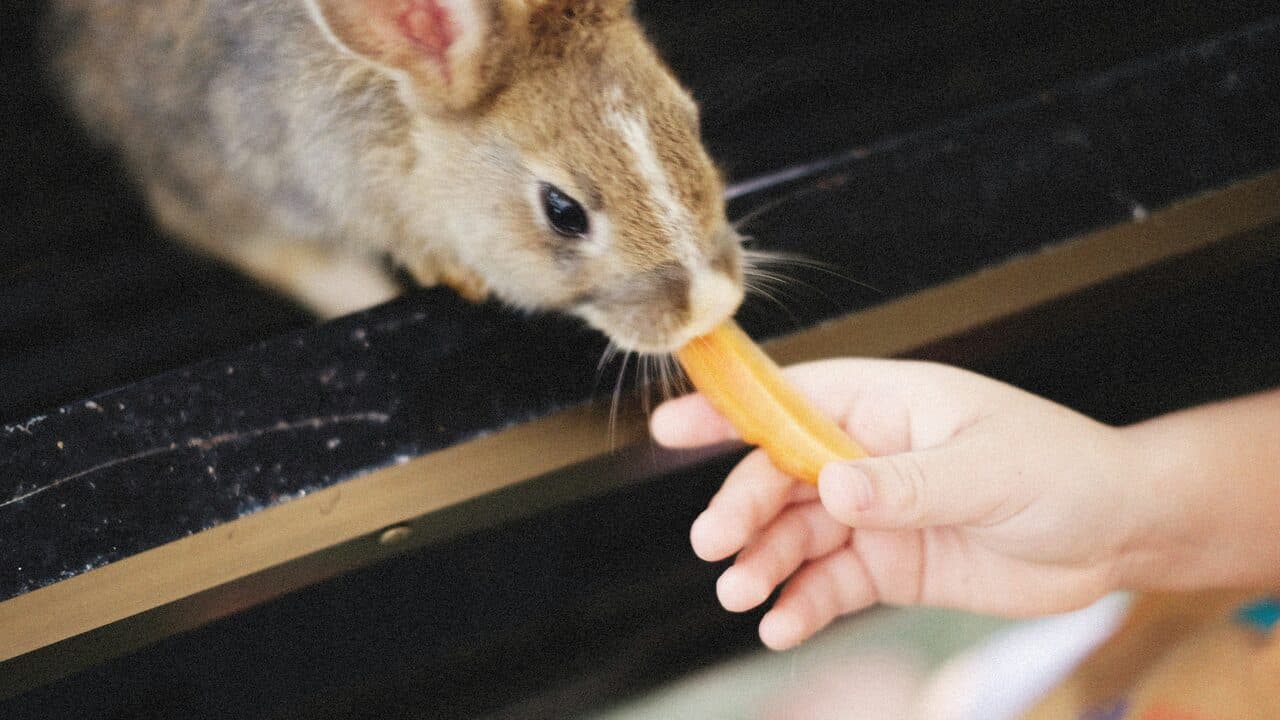
Only as a rare, tiny treat. Carrots are high in sugar, and the cartoon image of a rabbit living on carrots is genuinely misleading — the staple is hay, not root vegetables or fruit.
What is GI stasis and how do I prevent it?
GI stasis is when a rabbit's gut slows or stops — a fast-moving, life-threatening emergency. The most avoidable cause is a low-fibre diet, so prevention is a hay-first diet with limited pellets and treats, constant fresh water, and daily activity. If a rabbit stops eating or passing droppings for around 12 hours, see a vet immediately.
Sources
This guide draws on the following published references. Each opens in a new tab so you can check it against what you have read here.
Rabbit Welfare Association & Fund (RWAF)
How to feed rabbits(opens in a new tab)House Rabbit Society
Healthy Rabbit Diet Guide: Safe Foods & Treats(opens in a new tab)RSPCA
A healthy diet for your pet rabbit(opens in a new tab)PDSA
Feeding your rabbits(opens in a new tab)VCA Animal Hospitals
Feeding Your Rabbit(opens in a new tab)
Get personalized pet care tips
Join our newsletter for breed-specific advice, care guides, and expert tips delivered weekly.
No spam, ever. Unsubscribe anytime.
Recommended Products for Rabbit Diet & Nutrition: The 70/20/10 Rule
Curated products to help you provide the best care.

AFFILIATE DISCLOSURE
This page contains affiliate links. We may earn a commission if you click and make a purchase at no extra cost to you.