
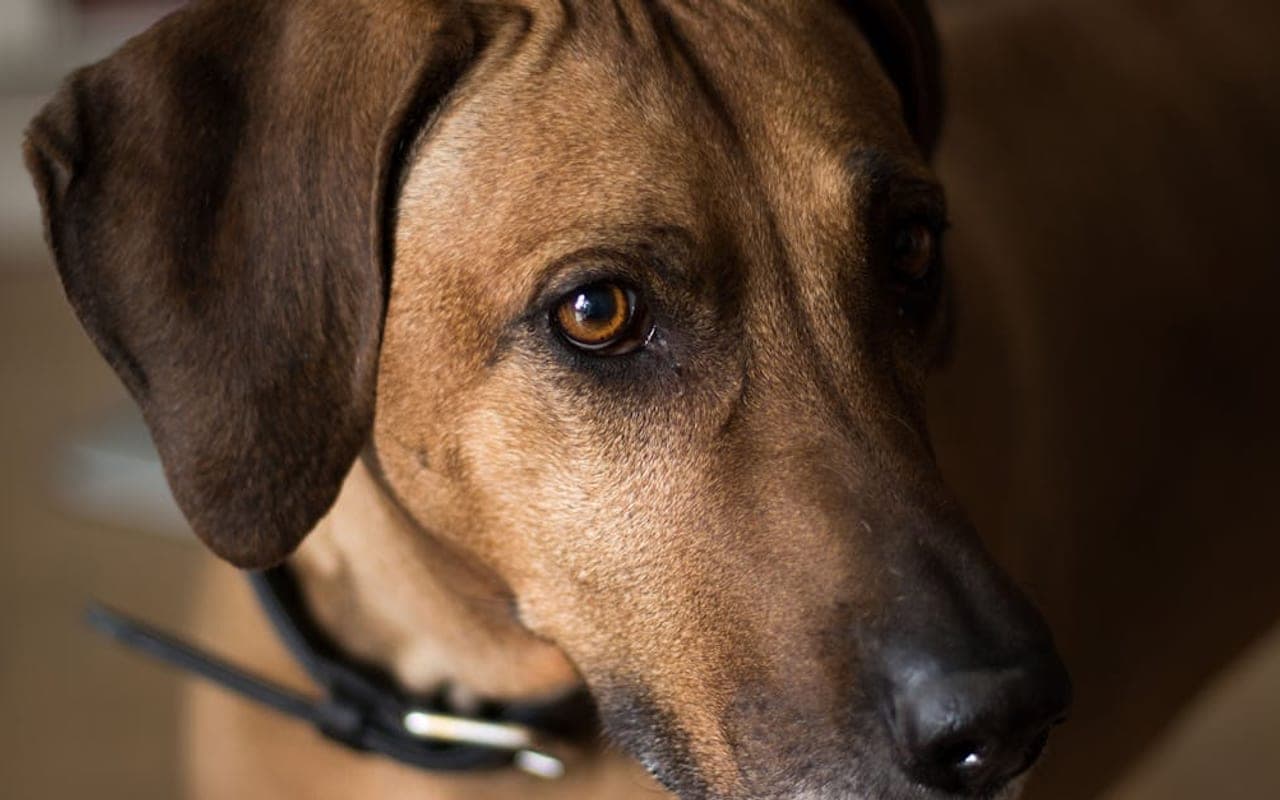
Rhodesian Ridgeback Care Guide
Overview The Rhodesian Ridgeback is a large southern-African hound built for a demanding job: developed by settlers in what is now Zimbabwe and South Africa by crossing European breeds with the native
Reading Time
📖 8 min read
Guide Type
🐾 Breed-Specific
Last Updated
📅 Sep 10, 2026
In This Guide
Overview
Overview
The Rhodesian Ridgeback is a large southern-African hound built for a demanding job: developed by settlers in what is now Zimbabwe and South Africa by crossing European breeds with the native ridged dogs kept by the Khoikhoi people, then used to track big game and to find and hold lions at bay — baying and harassing, never killing — which earned the breed its old nickname, the "African Lion Hound" (AKC; Britannica). That heritage is the key to living with one. This is a working guardian-hunter first and a couch companion second, and almost everything about day-to-day care follows from that.
The breed's signature is the ridge itself: a clean stripe of hair down the spine that grows in the opposite direction to the rest of the coat, starting behind the shoulders and tapering out before the hips, with two matching whorls (crowns) at the top. The ridge is caused by a specific genetic duplication and is the trait the breed is named for (AKC; Hillbertz et al., Nature Genetics 2007).
Physically, expect a powerful, athletic dog — males stand about 25–27 inches and weigh roughly 85 pounds, females about 24–26 inches and around 70 pounds (AKC). The short coat hides a lot of muscle and stamina.
Temperament is where new owners are most often caught out. Ridgebacks are dignified, deeply loyal to their own people, and famously aloof or reserved with strangers, paired with real independence and courage from their hunting past (AKC; Britannica). That independent streak means early, consistent, positive socialization and training are not optional — a Ridgeback will happily make its own decisions if you do not give it good ones first. This guide covers care specific to the breed; breed history and choosing a puppy live on the Rhodesian Ridgeback breed page.
Exercise
Exercise
A Rhodesian Ridgeback was bred to cover rough country all day alongside hunters, and that engine has not gone anywhere. This is a high-energy, high-stamina dog that needs real daily exercise — think a genuine hour or more split across brisk walks, running, and vigorous play, not a single lap of the block (AKC). A Ridgeback whose body and mind are under-worked does not sulk quietly; the independent, problem-solving temperament turns boredom into destruction, escape attempts, and stubbornness.
Two breed-specific cautions shape how you deliver that exercise. First, containment: Ridgebacks are athletic and can clear a surprising fence, so a tall, secure, well-maintained yard is essential, not optional. Second, prey drive. The hunting heritage means a Ridgeback may take off after cats, rabbits, or other small animals, and recall becomes unreliable the instant something bolts — so work off-leash only in genuinely secure spaces and use a long line elsewhere (AKC; Britannica).
Because this is a large, fast-growing breed, manage a puppy's exercise carefully. Keep young dogs off repetitive high-impact activity — long forced runs, jumping, hard landings, stairs — until the growth plates close, since that repeated loading contributes to the joint disease covered in the health section (VCA). Free play on soft ground beats structured pounding for a growing Ridgeback. Pair the physical work with mental work — training, scent games, puzzle feeders — because a tired body alone does not satisfy this thinking breed.
Grooming
Grooming
The coat is the easy part of Ridgeback ownership. It is short, dense, sleek, and close-lying, and it sheds only moderately, so a weekly once-over with a rubber curry mitt or soft bristle brush lifts dead hair and keeps it glossy (AKC). Expect a slightly heavier shed a couple of times a year. Baths are occasional — every couple of months, or when the dog is actually dirty — since over-washing a short coat strips its natural oils for no benefit.
Do not let the low coat workload tempt you into skipping the unglamorous basics, which matter more on a working dog than the coat ever will. Trim the nails about monthly, or whenever you hear them clicking on the floor. Check and gently clean the ears weekly, watching for redness, odor, or discharge that signal infection. Brush the teeth several times a week to stay ahead of dental disease.
One breed-specific habit worth building into grooming time: run your hands slowly along the spine and the midline of the neck and back, feeling for any small lump, tuft, or draining spot along the ridge line, which can be an early sign of the dermoid sinus discussed in the health section. Grooming is when you are most likely to notice it — flag anything unusual to your veterinarian.
Health
Health
Ridgebacks are, on the whole, a fairly sound breed, but a handful of conditions are worth understanding — ranked here by how breed-specific and consequential they are. This is general information about risk, not a diagnosis; your veterinarian is the one to evaluate any individual dog.
Dermoid sinus — the breed-defining one. A dermoid sinus is a congenital defect in which a narrow, tube-like tract of skin runs inward toward the spine, formed during development when the skin fails to fully separate from the neural tube; it usually appears along the midline of the back or neck (RRCUS). It matters here because it is genetically tied to the ridge: the same duplication of the FGF3, FGF4, FGF19 and ORAOV1 genes that produces the ridge also predisposes dogs to dermoid sinus, and dogs carrying two copies of the ridge mutation are at higher risk, while ridgeless Ridgebacks are essentially never affected (Hillbertz et al., Nature Genetics 2007). Breeders palpate newborn puppies for the tract; left untreated a sinus can become infected or reach the spinal cord, and surgical removal is the definitive fix (RRCUS).
Hip and elbow dysplasia. Both are inherited malformations in which the joint develops abnormally and grinds toward painful arthritis over time, and the breed club lists both among the Ridgeback's screened conditions (RRCUS; VCA). The Orthopedic Foundation for Animals reports a relatively low hip-dysplasia rate in the breed, but OFA screening of breeding dogs remains standard (RRCUS; OFA). Keeping your dog lean and managing a puppy's high-impact activity meaningfully lowers the odds of clinical arthritis (VCA).
Degenerative myelopathy (DM). DM is a progressive, non-painful spinal-cord disease — comparable to ALS in people — that causes gradual hind-limb weakness and loss of coordination in older dogs, and it is recognized in Ridgebacks (RRCUS). It is strongly associated with a mutation in the SOD1 gene, and a DNA test lets breeders identify carriers and avoid at-risk pairings (RRCUS; canine DM research).
Hypothyroidism. An underactive thyroid gland is another condition the breed club screens for; it slows metabolism and can cause weight gain, lethargy, and coat or skin changes. It is straightforward to diagnose with bloodwork and manage with a daily thyroid supplement for life (RRCUS; VCA).
Dilated cardiomyopathy (DCM). Heart disease including DCM — in which the heart muscle enlarges and weakens — is noted among health concerns for large breeds such as the Ridgeback by breed-health resources, which is why periodic cardiac evaluation (auscultation and, where indicated, an echocardiogram) belongs in long-term care (ManyPets; Pet Insurance Review).
Bloat / gastric dilatation-volvulus (GDV). As a large, deep-chested dog, the Ridgeback carries the breed-typical risk of bloat, an emergency in which the stomach fills with gas and can twist, cutting off blood flow (Cornell; Wikipedia: GDV). Feeding smaller meals rather than one large one and avoiding hard exercise around mealtimes lowers the risk, and many owners discuss a preventive gastropexy with their vet (Cornell; ManyPets). Learn the warning signs: a swollen belly, unproductive retching, drooling, and restlessness mean go to an emergency vet immediately.
A few Ridgeback-specific questions come up often.
Frequently Asked Questions
Does every Rhodesian Ridgeback develop a dermoid sinus?
No. Dermoid sinus affects only a minority of Ridgebacks and is closely linked to the ridge gene — dogs with two copies of the ridge mutation are at higher risk, while ridgeless dogs are essentially never affected (Hillbertz et al., Nature Genetics 2007). Reputable breeders check puppies at birth, and when a sinus is present it can be surgically removed (RRCUS). Ask a breeder whether their litters are screened for it.
Is the ridge itself a health problem?
The ridge is a normal, defining feature of the breed and is not painful or harmful on its own. The genetics get complicated, though: the same gene duplication that creates the ridge also raises the risk of dermoid sinus, which is why the ridge and that particular defect are discussed together (Hillbertz et al., Nature Genetics 2007). A ridge does not mean your dog has a sinus — it means the breed as a whole warrants newborn screening.
My older Ridgeback's back legs are getting weak — could it be degenerative myelopathy?
Progressive, painless hind-limb weakness in an older Ridgeback is worth taking seriously, as the breed is recognized for degenerative myelopathy, a spinal-cord disease tied to the SOD1 gene (RRCUS). But similar signs can come from arthritis or disc disease, so this needs a veterinary work-up rather than a guess. A DNA test can clarify genetic risk, and your vet can rule out the more treatable causes.
How do I lower my Ridgeback's risk of bloat?
Because Ridgebacks are deep-chested, feed two or more smaller meals a day instead of one big one, and avoid vigorous exercise in the window right around eating (Cornell; ManyPets). Talk to your vet about whether a preventive gastropexy makes sense for your dog, and learn the emergency signs — a distended abdomen, unproductive retching, and restlessness require an immediate emergency visit.
Sources
This guide draws on the following published references. Each opens in a new tab so you can check it against what you have read here.
American Kennel Club
Rhodesian Ridgeback Dog Breed Information(opens in a new tab)Rhodesian Ridgeback Club of the United States
The Rhodesian Ridgeback Club of the United States - The Club(opens in a new tab)Rhodesian Ridgeback Club of the United States
The Rhodesian Ridgeback Club of the United States - CHIC(opens in a new tab)PetMD
Rhodesian Ridgeback Dog Breed Health and Care | PetMD(opens in a new tab)VCA Animal Hospitals
Rhodesian Ridgeback(opens in a new tab)Online Mendelian Inheritance in Animals (OMIA)
OMIA:000272-9615: Dermoid sinus in Canis lupus familiaris (dog)(opens in a new tab)
Affiliate disclosure: We may earn a commission from qualifying purchases. This doesn't affect our recommendations.
Recommended Products
Rhodesian Ridgeback Care Guide Book
Breed-focused reading and owner references for Rhodesian Ridgeback care, training, grooming, and health planning.
Rhodesian Ridgeback Food and Supplies
Helpful supplies for rhodesian ridgeback dog supplies routines at home.
Rhodesian Ridgeback Grooming Tools
Helpful supplies for rhodesian ridgeback grooming tools routines at home.
Get personalized pet care tips
Join our newsletter for breed-specific advice, care guides, and expert tips delivered weekly.
No spam, ever. Unsubscribe anytime.