
Romanian Carpathian Shepherd Care Guide
The Carpatin: a working guardian of the high Carpathians Romanian shepherds needed a dog that could winter outdoors with the flock and put itself between the sheep and a bear without waiting for a com
Reading Time
📖 9 min read
Guide Type
🐾 Breed-Specific
Last Updated
📅 Sep 10, 2026
In This Guide
Overview
The Carpatin: a working guardian of the high Carpathians
Romanian shepherds needed a dog that could winter outdoors with the flock and put itself between the sheep and a bear without waiting for a command. The Ciobanesc Romanesc Carpatin — the Romanian Carpathian Shepherd Dog — is that dog, shaped by use long before it was shaped by a written standard. The Fédération Cynologique Internationale records it as Standard No. 350, Group 1 (sheepdogs and cattle dogs), Section 1, whose current standard is dated 2015. Romania's own FCI-member kennel club, the Asociatia Chinologica Romana, states that "for centuries the principle criteria for selection has been utilisation."
What a Carpatin actually looks like
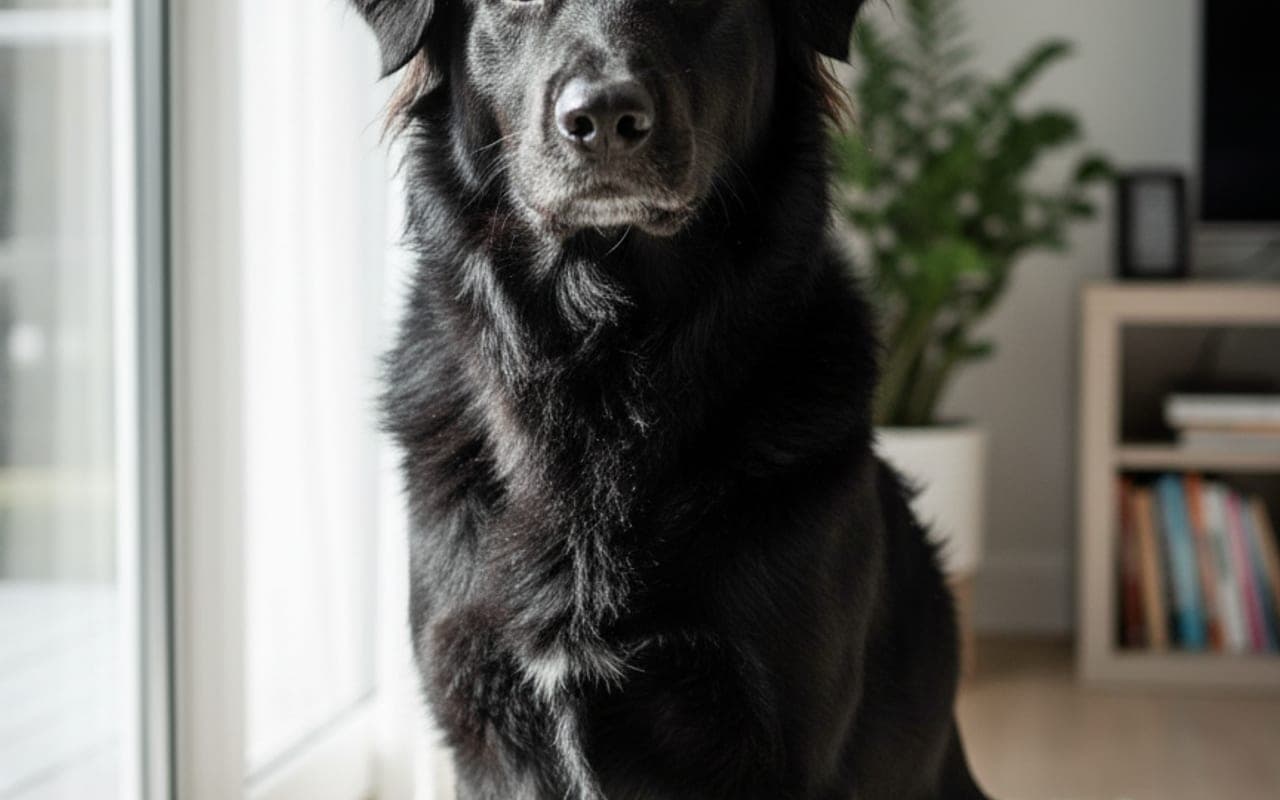
Wolf-grey is the signature. The Carpatin carries a harsh, weather-resistant double coat in wolf-grey and sable shades, short and flat over the head and the front of the legs, longer on the neck, the back of the legs and the tail. The frame is rectangular rather than square, and the impression is agility rather than bulk: males stand roughly 65-73 cm at the withers, females roughly 59-67 cm. The standard sets no weight range at all, asking only that weight be in harmony with size (Fédération Cynologique Internationale).
That coat is also the fastest way to separate the Carpatin from its Romanian cousin. The Romanian Mioritic Shepherd Dog (FCI 349) is the long, shaggy, white-and-grey mountain dog; the Carpatin is the shorter-coated, leaner, wolf-coloured one. Same mountains, different breed.
Temperament
The American Kennel Club, which records the breed in its Foundation Stock Service rather than full registration, describes it as "a natural guardian, very courageous and loyal" and as "a dignified, proud, calm, and balanced dog." Read that as a job description: a guardian is devoted without being biddable, because it was bred to judge a situation alone at 2 a.m. on a hillside — and it will judge your visitors the same way.
Exercise
How much a Carpatin actually needs
This is a working guardian, not a sled dog and not a marathon partner. The natural pattern is long, low-intensity patrolling broken by short bursts of decisive action, so the honest answer is moderate-to-high volume at low intensity: one to two hours a day across walks, patrol time and mental work. A Carpatin that gets none of it does not become calm — it becomes a bored guardian with opinions about the fence line.
Territory beats laps
Space matters more here than speed. Guardians patrol and expand a perceived territory, and an unfenced Carpatin keeps widening its circuit. Give it a large, securely fenced area — solid fencing of good height, checked for gaps and digging points — because containment protects the dog, the wildlife and the neighbours at once. Outside it, keep the dog leashed: recall is not a reliable brake on a dog bred to decide for itself about a threat.
Work for the mind, and socialise early
Spend part of that budget on thinking. Scent games, food puzzles and short reward-based sessions tire a guardian faster than extra distance, because problem-solving is what the job asked of them. Start socialisation early and keep it going through adolescence — visitors, other dogs, traffic, livestock, new surfaces. Suspicion of the unfamiliar is the breed's default, so calm early exposure is what teaches an adult Carpatin to tell an odd event from a threat.
Not a jogging companion
Skip the running-partner plan. Adults are heavy-framed and growing dogs are still building joints, so repetitive high-impact roadwork is the wrong load. Keep puppies to free play on forgiving ground and add distance only after growth finishes; ask your veterinarian when that is.
Grooming
A mountain double coat is working equipment
This coat is equipment, not decoration. A harsh outer layer sheds rain and snow while a dense, soft undercoat holds warm air against the skin; that pairing let these dogs sleep beside a flock through a Carpathian winter. It is short and flat on the head and front legs, longer over chest, rear legs and tail, so the work concentrates there.
The weekly routine
One thorough brush a week is enough outside shedding season, because a harsh outer coat sheds dirt once it dries and does not mat the way a soft coat does. Work in sections down to the skin with a slicker or pin brush, then rake the chest, breeches and tail where dead undercoat collects. Reaching the skin matters more than brushing often, because surface strokes leave a felted layer underneath that traps damp.
Twice a year the undercoat lets go in sheets over a few weeks, and during those stretches the coat needs daily attention rather than weekly. Rake daily in short sessions then, because packed dead undercoat blocks airflow to the skin and that matters most in warm weather.
Do not shave a Carpatin. The harsh outer layer and dense undercoat work as one insulating system in both directions, and clipping it off leaves the dog less protected in heat, not more. Wash sparingly: a harsh coat like this sheds most dirt on its own once it dries, and routine shampooing strips the oils that make it water-shedding in the first place.
Ears, nails and teeth
Check ears weekly for redness, odour or discharge, and ask a veterinarian before putting anything into the ear canal. Trim nails every three to four weeks, because on a heavy breed overlong nails change how the foot loads. Brush teeth several times a week with toothpaste made for dogs, since human toothpaste is not safe for a dog to swallow.
Health
A hardy landrace with a thin evidence file
Very little has been published on Carpatin health, and that shapes everything below. The breed was selected on the mountain for usefulness rather than looks — Romania's FCI-member kennel club, the Asociatia Chinologica Romana, notes that for centuries the criterion of selection was utilisation — and reached a written standard only recently, the Fédération Cynologique Internationale recognising Standard No. 350 (Group 1, Section 1) in 2015. No breed-wide hereditary disease has been documented in it and no health survey exists — good news, but not proof of health, since a small and lightly screened population can simply be under-observed. What follows is awareness of risks common to large working dogs.
Joints: screen the parents, manage the growth
Canine hip dysplasia is a developmental condition in which laxity in the hip joint causes abnormal movement and progressive joint damage, and it is most common in large-breed dogs (American College of Veterinary Surgeons). Elbow dysplasia follows a similar pattern. Genetics drives it; growth rate and food intake shape the outcome.
So buy from breeders who radiograph and score hips and elbows: assessment methods such as PennHIP distraction radiographs and the Ortolani palpation test are done by a veterinarian under sedation (American College of Veterinary Surgeons), so a breeder with no results has not done this. And keep the growing dog lean, because rapid weight gain and excessive food intake worsen how the condition develops (American College of Veterinary Surgeons). Reluctance to rise or jump, a wobbly gait or stiffness after rest belongs in front of a veterinarian.
Bloat and GDV: the emergency to rehearse
Gastric dilatation-volvulus is the risk every owner of a big, deep-chested dog should recognise fast. The stomach distends with gas and twists, sealing both ends and compressing the large abdominal veins, which starves tissue of blood and sends the dog into shock (VCA Animal Hospitals). Untreated it is fatal, while survival exceeds 80 percent when treatment is prompt (Cornell University College of Veterinary Medicine) — recognition is what saves the dog. Watch for repeated retching that brings nothing up, heavy drooling, restlessness, a stretched "praying" posture, laboured breathing, pale gums or a swollen abdomen (Cornell University College of Veterinary Medicine). Treat any of it as an emergency and go to the nearest open veterinary hospital rather than waiting to see whether it settles.
Risk rises with large size, a deep chest, family history, rapid eating, one large daily meal and exercise straight after eating (Cornell University College of Veterinary Medicine), so several smaller meals and a quiet gap around them are sensible. Where risk is high, a preventive gastropexy is worth raising with your veterinarian.
Growth, weight and the long view
A large-breed puppy fed too generously may never look fat and still outgrow its own skeleton, which is how developmental orthopaedic problems start — so aim for a lean body condition of about 4 out of 9 during growth, on a large-breed diet with a controlled calcium-to-phosphorus ratio, until around 18 to 24 months (VCA Animal Hospitals). Slow is the goal, not big. In adulthood, weight control is the cheapest protection a guardian's joints will get, and the annual check earns its place because this breed's stoicism masks discomfort. Your veterinarian is the right person to read all of this against your own dog.
Frequently Asked Questions
Is the Romanian Carpathian Shepherd a healthy breed?
Honestly, nobody can say with confidence. No breed-wide hereditary disease has been documented in the Carpatin and no health survey has ever been run on it, which is an absence of records rather than proof of health — a small, lightly screened working population can simply be under-observed. Treat it as a large working dog and screen accordingly.
What health screening should a Carpatin breeder be able to show me?
Hip and elbow radiograph scores on both parents, since hip dysplasia is most common in large breeds and primarily genetic, and methods such as PennHIP distraction radiographs and the Ortolani test exist so breeding stock can be assessed (American College of Veterinary Surgeons).
What does bloat look like, and what should I do?
Repeated unproductive retching, drooling, restlessness, a stretched "praying" stance, laboured breathing, pale gums or a swollen abdomen (Cornell University College of Veterinary Medicine). Go to an emergency veterinary hospital immediately, because GDV is fatal untreated.
How fast should a Carpatin puppy grow?
Slowly. Overfeeding a large-breed puppy can outpace skeletal development without making it look fat, so the guidance is measured meals, a large-breed growth diet and a lean body condition of about 4 out of 9 until around 18 to 24 months (VCA Animal Hospitals).
Sources
This guide draws on the following published references. Each opens in a new tab so you can check it against what you have read here.
Asociatia Chinologica Romana
Asociatia Chinologica Romana - Romanian Carpathian Shepherd Dog - FCI 350(opens in a new tab)American Kennel Club
Romanian Carpathian Shepherd - Dog Breed Information(opens in a new tab)Fédération Cynologique Internationale
FCI Standard N° 350 — Ciobanesc Romanesc Carpatin (Romanian Carpathian Shepherd Dog)(opens in a new tab)VCA Animal Hospitals
Nutritional Considerations for Large and Giant Breed Dogs(opens in a new tab)Cornell University College of Veterinary Medicine
Gastric dilatation volvulus (GDV) or "bloat"(opens in a new tab)VCA Animal Hospitals
Bloat: Gastric Dilatation and Volvulus in Dogs(opens in a new tab)American College of Veterinary Surgeons
Canine Hip Dysplasia(opens in a new tab)
Affiliate disclosure: We may earn a commission from qualifying purchases. This doesn't affect our recommendations.
Recommended Products
Romanian Carpathian Shepherd Care Guide Book
Breed-focused reading and owner references for Romanian Carpathian Shepherd care, training, grooming, and health planning.
Romanian Carpathian Shepherd Food and Supplies
Helpful supplies for romanian carpathian shepherd dog supplies routines at home.
Romanian Carpathian Shepherd Grooming Tools
Helpful supplies for romanian carpathian shepherd grooming tools routines at home.
Get personalized pet care tips
Join our newsletter for breed-specific advice, care guides, and expert tips delivered weekly.
No spam, ever. Unsubscribe anytime.