
Russian Tsvetnaya Bolonka Care Guide
The first thing to accept about caring for a Russian Tsvetnaya Bolonka is a gap you cannot close: because the breed is genuinely rare, there is no breed-wide health study behind it. No large dataset t
Reading Time
📖 8 min read
Guide Type
🐾 Breed-Specific
Last Updated
📅 Sep 9, 2026
In This Guide
Overview
The first thing to accept about caring for a Russian Tsvetnaya Bolonka is a gap you cannot close: because the breed is genuinely rare, there is no breed-wide health study behind it. No large dataset tells you how often this specific breed develops a given disorder, the way one exists for a Labrador or a Cavalier. That absence is not a reason to worry more than the numbers warrant, but it does change how you plan. Instead of chasing a breed statistic that does not exist, you care for the Bolonka as what it is physically: a small, low-slung toy companion in the same body class as the Bichon Frise, the Maltese, and the Toy Poodle, and prone to the things that class is prone to.
The second thing to accept is that the soft, wavy, non-shedding coat this breed is admired for is the single largest ongoing demand it makes on you. A coat that holds its hair instead of dropping it is more brushing work, not less. Add near-daily tooth care and you have a dog whose upkeep is steady and hands-on rather than occasional. What follows is the practical side of ownership. Background on the breed's origins and temperament sits on the Russian Tsvetnaya Bolonka breed page, and our other breed write-ups are in the care guide library.
Daily Care
The routine that keeps a Bolonka well is short but genuinely daily, and the mouth is at the center of it. VCA calls daily tooth brushing "the best way to prevent tartar build-up," using a dog-formulated toothpaste, and candidly notes that "most dog owners do not brush their dog's teeth daily." On a small-jawed breed where crowded teeth already stack the odds toward gum disease, that daily minute is the highest-value habit you have. Start it in puppyhood so the dog accepts the handling, and pair it with a quick look at the eyes, ears, and coat while you are there.
Two other habits earn their place in the day. Consistent, low-key socialization keeps a companion breed comfortable with visitors and new situations rather than reactive toward them — a few calm exposures a week beat one overwhelming outing. And be deliberate about house-training: small breeds are widely known to take longer to reliably house-train, so a fixed schedule of outings and patient, consistent reinforcement matters more here than with a larger dog. None of this is time-consuming, but it is the kind of care that only works when it is done steadily.
Nutrition
Feed a Bolonka as the small dog it is, and the physiology is genuinely different from a big dog scaled down. Per the American Kennel Club's nutrition guidance, "small and toy breed dogs might need more calories per pound than large-breed dogs," with "higher metabolic rates" that make small-breed formulas more calorie-dense and give them "smaller kibbles, which are easier for small breed puppies to chew and are less of a choking hazard."
Puppyhood is the stage that needs care. Because toy puppies carry "low sugar and body fat reserves," the AKC advises feeding a calorie-dense small-breed puppy food "anywhere from four-to-six times a day and watched closely for symptoms of hypoglycemia" — the low-blood-sugar risk described in the health section. As the dog matures you can space meals out, but keep them regular rather than free-feeding, and weigh the portions. On a dog this small, a few extra grams a day is a meaningful share of its intake, and excess weight presses on exactly the joints and knees this body type cannot spare. You should be able to feel the ribs easily and see a waist from above; when those fade, trim the ration and the treats before the weight settles in.
Exercise
A Bolonka is a companion breed, not an athlete, and its exercise needs are modest and easy to meet indoors or on short outings. A couple of walks a day plus play in the home covers a healthy adult; this is a dog that will happily match a quiet household. Keep impact low — its small joints, and the kneecap risk noted above, mean repeated jumping down from furniture and stairs is worth managing rather than encouraging.
The failure mode with a small companion dog is rarely too little physical exercise; it is too little to do. A bright, people-oriented breed left with empty hours tends to fill them with barking, clinginess, and anxious habits. Short training games, food puzzles, and simply including the dog in the day's routine do more for its behavior than distance ever will.
Grooming
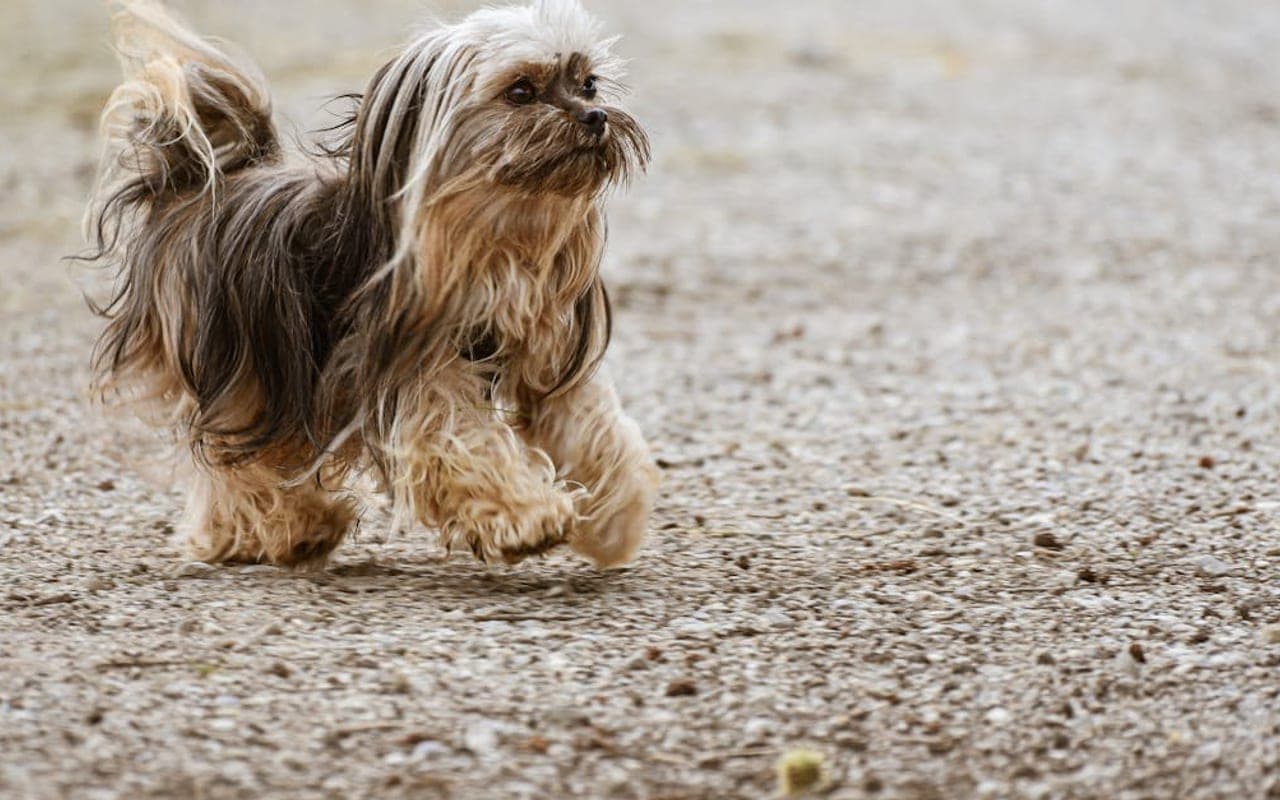
The Bolonka's coat is where most of your care time will go, and the reason is counterintuitive. A non-shedding coat does not stop producing loose hair — it traps it. PetMD's grooming guidance is blunt about the consequence: non-shedding, long-haired dogs "are more prone to matting," and once a mat forms it "CANNOT be combed out." A mat is not a cosmetic problem on a small dog. Left in place it tightens against the skin, and PetMD warns that matting can "constrict a limb" and cause "deep wounds, swelling of the feet, or bedsore-like injuries."
That is why the schedule matters more than the tools. PetMD's baseline for long coats is brushing "two to three times per week, using a slicker brush and metal comb"; for a soft, curl-prone coat like the Bolonka's, treat that as a floor and move toward most days. Work down to the skin rather than gliding over the surface, and pay attention to the friction points where mats start — behind the ears, under the front legs, and around the collar. Plan on a professional groom every several weeks for a tidy trim, and think of home brushing between visits as the thing that actually prevents mats, not the salon appointment.
Health
Because no population-level prevalence study exists for this breed, the honest approach is to watch for the disorders documented across small and toy companion dogs, each tied here to a named veterinary source, rather than to quote a Bolonka-specific rate that nobody has measured.
- Kneecap dislocation (patellar luxation). This is the orthopedic problem most associated with small companion dogs. Cornell University's Riney Canine Health Center describes it as "more common in small breed dogs, such as Toy Poodles, Yorkshire Terriers, Chihuahuas and Pomeranians," and the American Kennel Club's veterinary advice lists the Bichon Frise — a comparable small companion breed — among the most susceptible breeds. The tell is a brief "skipping" gait: the dog hops on a hind leg for a few strides, then carries on as if nothing happened. Cornell notes that veterinarians grade the condition from 1 to 4 and that mild cases are often managed without surgery through weight control, joint supplements, and anti-inflammatory medication, reserving surgery for advanced or persistently painful cases. If you notice that skip, have the knees examined rather than waiting for it to worsen.
- Dental and gum disease. Small mouths concentrate this risk. Cornell reports that "80-90% of dogs over the age of 3 have some component of periodontal disease" and that "it's worse in smaller breeds." VCA Animal Hospitals explains the mechanism directly: "Small breeds and brachycephalics (short-nosed dogs) are more prone to periodontal disease due to the small size of their jaw and crowding of the teeth." For a Bolonka, that makes the mouth the part of the body most likely to cause trouble first, and the part where your daily habits move the outcome the most (see daily_care).
- Low blood sugar in young toy puppies (hypoglycemia). This is a puppyhood risk rather than a lifelong one, but it is worth knowing before you bring one home. PetMD's veterinary-reviewed guidance lists "puppy or toy breed hypoglycemia" as a recognized cause of low blood sugar, with signs including lethargy, weakness, disorientation, tremors, and, if untreated, seizures or collapse. PetMD frames it as a medical emergency and stresses "small, frequent meals to keep their glucose levels regulated." The practical takeaway sits in the nutrition section below.
One honest caution about this breed specifically: the Bolonka is often described in the same breath as "hypoallergenic" and "low-maintenance." The first is a claim no coat can fully deliver, and the second, as the grooming section explains, is the opposite of true. Buy or adopt one for the dog, not for a promise about its coat.
This is general information, not a diagnosis. Always consult your veterinarian for medical decisions about your dog.
Costs
Budgeting for a Bolonka is less about rare emergencies and more about two predictable, recurring lines. The first is grooming. A non-shedding coat that mats if neglected means either a real commitment of your own time with a slicker brush and comb several times a week, or regular professional grooming every few weeks — usually both. The second is dental care: given how strongly small breeds are predisposed to periodontal disease, expect professional cleanings under anesthesia to become a normal part of the dog's veterinary life, on top of the at-home brushing that slows how often they are needed.
Beyond those, plan for the small-dog scenarios this guide has flagged. A knee examination if you ever see the skipping gait, which for a grade-2-or-higher case can mean surgery; watchful puppy feeding to head off hypoglycemia; and routine veterinary visits. Because this is a rare breed with no documented breed-wide risk profile, the sensible financial posture is to keep a cushion set aside — or a pet-health policy in place — for the orthopedic or dental work that small companion dogs are statistically likely to need at some point, rather than to assume a specific bill. Money spent on brushing, dental care, and keeping the dog lean is the cheapest form of care you can buy, because it delays the more expensive kind.
Frequently Asked Questions
How much grooming does a Russian Tsvetnaya Bolonka need?
The Bolonka's soft, wavy, non-shedding coat is the single largest ongoing demand it makes on you, because a coat that holds its hair instead of dropping it traps loose hair and is prone to matting. PetMD's baseline for long coats is brushing two to three times a week with a slicker brush and metal comb, but for this curl-prone coat treat that as a floor and move toward most days, working down to the skin at friction points like behind the ears, under the front legs, and around the collar. Plan on a professional groom every several weeks, since a mat cannot be combed out and can tighten against the skin and cause wounds.
Is the Russian Tsvetnaya Bolonka really hypoallergenic and low-maintenance?
The Bolonka is often described as hypoallergenic and low-maintenance, but the guide cautions that the first is a claim no coat can fully deliver and the second is the opposite of true. Its non-shedding coat traps loose hair and mats if neglected, making upkeep steady and hands-on rather than occasional. Buy or adopt one for the dog, not for a promise about its coat.
What are the main health concerns for a Russian Tsvetnaya Bolonka?
Because no breed-wide prevalence study exists for this rare breed, owners should watch for disorders documented across small and toy companion dogs. Patellar luxation (kneecap dislocation) is the most associated orthopedic problem, showing as a brief skipping gait; Cornell notes vets grade it 1 to 4 and mild cases are often managed without surgery. Dental and gum disease is concentrated by the small jaw and crowded teeth, and young toy puppies face a hypoglycemia (low blood sugar) risk that PetMD frames as a medical emergency.
How should I feed a Russian Tsvetnaya Bolonka, especially as a puppy?
Feed a Bolonka as the small dog it is: per the AKC, small and toy breeds may need more calories per pound and do well on calorie-dense small-breed formulas with smaller kibbles. Because toy puppies carry low sugar and body fat reserves, the AKC advises feeding a small-breed puppy food four-to-six times a day and watching for signs of hypoglycemia. As the dog matures you can space meals out but keep them regular rather than free-feeding, weigh portions, and make sure you can feel the ribs and see a waist from above.
How much exercise does a Russian Tsvetnaya Bolonka need?
A Bolonka is a companion breed, not an athlete, so its exercise needs are modest: a couple of walks a day plus play in the home covers a healthy adult, and it will happily match a quiet household. Keep impact low, because its small joints and kneecap risk mean repeated jumping down from furniture and stairs is worth managing. The bigger issue is boredom rather than too little physical exercise, so short training games, food puzzles, and including the dog in the day's routine do more for its behavior than distance.
Sources
This guide draws on the following published references. Each opens in a new tab so you can check it against what you have read here.
American Kennel Club
American Kennel Club — *Patellar Luxation in Dogs* (Bichon Frise among most susceptible breeds; grades I–IV; surgery successful in small dogs)(opens in a new tab)American Kennel Club
American Kennel Club — *Finding and Choosing the Best Dog Food for Small Breed Dogs* (more calories per pound; higher metabolic rate; calorie-dense small-breed formulas; smaller kibble; toy puppies fed 4–6 times a day with hypoglycemia watch)(opens in a new tab)Cornell University College of Veterinary Medicine, Riney Canine Health Center
Cornell University College of Veterinary Medicine, Riney Canine Health Center — *Patellar Luxation* (more common in small breeds; "skipping" gait; grades 1–4; conservative vs. surgical management)(opens in a new tab)Cornell University College of Veterinary Medicine, Riney Canine Health Center
Cornell University College of Veterinary Medicine, Riney Canine Health Center — *Periodontal Disease* (80–90% of dogs over age 3 have some component of periodontal disease; worse in smaller breeds)(opens in a new tab)PetMD (veterinary
PetMD (veterinary-reviewed) — *Hypoglycemia in Dogs* (puppy/toy-breed hypoglycemia; signs; small, frequent meals; medical emergency)(opens in a new tab)PetMD
PetMD — *Pet Grooming: How to Handle Matting in Dogs and Cats* (non-shedding long-haired dogs more prone to matting; mats cannot be combed out; skin damage; brush long coats 2–3 times per week)(opens in a new tab)VCA Animal Hospitals
VCA Animal Hospitals — *Dental Disease in Dogs* (daily tooth brushing as the best prevention; small breeds and brachycephalics more prone due to small jaw and crowded teeth; most owners do not brush daily)(opens in a new tab)
Affiliate disclosure: We may earn a commission from qualifying purchases. This doesn't affect our recommendations.
Recommended Products
Russian Tsvetnaya Bolonka Care Guide Book
Breed-focused reading and owner references for Russian Tsvetnaya Bolonka care, training, grooming, and health planning.
Russian Tsvetnaya Bolonka Food and Supplies
Helpful supplies for russian tsvetnaya bolonka dog supplies routines at home.
Russian Tsvetnaya Bolonka Grooming Tools
Helpful supplies for russian tsvetnaya bolonka grooming tools routines at home.
Get personalized pet care tips
Join our newsletter for breed-specific advice, care guides, and expert tips delivered weekly.
No spam, ever. Unsubscribe anytime.