
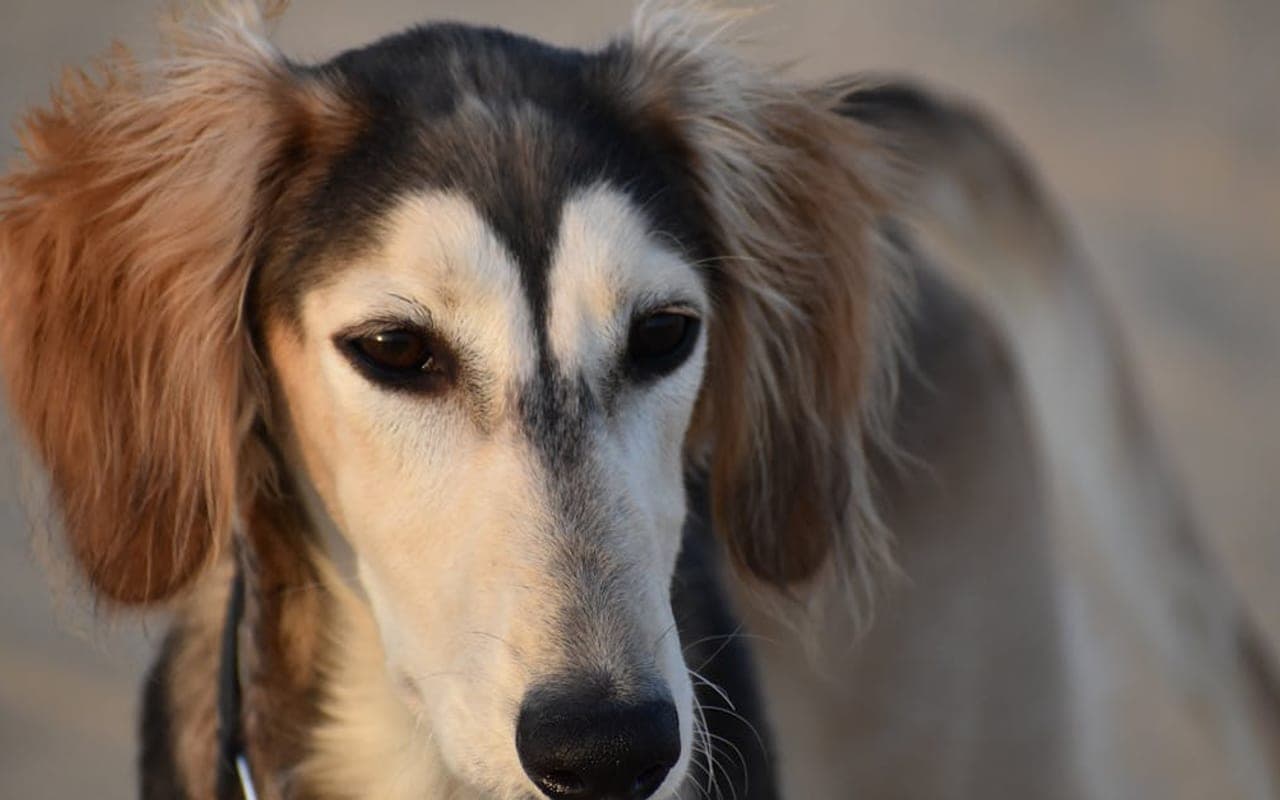
Saluki Care Guide
The Saluki at a Glance The Saluki is one of the oldest known domesticated dog breeds, kept for thousands of years across the Middle East as the coursing hound of desert tribes and, as the American Ken
In This Guide
Overview
The Saluki at a Glance
The Saluki is one of the oldest known domesticated dog breeds, kept for thousands of years across the Middle East as the coursing hound of desert tribes and, as the American Kennel Club puts it, "the hunting hound of kings." Unlike scent hounds that trail a track, the Saluki hunts by sight: it spots quarry such as hare or gazelle at a distance, then runs it down over open desert terrain on raw speed and stamina rather than nose. That single purpose shaped everything about the dog you live with today.
Physically, the Saluki is built to gallop. It is a lean, deep-chested sighthound with a long neck, a tucked-up waist, and long legs that give it a light, floating stride. Two coat varieties are recognised: the smooth, which carries a short close coat all over, and the feathered, which adds silky feathering on the ears, the tail, and the backs of the legs. Both share the same slim, athletic frame — the feathering is decoration on the same running machine.
Temperament is where owners most often misread the breed. Salukis are sensitive, dignified, and aloof, particularly with strangers, and they are independent thinkers bred to make split-second decisions alone at a full run. The AKC describes them as "gentle, dignified, and independent but loyal." They bond deeply with their own people but rarely fawn, dislike rough handling, and respond poorly to heavy-handed training because pressure makes a soft dog shut down. What never switches off is the running drive: an adult Saluki can reach speeds that few other breeds match, and the instinct to chase a moving thing is hardwired, not a habit you can train away. Understanding that drive is the foundation of keeping one safely.
Exercise
Exercising the Saluki
A Saluki was bred to chase quarry across desert for miles, so a walk around the block does not touch what this dog needs. It needs to open up and gallop hard, because the long-legged, deep-chested body is built for sprinting and only real running satisfies it. A Saluki that never runs properly becomes restless, and a bored sighthound is far harder to live with than a tired one.
Where the running has to happen
The single most important rule for this breed is that hard galloping happens inside a securely fenced area, never loose near roads. Salukis carry an intense, hardwired prey drive: a moving cat, squirrel, rabbit, or even a windblown bag can trigger an instant chase, and once a Saluki is running flat-out, calling it back rarely works — the sighting instinct overrides recall in a way training cannot reliably fix. That mix of speed, prey drive, and unreliable recall is why the breed is not an off-leash dog-park or open-field candidate near traffic.
Practical routine
Keep the dog on a lead for street walks and use a martingale-style collar, because a slim Saluki head can slip a standard flat collar when it lunges. For real exercise, give daily access to a tall, fully fenced yard, a hired secure dog field, or a fenced lure-coursing setup where it can sprint safely. Two outings a day, one of them a genuine run, suits most adults.
Growth and body condition
Let young Salukis mature before you ask for long, repetitive road running, so growing joints are not overloaded. Keep the adult lean: this is naturally a thin, racy dog whose ribs and hips show slightly, and extra weight strains the frame and blunts the breed's athleticism. If a normally lean Saluki loses further condition or tires unusually fast, see a vet rather than just resting it.
Grooming
Grooming the Saluki
The Saluki is one of the lower-maintenance coats among the hounds, because the body coat is short, smooth, and close-lying. There is no dense double undercoat to blow out twice a year, so shedding stays modest. That does not mean the coat looks after itself — the areas that need attention are the feathering, not the body.
Body coat
A weekly once-over with a soft bristle brush or a rubber grooming mitt lifts loose hair and spreads skin oils along the short coat, which is enough to keep a smooth Saluki gleaming. Because the coat is thin and the skin sits close to a lean frame with little fat padding, brush gently and check the skin for nicks, ticks, or dry patches as you go — thin-skinned sighthounds mark and scrape more easily than heavier breeds.
Feathering on ears, tail, and legs
Feathered Salukis carry silky longer hair on the ears, the underside of the tail, and the backs of the legs, and this is where mats form. Ear feathering is the classic trouble spot because it hangs into food and water and tangles behind the ear where you cannot see it. Comb the ear fringes, tail, and leg feathering two or three times a week with a fine steel comb, working from the ends inward so you tease knots apart rather than drag them tight against the skin. Lift long ear hair clear at mealtimes, or use a snood, because food dried into the feathering is the usual reason it mats.
Routine care
Trim nails every couple of weeks, because long nails change how this galloping dog loads its feet. Check ears for wax or odour while you comb the fringes, and keep a dental routine going. Bath only when the dog is actually dirty, since over-bathing dries already-delicate skin.
Health
Saluki Health
Salukis are generally hardy and long-lived, but their sighthound build — very low body fat, lean muscle, thin skin, and a deep chest — creates a few breed-specific concerns every owner and treating vet should know. This flags what to watch for; it is not a diagnosis, and any change in your dog should be assessed by a veterinarian who can examine the animal.
Anesthesia and drug sensitivity — tell the vet it is a sighthound
This is the single most important fact to carry into any clinic. Lean sighthounds like the Saluki and Greyhound have far less body fat than typical dogs and metabolise some drugs differently, so certain anesthetics and sedatives can build to higher levels, take deeper effect, and clear more slowly. The Saluki Club of America states that because lean Salukis have less body fat to absorb barbiturate anesthetics, they may go under more deeply and take longer to recover. Broader veterinary anesthesia literature reports the same pattern across sighthounds: lower body fat, less drug-metabolising liver enzyme activity, less serum protein for anesthetics to bind to, and a greater tendency to lose body heat under anesthesia. So before any surgery, dental, or sedation, tell the team the dog is a sighthound so they can plan drug choice, dosing, monitoring, and warming. A vet unfamiliar with the breed may not raise it, so raise it yourself.
This is NOT the MDR1 (multidrug-sensitivity) gene issue. MDR1 is concentrated in herding breeds — Collies, Australian Shepherds, Shelties and relatives — and affects drugs such as high-dose ivermectin. The Saluki's anesthetic sensitivity comes from its lean build, a different mechanism, so MDR1 should not be assumed for this breed unless a specific test or vet says so.
Heart disease
Cardiac disease is one condition the breed is actively screened for. The Saluki Club of America notes some Salukis may be prone to heart problems, including dilated cardiomyopathy (DCM), in which the heart muscle weakens and enlarges. Because heart disease can develop with age and stay silent early, the club advises that screenings matter as a dog gets older, and responsible breeders often echocardiogram their breeding stock. A persistent cough, laboured or fast breathing, unusual tiredness, fainting, or dropping exercise tolerance in a dog that normally loves to run all warrant a vet check — not proof of heart disease, just a reason to have the heart looked at rather than wait.
Thyroid function and the sighthound reference range
Hypothyroidism is recognised in the breed, with an important nuance. As the Saluki Club of America explains, Salukis can normally function very well with lower thyroid values than many other breeds. A Saluki's result can therefore look "low" against a standard canine range yet be normal for the breed — a real risk of over-diagnosis and unnecessary lifelong medication. If thyroid testing is done, ask that it be read with sighthound norms in mind, ideally via a full panel rather than a single value, and discuss borderline numbers before treating.
Bloat (GDV) in a deep-chested breed
Like other deep-chested dogs, the Saluki carries some risk of gastric dilatation and volvulus (GDV), or bloat — a sudden, life-threatening emergency in which the stomach fills with gas and can twist. VCA Animal Hospitals describes it as most common in large, deep-chested breeds and needing veterinary care within minutes to hours, not the next day. Learn the signs before you need them: a swollen or distended belly, unproductive retching (trying to vomit with little coming up), drooling, restlessness or pacing, and signs of pain or collapse. If you see these, treat it as an immediate emergency. Measures some owners adopt, such as avoiding one large gulped meal and heavy exercise right around eating, are worth discussing with your vet.
Heat, sun, and the lean thin-skinned body
The Saluki evolved for desert heat, but its lean frame and fine coat cut both ways at home. With little body fat for insulation, Salukis feel the cold and often appreciate a coat in winter, while their thin skin gives less sun protection than a heavy coat. Give shade and water on hot days, avoid hard galloping in peak heat, and never leave any dog in a warm car. Watch for overheating — heavy panting, weakness, distress — and cool the dog if you see it.
Cancer and routine care
The Saluki Club of America notes the breed can be susceptible to certain cancers and that annual check-ups to catch symptoms early matter. Otherwise the baseline is the same as any dog: keep it lean, keep vaccinations and parasite prevention current, maintain dental care, and use regular vet check-ups so problems are caught early rather than late.
Frequently Asked Questions
Why do I need to tell the vet my Saluki is a sighthound before surgery?
Because lean sighthounds have very low body fat and metabolise some drugs differently, certain anesthetics can hit harder and clear more slowly. The Saluki Club of America notes lean Salukis may go under more deeply and take longer to recover, so the vet can plan drug choice, dosing, warming, and monitoring in advance.
Is the Saluki's drug sensitivity the same as the MDR1 gene problem?
No. MDR1 multidrug sensitivity is concentrated in herding breeds like Collies and Australian Shepherds and affects drugs such as high-dose ivermectin. The Saluki's sensitivity comes from its lean sighthound build and is a different mechanism, so do not assume MDR1 for a Saluki unless a specific test or vet says so.
My Saluki's thyroid blood test came back low — does it have hypothyroidism?
Not necessarily. The Saluki Club of America notes Salukis can function normally with lower thyroid values than many breeds, so a result that looks low on a standard range may be normal for the breed. Ask your vet to interpret it with sighthound norms, ideally via a full panel, before starting lifelong medication.
What bloat warning signs should I act on immediately?
A swollen or distended belly, repeated retching that brings up little or nothing, drooling, restlessness, and signs of pain or collapse. VCA Animal Hospitals describes bloat as a deep-chested-breed emergency needing care within minutes to hours, so treat these signs as a reason to reach a vet or emergency clinic right away.
Sources
This guide draws on the following published references. Each opens in a new tab so you can check it against what you have read here.
Saluki Club of America
Saluki Health - Saluki Club of America(opens in a new tab)American Kennel Club (AKC)
Saluki Dog Breed Information(opens in a new tab)PetMD
Saluki Dog Breed Health and Care(opens in a new tab)VCA Animal Hospitals
Saluki(opens in a new tab)
Affiliate disclosure: We may earn a commission from qualifying purchases. This doesn't affect our recommendations.
Recommended Products
Saluki Care Guide Book
Breed-focused reading and owner references for Saluki care, training, grooming, and health planning.
Saluki Food and Supplies
Helpful supplies for saluki dog supplies routines at home.
Saluki Grooming Tools
Helpful supplies for saluki grooming tools routines at home.
Get personalized pet care tips
Join our newsletter for breed-specific advice, care guides, and expert tips delivered weekly.
No spam, ever. Unsubscribe anytime.