
Schipperke Care Guide
What the Schipperke really is The Schipperke is Belgium's "little captain" — the traditional barge dog of the canals and waterways of the Low Countries, where it earned its keep as a shipboard watchdo
In This Guide
Overview
What the Schipperke really is
The Schipperke is Belgium's "little captain" — the traditional barge dog of the canals and waterways of the Low Countries, where it earned its keep as a shipboard watchdog and a relentless hunter of rats and vermin. This is not a lapdog that happens to be small; it is a working ratter in a compact frame, and the job still shows in the temperament centuries later.
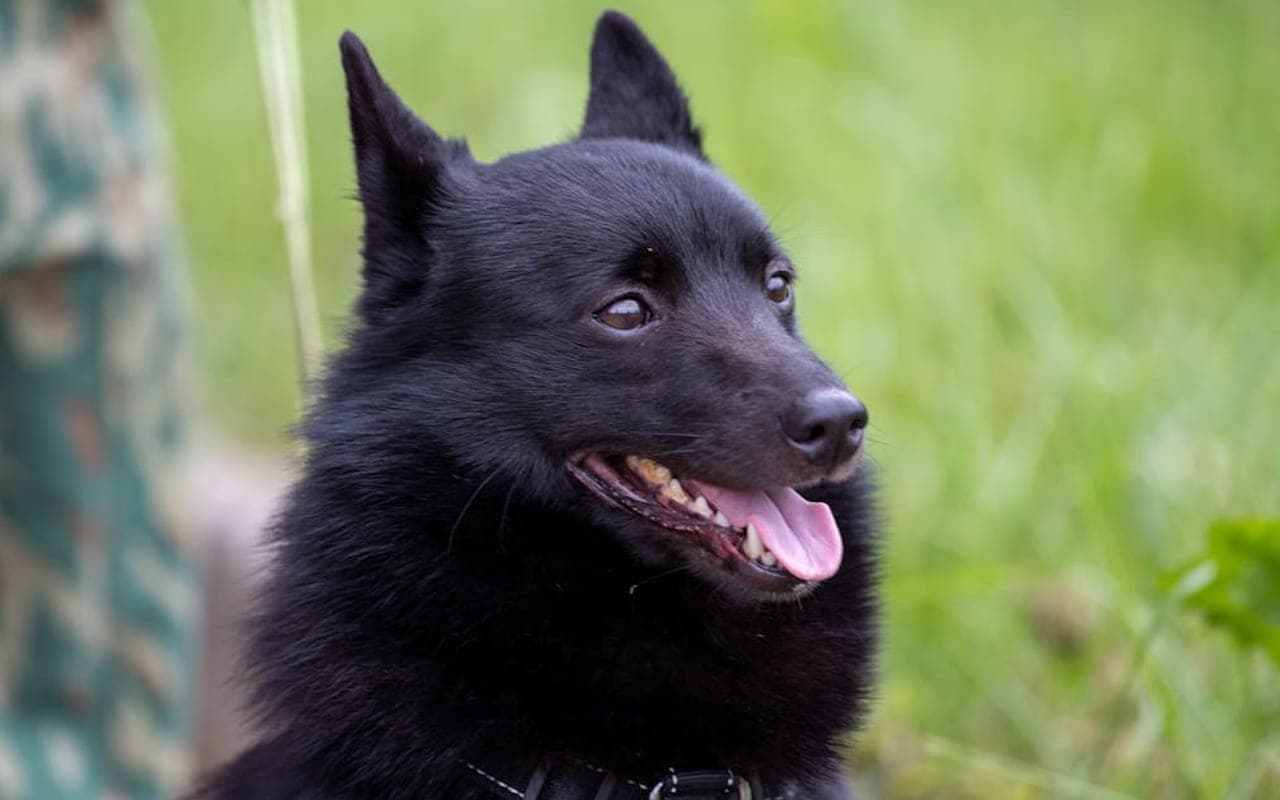
In looks, the Schipperke is unmistakable: a small, thickset, cobby black dog with a sharp, fox-like face and a silhouette that slopes from a thick neck down toward the rear. The showpiece is the coat — an abundant black double coat that stands off the body into a pronounced ruff, cape and "culottes." Under the AKC standard the outer coat must be black; any other color is a disqualification. Most adults weigh roughly 10 to 16 pounds and stand about 10 to 13 inches at the shoulder, and the breed is known as robust and long-lived, commonly reaching 13 to 15 years.
Temperament is the part new owners underestimate. Schipperkes are intensely curious, busy, and self-directed — famously described as mischievous with "never a dull moment." They are alert natural watchdogs that will bark to announce anything unusual, and they are notorious escape artists: a curious, under-stimulated Schipperke will slip a gate, dig under a fence, or ignore an electronic boundary in pursuit of an interesting scent. Bring one home expecting a smart, high-energy companion that needs a job, secure containment, and steady engagement — not a quiet, low-maintenance pet.
Exercise
Exercise and containment for a Schipperke
A Schipperke is a small dog with the drive of a working ratter, so its exercise needs run higher than the size suggests. Plan on daily leashed walks plus active play, and treat mental work as non-negotiable alongside the physical. These are highly intelligent, job-seeking dogs that thrive on tasks — training games, puzzle feeders, scent work, fetch, and dog sports all suit them. A Schipperke that is left bored and under-exercised typically invents its own entertainment: excessive barking, destructive chewing, or digging up the yard.
The trait that shapes everything outdoors is the breed's escape artistry. Schipperkes are intensely curious and will take off after an interesting scent without a second thought, and they are clever, determined problem-solvers about getting loose. They slip through open gates and doors in moments, dig tunnels under fences when bored, and are not reliably contained by electronic/invisible fences.
That means containment must be physical and solid. Exercise a Schipperke on leash in unfenced areas, and rely on a secure, tall fence with gaps and gate latches checked; to stop digging escapes, add an L-footer of chicken wire, hardware cloth, or chain-link along the fence base. Even inside a fenced yard, supervise rather than leaving the dog out alone. Get the daily physical and mental output right and you get a settled companion; skip it and the escape instinct and nuisance behaviors both intensify.
Grooming
Grooming the Schipperke's double coat
The Schipperke wears a true double coat: a harsh, straight black outer coat over a dense, short undercoat that thickens dramatically around the neck to form the breed's signature stand-off ruff, cape and culottes. Understanding that structure is the whole of Schipperke grooming.
For most of the year the coat is surprisingly low-maintenance — a thorough brushing once or twice a week is enough to lift loose hair and keep the ruff and cape looking full. The breed does not need professional trimming or scissoring to look right.
The exception is shedding. Schipperkes "blow" their undercoat once or twice a year — typically in spring and fall — and during those weeks the dense undercoat drops in large volume. Brush far more frequently through a blow, ideally most days, using an undercoat rake or slicker to clear the shedding underlayer before it mats behind the ears, in the ruff, and in the culottes.
One rule matters most: do not shave or clip a Schipperke's double coat. The two layers work together to insulate against heat and cold and to protect the skin, and clipping can leave the coat patchy or coarse and may not regrow correctly. Manage the coat by brushing it out, not cutting it down. Bathe only occasionally, when the dog is genuinely dirty, plus routine nail trims and ear checks.
Health
Schipperke health: the breed-specific risks
The Schipperke is generally a hardy, long-lived breed, but a few conditions are meaningfully tied to the breed and worth understanding before you buy or as your dog ages. The points below describe risks, not a diagnosis — anything you notice in your own dog should be assessed by your veterinarian.
Mucopolysaccharidosis IIIB (MPS IIIB / Sanfilippo type B)
This is the health issue most specific to the Schipperke. MPS IIIB is an inherited, autosomal-recessive lysosomal storage disease caused by a variant in the NAGLU gene, which leaves the dog deficient in the enzyme alpha-N-acetylglucosaminidase. Affected dogs develop a slowly progressive loss of coordination (ataxia) at around two years of age, and the disease is ultimately fatal, typically requiring humane euthanasia before six years of age. Because it is recessive, a dog needs two copies of the variant to be affected, and healthy carriers with one copy show no signs. A DNA test has been available since 2003 and has sharply reduced the disease in the breed through informed breeding. Ask any breeder for the MPS IIIB DNA-test results of the parents.
Legg-Calvé-Perthes disease
In this condition the head of the femur (the "ball" of the hip joint) degenerates, likely from an interrupted blood supply, causing pain and lameness in a rear leg. It shows up in young Schipperkes, usually before 18 months of age, and is often treated surgically.
Epilepsy and other tracked conditions
Epilepsy, seen as recurrent seizures, occurs in the breed and is among the conditions the Schipperke Club of America tracks along with autoimmune skin disease, Cushing's disease, diabetes mellitus, and atopy. The breed's health screening (CHIC) also calls for patella, thyroid, and eye clearances, reflecting the risk of luxating patella, hypothyroidism, and inherited eye disease.
Routine small-dog care
Like other small breeds, Schipperkes are prone to dental disease, so at-home tooth brushing and veterinary dental care matter over a long life. Keep your dog lean — a healthy weight is roughly 10 to 16 pounds — to protect the joints, and keep up core preventive care with your vet.
Sources for this section: Schipperke Club of America; PetMD; and Kim et al., "An exonic insertion in the NAGLU gene causing Mucopolysaccharidosis IIIB in Schipperke dogs," Scientific Reports / PMC7035321.
Owners often ask us the following about Schipperke health.
Frequently Asked Questions
What is the most important health test to ask a Schipperke breeder about?
Ask for proof that both parents were DNA-tested for MPS IIIB (the NAGLU-gene variant). Because it is recessive, breeding two carriers can produce affected pups, so a responsible breeder tests and shares results. Patella, thyroid, and eye clearances are also part of the breed's recommended screening.
Are Schipperkes generally healthy dogs?
Yes — the breed is considered robust and long-lived, commonly reaching about 13 to 15 years. The concern is not frailty but a handful of specific inherited conditions, most notably MPS IIIB, which is why parent DNA testing matters more than in many breeds.
My young Schipperke is limping on a back leg — what could it be?
Rear-leg lameness in a Schipperke under about 18 months should be checked promptly by a vet, as the breed is predisposed to Legg-Calvé-Perthes disease (degeneration of the femoral head). Only a veterinary exam and imaging can diagnose it, so do not wait it out.
Do Schipperkes have a seizure disorder?
Epilepsy occurs in the breed and is one of the conditions the Schipperke Club of America monitors. If your dog has a seizure, record what you see and contact your veterinarian; recurrent seizures need veterinary evaluation rather than home management.
Sources
This guide draws on the following published references. Each opens in a new tab so you can check it against what you have read here.
American Kennel Club (AKC)
Schipperke Dog Breed Information(opens in a new tab)Schipperke Club of America
All About Schipperkes(opens in a new tab)PetMD
Schipperke Dog Breed Health and Care(opens in a new tab)Embark Veterinary
Mucopolysaccharidosis IIIB, Sanfilippo Syndrome Type B, MPS IIIB in dogs(opens in a new tab)
Affiliate disclosure: We may earn a commission from qualifying purchases. This doesn't affect our recommendations.
Recommended Products
Schipperke Care Guide Book
Breed-focused reading and owner references for Schipperke care, training, grooming, and health planning.
Schipperke Food and Supplies
Helpful supplies for schipperke dog supplies routines at home.
Schipperke Grooming Tools
Helpful supplies for schipperke grooming tools routines at home.
Get personalized pet care tips
Join our newsletter for breed-specific advice, care guides, and expert tips delivered weekly.
No spam, ever. Unsubscribe anytime.