
Tibetan Mastiff Care Guide
The Tibetan Mastiff at a glance The Tibetan Mastiff is a livestock-guardian dog from the high Himalaya, developed over centuries by nomadic herders and monastery communities to defend flocks, tents, a
In This Guide
Overview
The Tibetan Mastiff at a glance
The Tibetan Mastiff is a livestock-guardian dog from the high Himalaya, developed over centuries by nomadic herders and monastery communities to defend flocks, tents, and property against wolves, leopards, and intruders across the Tibetan Plateau. Almost everything about the breed today traces back to that job, so it helps to read the dog as a guardian first and a companion second.
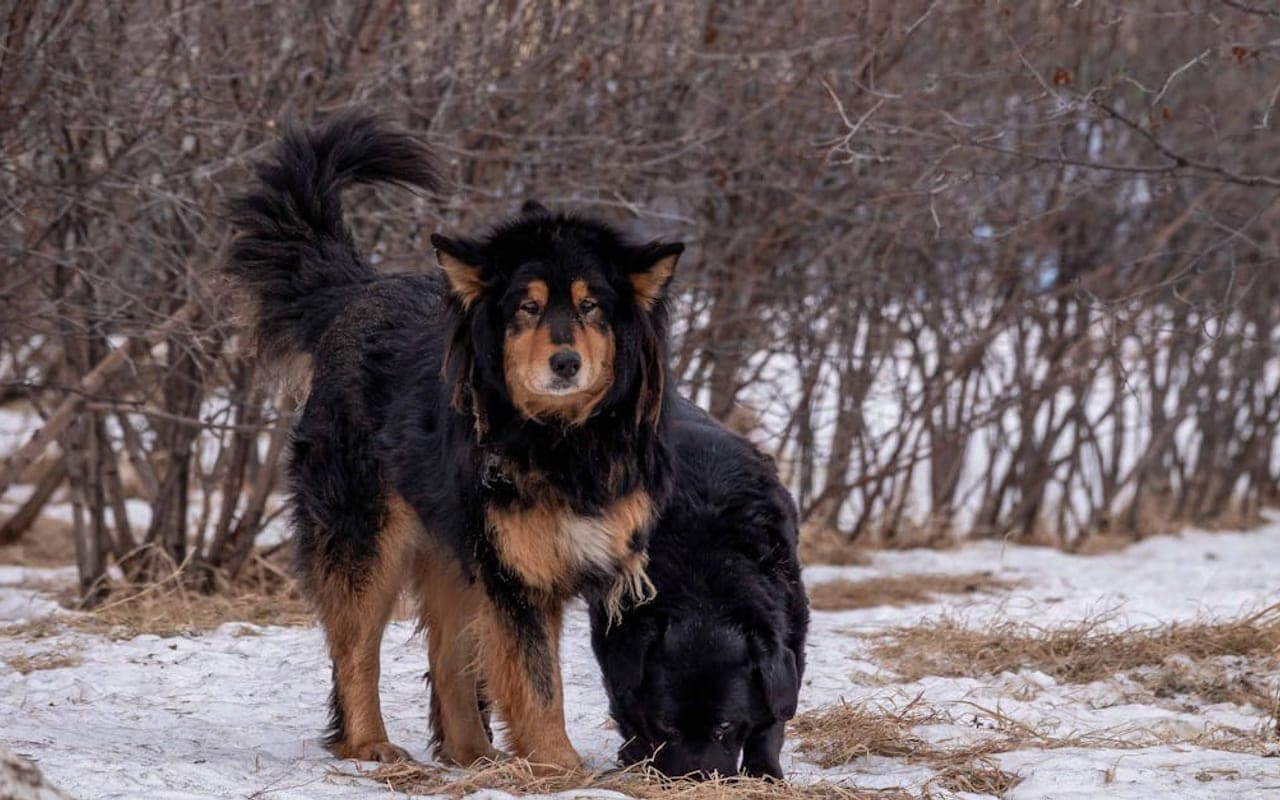
Physically it is one of the largest of the guardian breeds: males commonly stand around 26 inches and up at the shoulder and often weigh well over 100 pounds, carrying a broad head, deep chest, and a heavy double coat topped by a pronounced mane around the neck and shoulders that is usually fuller in males. The coat evolved for brutal mountain winters rather than show, and it drives much of the grooming and heat-tolerance advice elsewhere in this guide.
Temperament is where the working past shows most. The American Kennel Club describes the breed as watchful, aloof, and territorial with strangers while calm and devoted with its own family. These dogs were bred to patrol at night and make their own decisions when no human was watching, so independence, a low biddability, and a tendency to bark and roam after dark are features of the guarding instinct, not training failures. Early, consistent socialization matters because a territorial giant that has never learned to read normal visitors is a real management problem.
Unlike breeds that shed steadily year round, the Tibetan Mastiff typically "blows" its dense undercoat in one heavy seasonal molt, so for much of the year the coat is comparatively low-maintenance and then demands concentrated effort for a few weeks. Prospective owners should weigh the breed's size, guarding drive, secure-fencing needs, and giant-breed health profile before committing, ideally alongside a breeder who health-tests and a veterinarian familiar with large working dogs.
Exercise
Exercise and activity
The Tibetan Mastiff's exercise needs surprise people who expect a giant working dog to be tireless. As a livestock guardian rather than a herding or sporting breed, it was bred to conserve energy and patrol a territory, not to run for hours, so its daily requirement is genuinely moderate. A couple of walks and some room to patrol usually satisfies an adult; this is not a breed that needs to be exhausted every day.
That moderate need comes with firm conditions, all of which follow from the guarding instinct. A securely fenced yard is close to non-negotiable, because a territorial dog of this size that gets loose is both a roaming risk and a liability, and Tibetan Mastiffs are known to patrol boundaries and test weak fencing. The fence should be tall and solid rather than ornamental. For the same reason, walks should be on a leash and harness with a handler who can manage a very strong dog, since a guardian that decides a passerby or another dog is a threat is difficult to hold on an undersized lead.
Mental stimulation matters as much as physical work. This is an intelligent, independent thinker that becomes bored and destructive without a job, so scent games, food puzzles, training that respects its low biddability, and simply having a territory to oversee do more for its wellbeing than repetitive drilling.
Two cautions are breed-specific. First, the Tibetan Mastiff is not a jogging or endurance-running partner; its heavy build and guardian metabolism are not suited to sustained road running, and forcing distance work on a giant breed stresses developing or aging joints. Puppies especially should not be pushed, because over-exercising a fast-growing large-breed skeleton can harm the joints. Second, that dense double coat makes the breed poorly heat-tolerant, so exercise in the cool of the morning or evening in warm weather, provide shade and water, and watch for overheating rather than pressing on in the heat.
Grooming
Grooming the Tibetan Mastiff
The Tibetan Mastiff carries a thick double coat: a coarse, weather-resistant outer layer over a dense wool undercoat, plus the heavy mane framing the neck and shoulders. Because that coat was built for Himalayan winters, its grooming rhythm is unusual and worth understanding before you bring one home.
For most of the year the coat is surprisingly manageable. A thorough brushing about once a week keeps it healthy, lifts out loose hair and dirt, and lets you check the skin underneath, because the mane and the dense hindquarter feathering are exactly where mats form if they are ignored. Use a pin brush or slicker to work the outer coat and a comb to reach the thicker areas around the neck, behind the ears, and on the "trousers" of the back legs.
The picture changes once a year. The American Kennel Club notes that Tibetan Mastiffs typically "blow" their undercoat in a single heavy seasonal shed, usually in spring or early summer, releasing a large volume of wool over a few weeks. During this molt, brief weekly sessions are not enough. Switch to daily work with an undercoat rake or a deshedding tool to pull the loosening undercoat free, because undercoat left trapped in the coat traps moisture and heat against the skin and encourages mats and hot spots. This concentrated shed is the reason the breed is sometimes described as low-shedding the rest of the year.
Bathing can be occasional rather than routine; the coat sheds dirt reasonably well, and over-bathing strips protective oils. Time a bath to the seasonal blow, when warm water and a good dry help release the dead undercoat faster.
The Tibetan Mastiff is a natural, unshaped breed, so it does not need clipping or scissoring, and shaving the double coat is discouraged because that coat insulates against heat as well as cold and does not always grow back correctly. Keep nails trimmed and check the ears, since the heavy coat can hide problems until they are advanced.
Health
Health and common conditions
The Tibetan Mastiff is generally a hardy, long-lived giant breed, but its size, working ancestry, and relatively small gene pool concentrate a specific set of risks. The Orthopedic Foundation for Animals (OFA), through its CHIC program, and the American Tibetan Mastiff Association point to a defined panel of pre-breeding tests, which tells you what to ask a breeder about and what to watch for. The conditions below are risks to understand, not a diagnosis; anything you notice should be assessed by your own veterinarian.
Hip and elbow dysplasia
As a large, heavy breed the Tibetan Mastiff is prone to hip and elbow dysplasia, developmental malformations of these joints that can cause pain, an abnormal gait, and osteoarthritis over time. Because the trait is partly genetic, responsible breeders screen stock through OFA hip and elbow evaluations (or PennHIP for hips), with final OFA joint certification at 24 months. Ask to see these results, and keep a growing puppy lean, because excess weight loads immature joints.
Hypothyroidism and autoimmune thyroiditis
The breed can develop hypothyroidism, often driven by autoimmune thyroiditis in which the immune system attacks the thyroid gland. Signs build gradually and are easy to miss: weight gain without more food, low energy, coat and skin changes, or cold intolerance. It is diagnosed by a veterinary blood panel and usually managed well with a daily thyroid medication, so it is manageable rather than catastrophic. OFA maintains a thyroid database, and periodic thyroid testing is part of the breed's recommended screening.
Canine inherited demyelinative neuropathy (CIDN)
CIDN is a rare, breed-specific hereditary nerve disease historically documented in Tibetan Mastiff puppies, notable enough to appear in breed-club and veterinary literature on the breed. It damages the myelin sheath insulating peripheral nerves, so signals to the muscles fail. Affected puppies show weakness in the first weeks of life, roughly around 7 to 10 weeks by many accounts and as early as about six weeks by others, progressing to an inability to stand or walk; it is untreatable and fatal, and it is inherited as an autosomal recessive trait traced to particular bloodlines. It is uncommon and never appears in an adult dog, but it is a large part of why pedigree transparency matters in this breed, so discuss line history with any breeder.
Eye conditions
Tibetan Mastiffs can inherit eye problems, most commonly entropion, in which the eyelid rolls inward so the lashes rub the eye's surface, causing irritation and, if unaddressed, damage; it is typically corrected surgically. Cataracts and other hereditary eye conditions are also seen. Breed screening includes an eye exam by a board-certified veterinary ophthalmologist (an ACVO Diplomate, recorded through OFA), and squinting, redness, or excessive tearing warrants a veterinary check.
Bloat and gastric dilatation-volvulus (GDV)
Like other large, deep-chested breeds, the Tibetan Mastiff is considered at risk for bloat and its most dangerous form, gastric dilatation-volvulus, in which the stomach distends with gas and can twist on itself. GDV is a life-threatening emergency, not a wait-and-see problem. Learn the warning signs so you can act fast: a swollen or hard abdomen, unproductive retching with nothing coming up, restlessness and pacing, drooling, and distress or collapse. If you see these, reach a veterinarian immediately, and ask in advance about risk-reduction steps and whether a preventive gastropexy is appropriate.
Lifespan and growth
The Tibetan Mastiff's typical life expectancy is on the order of 10 to 12 years, long for a giant breed. These dogs grow slowly and mature late, and pushing growth by over-feeding or over-exercising a puppy can worsen joint problems, so a growth-appropriate diet and controlled exercise in the first couple of years pay off later. Treat this guide as a checklist for conversations with your veterinarian, and prioritize breeders who health-test, the single biggest lever on your odds of a sound dog.
Common questions about Tibetan Mastiff health
These are general answers; your own veterinarian remains the right source for advice about a specific dog.
Frequently Asked Questions
What health tests should a responsible Tibetan Mastiff breeder have done?
Following the OFA CHIC panel and the American Tibetan Mastiff Association, look for OFA (or PennHIP) hip evaluations, OFA elbow evaluations, a thyroid panel, and an eye exam by a board-certified veterinary ophthalmologist. Final hip and elbow certification is done at 24 months, so ask to see completed results on the parents rather than a promise.
Is CIDN something I need to worry about in an adult Tibetan Mastiff?
CIDN (canine inherited demyelinative neuropathy) is a rare inherited condition that appears in very young puppies, within the first weeks of life, not in adults, and has been traced to specific bloodlines. It is untreatable, which is why pedigree transparency matters, but a healthy adult does not develop it later, so focus your questions on the breeder's line history.
How do I recognize bloat, and is it really an emergency?
Yes, gastric dilatation-volvulus is a true emergency. Watch for a swollen or hard belly, unproductive retching where the dog tries to vomit but nothing comes up, restlessness, drooling, and obvious distress. If you see these signs, go to a veterinarian immediately, and ask your vet in advance whether a preventive gastropexy suits your dog.
How long do Tibetan Mastiffs live?
Typically about 10 to 12 years, relatively long for a giant breed. They grow slowly and mature late, so keeping a puppy lean, feeding for controlled growth, and avoiding over-exercise while the joints develop all support a healthy span, alongside routine veterinary care.
Sources
This guide draws on the following published references. Each opens in a new tab so you can check it against what you have read here.
American Kennel Club (AKC)
Tibetan Mastiff Dog Breed Information(opens in a new tab)American Tibetan Mastiff Association (ATMA)
American Tibetan Mastiff Association Code of Ethics (health testing)(opens in a new tab)PetMD
Tibetan Mastiff Dog Breed Health and Care(opens in a new tab)VCA Animal Hospitals
Tibetan Mastiff Dog Breed Guide(opens in a new tab)
Affiliate disclosure: We may earn a commission from qualifying purchases. This doesn't affect our recommendations.
Recommended Products
Tibetan Mastiff Care Guide Book
Breed-focused reading and owner references for Tibetan Mastiff care, training, grooming, and health planning.
Tibetan Mastiff Food and Supplies
Helpful supplies for tibetan mastiff dog supplies routines at home.
Tibetan Mastiff Grooming Tools
Helpful supplies for tibetan mastiff grooming tools routines at home.
Get personalized pet care tips
Join our newsletter for breed-specific advice, care guides, and expert tips delivered weekly.
No spam, ever. Unsubscribe anytime.