
Tibetan Spaniel Care Guide
The monastery dog that sat on the wall The Tibetan Spaniel is not a spaniel at all. It flushes no game and points no birds; the "spaniel" in its name is a European label pinned long after the fact ont
In This Guide
Overview
The monastery dog that sat on the wall
The Tibetan Spaniel is not a spaniel at all. It flushes no game and points no birds; the "spaniel" in its name is a European label pinned long after the fact onto a small companion that developed in the Buddhist monasteries of Tibet. There, according to the American Kennel Club, the breed was bred for sentinel work on the walls of monasteries, where a dog perched on a high ledge could watch the approaches and bark an alarm that brought the monks to attention. That single job explains most of the modern Tibbie: the love of height, the watchful eye, the readiness to sound off at a stranger and then settle once the household has responded.
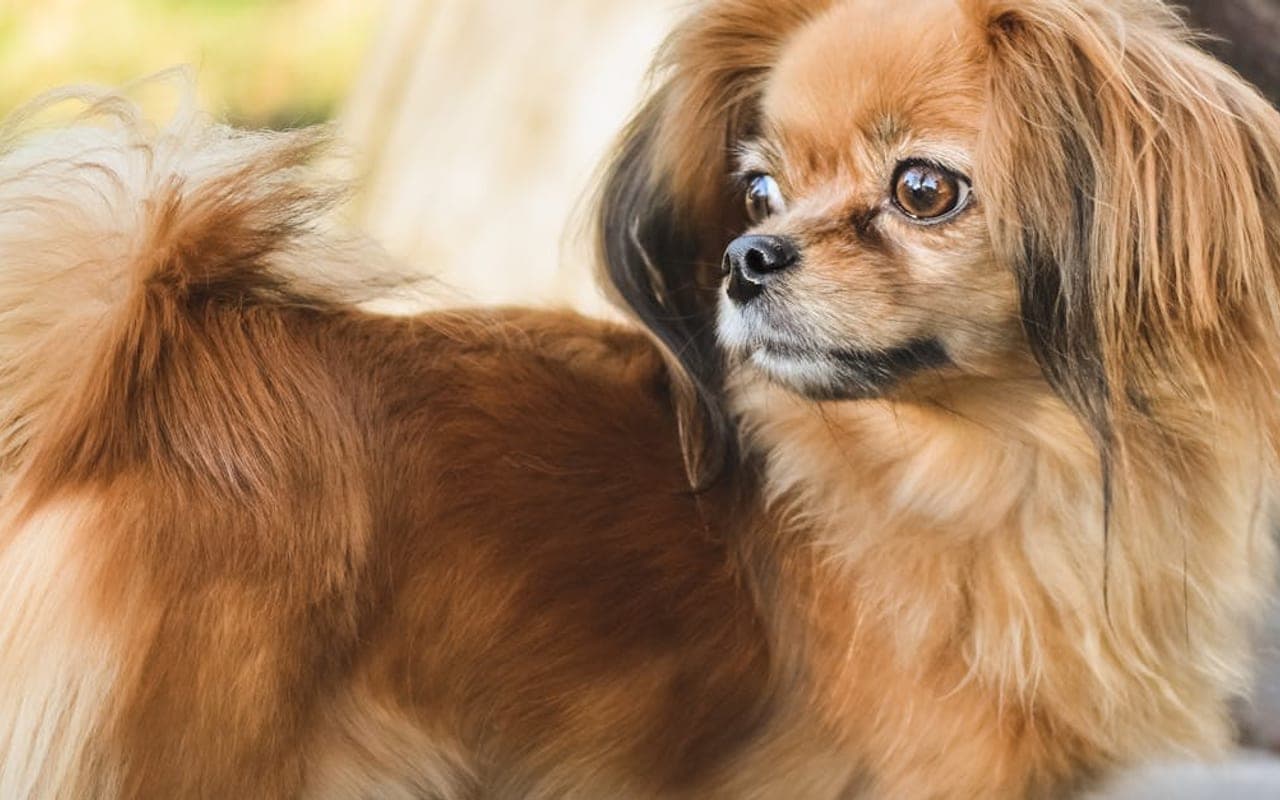
Physically it is small but emphatically not a toy. It stands around 10 inches at the shoulder and weighs roughly 9 to 15 pounds, with a slightly bowed front, a silky moderate-length double coat, a lion's mane of longer hair framing the neck and shoulders (heavier in males), and a plumed tail carried in a curl over the back. The face is only mildly shortened — a blunt, cushioned muzzle rather than the pushed-in face of a Pug — which spares the breed the worst airway trouble of the truly flat-faced dogs.
Temperament is where the breed earns its following. Owners describe an alert, quietly intelligent, faintly catlike dog: independent enough to entertain itself and to weigh whether it feels like obeying, yet deeply affectionate and closely bonded to its people. It likes to climb to a vantage point — the back of a sofa, a windowsill — and survey its domain, a habit that reads as pure monastery-wall instinct several centuries on. Assertive for its size and quick to alert, it makes a characterful companion rather than a biddable follower.
Exercise
A companion's exercise needs, not an athlete's
The Tibetan Spaniel was bred to watch, not to work all day, and its exercise needs are modest to match. A couple of short daily walks plus some active play keep an adult fit and satisfied; this is a dog content to be a companion rather than an endurance partner, and it happily matches a relaxed household. Young adults have more to burn, but even they are small dogs that cover little ground per stride, so total distance stays reasonable.
What the breed wants more than mileage is engagement and elevation. True to its monastery-wall origins, a Tibbie loves height and a good view: give it a perch — the arm of the sofa, a cushioned windowsill, a step on a landing — and it will spend contented hours watching the street and the household from above. Simple climbing and vantage points satisfy an instinct a flat walk does not touch. Pair that with mental work, because an intelligent, independent dog left understimulated invents its own entertainment: rotate a few puzzle feeders, teach small tricks, and play hide-and-find games that use the breed's watchful, problem-solving side.
Two cautions follow from who this dog is. First, the alert nature and independent streak mean a Tibetan Spaniel may take itself off to investigate, so exercise it in a securely fenced area or on a lead — a dog that ignores a recall near a road is in danger however well it heels. Second, the mildly shortened face means it does not shed heat as efficiently as a long-nosed breed, so keep hard exercise light in hot, humid weather and offer water and shade. Match the effort to a small companion dog and it stays sound; over-face it and you gain nothing.
Grooming
Coat care for a natural, untrimmed breed
The Tibetan Spaniel wears a moderate-length silky double coat: a topcoat that lies flat and smooth over the body, a softer undercoat beneath, and longer furnishings that build the mane at the neck, the feathering on the ears and backs of the legs, and the trademark tail plume. Because the coat is moderate rather than profuse, it is one of the easier long-ish coats to keep — but it is a double coat, so it sheds.
A thorough brushing once a week suits most of the year, because the flat, silky texture resists the daily knotting a woollier coat would suffer. Work down to the skin with a pin brush, then follow with a comb through the friction points — behind the ears, through the mane, in the "trousers" on the hind legs, and under the tail plume — since those longer furnishings are where tangles actually form. Twice a year, typically spring and autumn, the undercoat blows and the dog sheds heavily; through those weeks brush every day or two to clear the loose down before it mats.
This is a natural breed. It is not clipped, scissored or shaped, and trimming the body coat is discouraged because it spoils the coat's weatherproof texture. Tidy only the hair between the paw pads and around the sanitary area, and leave the rest alone.
Round out grooming with the small-dog basics. Check the feathered ears weekly for wax, odour or redness, since they trap moisture. Wipe the corners of the large eyes to limit tear staining and to notice any change early. Trim the nails every few weeks so they neither click nor splay the foot, and brush the teeth several times a week, because small breeds are especially prone to dental disease.
Health
Health, screening and the conditions that matter
The Tibetan Spaniel is generally a hardy, long-lived small dog: the American Kennel Club puts its typical lifespan at about 12 to 15 years. Responsible breeding centres on a few screenable conditions, so start with health-tested parents and catch trouble early. None of this is a diagnosis — it is a map of risks to raise with your vet.
The eyes: progressive retinal atrophy
The condition most associated with the breed is progressive retinal atrophy (PRA), a hereditary disease in which the retina's light-sensing cells gradually degenerate until sight is lost. It is neither painful nor sudden. Because the rod cells fail first, the earliest sign is poor vision in dim light, before peripheral then central sight go over months to years. Research on the breed traces one form to a mutation in the FAM161A gene, known as PRA3, inherited in an autosomal recessive pattern: a dog needs two copies to be affected, while single-copy carriers stay healthy but pass it on.
A DNA test for PRA3 exists, so breeders can avoid pairing two carriers — but the Tibetan Spaniel Association is emphatic that it is not the whole story. Only about two-thirds of PRA in the breed is explained by the known mutation, so a "clear" gene result does not fully rule it out. Parent-club guidance is therefore that DNA testing must not replace a physical eye exam by a board-certified veterinary ophthalmologist — the screening registered through the Orthopedic Foundation for Animals and the American College of Veterinary Ophthalmologists. There is no cure, but early diagnosis lets you keep the dog's surroundings safe as its sight fades.
Cherry eye, knees and liver
Small shorter-faced breeds can also develop cherry eye — a prolapse of the third eyelid's gland that shows as a red bump in the eye's inner corner; VCA Animal Hospitals notes it usually needs surgery before the exposed gland dries out and stops making tears. Patellar luxation, where the kneecap slips out of its groove, is common in small breeds — watch for a skip or hitch in the back-leg gait. VCA Animal Hospitals says mild cases are managed with weight control and severe ones with surgery, so keeping it lean helps; the Orthopedic Foundation for Animals offers a patella evaluation used in breeder testing. Portosystemic (liver) shunt — an abnormal vessel that lets blood bypass the liver, so toxins build up — is uncommon but worth knowing, because signs such as stunted growth, poor condition or dullness after meals deserve a prompt work-up.
A mildly shortened face, kept in proportion
The Tibetan Spaniel has a slightly shortened muzzle, so it is technically brachycephalic-leaning — but only by degree, and should not be lumped in with the Pug or Bulldog. Its blunt muzzle is far longer and more open than those, and severe airway disease is not a defining problem of the breed. It does cool itself less efficiently than a long-nosed dog, so avoid hard exercise in heat, and mention noisy breathing or exercise intolerance to your vet. Skin allergies are also reported, so persistent scratching or recurrent ear trouble is worth investigating.
Frequently Asked Questions
Is a Tibetan Spaniel a type of spaniel?
No. Despite the name it was never bred to flush or retrieve game. It is an ancient companion and watch-dog from Tibetan monasteries, where the American Kennel Club notes it did sentinel work on the walls. The "spaniel" name came later, in the West.
What eye disease should owners know about, and can it be tested for?
Progressive retinal atrophy (PRA) — a gradual, painless sight loss that starts with poor night vision. A DNA test exists for the PRA3 (FAM161A) mutation, but the Tibetan Spaniel Association stresses it covers only about two-thirds of cases, so a clear gene test does not replace regular eye exams by a veterinary ophthalmologist.
Is it a flat-faced dog with breathing problems like a Pug?
Only mildly. It has a slightly shortened muzzle, nothing like the extreme face of a Pug or Bulldog, and severe airway disease is not typical of the breed. It does handle heat less efficiently than a long-nosed dog, so keep exercise light in hot weather.
How long do Tibetan Spaniels live, and what screening should a breeder do?
Typically about 12 to 15 years. Reputable breeders screen parents for hereditary eye disease through a veterinary ophthalmologist (registered with the Orthopedic Foundation for Animals and ACVO) and evaluate the knees for patellar luxation. Ask to see those results before committing to a puppy.
Sources
This guide draws on the following published references. Each opens in a new tab so you can check it against what you have read here.
American Kennel Club
Tibetan Spaniel Dog Breed Information(opens in a new tab)Tibetan Spaniel Club of America
Tibetan Spaniel Club of America | AKC breed information(opens in a new tab)PetMD
Tibetan Spaniel Dog Breed Health and Care | PetMD(opens in a new tab)PLOS ONE (PubMed Central / NIH)
An Intronic SINE Insertion in FAM161A that Causes Exon-Skipping Is Associated with Progressive Retinal Atrophy in Tibetan Spaniels and Tibetan Terriers(opens in a new tab)
Affiliate disclosure: We may earn a commission from qualifying purchases. This doesn't affect our recommendations.
Recommended Products
Tibetan Spaniel Care Guide Book
Breed-focused reading and owner references for Tibetan Spaniel care, training, grooming, and health planning.
Tibetan Spaniel Food and Supplies
Helpful supplies for tibetan spaniel dog supplies routines at home.
Tibetan Spaniel Grooming Tools
Helpful supplies for tibetan spaniel grooming tools routines at home.
Get personalized pet care tips
Join our newsletter for breed-specific advice, care guides, and expert tips delivered weekly.
No spam, ever. Unsubscribe anytime.