
Non-Sporting group
Tibetan Spaniel
The Tibetan Spaniel is not a spaniel and never flushed a bird in its life — it is an ancient Asian companion-and-sentinel breed, closer in lineage to the Pekingese and Lhasa Apso than to a Cocker.
Size
9-15 lb
Lifespan
12-15 years
Exercise
30-60 minutes
Shedding
Moderate
Experience
Match to owner routine
Decision first
Is a Tibetan Spaniel right for you?
Start with fit before history or trivia. These are ownership signals, not guarantees about any individual dog.
Best suited for
- Households with children.
- Homes with other compatible pets.
- Apartment homes with a consistent routine.
- Owners seeking a manageable daily exercise routine.
Think carefully if
- You need a dog with almost no daily routine.
- You cannot keep up with grooming and preventive care.
- The dog will spend most days alone without support.
Conditional fit
Apartment fit depends on exercise, enrichment, noise management, and outdoor access.
Daily reality
Tibetan Spaniel commitment snapshot
Daily exercise
30-60 minutes
Match activity to age, health, weather, and training goals.
Coat care
Moderate
Grooming needs vary by coat, shedding, and lifestyle.
Time alone
Needs planning
Most dogs need gradual alone-time conditioning and support.
Structured facts
Tibetan Spaniel at a glance
The measurements and traits that most affect day-to-day life with this breed.
Group
Non-Sporting
Weight
9-15 lb
Height
9-11 in
Lifespan
12-15 years
Temperament
Playful | Bright | Self-Confident
View all characteristics and methodology
Lifestyle fit
- Apartment suitability
- Likely fit
- Child friendliness
- Often good, with socialisation and supervision
- Other-pet fit
- Often compatible with careful introductions
Owner commitment
- Exercise
- 30-60 minutes
- Grooming
- Moderate
- Shedding
- Moderate
- Training
- Moderate
Environment and health
- Health risk
- Needs planning
Ratings combine structured breed data, visible breed fields, and editorial context. They are planning aids, not predictions for an individual dog.
Daily life
Tibetan Spaniel temperament and behavior
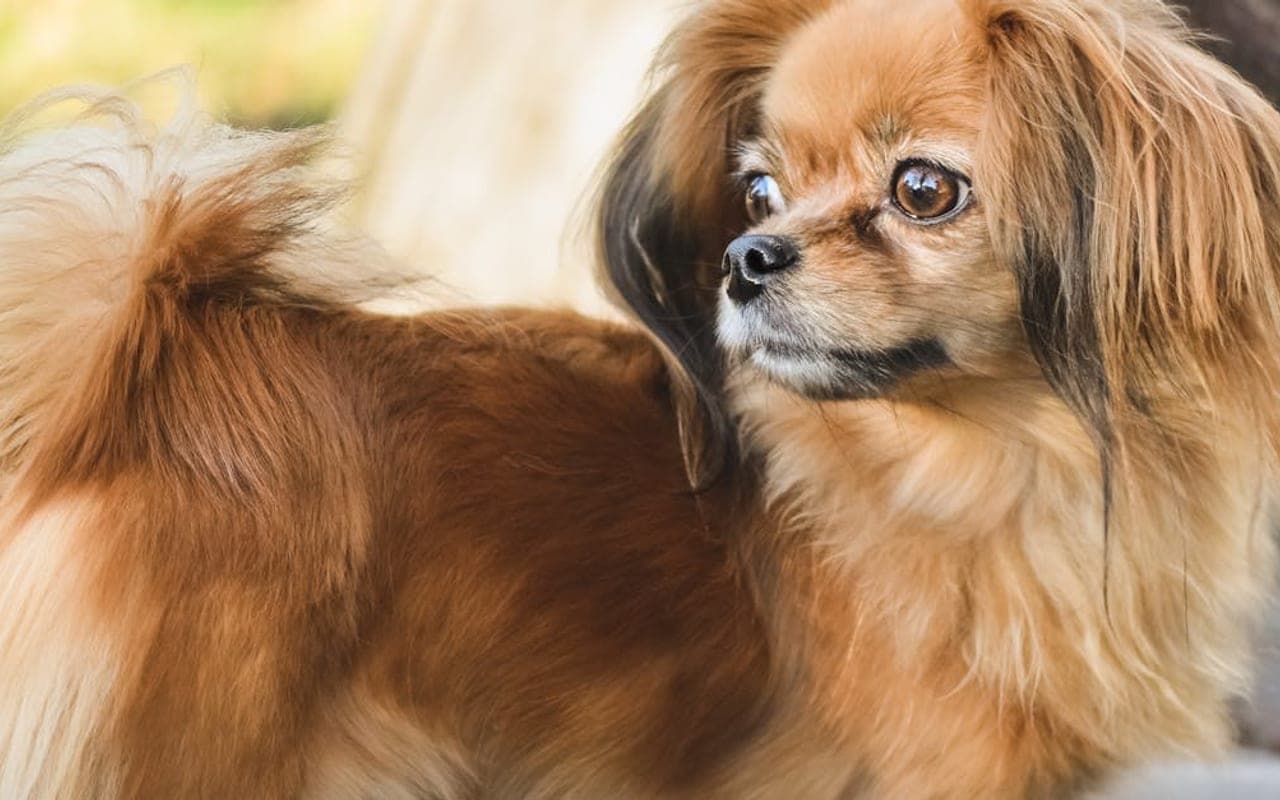
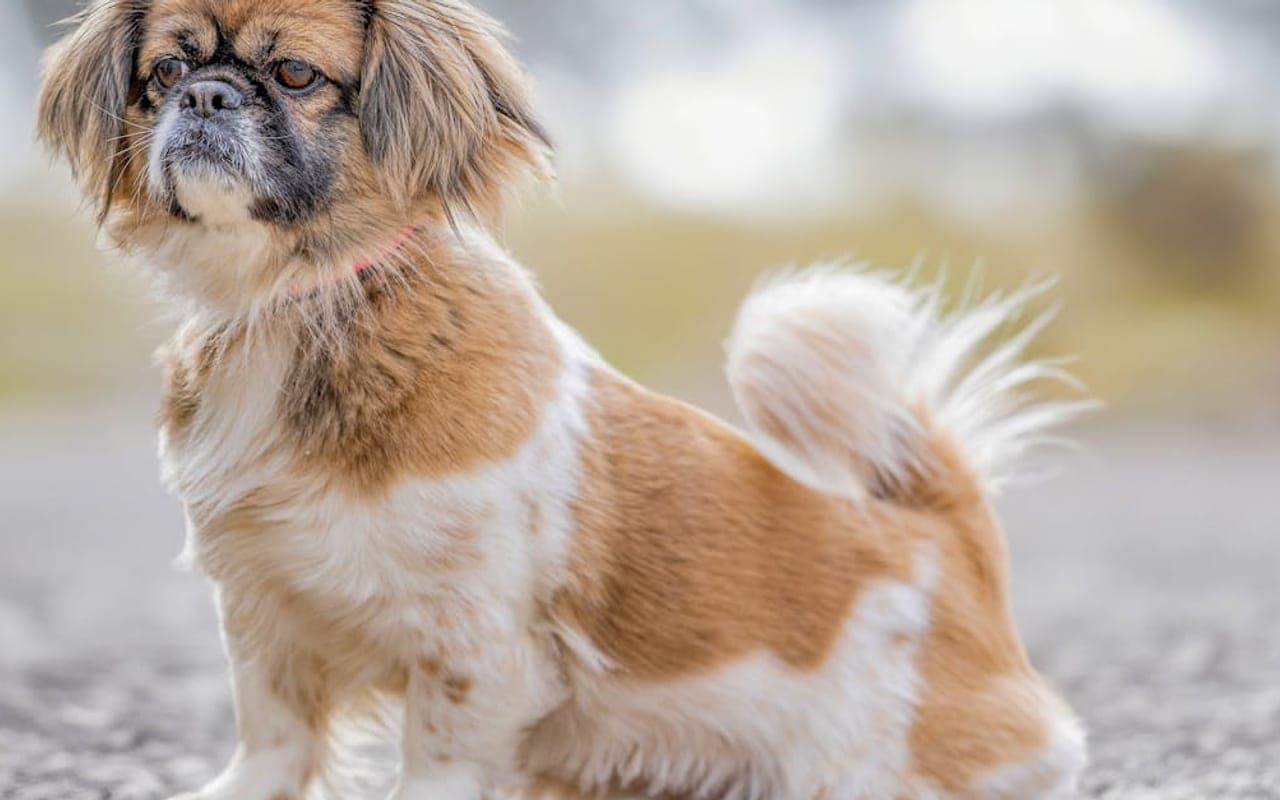
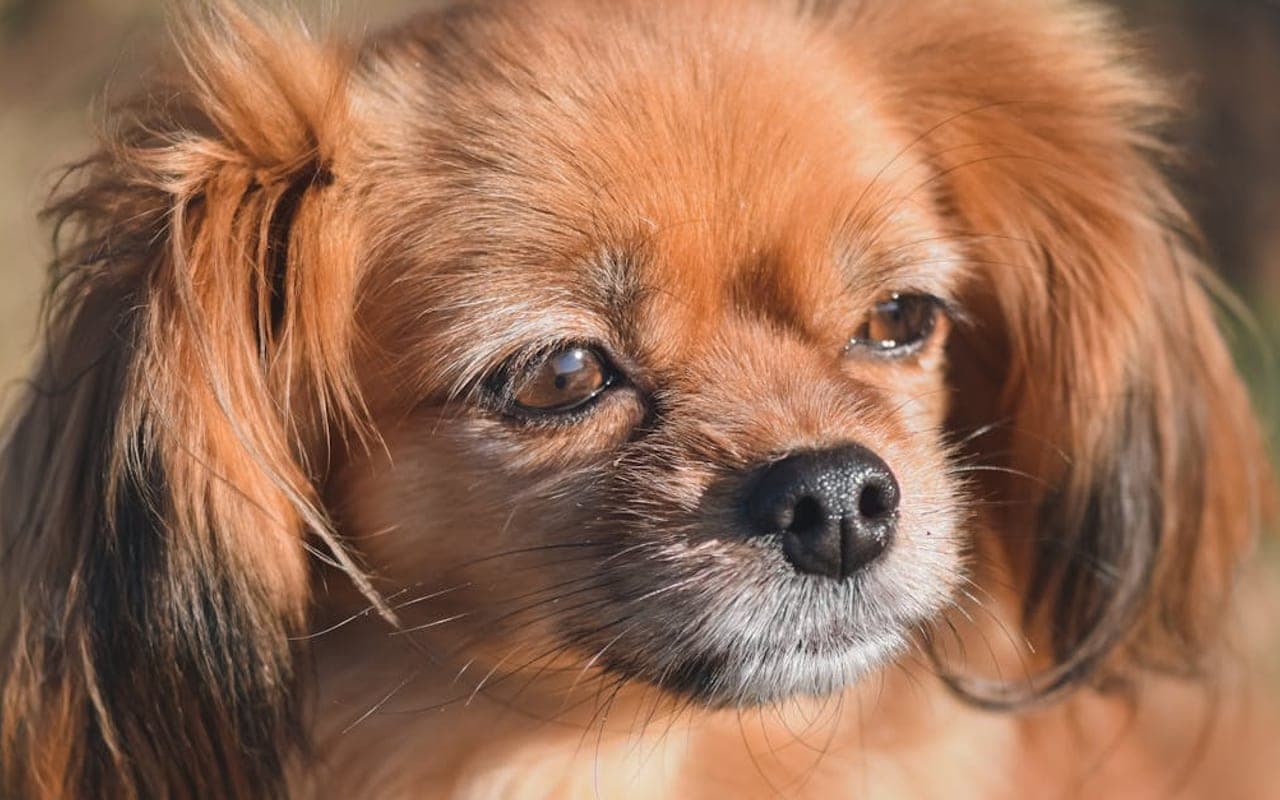
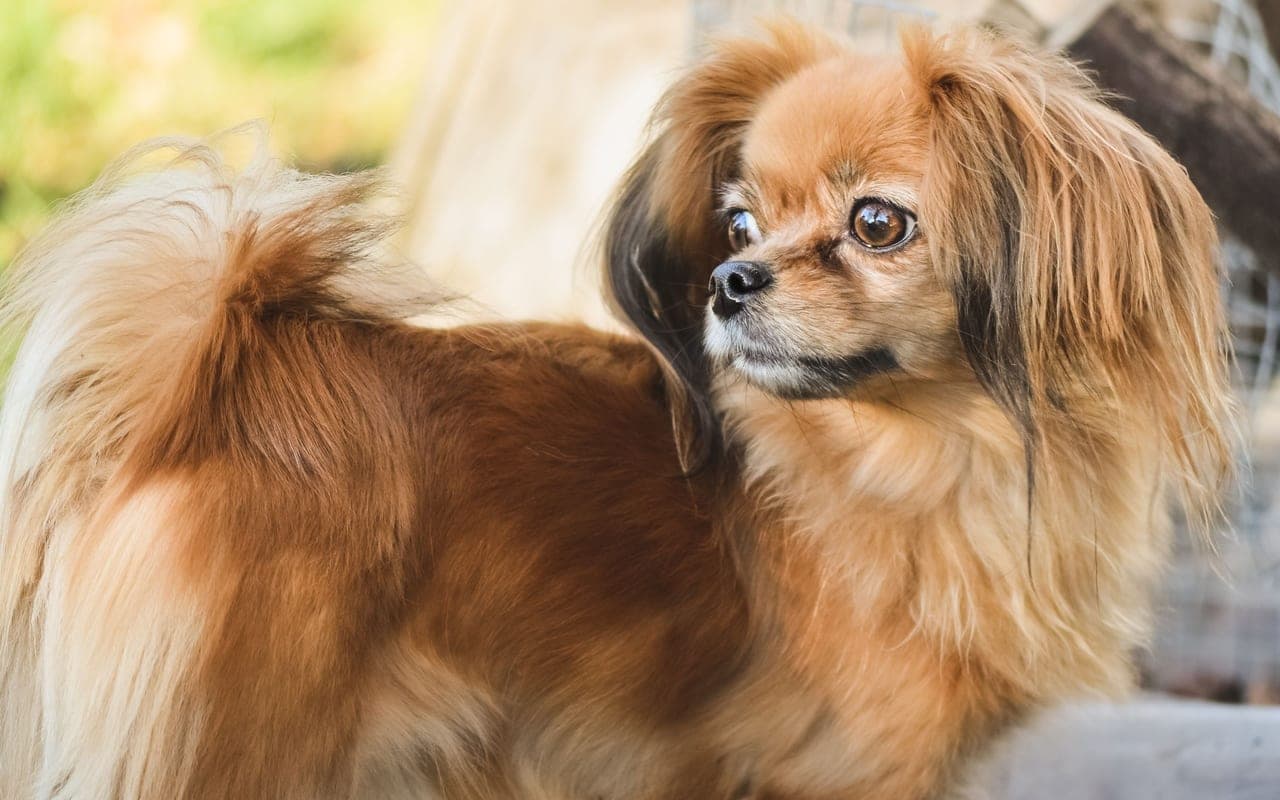
The Tibetan Spaniel is not a spaniel and never flushed a bird in its life — it is an ancient Asian companion-and-sentinel breed, closer in lineage to the Pekingese and Lhasa Apso than to a Cocker. Tibetan monks bred Tibbies to sit on monastery walls and bark a warning down to the larger guard dogs below. That job description still describes the dog you bring home: a 9-15 lb (4-7 kg), roughly 10-inch-tall, lightly built dog with a silky coat, a lion's-mane ruff, a plumed tail over the back, and a hard-wired instinct to perch high and announce visitors. The Tibbie is right for you if you want a small, low-exercise, intelligent dog that bonds intensely to a household and is content as a lap dog that still has opinions. They are clever, slightly aloof with strangers (not shy, not aggressive — reserved, exactly as the watch-dog history predicts), and affectionate to the point of velcro with their own people. They tolerate apartment life well and are a realistic option for older or less active owners. The Tibbie is wrong for you if you want instant obedience or a quiet dog. Independence is built in — they will weigh whether your recall is worth interrupting their surveillance — so off-leash reliability is a project, not a default. The alarm bark that made them useful on a monastery wall makes them a notable barker in a flat with thin walls. And the long-low silhouette plus a slightly shortened muzzle means this is a dog you choose for temperament, then screen hard for two specific genetic problems before you ever sign anything.
Playful | Bright | Self-Confident
Playful
A common Tibetan Spaniel temperament descriptor that should be interpreted alongside training, exercise, and household fit.
Bright
A common Tibetan Spaniel temperament descriptor that should be interpreted alongside training, exercise, and household fit.
Self-Confident
A common Tibetan Spaniel temperament descriptor that should be interpreted alongside training, exercise, and household fit.
Owner note
Temperament labels are starting points, not guarantees. Meet the individual dog and ask about behavior history whenever possible.
Care essentials
How to care for a Tibetan Spaniel
What looking after one actually involves: exercise, grooming, food, training, and routine health.
ExerciseAs needed
- Moderately active breed needing 30-60 minutes of daily exercise.
GroomingAs needed
- Brush 2-3 times per week.
TrainingAs needed
- Consistent, patient training works best.
NutritionAs needed
- Feed high-quality dog food appropriate for age, size, and activity level.
Veterinary CareAs needed
- Annual wellness exams, vaccinations, dental care, and parasite prevention.
Health planning
Tibetan Spaniel health risks and screening
Every breed has individual health variation. Use this profile for planning and discuss medical decisions with a veterinarian.
Responsible ownership
Finding a Tibetan Spaniel responsibly
What to ask a breeder or rescue is the same conversation for every breed, so we keep it in one place and keep it current.
Health documentation, meeting the parents or foster, contracts and return support, and the warning signs worth walking away from.
Original purpose
Tibetan Spaniel history
History is useful when it explains today's behavior, coat, exercise needs, and training style.
Read the breed history
The Tibetan Spaniel was developed in the Buddhist monasteries of Tibet, where small bell-like dogs lived alongside monks for centuries as companions, foot-warmers, and — critically — as the alarm system. A Tibbie would sit on the high monastery walls and bark down at approaching strangers, alerting both the monks and the larger Tibetan Mastiffs that did the actual deterring. They were also turned prayer wheels in some accounts and were prized enough to be given as diplomatic gifts to the imperial courts of China, where they exchanged bloodlines with the small flat-faced Asian breeds, which is why a Tibbie looks like a relative of the Pekingese rather than a Western spaniel. The breed reached England in the late 1800s and early 1900s through missionaries and colonial travelers, nearly vanished during the World Wars, and was rebuilt from a small founder population — a genetic bottleneck that explains why a handful of recessive conditions persist in the breed today. "Spaniel" is a translation artifact, not a function.
Gallery
Tibetan Spaniel photos
Images are cropped consistently and loaded progressively to keep the page responsive.
Lower-page context
Tibetan Spaniels in culture
Where the breed shows up in film, sport, work and folklore — the enjoyable part, once the practical questions are answered.
Fun facts
- The Tibetan Spaniel belongs to the Non-Sporting Group.
- The average lifespan of a Tibetan Spaniel is 12 to 15 years.
- Tibetan Spaniel dogs are valued for their playful, bright, self-confident nature.
Tibetan Spaniel FAQs
How long do Tibetan Spaniels live?
A Tibetan Spaniel from screened lines typically lives 12-15 years, and many reach the upper end of that range because this is a structurally light, low-impact breed. The two things that shorten a Tibbie's life are not aging — they are a congenital liver shunt that surfaces in puppyhood and the recessive PRA3 blindness gene that surfaces in middle age. Both are screenable before purchase, so lifespan in this breed is largely a function of how carefully the parents were tested.
Are Tibetan Spaniels good with children?
Yes, with sensible limits. Tibbies are affectionate, sturdy enough for a small breed, and tolerant of household activity, but at 9-15 lb they are still a small dog whose knees and back can be injured by rough handling or a fall from a child's arms. They do best with children old enough to be taught not to lift or chase the dog. Supervise toddlers, give the Tibbie an escape route to a perch, and the breed is genuinely good family company.
Do Tibetan Spaniels bark a lot?
Yes — barking is the job they were bred for. Tibbies were monastery wall sentries whose entire purpose was to spot intruders and sound an alarm down to the bigger dogs, and that instinct is fully intact. Expect alerting at visitors, passers-by, and anything novel from a window or high perch. You can manage it with early 'enough' training and by reducing visual triggers, but a household needing a near-silent dog should not choose this breed; in an apartment with thin walls this is a real consideration.
How much grooming does a Tibetan Spaniel need?
Moderate and stable, with no clipping. Brush the double coat 2-3 times a week for about 10 minutes, focusing on the mat-prone zones behind the ears, the feathered legs, and the tail plume; increase to every other day for 2-3 weeks during the spring and autumn shed. The natural coat should never be shaved. The breed-specific extra task most owners miss is a weekly eye check for cloudiness or a red corner lump, because two of the Tibbie's main health risks present in the eyes.
Are Tibetan Spaniels easy to train?
They are intelligent but independent, so they train well for things they see the point of and slowly for things they do not. The sentinel breeding produced a dog that thinks for itself rather than waiting for orders — recall in particular is unreliable off-leash because spotting something to investigate outranks your cue. Use short, reward-based sessions, keep them on leash or in a fenced area, and judge progress in weeks of consistency rather than expecting Border-Collie-style instant compliance. Harsh correction backfires; they shut down.
What health tests should a Tibetan Spaniel breeder have done?
At minimum: a DNA test for the PRA3 progressive retinal atrophy mutation on both parents (clear or clear-by-parentage), an annual ophthalmologist eye examination on the parents, and a patella evaluation. Ask whether the line has any history of portosystemic shunt, since that is the most financially serious early problem. A breeder who can produce written PRA3 and eye results is the cheapest insurance you can buy in this breed — diagnostics and surgery for a shunt alone can exceed $5,000.
Sources
These are the published sources this page draws on. Each opens in a new tab so you can check it yourself.
American Kennel Club
Tibetan Spaniel — breed standard and profile(opens in a new tab)Supports: Breed standard and recognition details.
Similar breeds to consider
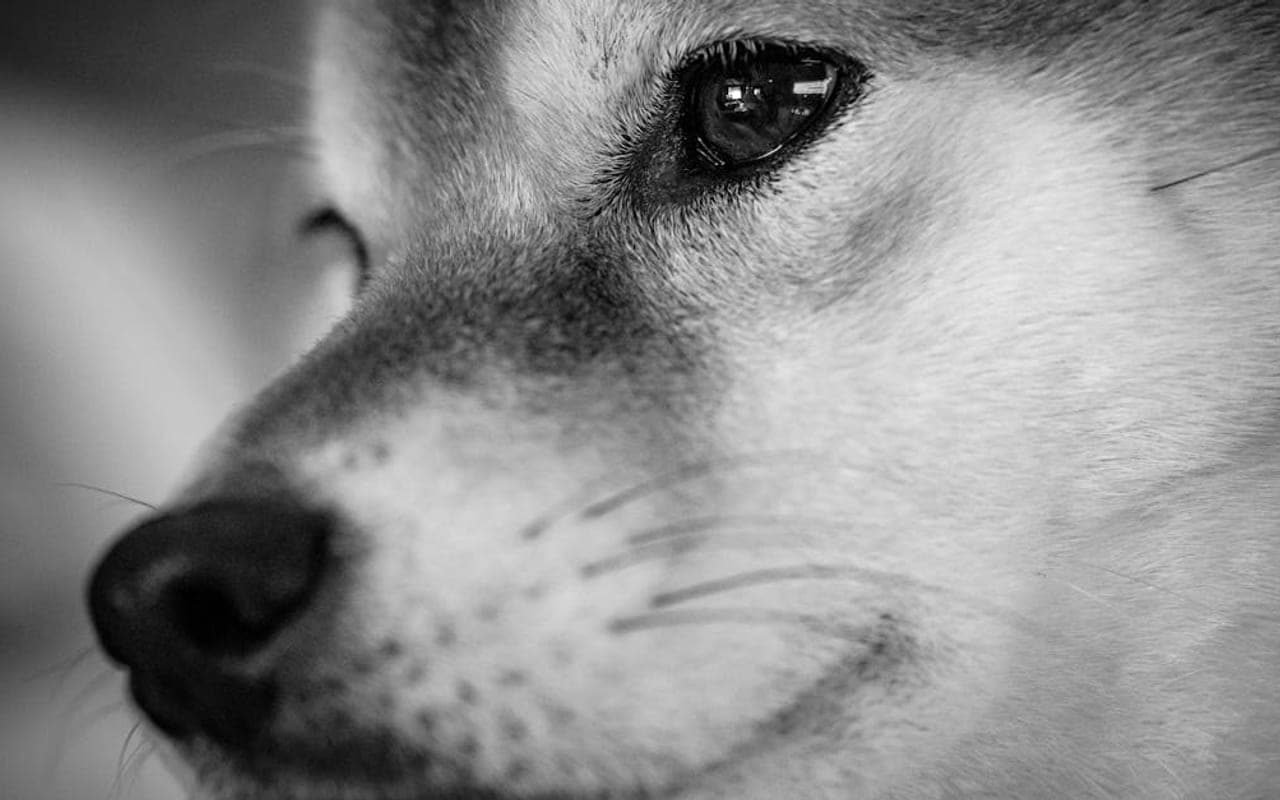
Shiba Inu
Also in the Non-Sporting group, with different care and temperament tradeoffs.
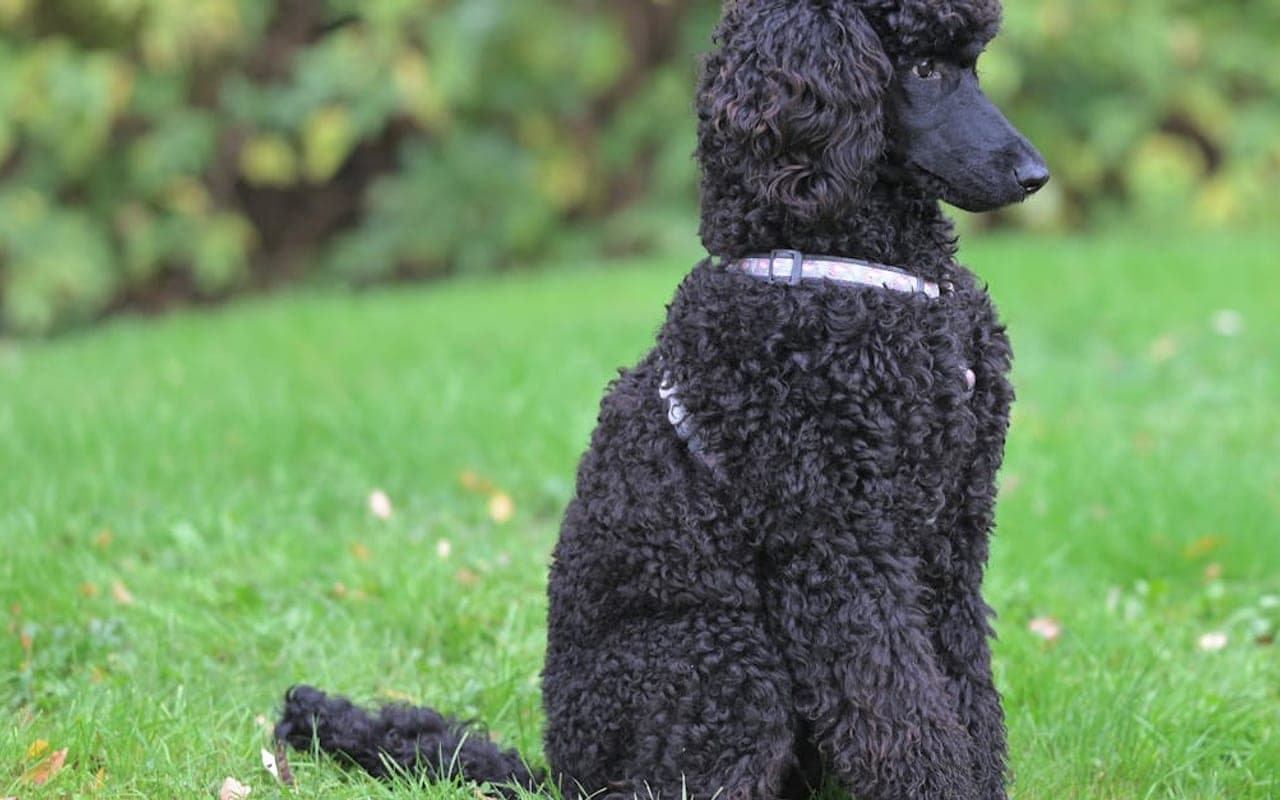
Poodle
Also in the Non-Sporting group, with different care and temperament tradeoffs.
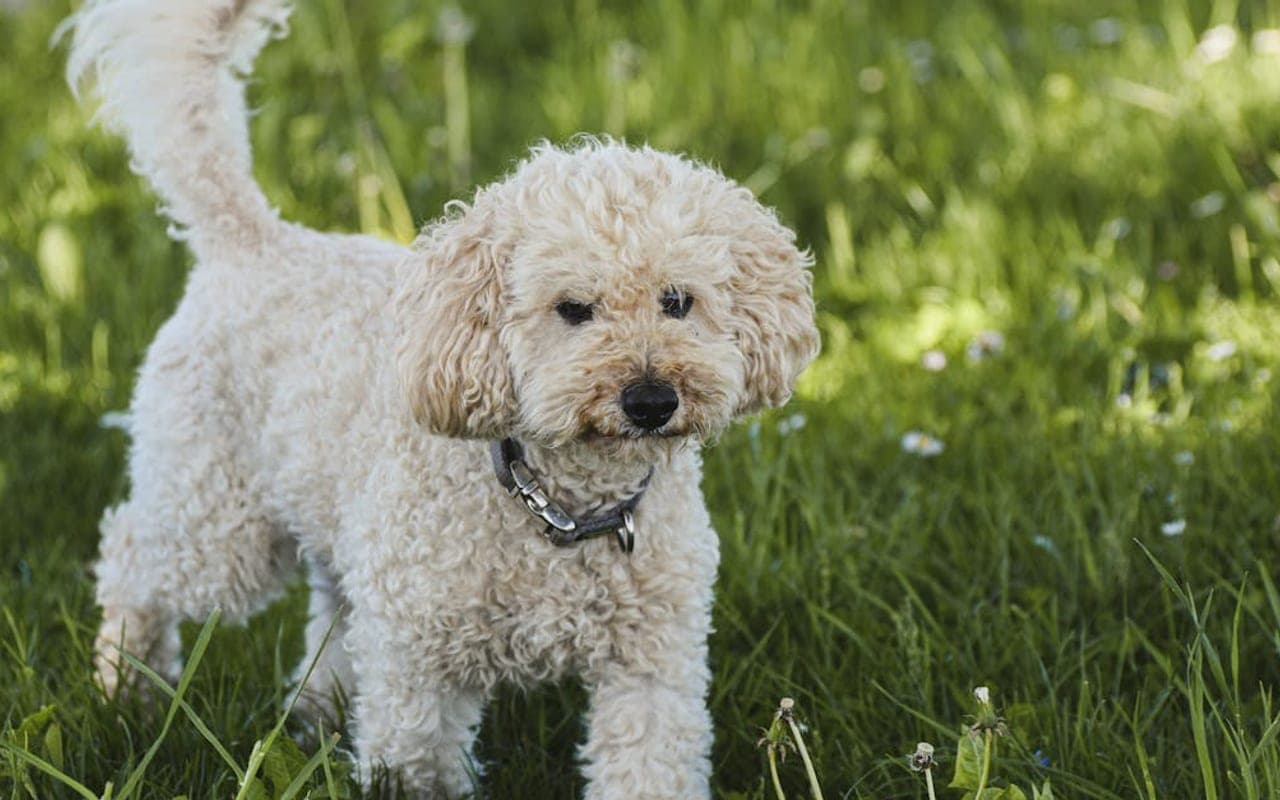
Poodle (Miniature)
Also in the Non-Sporting group, with different care and temperament tradeoffs.
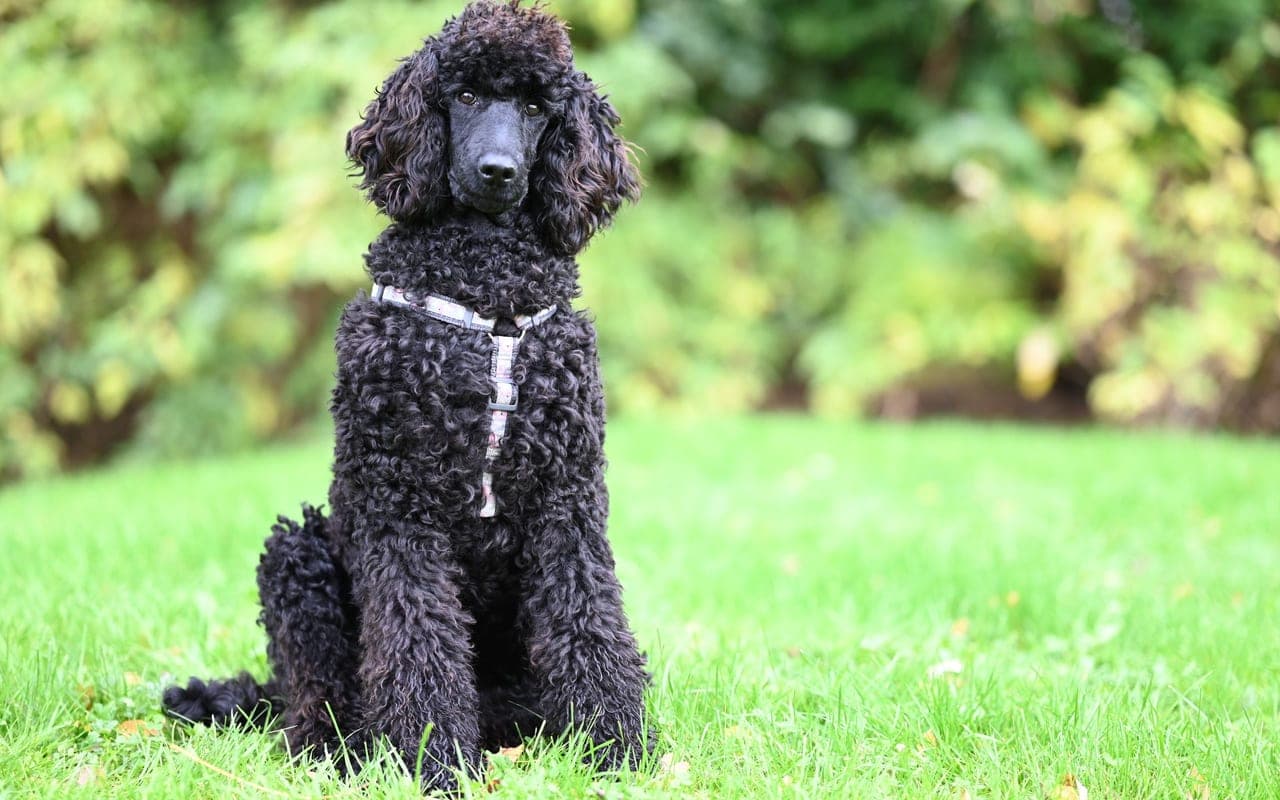
Poodle (Standard)
Also in the Non-Sporting group, with different care and temperament tradeoffs.
Explore More About Tibetan Spaniel
Dive deeper into everything Tibetan Spaniel — costs, care, and expert insights.
Considering a cat instead?
Browse Cats