
Treeing Walker Coonhound Care Guide
Treeing Walker Coonhound: The Fast, Hot-Nosed Tree Dog The Treeing Walker Coonhound descends from the Walker strain of American foxhound — a line traced to English Foxhound stock brought to Virginia a
Reading Time
📖 8 min read
Guide Type
🐾 Breed-Specific
Last Updated
📅 Sep 10, 2026
In This Guide
Overview
Treeing Walker Coonhound: The Fast, Hot-Nosed Tree Dog
The Treeing Walker Coonhound descends from the Walker strain of American foxhound — a line traced to English Foxhound stock brought to Virginia and refined into a faster hound — and was recognized as a breed in its own right by the United Kennel Club in 1945 (UKC). That foxhound heritage shows in everything it does: this is a lean, athletic American scenthound built to run.
Nicknamed "the People's Choice" for its standing in the coon-hunting world (AKC), the Treeing Walker hunts differently from the slower, cold-nosed hounds. It is "hot-nosed," meaning it works fresh scent and drops stale trails, and it is widely regarded as the fastest of the coonhound breeds — it covers ground in a hurry and pushes its quarry hard. When the animal it is chasing (classically a raccoon) climbs a tree to escape, the dog stays at the base and "trees" it, switching to a locate bark so the hunter can follow the sound in. The AKC sums the breed up as "a fast, hot nosed, sensible hunter with a clear, ringing bugle voice."
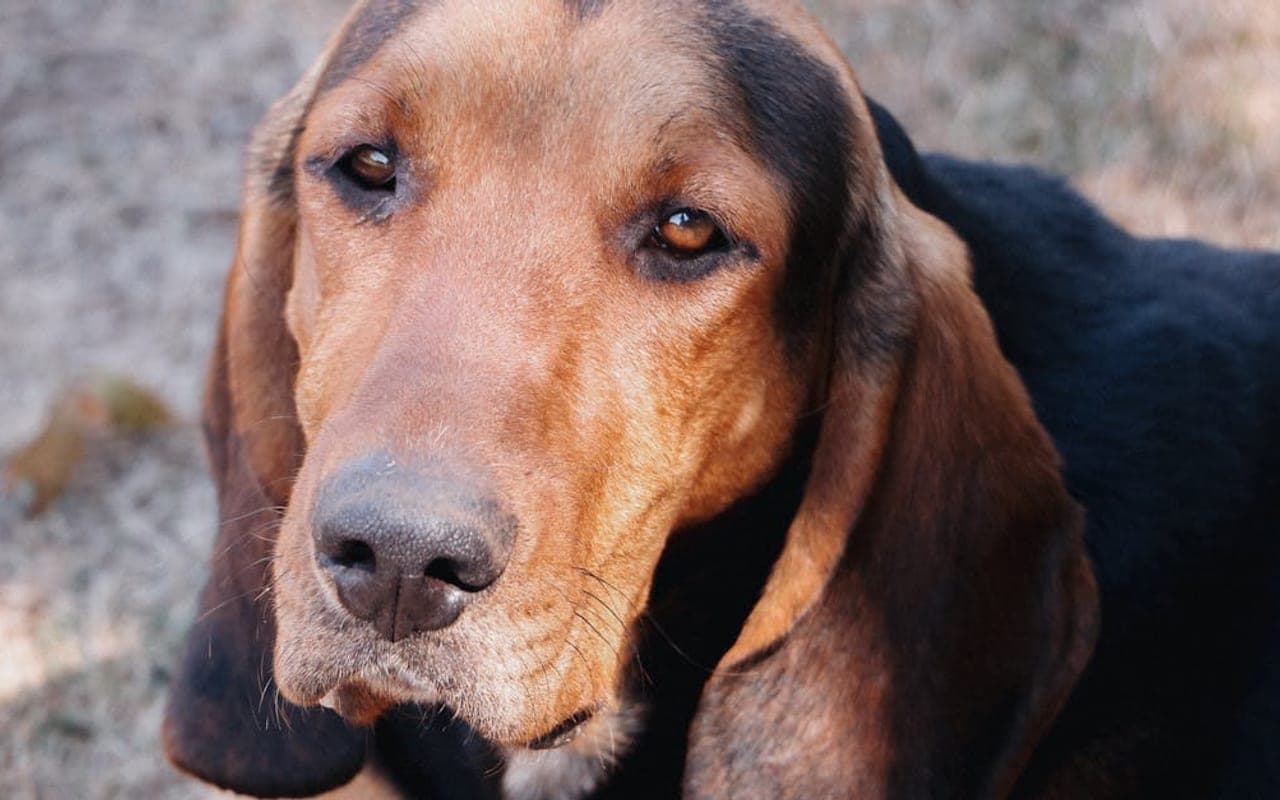
The coat is short, smooth and tricolor — white, black and tan — and needs little upkeep (AKC). In temperament, Treeing Walkers are smart, confident and genuinely friendly with their people, which makes them affectionate housemates. Two traits define daily life with one, though. The first is a powerful prey drive inherited from generations of field breeding. The second is a loud, carrying voice: coonhounds are "bred to be heard" (AKC), so the ringing bay that lets a hunter track a dog through the woods is the same bay a neighbor hears from the yard. Someone wanting a quiet, low-drive lapdog should look elsewhere; someone who can channel the energy and live with the noise gets an outgoing, tireless companion.
Exercise
Exercising and Managing a Treeing Walker Coonhound
This is a working scenthound with hunting-dog stamina, and the single biggest mistake new owners make is under-exercising one. Treeing Walkers were bred to run hard for hours and cover big ground in a hurry, so a short stroll will not touch it. Plan on at least an hour of real activity a day, and ideally more (PetMD) — long walks, jogging or running alongside a bike, hiking, and hard galloping in safely enclosed spaces. A well-exercised Walker is a manageable Walker; a bored, under-exercised one turns destructive and even more vocal.
Feed the nose as well as the legs. Because the breed hunts by scent, scent-based work — tracking games, nose-work, or hidden food and scent trails to follow — burns mental energy that plain walking does not, and uses the dog for what it was built to do. Field trials and tracking sports suit them especially well, because they match generations of endurance-tracking breeding.
Two management realities come with that drive, and both are non-negotiable near traffic. First, the Treeing Walker has a strong prey drive, and once it locks onto a scent, recall often collapses because the nose overrides the ears. Keep the dog on leash in open areas and rely on secure, tall fencing at home, because a hound that "self-employs" on a rabbit trail can be across a road before it hears you call — and an invisible fence is a poor fit for a determined scenthound. Second, the loud, carrying bay that makes the breed a superb hunter also travels across a neighborhood; expect vocalizing, use training and enrichment to manage it, and think hard before keeping one in a noise-sensitive apartment.
Grooming
Grooming the Treeing Walker Coonhound
The Treeing Walker's short, smooth, tricolor coat is one of the easiest parts of owning the breed. It is genuinely low-maintenance (PetMD): a weekly once-over with a rubber curry or hound mitt lifts dead hair and spreads skin oils, and a bath roughly once a month — or after a muddy field run — keeps the coat clean without stripping it. They are moderate shedders (PetMD), so the weekly brush mostly keeps loose hair off your floors rather than detangling anything.
The part that actually needs discipline is the ears. Like other coonhounds, the Treeing Walker has long, pendulous ears that fold over the canal and trap warmth and moisture — the conditions that let yeast and bacteria grow, which is why the breed is prone to ear infections (PetMD). Check inside each ear flap weekly for redness, odor or discharge, and clean on a routine schedule with a vet-recommended, pH-balanced dog ear cleaner (PetMD). This matters most after swimming, bathing or a wet day in the field: dry the ears thoroughly afterward, because a hound that works and gets wet gives moisture more chances to sit in the canal. Frequent infections can signal an underlying allergy, so flag a recurring pattern to your vet rather than only re-cleaning.
Round out the routine with the basics, each for a reason. Trim the nails every few weeks, because an active hound on hard ground needs them short to move comfortably and avoid splitting. Brush the teeth several times a week, because dental disease is one of the most common health problems in dogs. Check paw pads and skin after fieldwork, since a dog built to run through cover picks up burrs, cuts and ticks the coat can hide.
Health
Treeing Walker Coonhound Health
The Treeing Walker Coonhound is generally a hardy, athletic scenthound; PetMD calls it a breed with few genetic health concerns and a typical lifespan of about 12 to 13 years (PetMD). A few issues still deserve attention, plus one uncommon neurological condition. Nothing below is a diagnosis — it is a guide to what to watch for.
Ears: the highest-odds problem
The long, pendulous ears that funnel scent are also this breed's most common weak point. They fold over the canal and hold in heat and moisture, and that warm, damp pocket lets yeast and bacteria grow, which is why the Treeing Walker is prone to ear infections (PetMD). Check them weekly, clean on a routine with a vet-recommended pH-balanced dog ear cleaner, and dry them after every swim, bath or wet field day (PetMD). Repeated infections can point to an underlying allergy worth a vet visit.
Hips and joints
Like many active, medium-to-large dogs, the Treeing Walker can be affected by hip dysplasia — a malformed hip joint that causes pain, limping, stiffness and eventually arthritis (PetMD). Because it is partly genetic, responsible breeders screen breeding stock, so ask to see hip evaluations before buying a puppy. Keeping an affected dog lean matters because every extra pound loads the joint, and vets manage many cases with weight control, joint support and pain relief (PetMD).
Eyes
Some coonhounds may be predisposed to inherited eye conditions such as progressive retinal atrophy (PRA) or cataracts, which can gradually reduce vision. This is not documented as a widespread problem in the breed, so monitor rather than expect it: mention cloudiness or night-vision trouble to your vet, and favor breeders who screen eyes.
Bloat (gastric dilatation-volvulus)
The Treeing Walker is deep-chested, and deep-chested breeds are recognized as being at higher risk of bloat, or gastric dilatation-volvulus (GDV) — a sudden, life-threatening emergency in which the stomach fills with gas and can twist (Merck Veterinary Manual). Warning signs include a swollen belly, unproductive retching, drooling and restlessness; because GDV can kill within hours, treat them as an immediate emergency.
Coonhound paralysis
"Coonhound paralysis" is the common name for acute polyradiculoneuritis, so named because it can develop about one to two weeks after a raccoon bite, when the immune system reacts to raccoon saliva and attacks the nerve roots (VCA). Despite the name it is not unique to coonhounds — any breed can develop it, and many affected dogs have never met a raccoon, with vaccines, infections or unknown triggers also implicated (University of Illinois). It usually starts as hind-leg weakness or a stiff gait that ascends toward all four limbs, and severe cases affect the chest muscles and labor breathing (VCA). There is no quick cure; the mainstay is nursing care, and most dogs recover over weeks to months (VCA). Sudden ascending weakness is an emergency, though the condition is uncommon — the goal here is awareness, not alarm.
Everyday preventive care
Keep the dog lean because excess weight loads the joints of a breed built to run, and stay current on the parasite prevention your vet recommends for a hound that works fields and woods. Brush the teeth several times a week and keep regular wellness checks so problems are caught early.
Frequently Asked Questions
Are Treeing Walker Coonhounds generally healthy dogs?
Yes — PetMD calls them a breed with few genetic concerns, living about 12 to 13 years. Watch for ear infections from their long ears and hip dysplasia, with less common inherited eye conditions, plus bloat and coonhound paralysis as rarer emergencies.
Why do Treeing Walker Coonhounds get so many ear infections?
Their long, pendulous ears fold over the canal and trap heat and moisture, which lets yeast and bacteria grow (PetMD). Weekly cleaning with a pH-balanced dog ear cleaner and drying after water lower the risk, and recurring infections can signal an allergy.
What is coonhound paralysis and should I worry about it?
It is acute polyradiculoneuritis, an uncommon condition in which the immune system attacks the nerve roots, sometimes one to two weeks after a raccoon bite (VCA). It is not exclusive to coonhounds and often involves no raccoon at all (University of Illinois). Recovery takes weeks to months with nursing care, but sudden ascending weakness is an emergency.
Does the Treeing Walker's deep chest mean I should worry about bloat?
Deep-chested dogs are recognized as higher-risk for bloat, or GDV, a fast, life-threatening stomach emergency (Merck Veterinary Manual). Learn the signs — distended belly, unproductive retching, drooling, restlessness — and treat them as an immediate emergency.
Sources
This guide draws on the following published references. Each opens in a new tab so you can check it against what you have read here.
United Kennel Club (UKC)
Breed Standards : Treeing Walker Coonhound | United Kennel Club (UKC)(opens in a new tab)American Kennel Club (AKC)
Treeing Walker Coonhound Dog Breed Information(opens in a new tab)PetMD
Treeing Walker Coonhound Dog Breed Health and Care | PetMD(opens in a new tab)VCA Animal Hospitals
Coonhound Paralysis | VCA Animal Hospitals(opens in a new tab)PetMD
Coonhound Paralysis In Dogs | PetMD(opens in a new tab)
Affiliate disclosure: We may earn a commission from qualifying purchases. This doesn't affect our recommendations.
Recommended Products
Treeing Walker Coonhound Care Guide Book
Breed-focused reading and owner references for Treeing Walker Coonhound care, training, grooming, and health planning.
Treeing Walker Coonhound Food and Supplies
Helpful supplies for treeing walker coonhound dog supplies routines at home.
Treeing Walker Coonhound Grooming Tools
Helpful supplies for treeing walker coonhound grooming tools routines at home.
Get personalized pet care tips
Join our newsletter for breed-specific advice, care guides, and expert tips delivered weekly.
No spam, ever. Unsubscribe anytime.