
Turkish Angora Care Guide
The Turkish Angora at a Glance The Turkish Angora is one of the oldest naturally occurring longhair cat breeds, tracing back centuries to the Ankara region of central Turkey, the city historically spe
In This Guide
Overview
The Turkish Angora at a Glance
The Turkish Angora is one of the oldest naturally occurring longhair cat breeds, tracing back centuries to the Ankara region of central Turkey, the city historically spelled "Angora" that gave the cat its name. This is not a modern designer cat assembled from other breeds; it developed on its own in the Anatolian highlands. When the breed's numbers thinned in the early twentieth century, the Ankara Zoo ran a deliberate preservation programme to protect the pure white cats, and those bloodlines helped re-establish the Angora abroad.
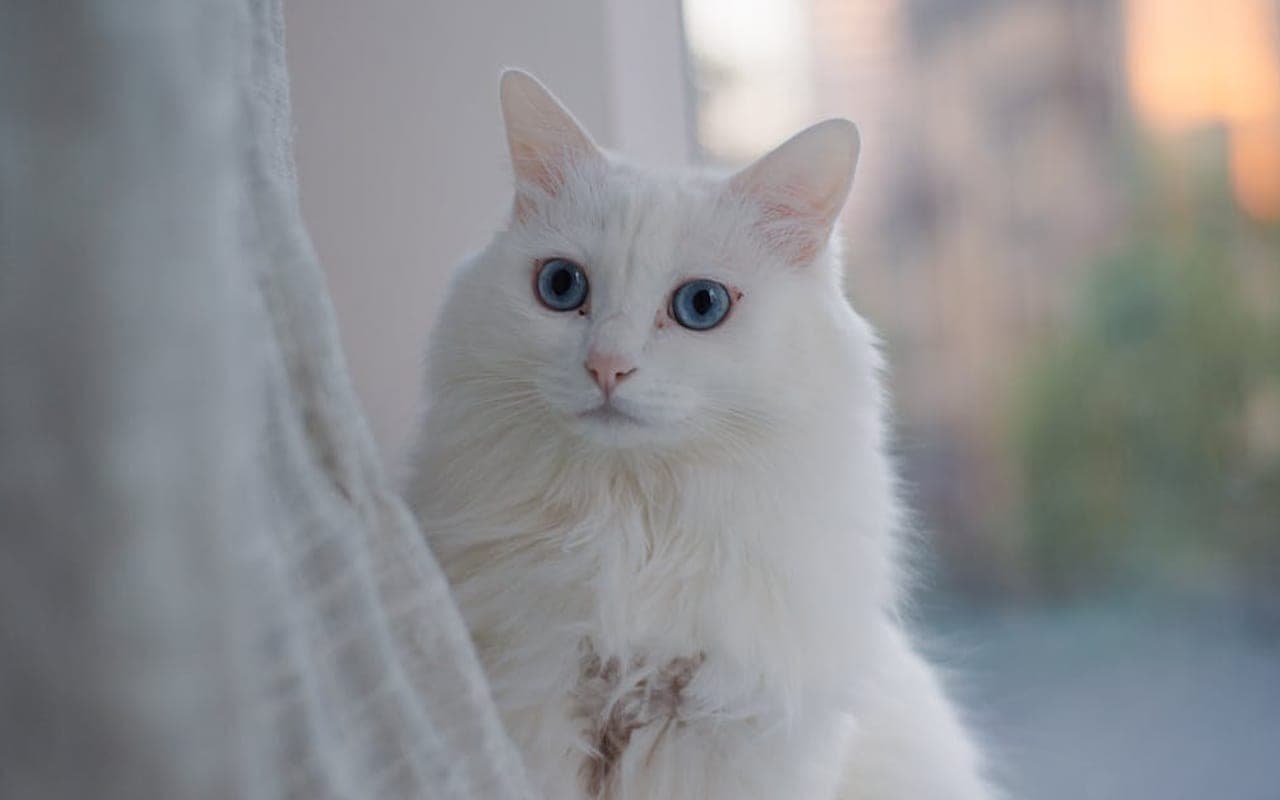
Physically, the Turkish Angora reads as elegant rather than heavy. It carries a long, lithe, finely boned body on slim legs, finishing in a plumed tail the cat often carries jauntily over its back. The coat is the giveaway: fine, silky and single-coated, with no dense woolly undercoat, so it drapes and shimmers rather than standing off the body. The breed is famous for its solid white cats, but that is a matter of reputation, not rule. Turkish Angoras come in a wide range of colours and patterns, including black, blue, red, cream, tabby and tortoiseshell, and their eyes can be amber, green, blue, or odd-eyed with one blue and one gold.
Temperament is where this breed earns its keep. Turkish Angoras are lively, highly intelligent and athletic, and they are relentlessly people-oriented. Owners often describe them as "designed to interact": they follow their humans room to room, supervise every task, and stay playful and kittenish well into adulthood. This is a cat that wants a job and a companion, not a decorative one that ignores you. Understanding that social, busy nature is the foundation for everything in this guide, from how you groom to how you keep the cat entertained.
Exercise
Exercise and Enrichment for a Turkish Angora
The Turkish Angora is a genuinely athletic cat, and its care needs follow directly from that. This is a lithe, finely built, agile breed that stays active and kittenish for years, so a quiet lap-cat routine will leave it frustrated and prone to inventing its own entertainment, usually at your expense.
Height is the single most important thing to plan for. Turkish Angoras love to climb and jump, and they gravitate to the highest point in any room, so give them that vertical territory on purpose. A tall cat tree, a few sturdy wall shelves and clear access to the tops of furniture let the cat perch and survey, which is where an Angora is happiest. Without those legitimate high spots it will simply commandeer the bookcase or kitchen cabinets, so building the vertical space in advance protects both the cat and your shelves.
Pair that climbing space with daily interactive play, because this breed's intelligence needs an outlet as much as its body does. Two or three sessions a day with a wand toy, a feather teaser or a ball to chase channel that athleticism and keep the cat lean. Rotate puzzle feeders and foraging toys to make that clever mind work for its food, and change the toys around every so often, because a bored Angora tires of a stale rotation quickly. Teaching simple tricks or fetch works well; these cats learn fast and enjoy the interaction.
Finally, remember the breed is intensely social. Angoras want to be part of household activity, so much of their "exercise" is really engagement with you. A cat left alone all day with no company and nothing to climb will grow restless, so factor in interaction and consider a compatible companion animal if the house is empty for long stretches.
Grooming
Grooming a Turkish Angora
The Turkish Angora is a longhair cat that grooms like a shorthair, and the reason is structural. Its coat is fine, silky and essentially single, without the dense woolly undercoat that makes Persians and other longhairs mat so readily. Because there is little undercoat to tangle against the topcoat, the Angora is far less mat-prone than its length suggests, and a light routine keeps it in good order.
A thorough brushing once a week is usually enough, because that is the interval at which loose hairs and any early tangles can be lifted out before they knot. Use a soft slicker or a wide-toothed comb and work gently along the body, paying attention to the longer feathering on the ruff, the "britches" on the hind legs and the plumed tail, since those longer sections are where the occasional tangle forms. Expect a heavier seasonal shed, typically as the weather warms, and increase brushing to two or three times a week during that window to stay ahead of the shed hair and reduce hairballs.
Bathing is rarely necessary; the silky coat sheds dirt well and most Angoras stay clean on their own. Beyond the coat, the same weekly session is a good moment for the rest of the routine. Brush the teeth with a cat-specific toothpaste as often as your cat tolerates, because dental disease is one of the most common health problems in all cats and home care slows it. Check the ears and wipe only the visible outer area if you see wax, never probing into the canal. Trim the nail tips every couple of weeks so they do not catch or overgrow. Keeping this handling gentle and regular suits the Angora's sociable temperament and keeps grooming a shared activity rather than a fight.
Health
Turkish Angora Health
The Turkish Angora is generally a hardy, long-lived breed, with a typical lifespan reported at around 12 to 18 years (Basepaws). A few conditions are still worth knowing about, and one is tied to the breed's famous white coat. None of the information below is a diagnosis; use it to know what to watch for, and let your veterinarian confirm or rule out any of these conditions.
Congenital deafness in white, blue-eyed cats
This is the health point most specific to the Turkish Angora, because the breed is so strongly associated with a pure white coat. The dominant white gene that produces that coat can interfere with development of the inner ear, and is also linked to blue eyes (International Cat Care). The result is congenital sensorineural deafness: present from birth rather than acquired, and not reversible.
The risk rises with blue eyes: a white cat with two blue eyes is far more likely to be deaf than one with non-blue eyes, and the deafness may affect one ear or both (International Cat Care). Odd-eyed Angoras, with one blue and one amber or green eye, are a special case, as such a cat may be deaf only in the ear on the blue-eyed side while hearing normally on the other. Because one-eared deafness is easy to miss at home, the definitive check is BAER testing (brainstem auditory evoked response), a painless test that measures each ear separately (International Cat Care). A deaf Angora can live a full, happy life but should be kept safely indoors, since it cannot hear traffic or danger.
Hypertrophic cardiomyopathy (HCM)
Hypertrophic cardiomyopathy, the most common form of heart disease in cats, is reported in the Turkish Angora, though not one of its most frequent inherited problems (Basepaws). In HCM the heart muscle thickens abnormally, making it harder to pump blood. It is often silent early on and may first show as a heart murmur at a routine exam, or as rapid or labored breathing, lethargy or reduced appetite (Basepaws). Because it can be present without obvious symptoms, screening matters: an echocardiogram (heart ultrasound) is how a veterinary cardiologist assesses the heart, and responsible breeders test parents to lower the risk of passing it on (PetMD). Any breathing changes or unusual tiredness warrant a prompt vet visit.
Hereditary ataxia
A rare hereditary ataxia has been described in the breed, affecting very young Turkish Angora kittens (Basepaws). This neurological condition disrupts balance and coordination, producing an unsteady gait, tremors and difficulty standing, with signs appearing early and sometimes progressing quickly (Basepaws). It is understood to pass on only when both parents carry the gene, so a kitten's parental health history is worth asking about, and a reputable breeder would typically identify it before a kitten leaves for its new home.
Everyday health and prevention
Beyond these breed-linked concerns, a Turkish Angora needs the same foundations as any cat: a measured diet to prevent obesity, routine dental care, and vaccinations and parasite prevention on your vet's schedule. Book a yearly check-up (twice yearly for seniors), and treat any lasting change in appetite, play or litter-tray habits as a reason to call.
Frequently Asked Questions
Are all white Turkish Angoras deaf?
No. Deafness is linked to the dominant white gene and is far more common in white cats with blue eyes, especially two, but many white Angoras hear normally (International Cat Care). Odd-eyed cats may be deaf only on the blue-eyed side. A BAER test is the only way to know for certain.
Do Turkish Angoras have heart problems?
Hypertrophic cardiomyopathy (HCM) is reported in the breed, though not among its most common inherited issues (Basepaws). Because it can be silent early on, an echocardiogram and testing of breeding parents is the responsible approach (PetMD). See your vet promptly if breathing seems labored.
What is hereditary ataxia in Turkish Angora kittens?
It is a rare inherited condition affecting very young kittens, causing an unsteady gait, tremors and impaired balance that can progress quickly (Basepaws). It appears only when both parents carry the gene, so ask about parental health history and use a reputable breeder.
How long do Turkish Angoras live, and are they generally healthy?
They are a hardy breed with a typical lifespan of around 12 to 18 years (Basepaws). Stay aware of white-cat deafness, HCM and, in kittens, hereditary ataxia, plus essentials like dental care and weight control. Your veterinarian can tailor a plan to your cat.
Sources
This guide draws on the following published references. Each opens in a new tab so you can check it against what you have read here.
Cat Fanciers' Association
Turkish Angora - The Cat Fanciers' Association(opens in a new tab)Hill's Pet Nutrition
Turkish Angora Cat Breed - Temperament, Personality and Characteristics Traits | Hill's Pet US(opens in a new tab)PetMD
Turkish Angora Cat Breed Health and Care | PetMD(opens in a new tab)Basepaws
Turkish Angora Cat Breed Guide: Care, Health & Size Breed Information & Insights | Basepaws(opens in a new tab)
Affiliate disclosure: We may earn a commission from qualifying purchases. This doesn't affect our recommendations.
Recommended Products
Turkish Angora Care Guide Book
Breed-focused reading and owner references for Turkish Angora care, training, grooming, and health planning.
Turkish Angora Food and Supplies
Helpful supplies for turkish angora cat supplies routines at home.
Turkish Angora Grooming Tools
Helpful supplies for turkish angora grooming tools routines at home.
Get personalized pet care tips
Join our newsletter for breed-specific advice, care guides, and expert tips delivered weekly.
No spam, ever. Unsubscribe anytime.