
Guppy
Guppies are small, active livebearing fish whose color and apparent hardiness often hide the level of planning a humane aquarium requires.
Origin
🇧🇷 Trinidad and Tobago and northern South America, including Venezuela, Guyana, Suriname, and northern Brazil
Overview
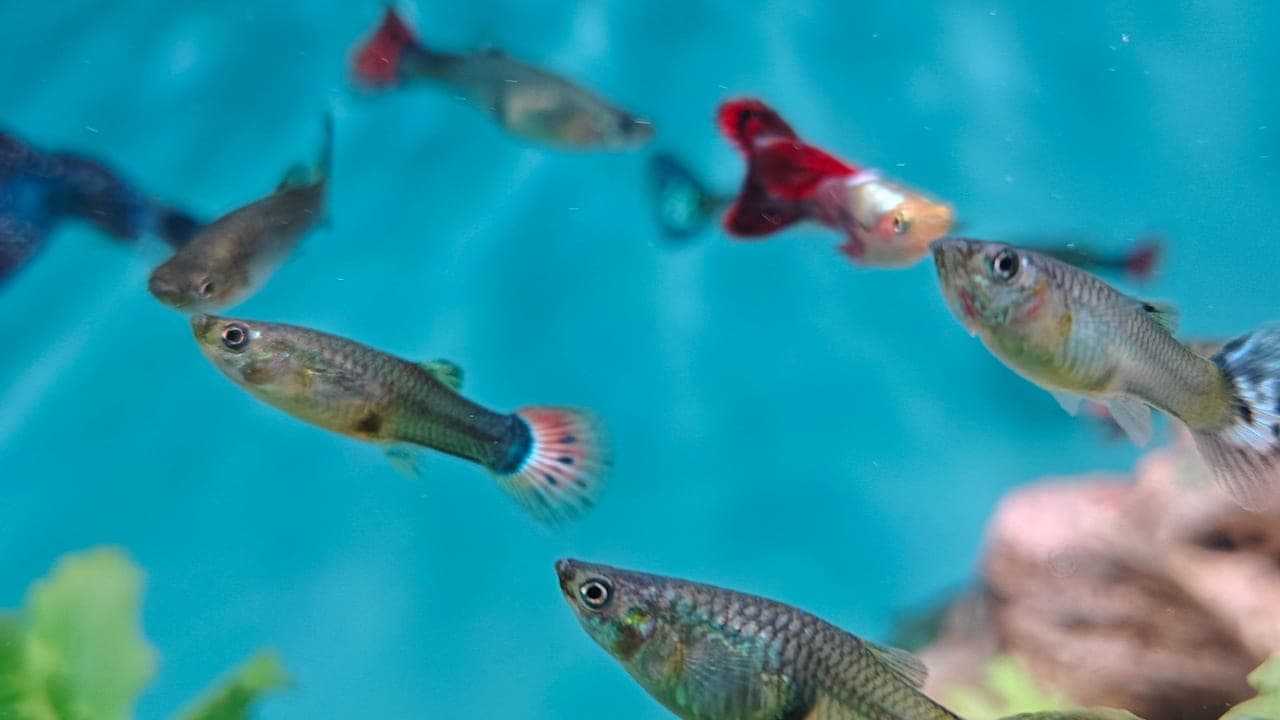
Guppies are small, active livebearing fish whose color and apparent hardiness often hide the level of planning a humane aquarium requires. Domestic males are usually smaller and more brightly patterned, while females are generally larger and more subdued, but color, fin shape, body size, and robustness vary across ornamental lines. A good guppy setup is built around the needs of a group rather than the minimum volume in which one fish can remain …
Temperament
History
Poecilia reticulata is a poeciliid livebearer native to parts of Trinidad and Tobago and northern South America. FishBase and the University of the West Indies describe a species adapted to warm springs, streams, canals, ditches, pools, and vegetated margins, with wild populations eating algae, small invertebrates, zooplankton, and detritus. Wilhelm Peters described the species in 1859, and its familiar English name commemorates Robert John Lechm…
Characteristics
Care Essentials
Diet
Use a reputable complete food formulated for small tropical omnivores or livebearers as the nutritional foundation. Particles must be small enough for every fish to take without repeated spitting. Feed restrained portions that the group consumes promptly, distributing food across more than one point so dominant or fast individuals cannot monopolize it. Watch the least assertive fish rather than judging the ration only by the first fish at the surface. Remove leftovers because decomposition raises the biological load and can undermine water quality. Guppy ecology supports variety: wild diets include algae, detritus, zooplankton, small insects, and other invertebrate material. In captivity, small amounts of safely sourced frozen or live foods can add behavioral variety, while quality foods with plant material broaden the diet. Variety does not mean feeding unverified wild-caught larvae or using treats as the staple. Store dry food cool and dry, replace stale food, and do not compensate for a poor base diet with random supplements. Adjust feeding to age, temperature, group size, condition, and reproductive status without using a fixed internet portion as a medical prescription. Fry require a deliberately separate feeding and water-quality plan if they are to be retained. Persistent weight loss, failure to compete, refusal of food, or abdominal change is a health signal requiring observation of water and social conditions and, when persistent or severe, aquatic-veterinary assessment.
Health
Prevention is the core health plan: mature biological filtration, stable appropriate water, restrained stocking, complete nutrition, low-stress social management, and quarantine for arrivals. UF/IFAS emphasizes that many captive-fish disease outbreaks involve environmental stress, crowding, inadequate nutrition, and opportunistic pathogens. The first response to a worrying change should therefore include testing temperature, ammonia, nitrite, nitrate, and pH, reviewing recent additions or maintenance, and documenting signs. It should not be an automatic reach for salt or for any medicine, including broad combination products. Urgent warning signs include repeated surface gasping, loss of equilibrium, inability to swim normally, marked lethargy, complete food refusal, rapidly spreading white spots or lesions, hemorrhage, severe fin erosion, abnormal swelling, protruding eyes, or multiple fish declining together. Less dramatic but important changes include clamped fins, rubbing against objects, isolation, progressive weight loss, and reduced activity. None of these signs points to one specific disease on its own. For example, UF/IFAS notes that visible white spots can suggest Ich but microscopic confirmation is needed because other conditions can look similar and gill-only infection may show no spots. Contact a veterinarian experienced with fish or a qualified aquatic animal health service for diagnosis and treatment selection. Quarantine new fish in a separate, appropriately heated and filtered system, with dedicated nets and siphons. UF/IFAS recommends a minimum 30-day quarantine in its Ich prevention guidance because transport can precipitate disease in apparently normal carriers. Observe feeding, swimming, skin, fins, and waste during that period. Do not share water or wet tools with the display aquarium. If illness occurs, extend the process and obtain expert direction. This is a prevention protocol, not proof that every pathogen will be detected. Do not treat routine salt addition as general wellness care. Guppies can tolerate a wider salinity range than many freshwater species, but tolerance does not establish benefit for continual salt exposure, and community plants or tankmates may have different limits. Treatment choices depend on diagnosis, water chemistry, species, and product; use professional guidance rather than copying instructions from an unrelated system.
Housing
The permanent aquarium should be mature, covered, heated, filtered, and larger than a temporary sales or quarantine container. For five or six adults, use at least 60 liters as this guide's high-bar starting point and favor a tank with meaningful horizontal length. The RSPCA Australia tropical-fish guidance gives 50 liters as a general minimum, while FishBase advises groups of five or more and a 60-centimeter minimum aquarium; the 60-liter recommendation intentionally adds welfare and water-quality margin. It must be increased for a larger colony, retained fry, or community tankmates. Stocking formulas based only on body centimeters ignore behavior, filtration maturity, adult female size, and reproduction. Maintain 24–26°C with a thermostatic heater and separate thermometer. Use pH 7.0–7.8 and approximately 9–19 dGH as practical targets for stable, moderately hard freshwater. If source water falls outside that range, learn its alkalinity and chemistry before altering it; repeated rapid adjustment can be more stressful than a stable value near an acceptable edge. FishBase's 18–28°C ecological range and broader reports of pH or salinity tolerance explain adaptability, not a target for daily fluctuations. This profile records salinity at 0 ppt because it describes routine freshwater care. Do not add salt as a permanent tonic. Complete fishless cycling or another evidence-based cycling method before adding the group. A biological filter must be able to convert toxic ammonia through the nitrogen cycle, while mechanical media captures solids. Ensure safe surface movement and adequate oxygen, especially in warm water. Protect small fish and fry from filter intakes. Never shut the filter down for long maintenance, replace all mature media simultaneously, or clean biological media with untreated chlorinated water. Prepare for power interruptions appropriate to local conditions. Create a layered environment: open midwater swimming space, live or safe artificial plants, fine-leaved or dense refuge, wood or smooth hardscape, and multiple sight breaks. Secure heavy items and avoid sharp edges. A substrate is optional to the fish but can support planting and foraging complexity if it can be maintained. Use a timed light-dark cycle and provide a genuine dark period; place the aquarium away from direct sun, aerosol sprays, vibration, and abrupt temperature change. Choose tankmates by shared temperature, hardness, adult size, feeding pace, fin-nipping risk, and predatory capacity. The word peaceful is not enough. Avoid fish large enough to swallow guppies, persistent fin nippers, highly aggressive or territorial species, and species whose water needs conflict. Quarantine every arrival. After introduction, watch actual access to food and space; compatibility is an observed outcome, never guaranteed by a species list.
Activity
Guppies meet their movement needs by swimming, exploring, foraging, choosing social partners, and moving between exposed and sheltered zones. Provide horizontal swimming length, an open lane, and several routes through plants or hardscape. Avoid filling a small tank with decoration until only a narrow corridor remains. At the same time, a bare box gives no refuge from attention. The practical goal is choice: open water for group movement, fine or dense structure for retreat, and visual breaks that let a pursued fish leave another's line of sight. Use flow to circulate and oxygenate water without pinning long-finned fish in place. If fish constantly shelter only behind the filter, struggle to hold position, or cannot feed normally, reassess the current. Rotate safe foraging presentation or modest structural details only when changes will not destabilize the tank. The 2025 enrichment study supports complex planted and wood structure as a welfare direction, but its small experimental tanks and specific protocol must not be copied as a home stocking standard. Normal activity is judged against the individual and group over time, not by forcing exercise.
Breeding
Treat mixed-sex housing as an active breeding project, not as a neutral community choice. Guppies use internal fertilization, and females can store sperm for later broods. Removing males therefore does not make a previously exposed female immediately non-reproductive. FishBase reports that females may produce young about every four weeks after a gestation context of roughly four to six weeks, often with 20–40 live young, while the PLOS study documents regular interbrood intervals and substantial individual life-history variation. These figures are planning evidence, not a promise for a particular female. Before mixing sexes, calculate where several successive broods would live, how filtration and water changes would scale, how the sexes will be separated, and which responsible homes can accept juveniles. Do not assume adults will control the population humanely by eating all fry; survival is variable, and predation is not a placement plan. Dense refuge can improve fry survival, which increases the keeper's capacity obligation. Conversely, removing all refuge merely to expose fry conflicts with the adults' need for structural choice. If breeding is not wanted, choose a carefully verified same-sex group. A commonly published mixed-sex convention is one male to two or three females. It may distribute attention, but primary behavioral research shows that male harassment can change female habitat use, foraging, and social association. Ratios do not override observation. Provide refuge and enough room, and intervene when one fish is persistently pursued, excluded from food, injured, or chronically hidden. Intervention may mean separating sexes or individuals into fully prepared systems, not adding more fish automatically. Do not release unwanted adults or fry or market them as mosquito control. U.S. Fish and Wildlife Service evidence documents aquarium and intentional introductions, established non-native populations, ecological risks, and mixed mosquito-control outcomes. Rehome through responsible aquarists, retailers that accept returns, or locally appropriate organizations, and verify local rules.
Daily Care
Start with two calm observation passes, including one at feeding. Count or account for the fish, check that each individual swims with control and can reach food, and look for a fish that has separated from its usual social area. Compare respiration, fin carriage, posture, color, and appetite with that individual's normal pattern. Confirm that the heater and filter are operating, the thermometer remains within the established 24–26°C target, the cover is secure, and the surface is moving enough for gas exchange. Remove dead plant matter and uneaten food promptly without turning each day into a disruptive deep clean. Use a test kit rather than visual clarity as proof of water safety. In a stable mature aquarium, log temperature and check the group daily, then test on a regular schedule appropriate to the tank. Test ammonia, nitrite, nitrate, and pH immediately after abnormal behavior, an unexpected death, a power or filter interruption, a large stocking change, or accidental overfeeding. Water that looks clear can still contain harmful nitrogen compounds. A reading or trend outside the tank's normal safe pattern calls for measured husbandry correction, not rapid pH chasing or indiscriminate medication. Make partial water changes on a consistent schedule, commonly weekly as a baseline, with frequency and volume adjusted to actual nitrate trends, stocking, feeding, and source-water chemistry. Condition new water and match its temperature closely. Vacuum accessible debris while preserving planted refuge and beneficial filter biology. Clean reusable filter media gently in removed aquarium water when flow declines; do not sterilize or replace every biological component together. Record changes so a future health problem has a usable timeline.
Maintenance
A guppy does not need brushing, handling, fin trimming, or removal from water for cosmetic care. Its protective skin and mucus layer are harmed by unnecessary contact. The keeper's equivalent of grooming is environmental maintenance: remove waste, keep water chemistry stable, inspect fins and skin without chasing the fish, maintain safe surfaces, and prevent sharp plastic, rough rock, or intake openings from damaging ornamental fins. If a fish must be moved, plan the destination first, minimize pursuit, use clean species-appropriate equipment, and keep transfer water temperature compatible. Never hold a guppy out of water for a routine inspection or attempt to cut a damaged fin at home. Fin damage is information: check social chasing, tankmate behavior, decor, intake protection, and water quality, then seek qualified help if injury is severe, worsening, inflamed, or accompanied by systemic signs.
Behavior And Enrichment
Guppies can learn predictable feeding locations and routines, but training should support calm husbandry rather than tricks that encourage overfeeding. Use a consistent approach cue, distribute a measured ration, and observe whether every fish attends. A learned feeding response makes appetite changes easier to detect. You can also condition the group to a target area before gentle maintenance, reducing frantic chasing. Do not tap glass, repeatedly startle fish, or keep offering food to produce a response. A fish that does not approach may be stressed, socially excluded, or unwell; investigate rather than escalating the cue. Keep routine changes gradual and allow refuge after maintenance. Social and foraging research shows that guppies use information from companions, so individual behavior should be interpreted in the context of the group.
Gallery
Frequently Asked Questions
Are guppies genuinely good fish for a beginner?
What tank size should I use, and how many guppies should live together?
Should I keep male and female guppies together, and what sex ratio works?
How do I sex guppies at the shop so I actually get a same-sex group?
Which fish can live with guppies in a community aquarium?
What temperature, pH, and hardness are best for a guppy aquarium?
What should guppies eat, and how do I avoid overfeeding?
What health warning signs matter, and should I routinely add aquarium salt?
Recommended for Guppy Owners
As an Amazon Associate, we earn from qualifying purchases made through these links, at no extra cost to you.
Related Breeds
- Aquatics
Neon Tetra
schooling
Tropical South America, especially blackwater and clearwater tributaries associated with the Solimoes River basin; most aquarium fish are commercially produced rather than collected from a single uniform wild habitat. - Aquatics
Betta Fish
inquisitive and individually variable
Tropical Southeast Asia, especially the Mekong basin and Thailand; domestic ornamental lines have been selectively bred far beyond the wild-type form. - Aquatics
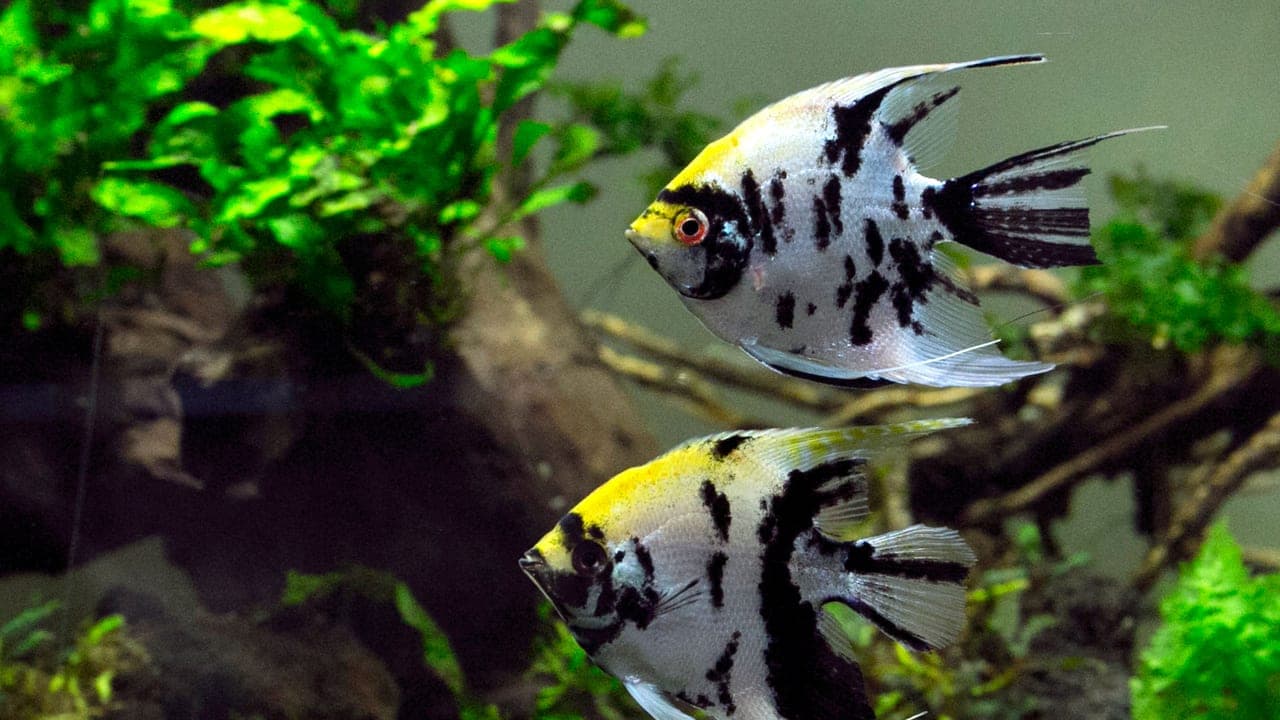
Freshwater Angelfish
socially complex
Tropical South America, principally the Amazon basin in Peru, Colombia, and Brazil, with records from the rivers of Amapá, the Oyapock drainage in French Guiana, and the Essequibo in Guyana. - Aquatics
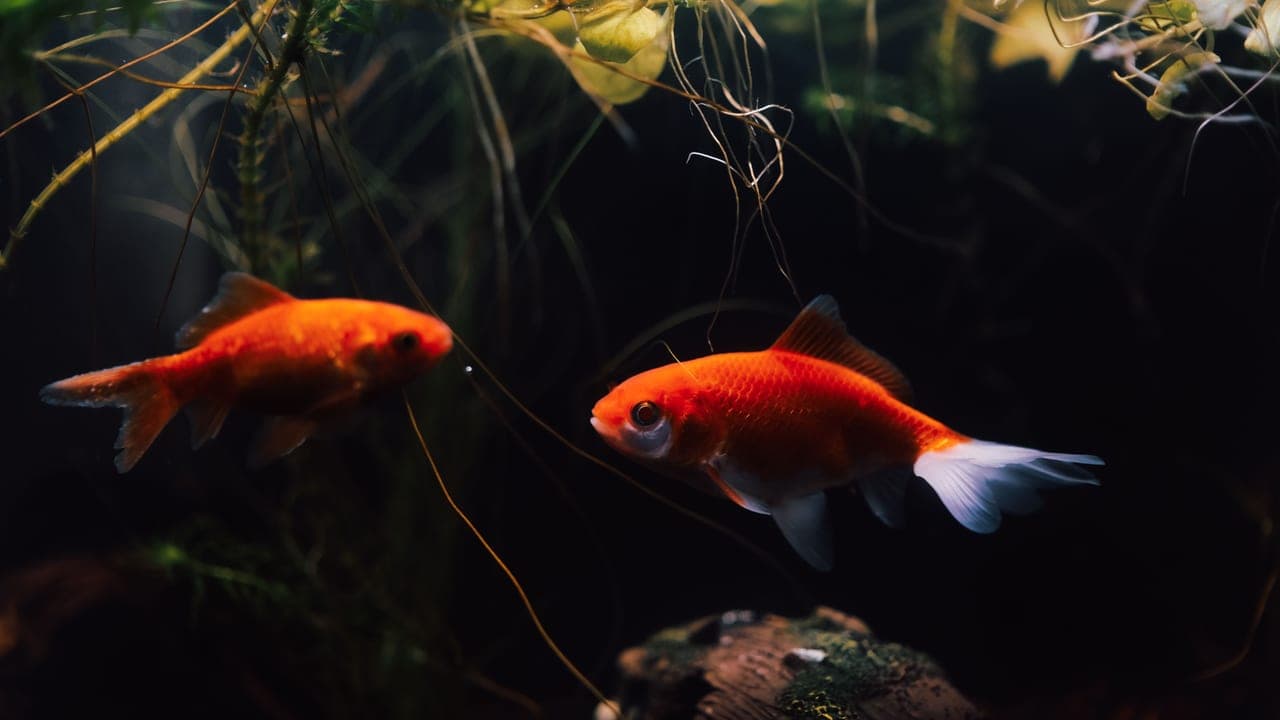
Goldfish
generally peaceful
East Asia, with China as the historic center of goldfish domestication and ornamental selection
Guppy Care Summary
Build the system before buying the fish. Use a level, securely supported aquarium of at least 60 liters for a modest permanent group of five or six adults, then increase volume and filtration when adding tankmates or retaining fry. Fit a reliable heater, thermometer, gentle but effective mechanical and biological filtration, and a close-fitting cover that still permits safe gas exchange. Complete the nitrogen cycle and confirm that the system processes waste before stocking. Add fish gradually rather than loading a newly cycled filter all at once. Aim for 24–26°C, pH 7.0–7.8, and moderately hard water around 9–19 dGH. These are care targets, not permission to make sudden chemical corrections. Match replacement water for temperature, treat municipal water with an appropriate conditioner, and use regular partial water changes to control accumulated waste. Test ammonia and nitrite whenever fish behave abnormally, after stocking changes, or after filter disruption; both should read 0 mg/L in a functioning aquarium. Track nitrate trends and adjust water-change volume, feeding, planting, and stocking before the trend becomes a crisis. Never rinse all biological filter media under chlorinated tap water or replace it all at once. Provide open swimming space plus dense planted or artificial cover, wood, and visual barriers. In a 2025 experiment using 15 tanks, guppies with higher structural enrichment showed more plant-, wood-, and surface-feeding behavior and more courtship, while waterborne cortisol was generally higher in the unenriched treatment at several sampling points. The pattern was not uniformly monotonic: biting was also higher in the highly enriched treatment, and the only recorded stereotypy was highest in the low-enrichment treatment rather than the barren one. The study therefore supports offering complexity and choice while monitoring the fish; it does not establish a universal furnishing formula or a home-aquarium stocking minimum. Secure every object, avoid sharp edges that can tear ornamental fins, and keep water flow usable rather than forcing long-finned fish to fight a current continuously. Maintain a regular light-dark cycle and a quiet dark period. Feed a complete, appropriately sized guppy or tropical omnivore food as the dietary base. Offer small portions that are consumed promptly and remove uneaten material. Rotate suitable small frozen or live invertebrate foods and plant-containing foods for variety when they are obtained and handled safely. Portion control matters because excess food degrades water quality; a rounded abdomen is not a reliable feeding target, especially in females that may be carrying young. Observe the group at every feeding. Healthy guppies should approach food, swim with control, hold their fins normally, and use more than one area of the tank. Loss of appetite, isolation, repeated surface gasping, rubbing, clamped or ragged fins, white spots, ulcers, swelling, abnormal posture, or sudden deaths require immediate water testing and qualified help. These signs overlap across environmental, parasitic, bacterial, fungal, and other problems, so do not diagnose from a photo or medicate the display tank by guesswork. Quarantine incoming fish and avoid sharing wet nets or siphons between quarantine and established systems. Routine aquarium salt is not a substitute for stable water, filtration, diagnosis, or species-appropriate treatment. Decide the reproductive plan before mixing sexes. Females can store sperm and may continue producing broods after separation from males. FishBase reports young at roughly four-week intervals, a four-to-six-week gestation context, and broods commonly around 20–40, with no parental care and possible predation on fry. Actual timing and brood size vary. If you cannot house, separate, or responsibly rehome repeated offspring, choose a same-sex group and verify sex carefully before purchase. Never release surplus fish.
Sources
These are the published sources this page draws on. Each opens in a new tab so you can check it yourself.
RSPCA Australia Knowledgebase
How Should I Care for My Tropical Fish?(opens in a new tab)RSPCA
Choosing an Aquarium for Pet Fish(opens in a new tab)FishBase
Poecilia reticulata (Guppy) Species Summary(opens in a new tab)U.S. Fish and Wildlife Service
Guppy (Poecilia reticulata) Ecological Risk Screening Summary(opens in a new tab)PubMed Central / Proceedings of the Royal Society B
Social Implications of the Battle of the Sexes: Sexual Harassment Disrupts Female Sociality and Social Recognition(opens in a new tab)Frontiers Media / Frontiers in Fish Science
Effect of Different Levels of Environmental Enrichment on the Welfare of Guppy (Poecilia reticulata)(opens in a new tab)PLOS Biology
The Evolution of Senescence and Post-Reproductive Lifespan in Guppies (Poecilia reticulata)(opens in a new tab)PubMed Central / Biology Letters
Male Harassment Drives Females to Alter Habitat Use and Leads to Segregation of the Sexes(opens in a new tab)UF/IFAS Extension
Introduction to Fish Health Management(opens in a new tab)UF/IFAS Extension
Submission of Fish for Diagnostic Evaluation(opens in a new tab)UF/IFAS Extension
Ichthyophthirius multifiliis (White Spot) Infections in Fish(opens in a new tab)University of the West Indies
Poecilia reticulata (Guppy) — Online Guide to the Animals of Trinidad and Tobago(opens in a new tab)PetMD
Guppy Care: Tank Setup, Feeding, and Health Guide(opens in a new tab)Merck Veterinary Manual
Common Signs of Illness in Fish(opens in a new tab)