
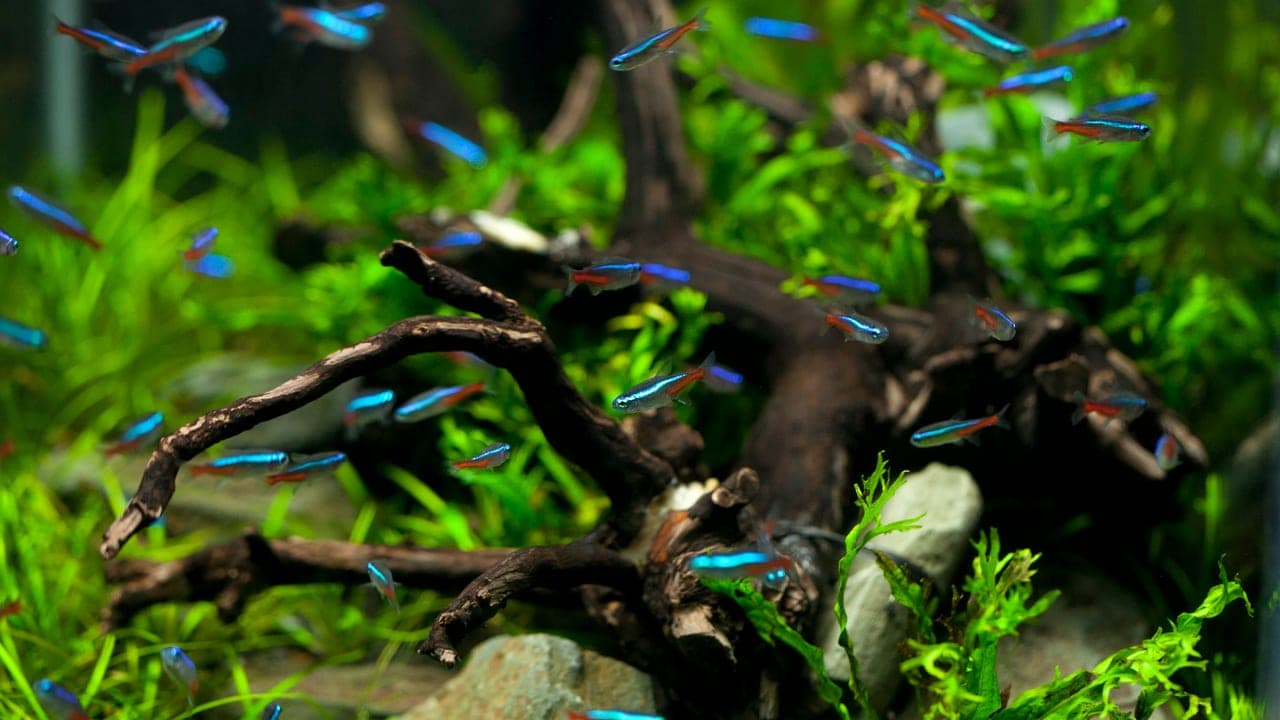
Neon Tetra
Neon Tetras are small South American freshwater fish recognized by an iridescent blue-green stripe and a red stripe that extends along the rear portion of the body.
Origin
Tropical South America, especially blackwater and clearwater tributaries associated with the Solimoes River basin; most aquarium fish are commercially produced rather than collected from a single uniform wild habitat.
Overview
Neon Tetras are small South American freshwater fish recognized by an iridescent blue-green stripe and a red stripe that extends along the rear portion of the body. Their small size and peaceful reputation often lead to minimal housing advice, but a high-welfare setup is built around the needs of the school, not the dimensions of one fish. This guide recommends at least ten Neon Tetras in a mature aquarium of approximately 60 liters with a horizo…
Temperament
History
Paracheirodon innesi was described in 1936 and became one of the most recognizable ornamental fishes in the world. FishBase identifies it from South American blackwater or clearwater tributaries of the Solimoes River and records a maximum standard length of 2.5 centimeters. Veterinary care material commonly describes a total length of roughly 3–4 centimeters; these measurements are not contradictory because standard length excludes the tail fin w…
Characteristics
Care Essentials
Diet
Use a complete fine tropical micro-pellet, granule, or flake from a reputable manufacturer as the nutritional foundation. FishBase describes wild adults eating worms, small insects, crustaceans, and plant matter, supporting an omnivorous small-prey profile rather than a single-food or exclusively carnivorous label. A commercial staple reduces the risk that a visually varied but nutritionally incomplete collection of treats becomes the whole diet. Check expiration and storage instructions, keep food dry and cool, and replace stale or damp food. Feed once daily as a conservative starting point and only the quantity the group consumes promptly; RSPCA Australia uses under roughly two minutes as a practical upper boundary for tropical fish. That is not an instruction to keep pouring food in for two minutes. Particle size, energy density, group size, temperature, and body condition differ. Start with less, observe every fish, and adjust from actual leftovers and condition. Spread food over more than one area so timid fish can participate. If one individual repeatedly misses meals, investigate aggression, illness, mouth size, flow, and location instead of increasing food that dominant fish will take. Occasional appropriately sized frozen or live daphnia, brine shrimp, small worms, or similar clean invertebrate foods can provide variety and foraging opportunities. Source and store them carefully because live and frozen feeds can carry contamination or spoil. Do not copy the ICAR broodstock experiment's three daily meals and four-percent-body-weight ration into routine pet care; those fish were being conditioned for artificial propagation under a research protocol. Mammalian meat, offal, bread, and household food are inappropriate. Overfeeding affects water as well as body condition because uneaten material and excess waste increase ammonia production. A sudden appetite decline is a health sign: test the environment and seek qualified advice if it persists or accompanies isolation, wasting, abnormal respiration, color change, or impaired swimming.
Health
Disease prevention begins before purchase. Choose active fish from a system without unexplained deaths or visible illness, and do not buy one Neon Tetra to add directly to an established display. Quarantine the intended group in a separate, fully heated and biologically supported system using dedicated equipment. Merck's aquarium-fish management guidance treats quarantine, water quality, stocking, sanitation, and nutrition as core preventive medicine. Quarantine duration and diagnostic sampling should be risk-based and developed with a fish-experienced veterinarian or competent aquatic-health professional; there is no single universal number, and medication should never be automatic. Concerning signs include persistent isolation, non-feeding, progressive weight loss, abnormal curvature, loss of swimming control, rapid or labored respiration, clamped or eroding fins, ulcers, hemorrhage, pale patches, lumps or cyst-like areas, unusual feces, and deaths elsewhere in the group. Test temperature, ammonia, nitrite, pH, and recent husbandry changes first, but do not assume safe water excludes infectious disease. Preserve a water sample and records when practical before a major change. Correct a confirmed environmental hazard with conditioned temperature-matched water and appropriate maintenance, while avoiding a total teardown that destroys biological filtration. The label neon tetra disease is commonly applied to infection by the microsporidian Pleistophora hyphessobryconis, but visual signs are not specific enough for a home diagnosis. Reviews of ornamental-fish microsporidia describe overlapping clinical presentations, and published work documents a columnaris-like systemic infection in Neon Tetras that could be confused with other causes. Color loss alone is especially weak evidence because the stripe naturally changes with light and circadian state. Do not combine medications, salt, heat changes, or disinfectants on the basis of a photograph or forum checklist. Seek urgent fish-veterinary help for respiratory distress, inability to remain upright, rapid decline, severe lesions, or multiple affected fish. A qualified work-up may require microscopy, histopathology, culture, or molecular testing that cannot be reproduced by looking through aquarium glass. There is no reliable cure for microsporidial infection once a fish is affected. Veterinary care-sheet guidance for this species is therefore to remove a confirmed or strongly suspected case promptly and euthanize it humanely, because spores spread through the school when an infected fish dies and is scavenged by its tankmates. A fish veterinarian's diagnosis still matters, because the environmental and bacterial causes that mimic the same signs are correctable and identifying one of them can save the rest of the group. Removal should not be delayed while waiting for a treatment option that does not exist.
Housing
Use a mature, covered, rectangular freshwater aquarium of at least 60 liters and at least 60 centimeters long for ten Neon Tetras. The lid reduces escape risk and stabilizes the environment, while leaving safe space for equipment and gas exchange. Provide a reliable heater and thermometer, efficient mechanical and biological filtration, and enough surface movement or aeration for oxygenation without excessive current. Use a prefilter where an intake could trap a small fish. Keep electrical equipment on protected circuits and prepare for heater, filter, outage, or leak failure. The routine editorial target is 22–26°C, pH approximately 6.0–7.0, and soft to moderately soft freshwater. FishBase records 20–26°C, pH 5.0–7.0, and 1–2 dGH; these are broad reference values, not a command to reproduce highly acidic wild water without the testing skill to keep it stable. Avoid rapid pH-down products and unmeasured mineral changes. Learn the seller's parameters, acclimate deliberately, and preserve stability. Keep ammonia and nitrite at 0 mg/L. Perform measured partial water changes with dechlorinated, temperature-compatible water, adjusting frequency to nitrate, stocking, feeding, and actual test results. Do not replace all water or all filter media as routine cleaning. Arrange plants, wood, and other aquarium-safe materials around the edges and rear, retaining a clear horizontal lane. Include darker refuge and visual cover without sealing off all open water. Approximately half-cover is a useful general welfare reference for prey-like tropical fish, not a requirement to fill precisely half the tank with one material. Give at least eight hours of darkness and avoid direct sun, erratic lighting, and overnight display light. Choose peaceful tankmates only after comparing adult size, mouth size, temperature, pH, hardness, group needs, feeding speed, activity, and disease risk. Avoid adult Freshwater Angelfish and other fish capable of swallowing Neon Tetras. Never release aquarium fish, plants, snails, pathogens, or untreated water into local waterways.
Activity
Neon Tetras obtain exercise through voluntary schooling, exploration, feeding, and movement through a properly shaped environment. Their small body does not make vertical height a substitute for horizontal distance. Preserve a clear route of at least 60 centimeters along the tank's long axis and keep the flow gentle enough that fish can choose where to swim rather than being pinned into one zone. Increase tank length and volume for larger schools or active tankmates. A decorative column or nano cube can hold similar water on paper while offering a much shorter travel path. Group size is part of usable movement. A controlled study comparing commonly kept aquarium fishes found Neon Tetras in groups of ten showed more favorable behavioral outcomes than fish kept in groups of five under the tested conditions. The result supports ten as a stronger starting target, but should not be stretched into the claim that every additional fish improves welfare regardless of crowding. A group of twenty in the same 60-liter tank may create more competition and waste than the system can support. Scale footprint, filtration, refuge, feeding access, and maintenance with numbers. Provide structured margins, plant cover, shaded refuge, and some open water. RSPCA Australia recommends substantial cover for prey species and notes that changing flow direction can provide enrichment. Make changes gradually and preserve an established safe zone. Enrichment is not tapping the glass, chasing fish with a net, exposing them to a predator, keeping them permanently frightened so they school tightly, or flashing lights to intensify color. Evaluate enrichment by broader use of the environment, normal feeding, stable respiration, absence of injuries, and the ability to retreat. Fish that constantly hug one corner may be responding to current, light, aggression, water quality, or fear rather than needing forced exercise.
Breeding
Breeding Neon Tetras is an advanced aquaculture project, not a casual consequence of keeping a mixed school. They scatter eggs and do not provide parental care, so adults may consume eggs. A responsible breeding plan therefore requires separate mature systems for conditioning adults, controlled spawning, protecting eggs, rearing very small larvae, culturing appropriately sized first foods, managing water quality at low biomass, and housing or placing the offspring. Do not trigger breeding without a realistic capacity and rehoming plan. Published controlled-spawning work and an ICAR incubation experiment show why broad pet-care summaries are inadequate as breeding instructions. Experimental protocols manipulate broodstock diet, light, water, spawning opportunity, egg separation, and temperature. In the ICAR study, artificially fertilized eggs incubated at 24–26°C developed successfully, with the highest mean hatch percentage in the 26°C treatment and a shorter incubation time at warmer temperatures. Those results apply to artificial propagation under the tested conditions. They do not establish 26°C as the only correct display-tank temperature, prove that warmer is always better, or validate the research ration for maintenance fish. Soft, clean water and subdued light are commonly important in controlled Neon Tetra propagation, but the exact chemistry, conditioning schedule, spawning substrate, egg treatment, and larval-food sequence should come from a current expert protocol and be validated against the breeder's water and stock. Eggs and larvae are far less forgiving of an immature biological system than the phrase easy egg layer implies. Never use a medication, disinfectant, extreme pH adjustment, or temperature change in a breeding system without understanding its effect on adults, gametes, eggs, larvae, microbes, and equipment. For most homes, providing a stable non-breeding school is the more responsible outcome.
Daily Care
Observe before feeding. A healthy school should use the horizontal water column, respond to normal activity around the aquarium, and regroup without one fish remaining persistently isolated. Count the fish, check that each can hold a normal position, and look for changes in respiration, appetite, body fullness, spine shape, skin, fins, eyes, and swimming control. Schooling intensity naturally changes with light, cover, feeding, and perceived threat; a tightly compressed group is not automatically a sign of excellent social welfare. Record meaningful changes from the group's baseline instead of judging one snapshot. Read the thermometer and confirm that the filter and heater are operating. Look for blocked intakes, reduced surface movement, a dead organism, uneaten food, or a recent maintenance error. Test ammonia and nitrite on a regular schedule and immediately when fish become pale, breathe rapidly, hover at the surface or filter return, clamp fins, stop feeding, or isolate. The operating target for both ammonia and nitrite is 0 mg/L, with two qualifications. Most hobby kits measure total ammonia, and only the unionized fraction of that total is acutely toxic; that fraction rises with pH and with temperature, which is one reason the slightly acidic water this species prefers is more forgiving than a hard alkaline tank showing the same total reading. A 0.0 result is a below-detection-limit result rather than a proven zero, so give more weight to the trend across repeated tests than to a single color block. Clear water can still carry dissolved waste, and a normal pH reading does not cancel an ammonia or nitrite problem. Keep a log of temperature, pH, ammonia, nitrite, nitrate, water changes, additions, and observed signs so a veterinarian can see the sequence. Feed a small controlled meal and watch its distribution. Neon Tetras have small mouths and can be outcompeted, so use appropriately sized food and offer it across two or more points. Remove obvious uneaten food. Maintain the established light-dark schedule and do not switch on intense room or aquarium lights suddenly at night to inspect color. If a fish looks dull after darkness, allow normal gradual lighting and reassess; persistent daytime change plus another sign deserves investigation. Routine care is quiet consistency, not daily netting, decoration changes, chemical additives, or attempts to make the school display tightly for spectators.
Maintenance
Neon Tetras require no hands-on grooming. Do not handle, rub, brush, or attempt to clean an individual fish. The skin and mucus barrier are protective, and unnecessary capture can injure a small fish. Grooming in this context means maintaining a safe environment: remove sharp edges, cover risky filter intakes, keep narrow holes from trapping fish, wipe viewing panes with aquarium-safe tools, siphon accumulated waste during measured water changes, and keep dedicated buckets and nets free from soap or household residues. Inspect rather than manipulate. Compare the fins, body surface, outline, and swimming pattern over time. A small reflective fish can appear different with viewing angle and light, so use consistent daytime conditions and, when helpful, a clear photograph or short video for longitudinal comparison. Never scrape a pale patch or cut a fin at home. Do not repeatedly net the whole school to inspect one fish. If capture is necessary for veterinary assessment or transfer, prepare the destination first, match temperature and chemistry as closely as the plan requires, minimize chase time, and use appropriately fine, wet, fish-safe equipment. Maintain the aquarium without sterilizing it. Rinse biological filter media gently in removed aquarium water when flow is restricted, rather than replacing all media or washing it under untreated chlorinated water. Use conditioned replacement water and avoid sudden large chemistry changes. Algae on a surface is not a reason for soap, disinfectant, or a complete reset. The target is a stable, hygienic biological system, not an inert-looking container. Persistent lesions, fin loss, swelling, abnormal curvature, or mucus change belong in a fish-health assessment, not a cosmetic-care routine.
Behavior And Enrichment
Neon Tetras do not need obedience training. They can learn predictable associations around feeding, lighting, and keeper presence, but a rapid approach to the front glass may represent food anticipation rather than proof of complete welfare. Use routine to reduce disturbance: turn room lights on before the aquarium light, feed at a consistent time and location, move slowly during maintenance, and allow the school a refuge. A gradual cue before feeding can help fish assemble and lets the keeper check that every individual appears. Do not try to manufacture a tight-schooling display by frightening the fish with tapping, sudden shadows, a net, a mirror, or a predatory tankmate. One schooling pattern by itself cannot certify either good welfare or distress; group size, flow, light, feeding, disturbance, cover, and individual condition all affect behavior. Nor should food be withheld for prolonged periods to force a response. Any simple target or station behavior used for observation must be voluntary, brief, and reinforced with part of the normal ration, not extra food that degrades water quality. The practical goal is cooperative predictability: fish continue normal swimming while the keeper approaches, feed distributes evenly, and necessary maintenance causes minimal panic. Behavior change is a useful warning only when interpreted carefully. Failure to approach at a familiar cue may prompt a check of temperature, water chemistry, appetite, tankmate behavior, and physical signs. It does not name a disease. Likewise, fish that hide after maintenance may need time and cover rather than repeated exposure intended to habituate them. Respect individual and group variation. The most useful training tool is a consistent observation log that helps a veterinarian distinguish an acute change from the school's normal rhythm.
Frequently Asked Questions
How many Neon Tetras should be kept together?
What tank size and shape do Neon Tetras need?
What temperature, pH, and hardness are best for Neon Tetras?
Can Neon Tetras live with Freshwater Angelfish or other community fish?
Why do Neon Tetras lose or change color at night?
What is neon tetra disease, and can I diagnose it by appearance?
What should Neon Tetras eat, and how often should they be fed?
How long do Neon Tetras live, and are they easy to breed?
Recommended for Neon Tetra Owners
As an Amazon Associate, we earn from qualifying purchases made through these links, at no extra cost to you.
Related Breeds
- Aquatics
Betta Fish
inquisitive and individually variable
Tropical Southeast Asia, especially the Mekong basin and Thailand; domestic ornamental lines have been selectively bred far beyond the wild-type form. - Aquatics
Freshwater Angelfish
socially complex
Tropical South America, principally the Amazon basin in Peru, Colombia, and Brazil, with records from the rivers of Amapá, the Oyapock drainage in French Guiana, and the Essequibo in Guyana. - Aquatics
Guppy
social
Trinidad and Tobago and northern South America, including Venezuela, Guyana, Suriname, and northern Brazil - Aquatics
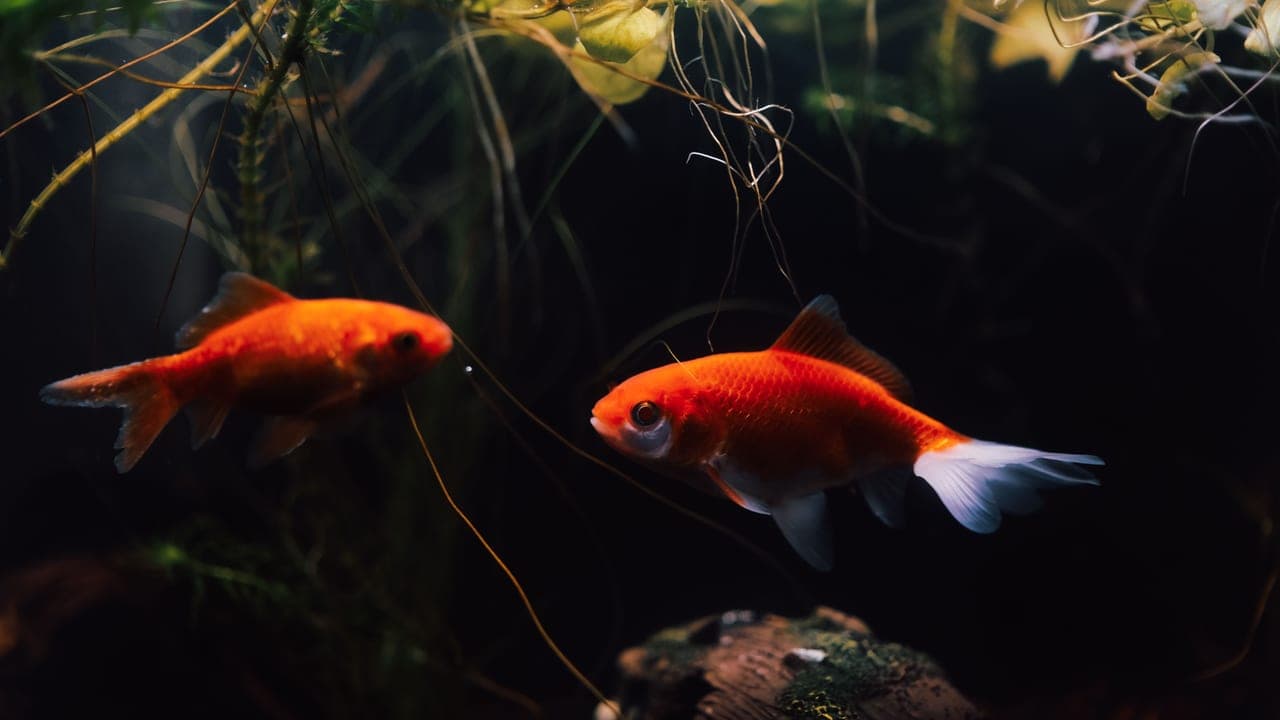
Goldfish
generally peaceful
East Asia, with China as the historic center of goldfish domestication and ornamental selection
Neon Tetra Care Summary
Build the aquarium around a school before buying any fish. Select a rectangular tank of at least 60 liters and at least 60 centimeters in horizontal length for ten Neon Tetras, then increase capacity when adding tankmates. Fit a heater, thermometer, covered intake or fine prefilter where necessary, and a filter that provides biological and mechanical filtration without turning the swimming route into a high-current channel. Establish the nitrogen cycle without fish and confirm that the system can process waste to 0 mg/L ammonia and 0 mg/L nitrite. A mature aquarium means more than water added yesterday: temperature and chemistry are stable, the biological filter has demonstrated capacity, maintenance routines are established, and plants or other safe structure are not being repeatedly uprooted or rearranged. Create an open horizontal swimming lane with planted or decorated margins, shaded areas, and refuge. A dark substrate and background can reduce exposure, but any material must be aquarium-safe and must not unpredictably alter chemistry. Provide a consistent light-dark cycle with at least eight hours of darkness. The stripe may shift toward a darker or more violet-blue appearance during dark adaptation; inspect health after normal daytime color has returned rather than startling sleeping fish under a bright light. Keep ten or more together. The study evidence supports ten over five under its test conditions, but does not prove that all larger numbers are automatically better in an undersized tank. Group size, water volume, footprint, filtration, food access, and tankmate pressure must improve together. Use a stable 22–26°C, approximately pH 6.0–7.0, and soft to moderately soft freshwater as the routine home target. Acclimate carefully when the supplier's chemistry differs and avoid rapid pH manipulation. Test ammonia and nitrite routinely and whenever behavior changes; both should remain at 0 mg/L. Check temperature, filter flow, respiration, schooling pattern, appetite, body shape, and skin daily. Feed once daily as a conservative starting routine, offering only a small amount the school finishes promptly. Use a fine complete tropical granule, micro-pellet, or flake as the base and occasional appropriately sized frozen or live invertebrates for variety. Feed in more than one location so bolder fish do not monopolize the meal. Quarantine new fish and avoid moving nets, siphons, water, or wet decor between systems without an appropriate biosecurity process. Do not medicate every new arrival by default and do not treat a pale stripe as a diagnosis. If one fish isolates, loses weight, bends, develops pale patches, cyst-like areas, fin damage, respiratory distress, or impaired swimming, test the environment, document the timeline, and contact a fish-experienced veterinarian. Several infectious and noninfectious conditions can overlap visually, including microsporidial disease and columnaris-like bacterial disease. Separate an affected fish only into a prepared, heated, filtered system when doing so can be accomplished without an uncontrolled temperature or water-quality shock.
Sources
These are the published sources this page draws on. Each opens in a new tab so you can check it yourself.
RSPCA Australia Knowledgebase
How Should I Care for My Tropical Fish?(opens in a new tab)Royal Veterinary Center (Macau)
Neon Tetra Care Sheet(opens in a new tab)California Academy of Sciences
Paracheirodon innesi — Eschmeyer's Catalog of Fishes Record(opens in a new tab)FishBase
Paracheirodon axelrodi (Cardinal Tetra) Species Summary(opens in a new tab)FishBase
Pterophyllum scalare (Freshwater Angelfish) Species Summary(opens in a new tab)FishBase
Paracheirodon innesi (Neon Tetra) Species Summary(opens in a new tab)PubMed / Journal of Cell Science
Light-Induced Colour Changes by the Iridophores of the Neon Tetra, Paracheirodon innesi(opens in a new tab)PubMed / Zoological Science
Light-Sensitive Motile Iridophores and Visual Pigments in the Neon Tetra, Paracheirodon innesi(opens in a new tab)ICAR / Journal of Indian Fisheries Association
Effect of Temperature on Incubation Period and Hatching Success of Neon Tetra, Paracheirodon innesi, Eggs(opens in a new tab)PubMed Central / Diseases of Aquatic Organisms
Pleistophora hyphessobryconis (Microsporidia) Infecting Zebrafish in Research Facilities(opens in a new tab)Oxford University Press / The Progressive Fish-Culturist
Controlled Spawning of the Neon Tetra(opens in a new tab)Elsevier / Applied Animal Behaviour Science
The Effect of Group Size on the Behaviour and Welfare of Four Fish Species Commonly Kept in Home Aquaria(opens in a new tab)Wiley / Journal of Fish Diseases
Muscle Infections in Imported Neon Tetra: Limited Microsporidia and Predominant Severe Columnaris Disease(opens in a new tab)UK Government
Selling Animals as Pets: Statutory Guidance for Local Authorities(opens in a new tab)Merck Veterinary Manual
Management of Aquarium Fish(opens in a new tab)