
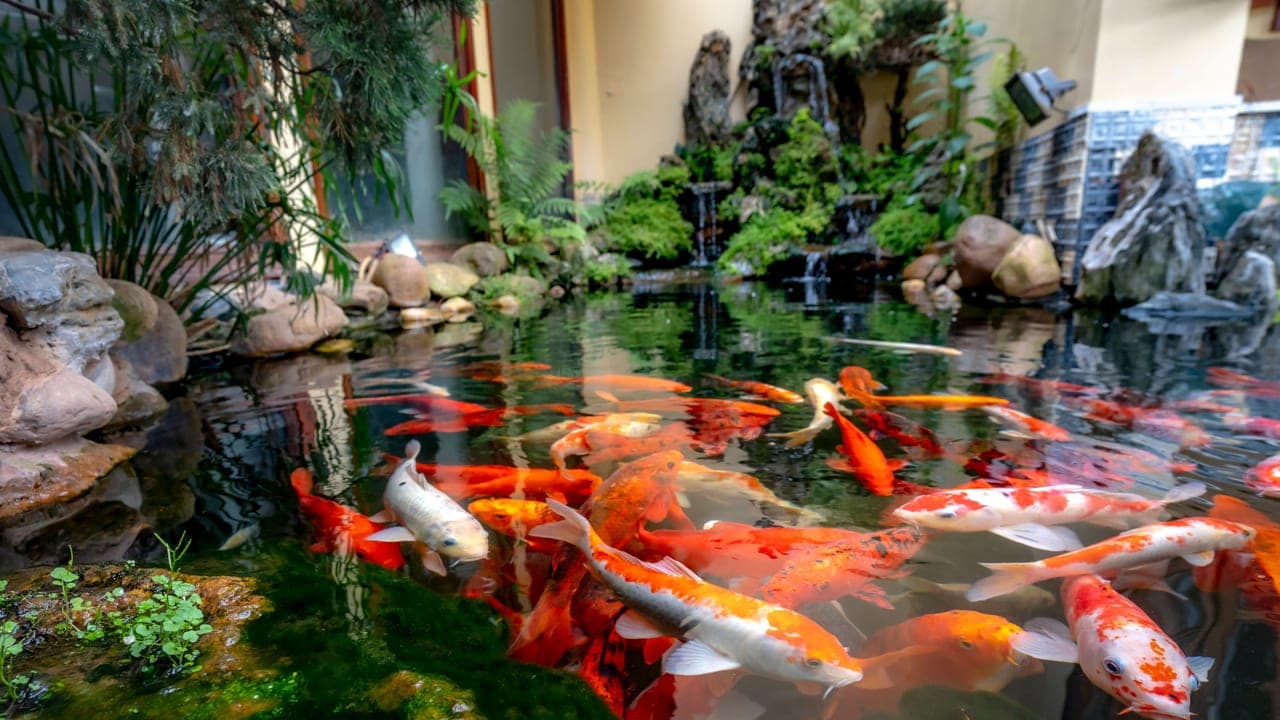
Koi
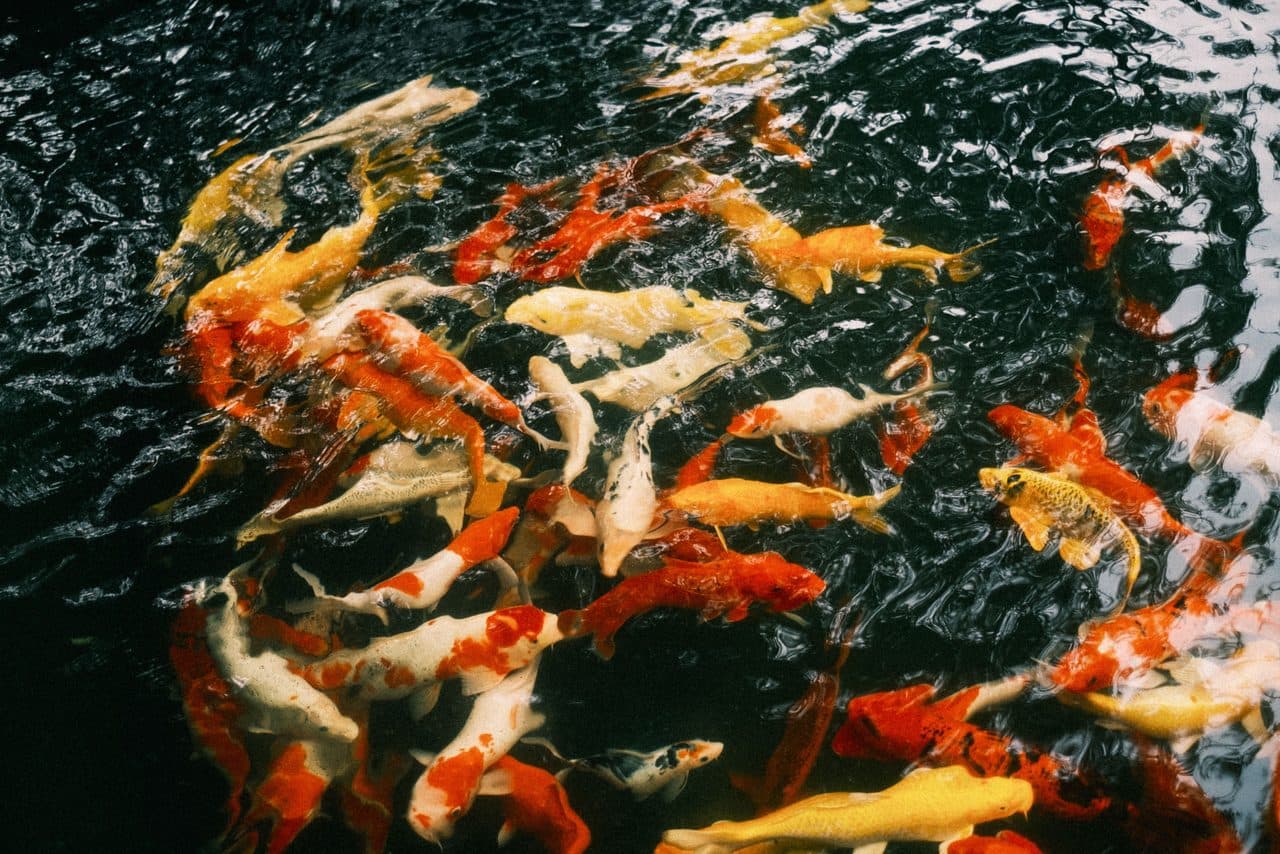
Koi are selectively bred ornamental carp designed for viewing from above, but their colors do not reduce the needs of a large, muscular, long-lived fish.
Origin
🇯🇵 Japan is credited with the modern ornamental koi recognized today, which Smithsonian places in early nineteenth-century Japan, developed from domesticated East Asian common-carp lineages with deeper carp-domestication roots in Asia. Sources differ on where the ornamental variety itself was developed: SRAC attributes its development to China, with subsequent Japanese influence.
Overview
Koi are selectively bred ornamental carp designed for viewing from above, but their colors do not reduce the needs of a large, muscular, long-lived fish. They explore, forage, learn feeding routines, interact in loose social groups, disturb soft substrates, and can grow from a hand-sized juvenile into an adult approaching 90 centimeters. Good koi keeping therefore begins below the surface: sufficient water volume, a stable structural pond, contin…
Temperament
History
Carp have a long domestication history in Asia, but the modern ornamental fish recognized as Japanese koi emerged much later. Smithsonian places modern Japanese koi in the early nineteenth century, when farmers retained and bred unusually colored carp, eventually producing the many named color and pattern varieties seen today. Genomic research supports koi as a domesticated carp population shaped by human selection for pigmentation and other trai…
Characteristics
Care Essentials
Diet
Use a reputable, complete koi formulation as the staple and match pellet size and texture to the smallest fish that must eat it. Store food sealed, cool, dry, and within the manufacturer's freshness period; old fats and vitamins do not become safe merely because pellets still look normal. Koi are omnivorous foragers, but insects, algae, plants, fruit, vegetables, and treats do not automatically make a balanced diet. Extras should be modest, fish-safe, and counted within the total ration rather than displacing complete food or overwhelming filtration. Feed according to measured water temperature, fish activity, body condition, life stage, and the product's temperature guidance. In the 18–24°C operating range, healthy koi often feed actively, but the correct amount is what the group consumes promptly while maintaining good condition and stable water chemistry. Feed by measured water temperature rather than by the calendar. Stop feeding entirely once water falls below about 10°C, because digestion slows enough that undigested food can rot in the gut. Between roughly 10°C and the 18–24°C optimum band, reduce frequency and quantity and use a readily digested wheatgerm-based food in spring and autumn. Measure the water itself, since a warm afternoon does not warm a deep pond. Resume feeding only when the water is reliably back above about 10°C on a rising trend, not on the first warm day. During heat, warm water holds less oxygen and a heavy meal increases metabolic and waste demand, so oxygen and chemistry can matter more than appetite. Never use feeding to force fish to the surface when they are gasping. Ensure every individual eats: large koi can monopolize floating food, while a weak or visually impaired fish may need a separate presentation. Do not compensate for poor growth with constant high-protein feeding in an undersized pond. Growth depends on genetics, sex, temperature, health, space, and water quality; accelerating one input can increase obesity, deformity, waste, and filter load without improving welfare.
Health
Prevention combines measured water quality, adequate oxygen, low injury risk, nutrition, quarantine, and control of every wet pathway into the pond. Keep ammonia and nitrite as close to nondetectable as the method can show; SRAC's below-0.05 mg/L values are production operating limits, not targets for chronic exposure. Maintain dissolved oxygen at least 5 mg/L and preferably with margin during warm nights and emergencies. Track pH and alkalinity because a stable near-neutral reading is safer than abrupt correction toward a fashionable number. Condition source water, avoid rapid temperature or chemistry changes, and never assume clear water is chemically safe. Quarantine new koi in an independent, cycled, covered system for a minimum of four weeks to two months, extended on a risk basis. That period only tells you something under two conditions that WOAH attaches to it. First, hold the quarantine at a temperature permissive for koi herpesvirus expression: WOAH treats water above 16°C as the range conducive to clinical disease and inspection, and describes the disease as temperature dependent, occurring mainly between 16 and 29°C. Second, house sentinel fish of known status with the new arrivals so that an infection has something susceptible to reveal itself in. A cold-water quarantine period proves nothing, however long it runs, because the virus can persist latently below permissive temperature and re-emerge when the pond warms in spring. Do not share nets, bowls, siphons, pumps, or wet hands between systems without appropriate disinfection. WOAH identifies all common-carp varieties as susceptible to koi herpesvirus, notes that survivors can remain persistently infected, and requires laboratory methods for defensible detection. KHV signs can include rising mortality, lethargy, separation, gasping, balance change, skin and mucus abnormalities, hemorrhage, fin erosion, and severe gill damage, but none is unique to KHV. Carp edema virus can produce koi sleepy disease, and Argulus can injure skin and transmit other agents; water-quality failures and multiple infections can look similar. Do not heat-cycle fish, salt the pond, or give medications, pesticides, or anesthetics based on an online guess. Test the environment, reduce cross-contamination, contact an aquatic veterinarian, and follow local reporting or laboratory instructions. A dead fish in a multi-fish event should be handled and stored only as the veterinarian or diagnostic laboratory directs, because a useful specimen can be lost through delay or improper freezing.
Housing
A koi pond is life-support infrastructure, not a lined hole with a fountain. Begin with adult biomass and group size. Approximately 1,000 liters per adult is a conservative floor drawn from veterinary guidance, while California Fish Vet notes that a mature female may warrant up to about 1,900 liters. A small social group therefore needs several thousand liters before allowances for displacement, freeboard, filter chambers, future growth, and extreme weather. Calculate actual water volume from measured fill or validated dimensions; decorative labels and pump ratings are often misleading. Use roughly 90–120 centimeters depth only as an initial design context. Colder climates may require deeper stable water and freeze protection; hot climates need shade, gas exchange, and thermal planning. Comply with permits, electrical codes, child barriers, structural requirements, and local wildlife or invasive-species rules. Provide bottom and surface collection, mechanical solids removal, mature biological filtration, circulation without dead zones, and redundant aeration. Select pumps by delivered flow at actual head height, not box maximum. Protect intakes from fish, make overflows screen-safe, prevent a pipe break or siphon from emptying the pond, and route storm overflow away from natural waterways. Keep an emergency air pump, generator or battery strategy, spare critical parts, and a written outage response. Establish the nitrogen cycle before adding koi and increase stocking slowly. Use source-water treatment appropriate to chlorine or chloramine. Test temperature, ammonia, nitrite, pH, nitrate, alkalinity, and dissolved oxygen on a schedule matched to the pond; test immediately after behavior change, storms, outages, treatments, filter cleaning, spawning, algae crashes, or rapid temperature shifts. Winter care protects gas exchange while avoiding dangerous thin ice and unneeded disturbance; summer care anticipates lower oxygen, warmer water, and greater biological demand. Never smash ice over fish or seal a pond completely, and never rely on one heater or one pump without failure planning.
Activity
Koi need continuous opportunities for sustained swimming, turning, depth choice, exploration, and foraging. Provide a broad, unobstructed footprint rather than counting deep but narrow water as equivalent volume. Roughly 90–120 centimeters of depth can be a useful starting context, but depth must support climate stability and safe movement rather than create inaccessible stagnant zones. Arrange returns so the pond circulates waste toward collection points without forcing fish to fight one high-velocity jet all day. Include open lanes, calmer resting areas, shade, and visual refuge from people and predators. Smooth, structurally stable margins and fish-safe planting zones can add complexity, but loose rock piles, sharp wire, exposed pump hardware, narrow gaps, and unstable shelves can trap or abrade large fish. Koi naturally investigate and may uproot plants, so design for that behavior instead of punishing it with a barren concrete box. Enrichment can include dispersed portions of the normal ration, changing but predictable feeding stations, safe floating shade, seasonal natural food opportunities that do not introduce contaminants, and voluntary target or station training. Hand-feeding is optional, not a welfare requirement; it should never involve chasing or withholding adequate nutrition. Judge exercise provision by normal, unimpeded movement and choice, not by how often fish perform at the viewing edge.
Breeding
Koi are externally fertilizing egg scatterers. In suitable seasonal conditions, mature fish may chase intensively and release adhesive eggs onto plants, spawning brushes, pond margins, or other submerged structure. The activity can damage fins and skin, exhaust females, foul water with eggs and milt, and expose adults or eggs to injury in a poorly designed pond. Adults do not provide dependable parental care and may eat eggs and fry. Accidental spawning therefore requires close observation, oxygen and chemistry checks, safe refuge, and removal of hazardous hard edges—not a casual promise to raise every offspring. Planned breeding is a separate aquaculture project: it needs known broodstock health, biosecurity, substantial nursery and culling capacity, protected filtration, multiple grow-out stages, appropriate live or prepared fry foods, and lawful, humane placement for potentially large numbers of fish. Color and pattern are inherited unpredictably, and only a small fraction of fry may meet a breeder's visual goal; that does not make the others disposable. Do not breed fish with chronic deformity, impaired swimming, recurrent disease, or unknown KHV status. Mixing valuable bloodlines without quarantine can spread pathogens through an entire collection. This guide does not give hormone, anesthetic, stripping, spawning-temperature, medication, or culling instructions. Work with an experienced welfare-focused breeder, aquatic veterinarian, and relevant local authority before manipulating reproduction or moving eggs, fish, or water between sites.
Daily Care
Begin with the pond before the food. Confirm that pumps, bottom drains or intakes, returns, skimmers, biological filters, ultraviolet equipment if used, and every air source are operating normally. Look for falling flow, unusual noise, leaks, blocked screens, foam, rapid evaporation, overflowing rainwater, or a water level that could expose a pump. A visual check is not a substitute for alarms or a backup plan, especially during warm nights, heavy feeding, algae die-offs, storms, or grid failures when oxygen can fall quickly. Observe every koi from above and, where possible, from the side. Compare each fish with its own usual posture, swimming effort, social position, respiration, appetite, body condition, skin, fins, eyes, mouth, and gill-cover movement. Watch for isolation, repeated flashing, clamped fins, loss of balance, surface gasping, crowding at an inlet, unusually rapid breathing, lethargy, wounds, ulcers, raised scales, color change, excessive or absent mucus, sunken eyes, or pale and ragged gills. Do not label those signs KHV or parasites from appearance alone. Immediately check temperature, dissolved oxygen where possible, ammonia, nitrite, pH, recent maintenance, chemical exposure, and equipment function; contact an aquatic veterinarian urgently when several fish are affected, deaths occur, respiration is impaired, or abnormalities persist. Feed only after the group is behaving normally. Measure the ration, spread it so timid fish can reach it, and remove persistent leftovers. Record tests, feeding, weather, treatments, additions, mortalities, and equipment work. Trend data reveal a deteriorating filter or seasonal oxygen problem sooner than memory does.
Maintenance
Koi do not need cosmetic grooming. Netting, lifting, scraping, photographing out of water, or handling to improve a show appearance damages the protective mucus layer and increases stress and injury risk. Leave capture to necessary transfer, measurement, diagnostic sampling, or veterinary care. When handling is unavoidable, prepare the destination first, use koi-safe soft nets or a sock net appropriate to the fish, wet all contact surfaces, support the body, protect the eyes and fins, and minimize air exposure. Never suspend a large koi by a standard mesh net or hold it by the mouth, gill covers, or tail. Pond maintenance is the useful equivalent of grooming: remove settled solids before they decay, rinse mechanical stages as designed, preserve biological media, trim unsafe plant material, secure drains, and clean viewing surfaces with fish-safe methods. Do not sterilize the entire mature system during routine care or rinse all biological media in chlorinated water. Separate quarantine equipment visually and physically from resident-pond tools. If algae must be managed, address nutrients, light, circulation, and mechanical removal before adding a chemical; rapid algae death can consume oxygen and destabilize water. Any chemical product must be legal for the setting, compatible with actual pond volume and species, and used only with defensible guidance.
Seasonal Care
Winter and summer are the two periods in which a pond that looks settled can still kill fish, and Penn State extension guidance on pond winterkill and pond water quality describes why. In freezing weather the governing problem is gas exchange: keep an unfrozen opening in the surface using an aerator positioned near the surface or a floating de-icer, so gases from decaying organic matter can leave and oxygen can enter. Never break ice by striking it; the shock concusses fish beneath. Do not run a pump or aerator deep enough to destratify the pond in freezing weather, because that mixes away the warmer deep layer the fish are overwintering in and pulls them into near-freezing water. Through autumn, exclude leaves before freeze-up: net the pond while leaves are still falling, remove fallen material rather than letting it decay under ice, and clear accumulated solids from the filter and pond bottom while the water is still workable. Feeding follows measured water temperature through both shoulder seasons, as described under nutrition, and the Royal Veterinary Center (Macau) koi care sheet is the seasonal veterinary reference used here. In summer the risk reverses: warm water holds less dissolved oxygen while fish metabolism, bacterial demand, and feeding all rise. Add shade, keep aeration running through warm nights, restrain stocking and feeding, watch for algae die-off, and treat a hot still dawn as the highest-risk moment of the day.
Behavior And Enrichment
Koi can learn predictable routines, distinguish feeding locations, approach familiar caretakers, and voluntarily station for observation. Use that capacity to improve care. Pair a distinct visual target or feeding station with a small portion of the normal ration, reward calm approach, and train each fish to pause where its body, fins, eyes, and mouth can be seen. More than one station helps reduce competition and can reveal a fish that suddenly stops participating. Keep sessions short and consistent, count rewards within the normal diet, and end if fish collide, crowd, gasp, or become frantic. Avoid glass or pond tapping, chasing with a net, grabbing, forced jumping, prolonged fasting, or feeding by hand when it causes large fish to strike one another. Training should never mask a welfare problem: unusually eager surface behavior can reflect underfeeding, while reluctance can reflect low temperature, poor oxygen, social exclusion, water chemistry, injury, or disease. Preserve natural foraging and quiet periods rather than turning every human approach into a feeding event. A useful trained behavior is calm transfer into a bowl or sock net under professional direction, but it must be shaped gradually and never used as an excuse for unnecessary capture.
Gallery
Frequently Asked Questions
How large and deep should a koi pond be?
Does clear pond water mean the water is safe for koi?
What filtration, aeration, and backup equipment does a koi pond need?
What should koi eat, and how should feeding change with the seasons?
Can koi live alone or with goldfish and other pond fish?
How should a new koi be quarantined, and can I identify KHV by its appearance?
How long do koi live, and did the koi Hanako really live for more than 200 years?
Can unwanted koi be released into a lake or stream, and what seasonal risks should a pond plan cover?
Recommended for Koi Owners
As an Amazon Associate, we earn from qualifying purchases made through these links, at no extra cost to you.
Related Breeds
- Aquatics
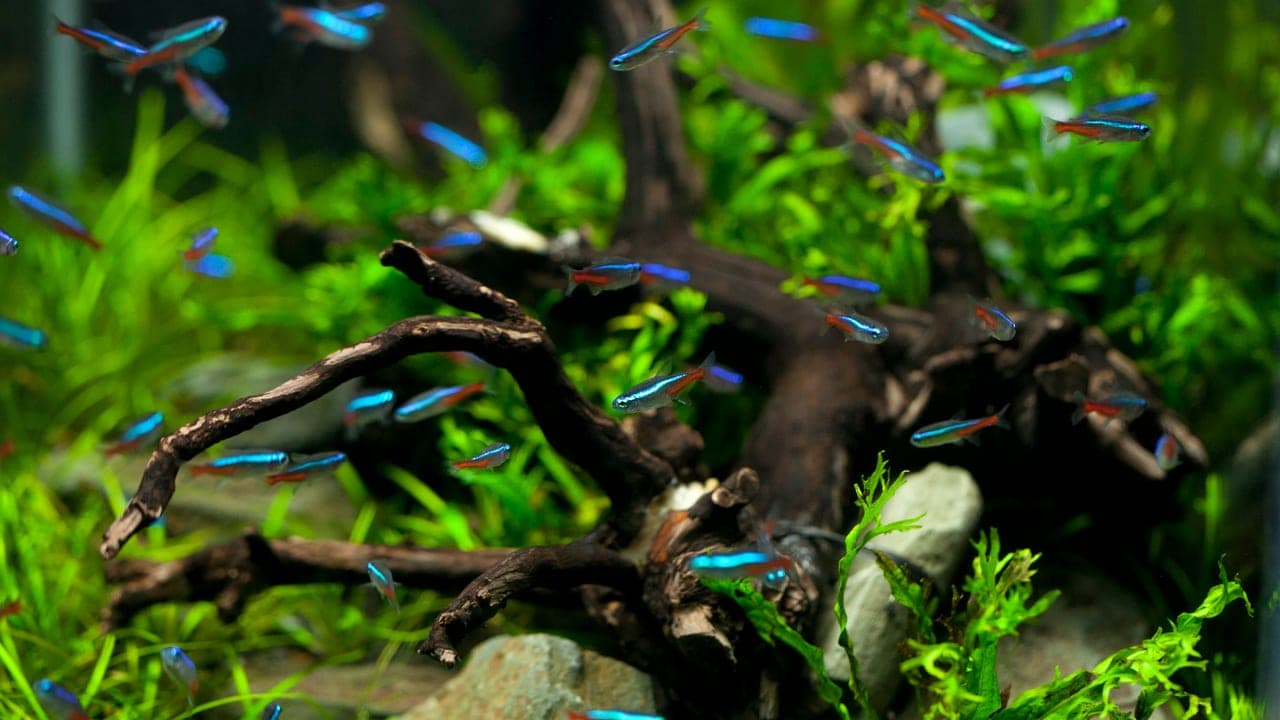
Neon Tetra
schooling
Tropical South America, especially blackwater and clearwater tributaries associated with the Solimoes River basin; most aquarium fish are commercially produced rather than collected from a single uniform wild habitat. - Aquatics
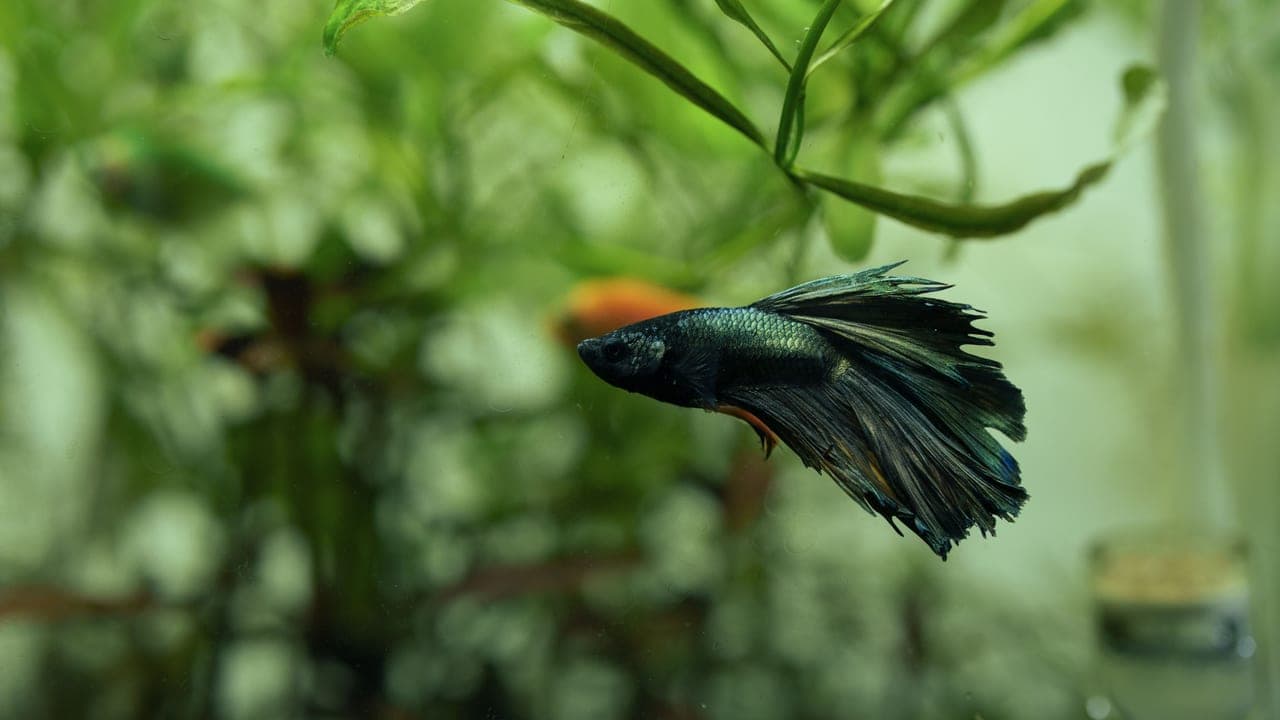
Betta Fish
inquisitive and individually variable
Tropical Southeast Asia, especially the Mekong basin and Thailand; domestic ornamental lines have been selectively bred far beyond the wild-type form. - Aquatics
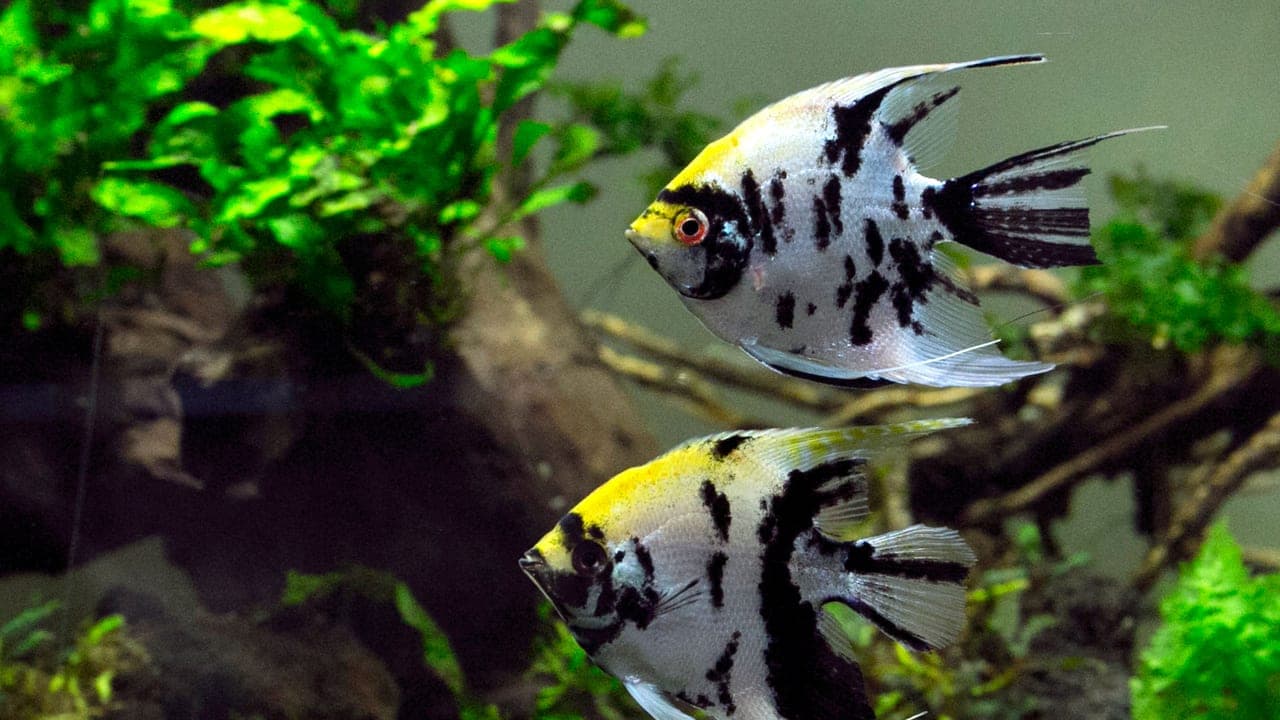
Freshwater Angelfish
socially complex
Tropical South America, principally the Amazon basin in Peru, Colombia, and Brazil, with records from the rivers of Amapá, the Oyapock drainage in French Guiana, and the Essequibo in Guyana. - Aquatics
Guppy
social
Trinidad and Tobago and northern South America, including Venezuela, Guyana, Suriname, and northern Brazil
Koi Care Summary
Build for the adult group before buying juveniles. Use roughly 1,000 liters per adult only as a conservative planning floor; a small group needs several thousand liters, and a mature female or heavily stocked system may require substantially more capacity. Prioritize footprint and usable swim space, with roughly 90–120 centimeters of depth as a common starting context that must be revised for local winter, summer, predator, construction, and safety conditions. Size mechanical removal for the real solids load and biological media for nitrogen conversion, keep circulation and aeration continuous, prevent a single blockage from draining the pond, and arrange backup power or emergency oxygen for outages. Cycle the system before stocking and add fish slowly. At least daily, confirm pump, filter, air delivery, water level, temperature, appetite, breathing, posture, schooling, and skin or gill appearance. Test ammonia, nitrite, pH, and temperature routinely; track nitrate, alkalinity and dissolved oxygen as the system and local water require. SRAC's operating context of 18–24°C, dissolved oxygen of at least 5 mg/L, unionized ammonia and nitrite below 0.05 mg/L, and pH near 7 is more useful than common-carp survival extremes, but home-pond ammonia and nitrite should be driven toward nondetectable. Feed a fresh complete koi food in measured portions that all fish consume, reducing or stopping according to measured water temperature, appetite, product directions, and professional seasonal guidance—not calendar folklore. Quarantine new koi separately for a minimum of four weeks to two months, extended on a risk basis, under an aquatic veterinarian's biosecurity plan, holding the quarantine at a temperature permissive for koi herpesvirus expression and with sentinel fish of known status alongside the new arrivals. KHV can affect common carp varieties, survivors may remain infected, and signs overlap with other failures; only appropriate laboratory testing can support diagnosis. Sudden deaths, gasping, severe lethargy, loss of balance, ulcers, marked mucus or color change, or pale and damaged gills require immediate water and equipment checks, isolation where safe, and an aquatic veterinarian or relevant authority. Never release koi or pond water into natural waterways.
Sources
These are the published sources this page draws on. Each opens in a new tab so you can check it yourself.
Southern Regional Aquaculture Center
Species Profile: Koi and Goldfish (SRAC Publication No. 7201)(opens in a new tab)Louisiana Sea Grant College Program / NOAA Institutional Repository
Using the Bead Filter in Your Koi Pond: A Comprehensive Guide to Water Quality Management(opens in a new tab)Royal Veterinary Center (Macau)
Koi Carp Care Sheet(opens in a new tab)Aquatic Veterinary Services of Northern California
How Many Koi per Gallon?(opens in a new tab)U.S. Geological Survey Nonindigenous Aquatic Species Program
Do Not Release Aquarium Fish into the Environment(opens in a new tab)U.S. Geological Survey Nonindigenous Aquatic Species Program
Common Carp (Cyprinus carpio) — Species Profile(opens in a new tab)Smithsonian's National Zoo and Conservation Biology Institute
Japanese Koi(opens in a new tab)National Center for Biotechnology Information
Cyprinus carpio 'koi' — NCBI Taxonomy Record(opens in a new tab)FishBase
Ecology Summary for Cyprinus carpio (Common Carp)(opens in a new tab)University of Michigan Museum of Zoology / Animal Diversity Web
Cyprinus carpio (Common Carp) Species Account(opens in a new tab)FishBase
Cyprinus carpio (Common Carp) Species Summary(opens in a new tab)World Organisation for Animal Health
Infection with Koi Herpesvirus — Aquatic Manual Chapter 2.3.6(opens in a new tab)PubMed Central / Frontiers in Genetics
Patterns of Geographical and Potential Adaptive Divergence in the Genome of the Common Carp(opens in a new tab)PubMed Central / Veterinary World
A Comprehensive Review of Current Practices, Challenges, and Future Perspectives in Koi Fish Cultivation(opens in a new tab)UF/IFAS Extension
Argulus (Fish Louse) Infections in Fish(opens in a new tab)Penn State Extension
Winterkill in Ponds(opens in a new tab)Penn State Extension
Water Quality Concerns for Ponds(opens in a new tab)UF/IFAS Extension / University of Florida George A. Smathers Libraries
Carp Edema Virus Disease (CEVD) / Koi Sleepy Disease (KSD)(opens in a new tab)Merck Veterinary Manual
Viral Diseases of Fish(opens in a new tab)Merck Veterinary Manual
Management of Aquarium Fish(opens in a new tab)