
Rough type
Abyssinian Guinea Pig
The Abyssinian is the guinea pig people buy for its looks and then discover is one of the lowest-maintenance cavies in the book.
Size
2-3 lb
Lifespan
5-7 years
Floor time
1+ hour floor time
Experience
Cavy-savvy planning
Decision first
Is a Abyssinian Guinea Pig right for you?
Start with fit before history or trivia. These are ownership signals, not guarantees about any individual guinea pig.
Best suited for
- Owners prepared for hay, vitamin C, enclosure cleaning, and exotics-vet planning.
Think carefully if
- You need a pet with almost no daily feeding, bedding, social, or health-monitoring routine.
- You cannot keep up with bedding, grooming, vitamin C, and preventive care.
- You cannot access an exotic or cavy-savvy veterinarian for routine and urgent care.
Conditional fit
Apartment living may be difficult unless the owner can provide a large enclosure, daily floor time, and clean, low-dust bedding.
Daily reality
Abyssinian Guinea Pig commitment snapshot
Daily floor time
1+ hour floor time
Match floor time, enrichment, companionship, vitamin C, and cleaning to age, health, and housing.
Coat care
Low
Grooming needs vary by coat, shedding, and lifestyle.
Social needs
Needs planning
Most guinea pigs need companionship, daily appetite checks, clean bedding, and quick response to weight or breathing changes.
Structured facts
Abyssinian Guinea Pig at a glance
The measurements and traits that most affect day-to-day life with this breed.
Group
Rough
Weight
2-3 lb
Lifespan
5-7 years
View all characteristics and methodology
Lifestyle fit
- Indoor housingWorks best with a large, ventilated enclosure and daily supervised floor time.
- Needs caution
- Child friendliness
- Needs caution
- Companion fit
- Individual match
- Handling styleGuinea pigs are prey animals and usually trust floor-level interaction first.
- Secure and gentle
Owner commitment
- Floor time
- 1+ hour floor time
- Grooming
- Low
- Bedding routineClean bedding controls ammonia and makes appetite or urinary changes easier to see.
- Daily spot clean
- Vitamin CFresh foods or supplements must cover daily vitamin C needs.
- Daily
Behavior
- Sociability
- Very high
- Energy
- High
- Handling
- Low-moderate
- Vocalization
- Expressive
Environment and health
- Dental and gut care
- Hay-first
- Air quality
- Low dust, low ammonia
- Health risk
- Needs planning
- Vet type
- Exotics or cavy-savvy
Ratings combine structured breed data, visible breed fields, and editorial context. They are planning aids, not predictions for an individual guinea pig.
Daily life
Abyssinian Guinea Pig temperament and behavior
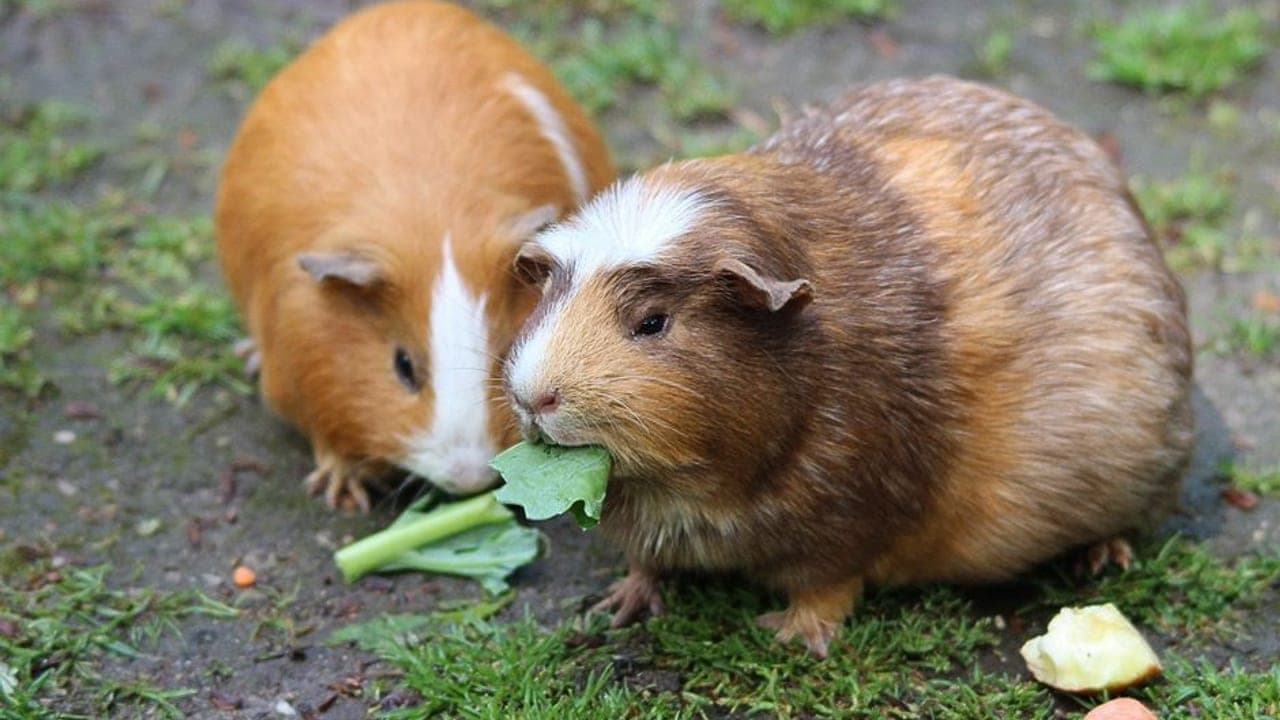
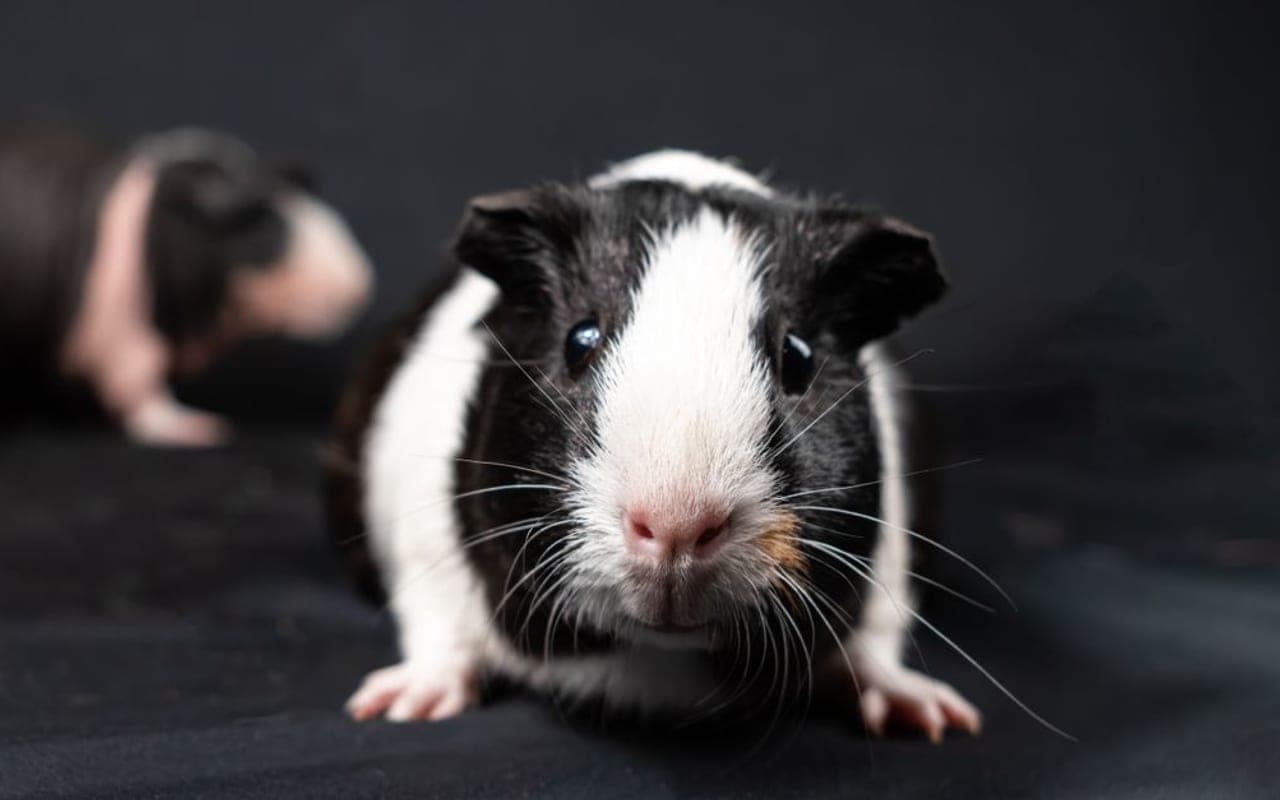
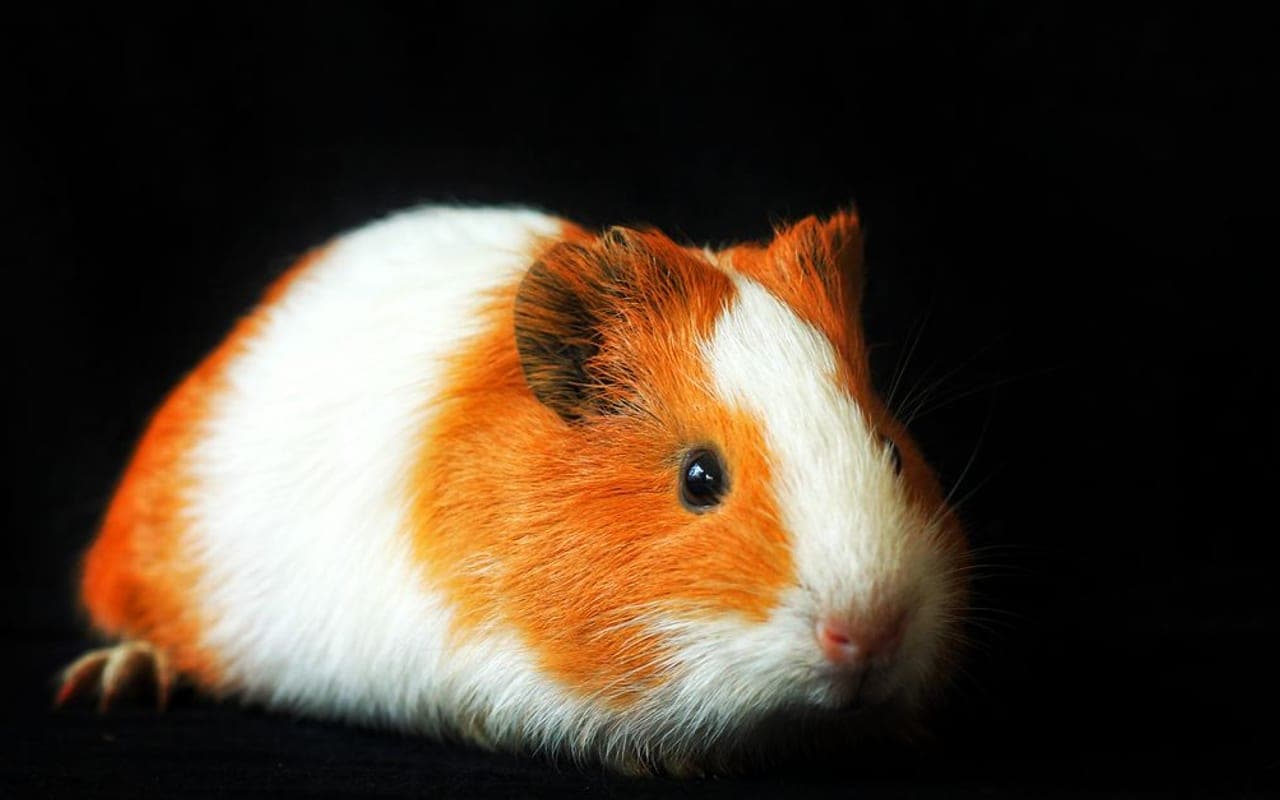
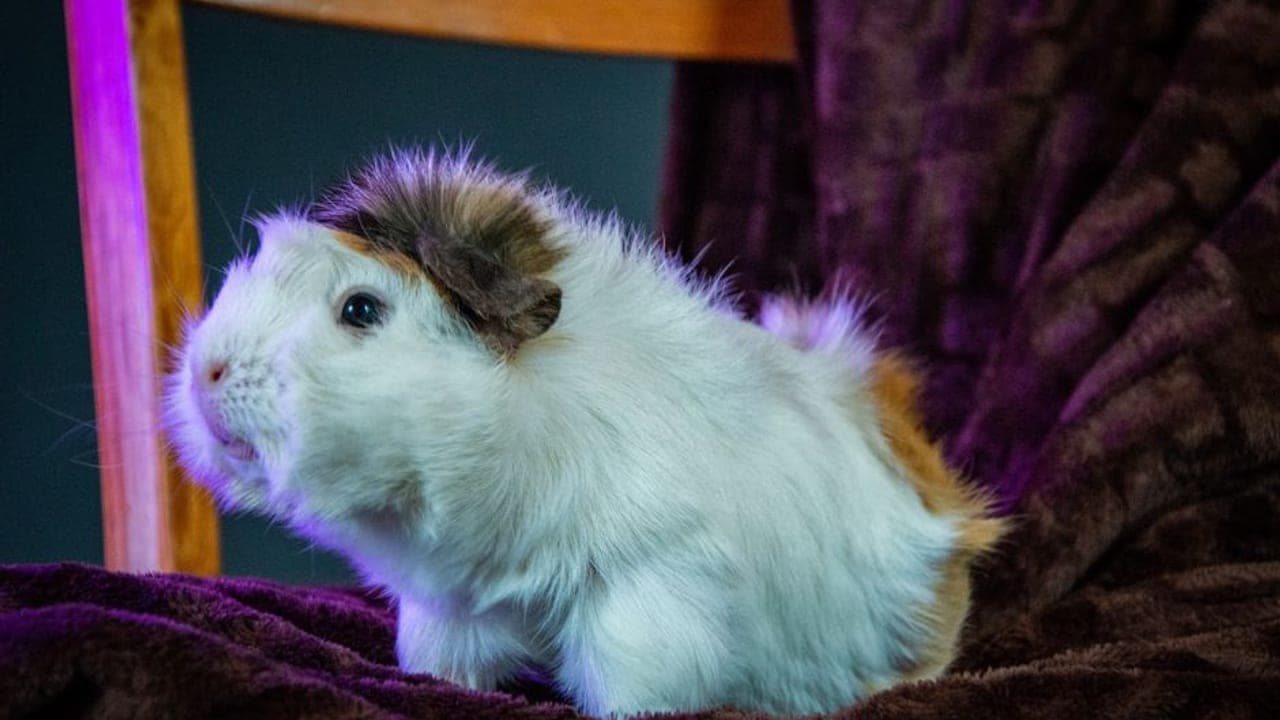
The Abyssinian is the guinea pig people buy for its looks and then discover is one of the lowest-maintenance cavies in the book. Both halves of that sentence are worth knowing before you choose one. The look comes from architecture. The British Cavy Council standard requires a specific arrangement of rosettes — swirls of hair radiating from pinpoint centres — which push the coat up into ridges running both along and across the body. Eight rosettes are required: four in a direct line across the body, one on each hip, and two thumb-shaped rump rosettes with equal centres. Shoulder rosettes are optional and improve the appearance when present. Five ridges follow: a centre ridge along the backbone, two side ridges parallel to it, a collar ridge across the shoulders, and a back ridge over the hips. When the ridges are straight, the standard notes, a checkerboard pattern is formed. Forty-five of the hundred show points go to that pattern alone, which tells you how much of the breed it is. The rest of the head is furnished too: a mane that must be harsh and erect, and a moustache formed where hair growing forward from the jaw-line meets hair growing on the nose. Here is the part that changes the daily job. The Abyssinian is a rough-coated **short**-haired cavy, and the standard caps coat length at 1.5 inches, or 4 cm. There is no sweep to drag, no frontal over the eyes, nothing to trim. If you want the drama of a long-haired cavy's appearance without the daily comb, this is the honest answer. Best suited to a first-time owner who wants a characterful-looking cavy with a genuinely modest grooming load. Think twice if you are buying a young animal expecting the adult coat pattern, for the reason below.
Owner note
Temperament labels are starting points, not guarantees. Meet the individual guinea pig and ask about behavior history whenever possible.
Care essentials
How to care for a Abyssinian Guinea Pig
What looking after one actually involves: diet, enclosure, floor time, bonding and routine health.
Expect Harsh, Not SoftAs needed
- Set this expectation before the animal arrives, because it disappoints people who were not told. The standard asks for a wealth and depth of thick, harsh coat, and harshness is what holds the ridges erect — a soft-coated Abyssinian is a poor Abyssinian by the breed's own measure. It will not feel like a plush pet. The standard also notes that boars are more commonly shown in adult classes because of their harsher coats, and that sows should not be unduly penalised for softer texture, so some variation between individuals is expected and normal rather than a sign that something is wrong.
Buying: Wait For The Coat To Come ThroughAs needed
- Check this before you commit to a specific animal. The standard tells judges outright that it is difficult to assess coat qualities in young Abyssinians, because their coats are not usually 'through' until they are at least 12 weeks of age. The practical translation is that the ridge and rosette pattern you see on a six-week-old is not the pattern the adult will carry, so choosing a young Abyssinian for its markings is choosing something that has not finished happening. If the pattern matters to you, see the animal at twelve weeks or older, or see the parents. If it does not matter, buy the temperament and the health and enjoy whatever the coat does.
The Moustache And Mane, Checked At FeedingAs needed
- Look at the face after any feed of wet vegetables, and properly once a week. The standard describes the moustache as the hair growing forward from the jaw-line meeting the hair growing on the nose, and that junction traps food in a way a smooth-faced cavy's does not. The mane, which runs from the top of the head to the shoulder and must be harsh and erect, catches bedding at its base for the same reason. Neither needs a tool — fingers and a damp cloth are enough — but both need looking at, because matted food against the skin of the face is how a minor irritation becomes a skin problem you find late.
Solid Flooring And Dry Bedding, Checked DailyAs needed
- Spot-clean daily and strip the enclosure weekly. Flooring must be solid rather than wire mesh: VCA Animal Hospitals identifies wire mesh flooring as a cause of foot sores, known as pododermatitis or bumblefoot. Bedding matters less for this breed than for the longhairs, because there is no sweep dragging through it, but dusty substrate still works into a harsh standing coat and sits at the base of the rosettes. Give more floor area than seems necessary and at least one hide per animal — a prey species with nowhere to retreat is a stressed one, and a stressed cavy is harder to handle for the weekly check.
Weekly Brushing, Worked Outward From Each RosetteAs needed
- Brush weekly with a soft brush, and work outward from each rosette centre following the direction the hair grows. The standard asks for a coat that stands well up, harsh and erect, and brushing against the lie flattens precisely that. Run your fingertips over each rosette centre as you go: the centre is a small depression with hair radiating away from it, so hay dust, bedding fragments and seeds collect there and lift straight out if you find them weekly. The whole job takes a couple of minutes. There is no combing schedule, no trimming and no wrappers, because the standard caps the coat at 1.5 inches and nothing on this animal is long enough to mat.
Health planning
Abyssinian Guinea Pig health risks and screening
Every guinea pig breed has individual health variation. Use this profile for planning and discuss vitamin C, hay intake, dental care, urinary signs, breathing, and urgent symptoms with an exotic or cavy-savvy veterinarian.
Ownership cost
How much does a Abyssinian Guinea Pig cost?
Cost figures are structured so first-year and lifetime estimates do not conflict with the underlying line items.
| Acquisition | $35-$100 |
|---|---|
| Routine monthly | About $55/month |
| Routine annual | About $660/year |
| First-year estimate | $695-$760 |
| Lifetime routine estimate | $3,300-$4,620 routine costs |
Currency: USD. Region: United States. Updated: . Typical ranges for this breed. Equipment, insurance, emergency veterinary care, boarding and training are NOT included: we hold no sourced figures for them, and estimating them would be a guess presented as data.
Responsible ownership
Finding a Abyssinian Guinea Pig responsibly
What to ask a breeder or rescue is the same conversation for every breed, so we keep it in one place and keep it current.
Health documentation, meeting the parents or foster, contracts and return support, and the warning signs worth walking away from.
Original purpose
Abyssinian Guinea Pig history
History is useful when it explains today's behavior, coat, care needs, and temperament.
Read the breed history
What is documented about the Abyssinian is its place in the British Cavy Council's coat taxonomy and its show culture, and that is what this section sticks to. The Council groups cavies by coat structure, and the Abyssinian sits in Rough-coated Shorthair, defined as coats that are either rosetted — the Abyssinian — or rexoid, which covers the Rex and the Teddy. That is a precise placement: it is the rosetted short coat, and the Rex and Teddy are the curled ones. Its show community runs through the Abyssinian Cavy Club, one of the Council's affiliated breed clubs, and the standard the club judges to is unusually prescriptive about anatomy rather than appearance. The ridges and rosettes are defined by position — the collar ridge over the shoulders at right angles to the centre ridge, the back ridge over the hips parallel to the collar — rather than by any impressionistic description of the look. On origins, the name suggests an Abyssinian provenance and we have not found a primary source establishing one. That gap is worth stating plainly rather than filling. What can be said with confidence is that the breed has been standardised in Britain long enough to have accumulated a highly specific rosette geometry, which is not something that happens quickly. Abyssinians are shown across a wide range of colour groups — brindle and tortoiseshell, tortoise and white, roan, self and any other colour — so colour is a class distinction rather than a mark of quality.
Gallery
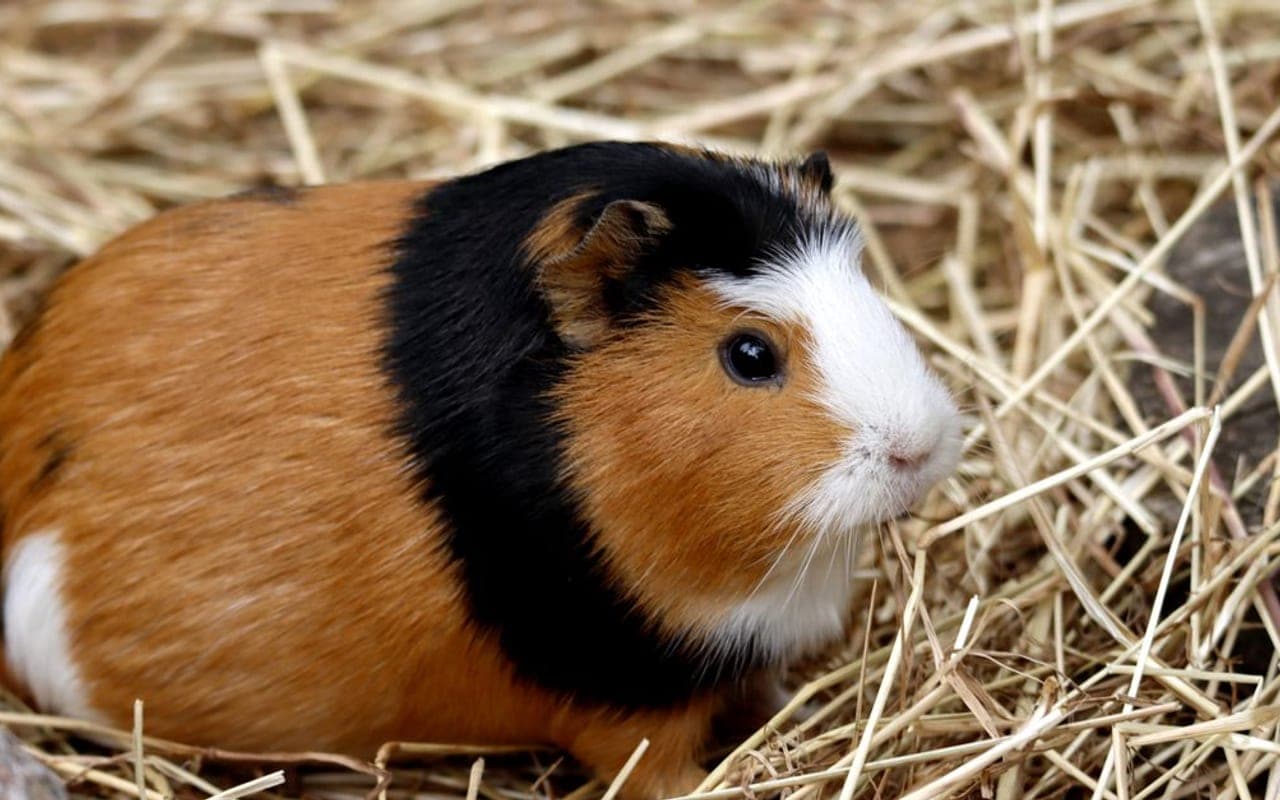
Abyssinian Guinea Pig photos
Images are cropped consistently and loaded progressively to keep the page responsive.
Lower-page context
Abyssinian Guinea Pigs in culture
Where the breed shows up in film, sport, work and folklore — the enjoyable part, once the practical questions are answered.
Fun facts
- Forty-five of the Abyssinian's hundred show points go to coat appearance alone — twenty-five for the ridges and twenty for the rosettes. No other feature comes close.
- The standard has no specific disqualifications for the Abyssinian at all. Almost every other breed in the book can be put out of its class for a single feature; this one cannot.
- A correct Abyssinian is described as 'short-coupled', achieved when the collar ridge sits well back behind the shoulders and the back ridge is well up in front of the hip bones.
- The moustache is a defined feature, not a nickname: hair growing forward from the jaw-line meeting the hair growing on the nose.
- Rump rosette centres normally sit about two-thirds of the way down the rump, and the standard specifically warns that they should not be too low.
Abyssinian Guinea Pig FAQs
Are Abyssinian guinea pigs good for beginners?
Yes, and better than most. The standard caps the coat at 1.5 inches, so there is no sweep to drag through bedding, no hair over the eyes, no trimming schedule and nothing long enough to mat. A weekly brush and a look at the face is the whole grooming job, which makes this one of the few visually striking cavies that does not carry a daily commitment.
How many rosettes should an Abyssinian have?
Eight are required by the standard: four in a direct line across the body, being the saddle and side rosettes, one on each hip in line with each other, and two thumb-shaped rump rosettes with equal centres. Shoulder rosettes are optional and the standard notes they improve appearance when displayed, which would take a well-marked animal to ten.
Why does my young Abyssinian's coat look messy?
Because it has not finished arriving. The standard tells judges that coat qualities are difficult to assess in young Abyssinians, as their coats are not usually 'through' until at least 12 weeks of age. A six-week-old's ridges and rosettes are not what the adult will carry, so a scruffy-looking youngster is normal rather than a fault.
Should an Abyssinian's coat feel soft?
No. The standard asks for a wealth and depth of thick, harsh coat, and that harshness is what holds the ridges standing up. A soft coat is a weakness by the breed's own measure, not a bonus. It is worth knowing before you buy, because people expecting a plush pet are sometimes surprised by how coarse a correct Abyssinian feels.
What is the checkerboard pattern?
It is what the standard says appears when the ridges are straight. Five ridges run across the animal — a centre ridge along the backbone, two side ridges parallel to it, a collar ridge over the shoulders at right angles, and a back ridge over the hips — and where straight ridges intersect they divide the body into a grid of squares.
Do Abyssinian guinea pigs need haircuts?
No. The standard states that coat length is not to exceed 1.5 inches, or 4 cm, so there is nothing to cut. This is the clearest practical difference between the Abyssinian and the long-haired breeds such as the Peruvian and Silkie, whose coats grow at roughly an inch a month and never stop.
Can Abyssinian guinea pigs live alone?
No. The RSPCA is explicit that guinea pigs get lonely and should not be kept alone, and that they are happiest in pairs, with wild guinea pigs living in family groups of five to ten. Companionship means at least one other guinea pig; a rabbit, cat or dog does not meet the requirement and brings predation or disease risk with it. In practice that means two rosetted coats to run a finger through each week, since bedding works into the ridges of both and a companion pair shares the same tray.
What is the worst fault in an Abyssinian?
Flatness. The standard lists specific faults in descending order of importance and puts flatness first — anywhere, but especially on the back, as runs to the collar or as flat sides. Since the whole breed is built on ridges standing up, a flat area is the coat failing to do the one thing the standard asks of it.
How long do Abyssinian guinea pigs live?
VCA gives 5 to 6 years as typical for guinea pigs, with some reaching 8 to 10. Plan for the upper end rather than the average, and find out what your nearest exotics practice charges before you need it, because not every veterinary practice treats guinea pigs and that cost decides whether an emergency is affordable.
Similar breeds to consider
Worth comparing if this breed appeals but you want a different fit on family life, size, temperament or care needs.
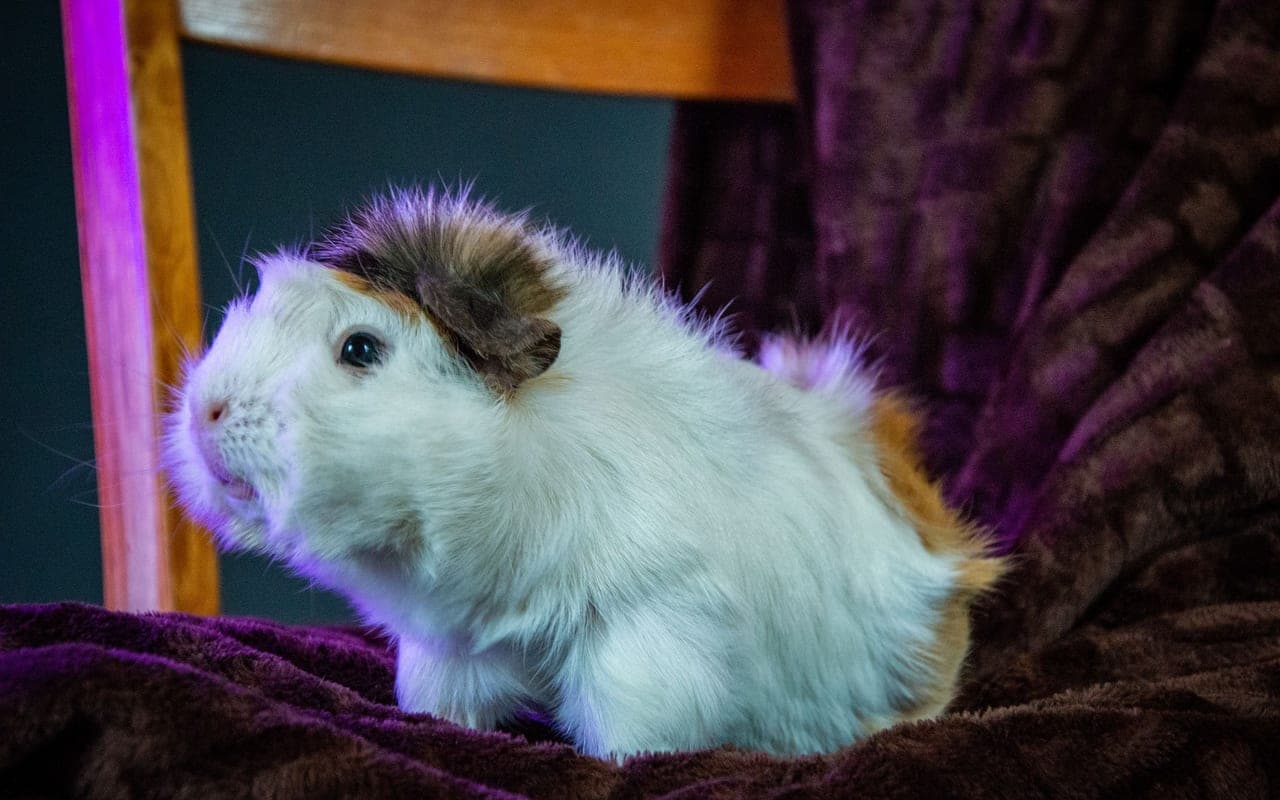
Teddy Guinea Pig
Also in the Rough group, with different coat care, handling, and companionship tradeoffs.
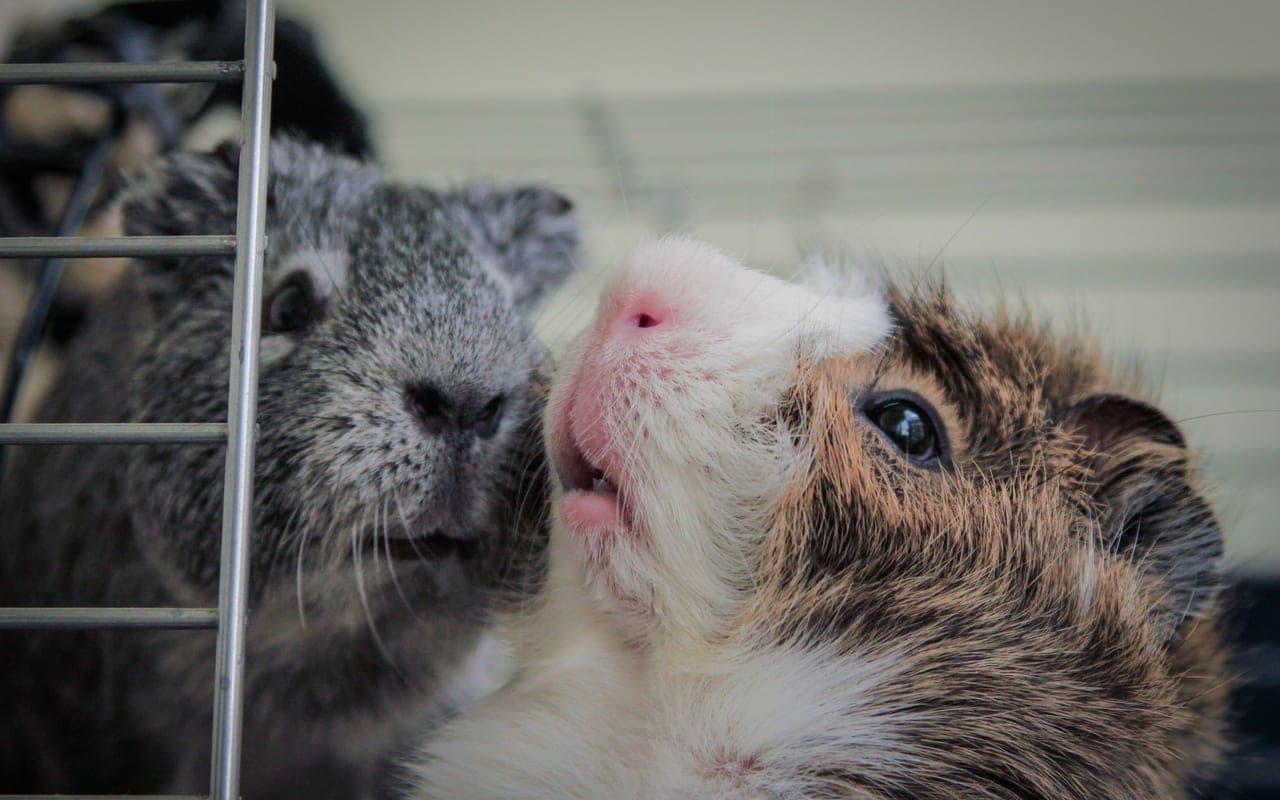
Silkie Guinea Pig
Compare coat care, handling tolerance, companionship, floor-time needs, and exotics-vet planning before deciding.
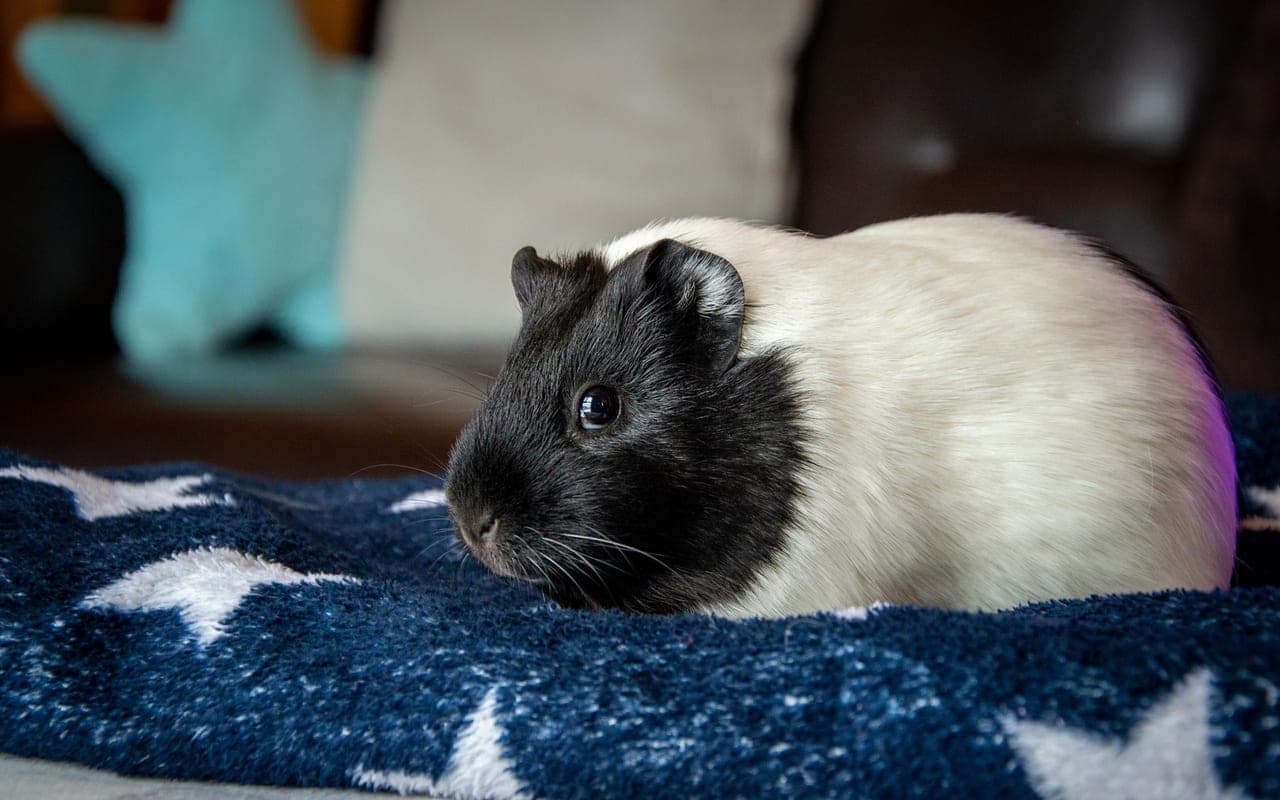
Swiss Guinea Pig
Compare coat care, handling tolerance, companionship, floor-time needs, and exotics-vet planning before deciding.
Coronet Guinea Pig
Compare coat care, handling tolerance, companionship, floor-time needs, and exotics-vet planning before deciding.
Explore More About Abyssinian Guinea Pig
Dive deeper into everything Abyssinian Guinea Pig — costs, care, and expert insights.
Considering a rabbit instead?
Browse Rabbits