
Medium-haired type
Swiss Guinea Pig
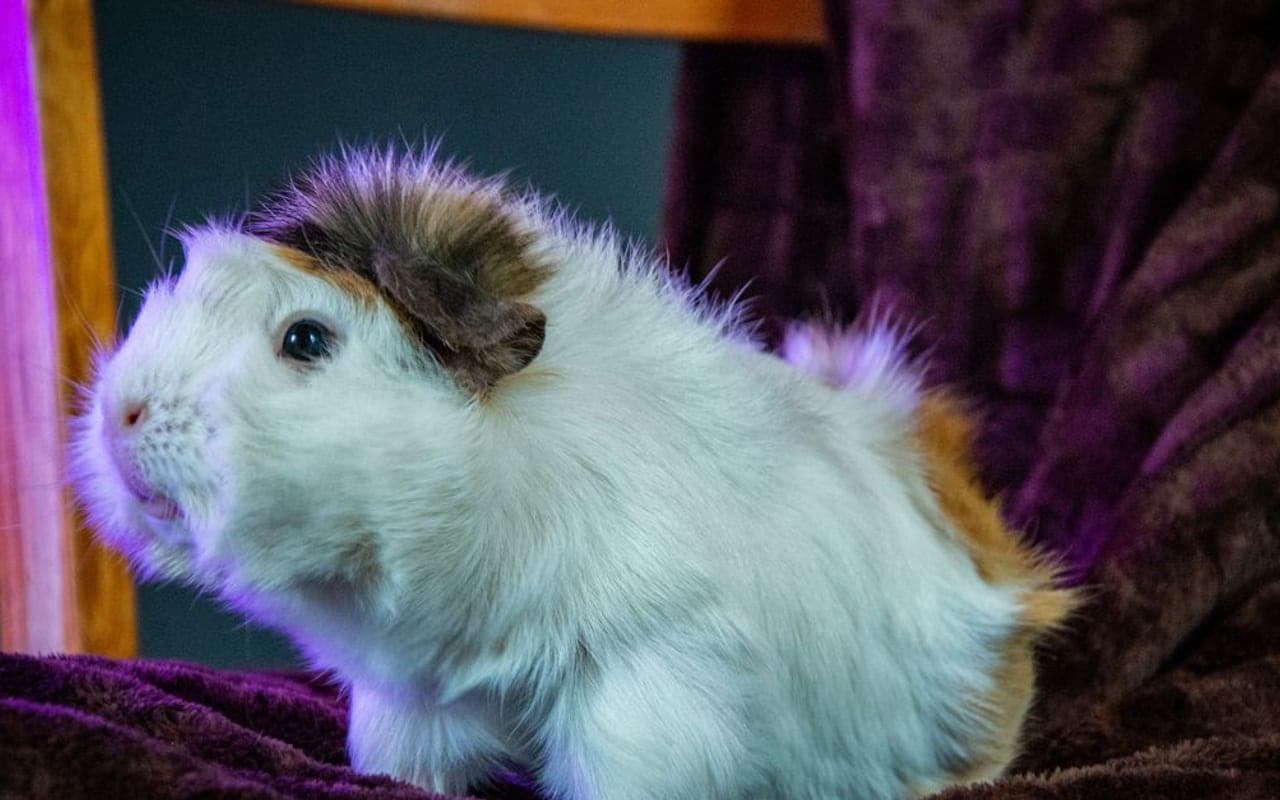
The Swiss is a ball of upright coat, and almost everything written about it elsewhere gets its coat type wrong.
Size
2-3 lb
Lifespan
5-7 years
Floor time
1+ hour floor time
Experience
Cavy-savvy planning
Decision first
Is a Swiss Guinea Pig right for you?
Start with fit before history or trivia. These are ownership signals, not guarantees about any individual guinea pig.
Best suited for
- Owners prepared for hay, vitamin C, enclosure cleaning, and exotics-vet planning.
Think carefully if
- You need a pet with almost no daily feeding, bedding, social, or health-monitoring routine.
- You cannot keep up with bedding, grooming, vitamin C, and preventive care.
- You cannot access an exotic or cavy-savvy veterinarian for routine and urgent care.
Conditional fit
Apartment living may be difficult unless the owner can provide a large enclosure, daily floor time, and clean, low-dust bedding.
Daily reality
Swiss Guinea Pig commitment snapshot
Daily floor time
1+ hour floor time
Match floor time, enrichment, companionship, vitamin C, and cleaning to age, health, and housing.
Coat care
Moderate
Grooming needs vary by coat, shedding, and lifestyle.
Social needs
Needs planning
Most guinea pigs need companionship, daily appetite checks, clean bedding, and quick response to weight or breathing changes.
Structured facts
Swiss Guinea Pig at a glance
The measurements and traits that most affect day-to-day life with this breed.
Group
Medium-haired
Weight
2-3 lb
Lifespan
5-7 years
View all characteristics and methodology
Lifestyle fit
- Indoor housingWorks best with a large, ventilated enclosure and daily supervised floor time.
- Needs caution
- Child friendliness
- Needs caution
- Companion fit
- Individual match
- Handling styleGuinea pigs are prey animals and usually trust floor-level interaction first.
- Secure and gentle
Owner commitment
- Floor time
- 1+ hour floor time
- Grooming
- Moderate
- Bedding routineClean bedding controls ammonia and makes appetite or urinary changes easier to see.
- Daily spot clean
- Vitamin CFresh foods or supplements must cover daily vitamin C needs.
- Daily
Behavior
- Sociability
- Very high
- Energy
- Moderate
- Handling
- Low-moderate
- Vocalization
- Expressive
Environment and health
- Dental and gut care
- Hay-first
- Air quality
- Low dust, low ammonia
- Health risk
- Needs planning
- Vet type
- Exotics or cavy-savvy
Ratings combine structured breed data, visible breed fields, and editorial context. They are planning aids, not predictions for an individual guinea pig.
Daily life
Swiss Guinea Pig temperament and behavior
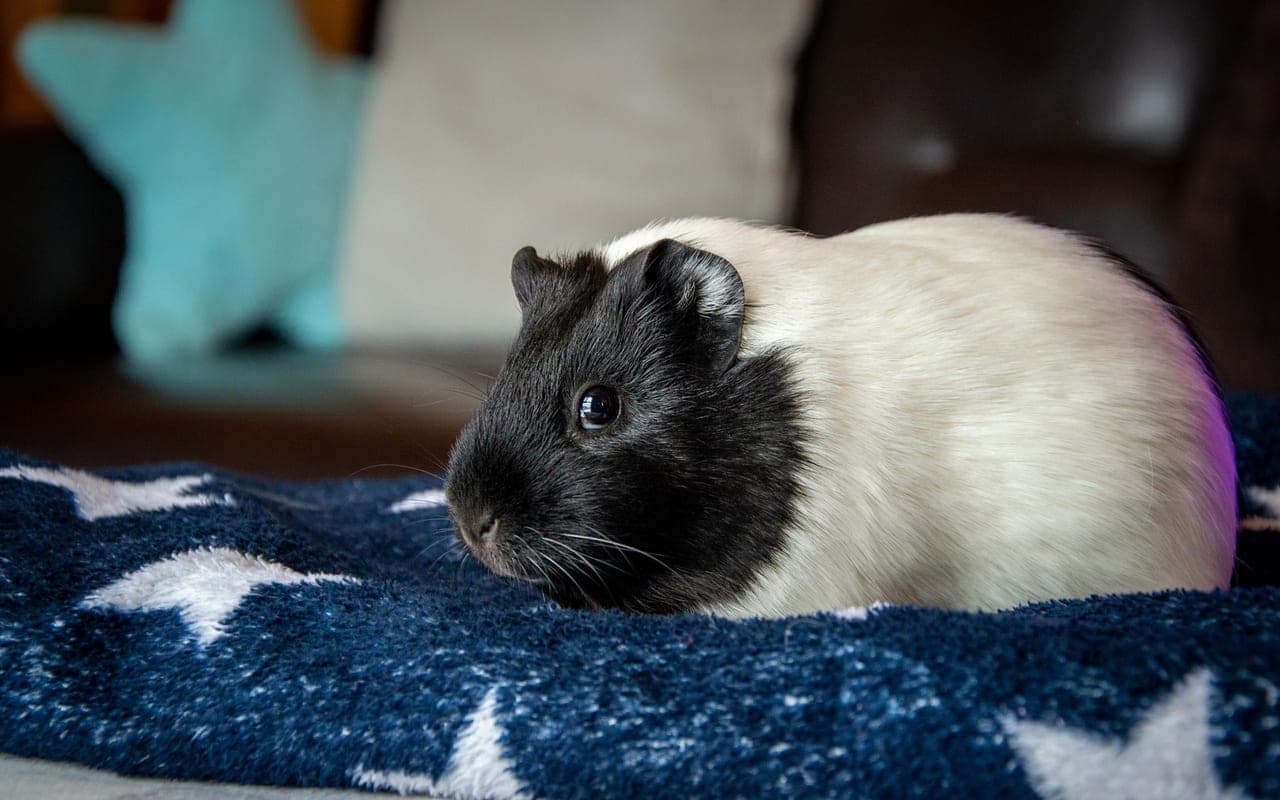
The Swiss is a ball of upright coat, and almost everything written about it elsewhere gets its coat type wrong. The British Cavy Council's Guide Standard is unambiguous: the Swiss is "a rexoid, semi-longhaired cavy whose coat stands erect from the body to give a rounded shape of even ('puff-ball') appearance". Not smooth, not short. The coat should be at least 5 cm long, even across the shoulders, sides and back, and dense enough that the skin is not visible without parting it. The feel is asked to do two contradictory-sounding jobs at once — dense, plush and springy, "coarse enough to support the hair standing erect but soft enough to create the required puffball appearance". Two details give the breed away, and both are worth knowing before you buy. The first is the **horns**. Ideally a Swiss carries longer hairs over the ears, and the standard names them exactly that. They are a feature to look for rather than a fault to worry about. The second is the moult, and it is the reason a healthy Swiss can look wrong for weeks at a time. The standard notes the breed "is inclined to moult at regular intervals, from the shoulder backwards", so an animal in mid-moult carries a longer coat around the rump than over the rest of the body. Exhibitors are told not to show Swiss during those stages. As a pet owner you will see the same wave pass down the animal several times a year, and it is normal rather than a sign of anything. The belly is deliberately different too: well covered, but shorter than the rest of the body. Best suited to an owner who wants an unusual coat with moderate rather than daily upkeep, and who will not panic at a lopsided moult. Think twice if you want a coat that looks the same all year.
Owner note
Temperament labels are starting points, not guarantees. Meet the individual guinea pig and ask about behavior history whenever possible.
Care essentials
How to care for a Swiss Guinea Pig
What looking after one actually involves: diet, enclosure, floor time, bonding and routine health.
Brush Upward, Twice A WeekAs needed
- Brush twice a week and lift the coat away from the body rather than smoothing it down. The standard describes a coat that stands erect to give a rounded puff-ball appearance, with no tendency either to lie forward or to part, so brushing flat undoes exactly what the coat is for. Work outward from the body in sections with a soft brush, separating rather than pressing. Check evenness as you go: the standard asks for even length across shoulders, sides and back, and lists coat of differing lengths — particularly extra length on the rump — as a severe fault. Watch too for swirls, where the coat direction visibly goes against the general lie, which the standard notes are usually found in the hip area.
Part The Coat And Look At The Skin, WeeklyAs needed
- Once a week, part the coat down to the skin in three or four places — over the shoulders, along the back, at the hips and on the flanks. The standard asks for density sufficient that the skin is not visible without parting the coat, which is a show requirement and also a warning: on this breed you cannot see the skin at all unless you deliberately open it up. PDSA lists hair loss, red skin, rashes and itching as the signs of mites, ringworm and over-grooming, none of which will be visible through a dense standing coat. The belly is the exception worth checking too, where the standard asks for a shorter coat than the body carries.
Expect The Moult Wave, And Do Not Treat It As A FaultAs needed
- Several times a year the coat sheds in a wave, and the standard documents the pattern: the Swiss is inclined to moult at regular intervals, from the shoulder backwards. During those weeks the animal carries a longer coat around the rump than over the rest of the body, which looks lopsided and is entirely normal — exhibitors are simply told not to show Swiss during the moulting stages. Brush a little more often while it passes, twice a week rather than once, to lift the shed coat out before it packs down. What is not normal is a coat that stays uneven once the wave has passed, or bare skin, which is worth a veterinary look.
The Forehead Rosette That Disappears, And What It Means When BuyingAs needed
- Check the forehead before you buy a young Swiss, and know how to read what you find. The standard notes that some Swiss possess a rosette on the forehead which usually fills out and disappears by five months of age, while also stating that a Swiss should not be shown with any visible rosette and that a visible rosette is a severe fault. Both things are true at once, and the resolution is age. A rosette on a young animal is expected to resolve; the same rosette still visible at five months or older is a fault that will not clear. If you are buying for show rather than as a pet, see the animal after five months or accept the risk knowingly.
Health planning
Swiss Guinea Pig health risks and screening
Every guinea pig breed has individual health variation. Use this profile for planning and discuss vitamin C, hay intake, dental care, urinary signs, breathing, and urgent symptoms with an exotic or cavy-savvy veterinarian.
Ownership cost
How much does a Swiss Guinea Pig cost?
Cost figures are structured so first-year and lifetime estimates do not conflict with the underlying line items.
| Acquisition | $25-$60 |
|---|---|
| Routine monthly | About $45/month |
| Routine annual | About $540/year |
| First-year estimate | $565-$600 |
| Lifetime routine estimate | $2,700-$3,780 routine costs |
Currency: USD. Region: United States. Updated: . Typical ranges for this breed. Equipment, insurance, emergency veterinary care, boarding and training are NOT included: we hold no sourced figures for them, and estimating them would be a guess presented as data.
Responsible ownership
Finding a Swiss Guinea Pig responsibly
What to ask a breeder or rescue is the same conversation for every breed, so we keep it in one place and keep it current.
Health documentation, meeting the parents or foster, contracts and return support, and the warning signs worth walking away from.
Original purpose
Swiss Guinea Pig history
History is useful when it explains today's behavior, coat, care needs, and temperament.
Read the breed history
The Swiss is held at Guide Standard rather than full standard within the British Cavy Council's framework, and that status is the most useful thing to know about its documentation. A Guide Standard is a working description for a breed the Council recognises but has not given a full standard to, and the Swiss shares that tier with the Lunkarya. The practical consequences are real: the breed is kept by fewer people, animals vary more between litters than in a long-established breed, and there is correspondingly less published material to check a seller's claims against. It has its own affiliated club, the Swiss Cavy Club, which is where a serious buyer should start. That thin documentation is also why misinformation about the breed circulates so freely. Descriptions calling the Swiss a smooth or short-coated cavy are common and are simply wrong against the standard, which defines it as rexoid and semi-longhaired with a coat of at least 5 cm standing erect from the body. This page previously carried that error, and it is corrected here. On origins the name points to Switzerland and we have not located a primary source establishing the breed's development there, so we record the gap rather than fill it. Swiss may be shown in any colour or combination of colours, and must be shown on a board of appropriate size covered in natural-coloured hessian — the same presentation the longhairs use, which is itself a signal about coat length.
Gallery
Swiss Guinea Pig photos
Images are cropped consistently and loaded progressively to keep the page responsive.
Lower-page context
Swiss Guinea Pigs in culture
Where the breed shows up in film, sport, work and folklore — the enjoyable part, once the practical questions are answered.
Fun facts
- The standard names the longer hairs over a Swiss's ears 'horns', and says the breed ideally has them.
- The Swiss moults in a wave from the shoulder backwards, so a healthy animal can carry two visibly different coat lengths at once.
- It is one of only two cavy breeds held at Guide Standard in the Council's book; the Lunkarya is the other.
- The coat is asked to be coarse enough to hold the hair standing erect but soft enough to look like a puff-ball — two requirements pulling in opposite directions.
- The belly is deliberately shorter-coated than the body, which is unusual: most standards ask for even coverage or, in the rexoid longhairs, a denser belly.
Swiss Guinea Pig FAQs
Is the Swiss guinea pig a smooth-coated breed?
No, and this is the most common error written about the breed. The British Cavy Council's Guide Standard defines the Swiss as a rexoid, semi-longhaired cavy whose coat stands erect from the body to give a rounded puff-ball appearance, with a coat of at least 5 cm. Any description calling it smooth or short-coated contradicts the standard.
Why does my Swiss guinea pig look lopsided?
It is probably mid-moult, and the standard documents the pattern. The Swiss is inclined to moult at regular intervals from the shoulder backwards, so during the wave the animal carries a longer coat around the rump than over the front of the body. Exhibitors are told not to show Swiss during those stages. It is normal and it passes.
What are the 'horns' on a Swiss guinea pig?
They are the longer hairs over the ears, and the standard names them exactly that. Ideally a Swiss carries them, so they are a feature to look for rather than a fault to be concerned about. They are one of the quickest ways to recognise the breed.
My young Swiss has a rosette on its forehead — is that a problem?
Probably not, if the animal is young. The standard notes that some Swiss possess a forehead rosette which usually fills out and disappears by five months of age. It also states that a Swiss should not be shown with any visible rosette and that a visible one is a severe fault, so the question is age: expected to resolve on a youngster, a lasting fault after five months.
How do you groom a Swiss guinea pig?
Brush twice a week, lifting the coat outward and upward rather than smoothing it flat, because the coat is meant to stand erect and brushing it down undoes that. Then part the coat to the skin in several places once a week — the standard asks for density sufficient that skin is not visible without parting, which means you cannot inspect the skin any other way.
How long should a Swiss guinea pig's coat be?
At least 5 cm, and even across the shoulders, sides and back. The standard lists coat of inappropriate length, or of differing lengths and texture — particularly extra length on the rump — as a severe fault, though extra rump length during a moult is expected rather than faulted.
Is the Swiss a rare breed?
It is held at Guide Standard rather than full standard, which is the Council's tier for breeds it recognises but has not yet given a full standard. In practice that means fewer keepers, more variation between litters and less published material to check a seller against. The Swiss Cavy Club is the place to start looking.
Can Swiss guinea pigs live alone?
No. The RSPCA is explicit that guinea pigs get lonely and should not be kept alone, and that they are happiest in pairs, with wild guinea pigs living in family groups of five to ten. Companionship means at least one other guinea pig; a rabbit, cat or dog does not meet the requirement and brings predation or disease risk with it. With a dense coat like this one, a pair means two thick coats that hold bedding close to the skin, so the weekly check is on both animals rather than one.
How long do Swiss guinea pigs live?
VCA gives 5 to 6 years as typical for guinea pigs, with some reaching 8 to 10. Plan for the upper end, and find out what your nearest exotics practice charges before you need it, because not every veterinary practice treats guinea pigs and that cost decides whether an emergency is affordable.
Similar breeds to consider
Worth comparing if this breed appeals but you want a different fit on family life, size, temperament or care needs.
Silkie Guinea Pig
Compare coat care, handling tolerance, companionship, floor-time needs, and exotics-vet planning before deciding.
Teddy Guinea Pig
Compare coat care, handling tolerance, companionship, floor-time needs, and exotics-vet planning before deciding.
Coronet Guinea Pig
Compare coat care, handling tolerance, companionship, floor-time needs, and exotics-vet planning before deciding.
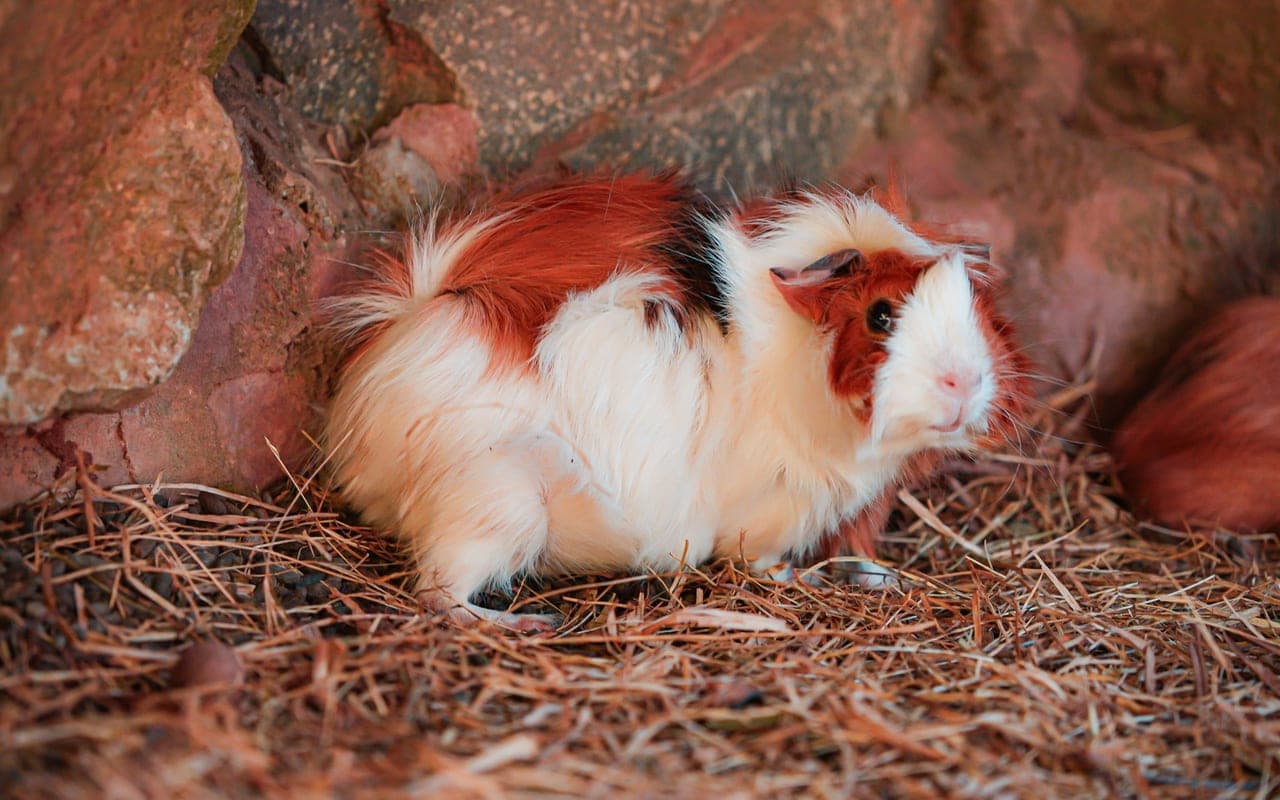
Crested Guinea Pig
Compare coat care, handling tolerance, companionship, floor-time needs, and exotics-vet planning before deciding.
Explore More About Swiss Guinea Pig
Dive deeper into everything Swiss Guinea Pig — costs, care, and expert insights.
Considering a rabbit instead?
Browse Rabbits