
Smooth type
Crested Guinea Pig
"Crested" is not one breed.

Size
2-3 lb
Lifespan
5-7 years
Floor time
1+ hour floor time
Experience
Cavy-savvy planning
Decision first
Is a Crested Guinea Pig right for you?
Start with fit before history or trivia. These are ownership signals, not guarantees about any individual guinea pig.
Best suited for
- Owners prepared for hay, vitamin C, enclosure cleaning, and exotics-vet planning.
Think carefully if
- You need a pet with almost no daily feeding, bedding, social, or health-monitoring routine.
- You cannot keep up with bedding, grooming, vitamin C, and preventive care.
- You cannot access an exotic or cavy-savvy veterinarian for routine and urgent care.
Conditional fit
Apartment living may be difficult unless the owner can provide a large enclosure, daily floor time, and clean, low-dust bedding.
Daily reality
Crested Guinea Pig commitment snapshot
Daily floor time
1+ hour floor time
Match floor time, enrichment, companionship, vitamin C, and cleaning to age, health, and housing.
Coat care
Low
Grooming needs vary by coat, shedding, and lifestyle.
Social needs
Needs planning
Most guinea pigs need companionship, daily appetite checks, clean bedding, and quick response to weight or breathing changes.
Structured facts
Crested Guinea Pig at a glance
The measurements and traits that most affect day-to-day life with this breed.
Group
Smooth
Weight
2-3 lb
Lifespan
5-7 years
View all characteristics and methodology
Lifestyle fit
- Indoor housingWorks best with a large, ventilated enclosure and daily supervised floor time.
- Needs caution
- Child friendliness
- Needs caution
- Companion fit
- Individual match
- Handling styleGuinea pigs are prey animals and usually trust floor-level interaction first.
- Secure and gentle
Owner commitment
- Floor time
- 1+ hour floor time
- Grooming
- Low
- Bedding routineClean bedding controls ammonia and makes appetite or urinary changes easier to see.
- Daily spot clean
- Vitamin CFresh foods or supplements must cover daily vitamin C needs.
- Daily
Behavior
- Sociability
- Very high
- Energy
- High
- Handling
- Low-moderate
- Vocalization
- Expressive
Environment and health
- Dental and gut care
- Hay-first
- Air quality
- Low dust, low ammonia
- Health risk
- Needs planning
- Vet type
- Exotics or cavy-savvy
Ratings combine structured breed data, visible breed fields, and editorial context. They are planning aids, not predictions for an individual guinea pig.
Daily life
Crested Guinea Pig temperament and behavior
"Crested" is not one breed. It is two, judged under opposite colour rules, and the difference decides which one you actually own. Both are short, smooth-coated cavies — body, coat and colour conform to the English Self standard — carrying a single rosette on the forehead. Both standards define that crest identically: it radiates from a centre point between the eyes and ears, forms a deep, regular rosette with a pinpoint centre, and its lower edge sits well down the nose. Then they diverge completely. The **English Crested** requires the crest to match the body colour, and the standard says that any differently coloured hairs in the crest are to be severely penalised. The **American Crested** requires the exact opposite: a complete circle of contrasting colour, usually white, against the body colour. So the animal most people picture when they hear "crested guinea pig" — a coloured cavy with a white flash on its forehead — is specifically an American Crested. Present that same white crest on an English Crested and you have not got a better animal; you have got a severely penalised one. The weighting tells you how much each standard cares. The crest carries 20 of the English Crested's 100 points and **40 of the American Crested's** — nearly half the animal resting on one rosette, which is among the highest weightings any single feature carries in a cavy standard. For an owner, the good news is that neither adds work. This is the smooth short coat with one whorl in it: a weekly brush, no trimming, no mats. Best suited to a first-time owner who wants a distinctive-looking cavy with an easy coat. Think twice only if you are paying a premium without knowing which of the two you are buying.
Owner note
Temperament labels are starting points, not guarantees. Meet the individual guinea pig and ask about behavior history whenever possible.
Care essentials
How to care for a Crested Guinea Pig
What looking after one actually involves: diet, enclosure, floor time, bonding and routine health.
Weekly Brush And WeighAs needed
- Brush once a week with a soft brush along the lie of the coat, and weigh the animal on kitchen scales at the same time, writing the number down. On a short-coated cavy the brush is worth more as an inspection than as grooming: nothing hides the skin, so PDSA's signs of mites and ringworm — hair loss, red skin, rashes, itching — show in the week they appear. The weight trend covers what the eye cannot: prey species conceal illness until they cannot, and a cavy that has stopped eating or passing droppings is a same-day emergency rather than a wait-and-see problem.
Nails Monthly, Hay AlwaysAs needed
- Check nails once a month and trim when the curve begins to turn, because guinea pigs on soft bedding do not wear them down and overgrown nails change how the animal stands. Look at the incisors at the same time; they should meet evenly. The molars cannot be inspected at home, which is exactly why unlimited grass hay matters more than any check you can perform — hay is the mechanism that wears continuously growing teeth, and a diet short on it is the usual reason a cavy ends up needing dental work under anaesthetic.
Knowing Which Crested You Have, Before You PayAs needed
- Settle this before money changes hands, because two standards share the name. Look at the crest colour against the body colour. A crest in a contrasting colour, usually white, forming a complete circle, is an American Crested. A crest matching the body colour is an English Crested, and on that standard any differently coloured hairs in the crest are severely penalised — so a stray white patch is a fault rather than a feature. Then check the centre is a pinpoint rather than spread, and that the rosette has no open centre, which the English Crested standard lists as a specific fault. Price should follow which standard the animal actually meets.
The Crest Centre, Checked With The Weekly BrushAs needed
- Once a week, while brushing, run a fingertip across the crest's centre and out along two or three of its radiating directions. The standard asks for a pinpoint centre, which means every hair on the forehead fans out from a single small point — and a point like that catches hay dust and bedding fragments and holds them against the skin. Lift anything you find with fingertips rather than a comb, which snags the centre and pulls the rosette out of shape. Then check whether crest hair has grown toward the eyes; on a short coat it usually has not, but the standard's ideal of a lower edge well down the nose means it is growing in that direction by design.
Health planning
Crested Guinea Pig health risks and screening
Every guinea pig breed has individual health variation. Use this profile for planning and discuss vitamin C, hay intake, dental care, urinary signs, breathing, and urgent symptoms with an exotic or cavy-savvy veterinarian.
Ownership cost
How much does a Crested Guinea Pig cost?
Cost figures are structured so first-year and lifetime estimates do not conflict with the underlying line items.
| Acquisition | $40-$120 |
|---|---|
| Routine monthly | About $50/month |
| Routine annual | About $600/year |
| First-year estimate | $640-$720 |
| Lifetime routine estimate | $3,000-$4,200 routine costs |
Currency: USD. Region: United States. Updated: . Typical ranges for this breed. Equipment, insurance, emergency veterinary care, boarding and training are NOT included: we hold no sourced figures for them, and estimating them would be a guess presented as data.
Responsible ownership
Finding a Crested Guinea Pig responsibly
What to ask a breeder or rescue is the same conversation for every breed, so we keep it in one place and keep it current.
Health documentation, meeting the parents or foster, contracts and return support, and the warning signs worth walking away from.
Original purpose
Crested Guinea Pig history
History is useful when it explains today's behavior, coat, care needs, and temperament.
Read the breed history
The Crested's documented history is a story about classification rather than geography, and the classification is what buyers get wrong. The British Cavy Council treats Crested as a modification rather than a coat: its taxonomy lists Crested as "variants of any of the above that have a crest", where "the above" means the short-haired categories — Self, Ticked, Marked and Marked Pattern. That is why the standards book contains not one Crested standard but several: English Crested and American Crested, plus Crested Ticked (Agouti) and Crested Marked Pattern covering crested versions of the Himalayan, Tan, Fox and Otter. A crest can be applied to almost any colour or marking pattern the Council recognises. All of them are gathered under one affiliated body, the Crested Cavy Club, which covers Crested, English Crested and Any Other Variety Crested classes. The naming is unfortunate and worth stating plainly: the English Crested and American Crested are not regional versions of the same breed the way the Sheltie and Silkie are. They are two distinct standards with opposing requirements, both judged in Britain, both in the same book. A British breeder offering "a Crested" is offering one of them and you should ask which. Colour, in both, follows the English Self standard, so the colour range is that of the smooth self-coloured cavy rather than anything specific to the crest.
Gallery
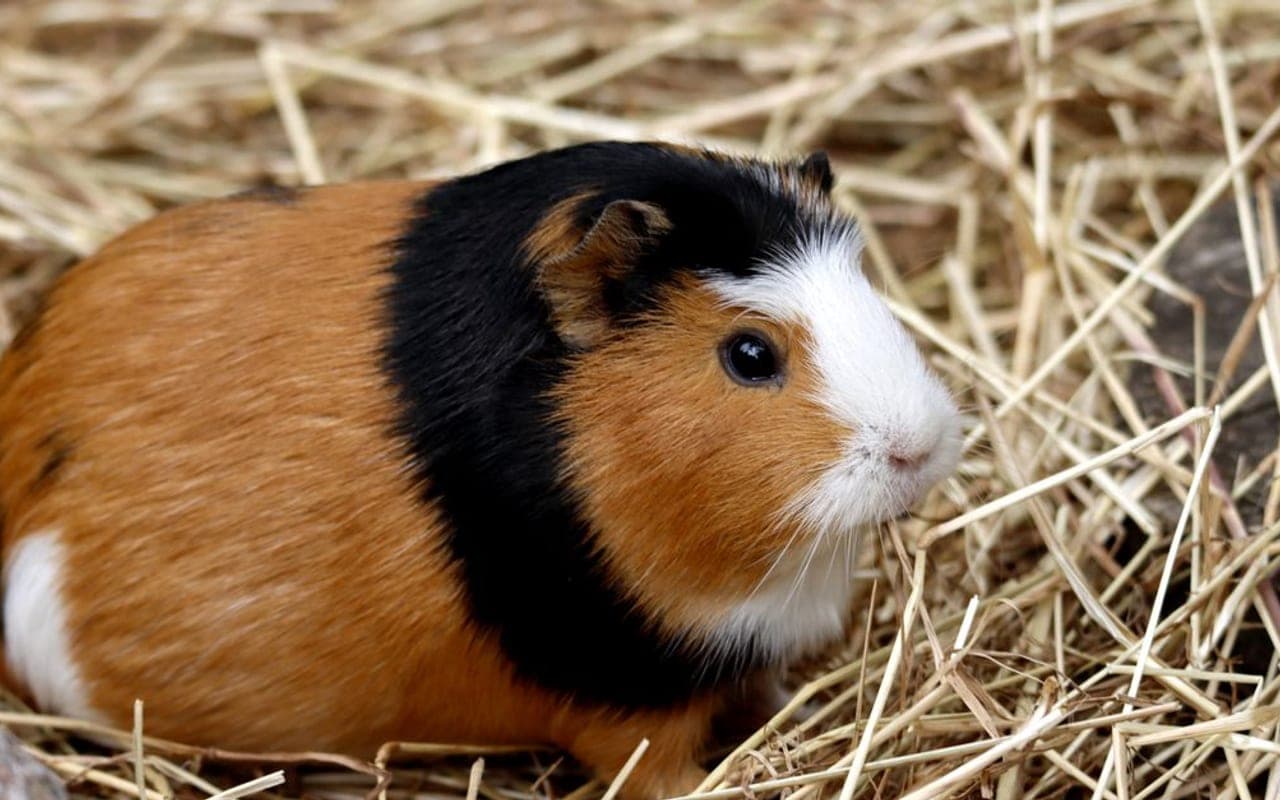
Crested Guinea Pig photos
Images are cropped consistently and loaded progressively to keep the page responsive.
Lower-page context
Crested Guinea Pigs in culture
Where the breed shows up in film, sport, work and folklore — the enjoyable part, once the practical questions are answered.
Fun facts
- The American Crested puts 40 of its 100 show points on the crest alone — the heaviest weighting any single feature carries in any cavy breed standard.
- The English Crested and American Crested are not regional names for one breed. They are two standards with opposing colour requirements, both judged in Britain, both in the same book.
- The Council treats Crested as a modification rather than a coat: 'variants of any of the above that have a crest'.
- There are crested versions of marked varieties too — the standards book carries Crested Himalayan, Crested Tan, Crested Fox and Crested Otter.
- The English Crested standard is explicit that its points are 20 for the crest and 80 per cent from the English Self standard — the crest is the only thing that makes it a different breed.
Crested Guinea Pig FAQs
What is the difference between an English Crested and an American Crested guinea pig?
Crest colour, and the standards require opposite things. The English Crested's crest must match the body colour, and any differently coloured hairs in it are severely penalised. The American Crested's crest must be a complete circle of contrasting colour, usually white. Same animal underneath, opposite colour rules, and two separate standards in the same book.
Is a white-crested guinea pig an American Crested?
Almost certainly, yes. A contrasting crest, usually white, forming a complete circle against the body colour is what the American Crested standard requires. That same white crest on an animal being judged as an English Crested would be severely penalised, so the colour of the whorl tells you which standard the animal belongs to.
Are Crested guinea pigs high maintenance?
No. Body, coat and colour conform to the English Self standard, so this is the short, flat, smooth cavy coat with a single whorl added. A weekly brush is the grooming routine; there is nothing to trim and no mat risk. The only addition is a weekly look at the crest centre and at whether crest hair has grown toward the eyes.
How much of a Crested's judging is the crest?
Twenty of a hundred points on the English Crested, and forty of a hundred on the American Crested. That second figure is the highest weighting any single feature carries in a cavy standard — nearly half the animal resting on one rosette, which is why crest quality drives the price so sharply.
What makes a good crest?
Both standards ask for the same geometry: a rosette radiating from a centre point between the eyes and ears, deep and regular with no areas of flatness, a pinpoint centre, and the lower edge well down the nose. The English Crested standard adds that the crest must not have an open centre, meaning skin visible at the middle.
Are Crested guinea pigs good for beginners?
Yes. This is one of the easiest cavy coats to live with — the smooth short coat with a whorl — so it suits a first-time owner who wants a distinctive-looking animal without a daily grooming commitment. Spend the time you save on company, hay, vitamin C and space, which is what actually decides a guinea pig's welfare.
Can any colour of guinea pig be crested?
Close to it. The Council treats Crested as a variant of any short-haired category rather than as a coat of its own, and the standards book carries Crested Ticked (Agouti) and Crested Marked Pattern standards covering crested Himalayan, Tan, Fox and Otter alongside the English and American Crested.
Can Crested guinea pigs live alone?
No. The RSPCA is explicit that guinea pigs get lonely and should not be kept alone, and that they are happiest in pairs, with wild guinea pigs living in family groups of five to ten. Companionship means at least one other guinea pig; a rabbit, cat or dog does not meet the requirement and brings predation or disease risk with it. The coat makes that easy here: both animals are short-coated, so a pair adds companionship without adding grooming — just check each crest stays clean.
How long do Crested guinea pigs live?
VCA gives 5 to 6 years as typical for guinea pigs, with some reaching 8 to 10. Plan for the upper end, and find out what your nearest exotics practice charges before you need it, because not every veterinary practice treats guinea pigs and that cost decides whether an emergency is affordable.
Similar breeds to consider
Worth comparing if this breed appeals but you want a different fit on family life, size, temperament or care needs.

American Guinea Pig
Also in the Smooth group, with different coat care, handling, and companionship tradeoffs.

Satin Guinea Pig
Also in the Smooth group, with different coat care, handling, and companionship tradeoffs.

Silkie Guinea Pig
Compare coat care, handling tolerance, companionship, floor-time needs, and exotics-vet planning before deciding.
Swiss Guinea Pig
Compare coat care, handling tolerance, companionship, floor-time needs, and exotics-vet planning before deciding.
Explore More About Crested Guinea Pig
Dive deeper into everything Crested Guinea Pig — costs, care, and expert insights.
Considering a rabbit instead?
Browse Rabbits