
Long-haired type
Silkie Guinea Pig
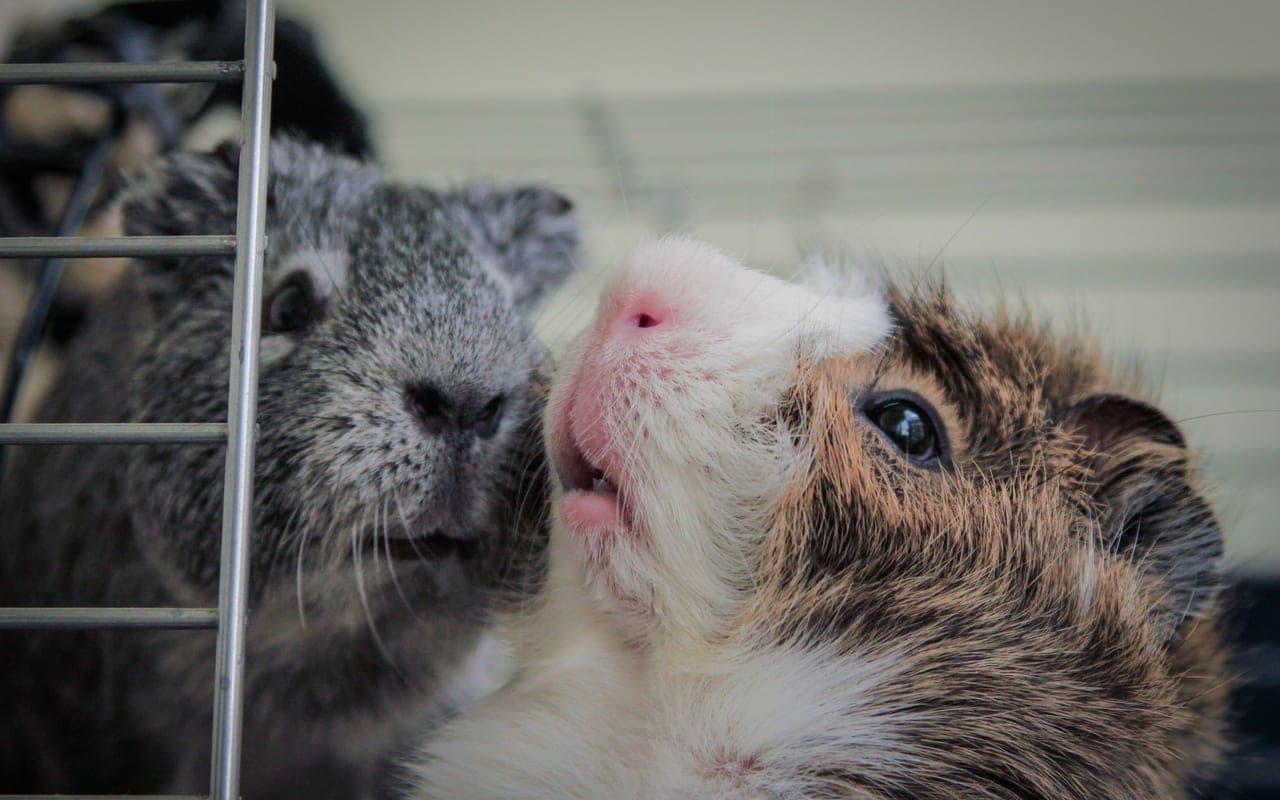
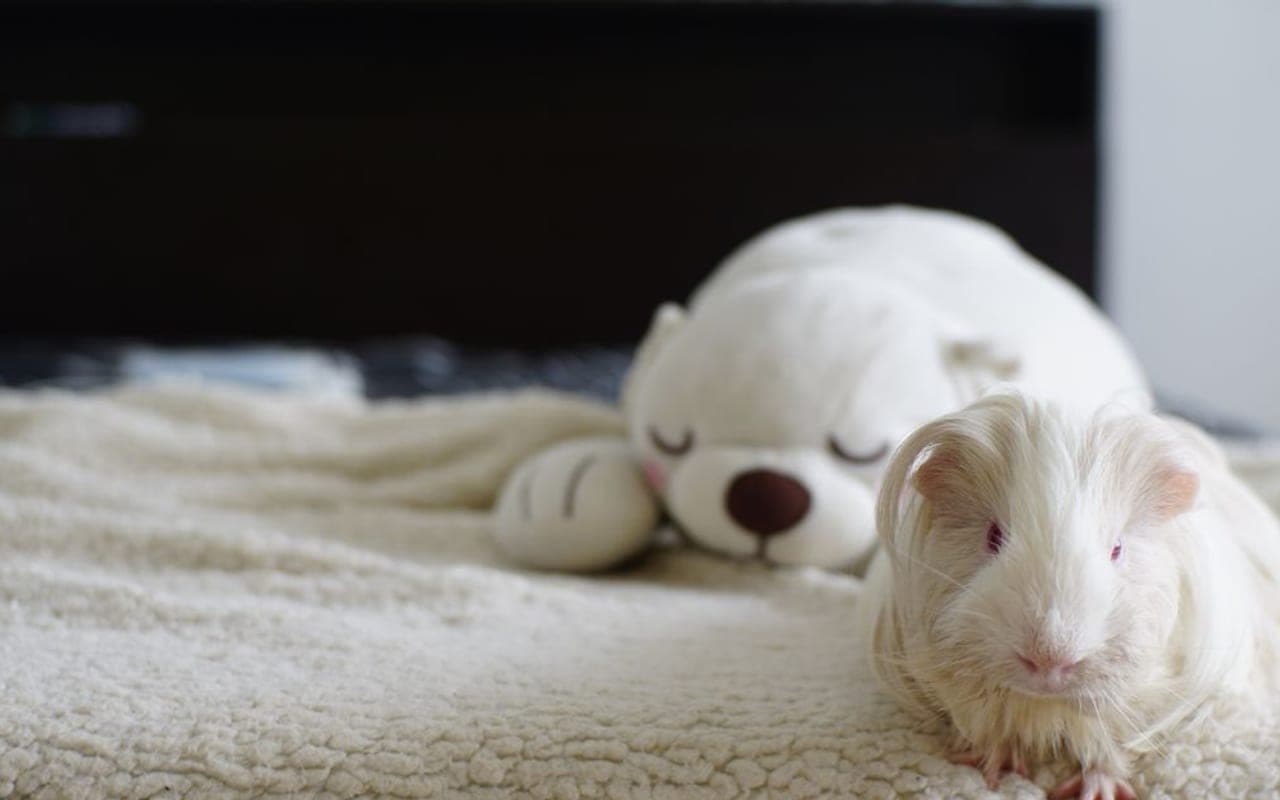
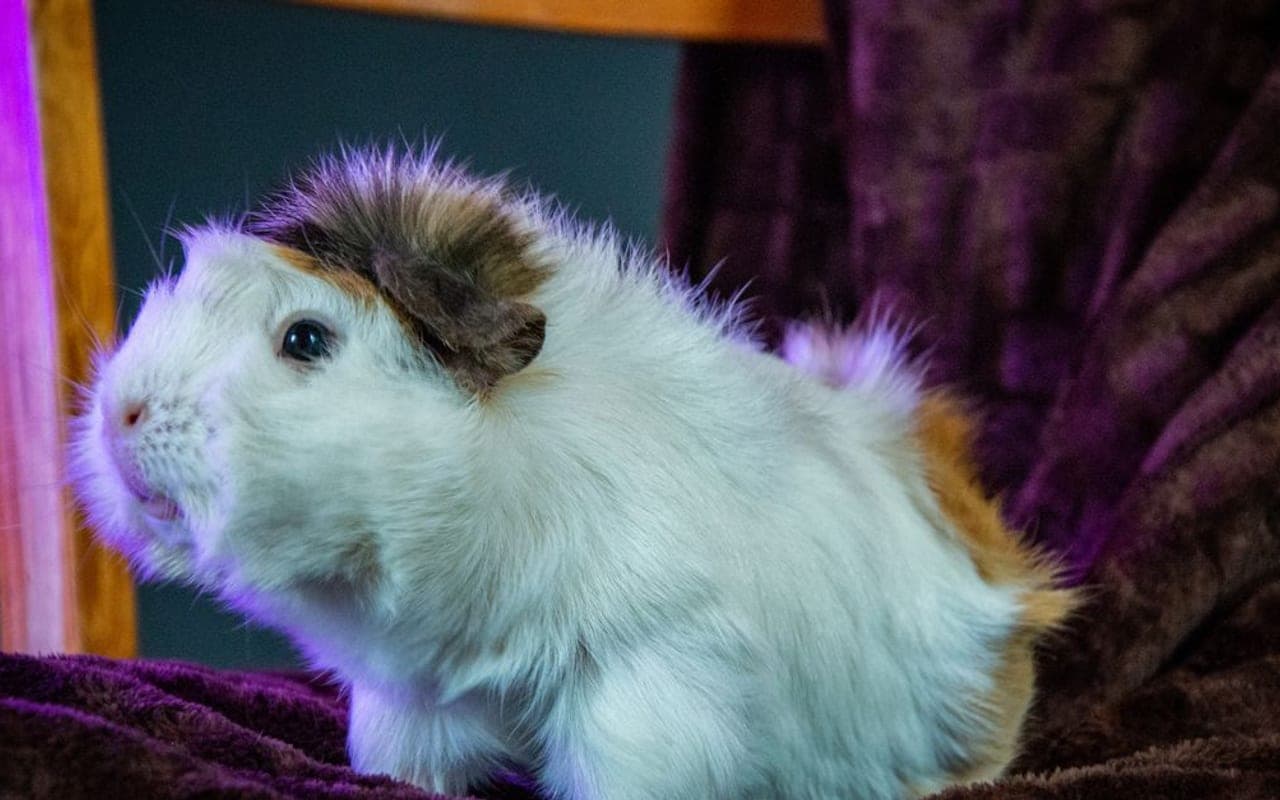
The Silkie is the long-haired guinea pig whose face you can always see.
Size
2-3 lb
Lifespan
5-7 years
Floor time
1+ hour floor time
Experience
Cavy-savvy planning
Decision first
Is a Silkie Guinea Pig right for you?
Start with fit before history or trivia. These are ownership signals, not guarantees about any individual guinea pig.
Best suited for
- Owners prepared for hay, vitamin C, enclosure cleaning, and exotics-vet planning.
Think carefully if
- You need a pet with almost no daily feeding, bedding, social, or health-monitoring routine.
- You cannot keep up with bedding, grooming, vitamin C, and preventive care.
- You cannot access an exotic or cavy-savvy veterinarian for routine and urgent care.
Conditional fit
Apartment living may be difficult unless the owner can provide a large enclosure, daily floor time, and clean, low-dust bedding.
Daily reality
Silkie Guinea Pig commitment snapshot
Daily floor time
1+ hour floor time
Match floor time, enrichment, companionship, vitamin C, and cleaning to age, health, and housing.
Coat care
High
Grooming needs vary by coat, shedding, and lifestyle.
Social needs
Needs planning
Most guinea pigs need companionship, daily appetite checks, clean bedding, and quick response to weight or breathing changes.
Structured facts
Silkie Guinea Pig at a glance
The measurements and traits that most affect day-to-day life with this breed.
Group
Long-haired
Weight
2-3 lb
Lifespan
5-7 years
View all characteristics and methodology
Lifestyle fit
- Indoor housingWorks best with a large, ventilated enclosure and daily supervised floor time.
- Needs caution
- Child friendliness
- Needs caution
- Companion fit
- Individual match
- Handling styleGuinea pigs are prey animals and usually trust floor-level interaction first.
- Secure and gentle
Owner commitment
- Floor time
- 1+ hour floor time
- Grooming
- High
- Bedding routineClean bedding controls ammonia and makes appetite or urinary changes easier to see.
- Daily spot clean
- Vitamin CFresh foods or supplements must cover daily vitamin C needs.
- Daily
Behavior
- Sociability
- Very high
- Energy
- Moderate
- Handling
- Low-moderate
- Vocalization
- Expressive
Environment and health
- Dental and gut care
- Hay-first
- Air quality
- Low dust, low ammonia
- Health risk
- Needs planning
- Vet type
- Exotics or cavy-savvy
Ratings combine structured breed data, visible breed fields, and editorial context. They are planning aids, not predictions for an individual guinea pig.
Daily life
Silkie Guinea Pig temperament and behavior
The Silkie is the long-haired guinea pig whose face you can always see. That is not a stylistic note, it is the buying decision between this breed and the Peruvian, and it is written into both breed standards. Under its British name — Sheltie — the British Cavy Council standard calls it "a smooth-haired, long-coated cavy" and requires that it be shown without a central parting, with "the hair on the face" lying "pointing towards the rear of the cavy". The Peruvian standard asks for the reverse: a central parting, and a frontal of hair originating at the shoulders and brushed forward to cover the face. Same coat length, opposite direction. The two are easy to mix up in a photograph precisely because length is what most listings describe and direction is what actually separates them. The physical give-away is a rosette. A Peruvian must carry two on the rump, and their placement is what pushes enough hair into its sweep to support the length. On a Sheltie, rosettes are the standard's single Specific Disqualification. The same feature that earns one breed its class removes the other from the class entirely. None of this makes the Silkie the easier animal. Its coat grows at "circa 2.5 cm (1 inch) per month of age" and never stops, exactly as the Peruvian's does, and its mane runs from the top of the head down to the shoulder and joins the sweep, so the coat is continuous from nose to rump. What changes is where the risk sits. There is no curtain of hair pressed against the eyes, and the daily work moves to the sweep and the belly — the parts that drag, collect bedding and mat out of sight. Best suited to an owner who wants long hair without hair in the animal's face, and who will either comb daily or keep the coat trimmed. Think twice if you want a low-effort pet, or if you are buying the coat rather than the grooming that maintains it.
Owner note
Temperament labels are starting points, not guarantees. Meet the individual guinea pig and ask about behavior history whenever possible.
Care essentials
How to care for a Silkie Guinea Pig
What looking after one actually involves: diet, enclosure, floor time, bonding and routine health.
Daily Coat Check And CombAs needed
- Budget five minutes every day and do it in a fixed order so nothing gets skipped. Lift the animal and check the belly and rear first, because the sweep drags and that is where bedding, urine and droppings collect. Finger-check close to the skin for mats — a mat forms against the body, not on the surface. Comb with a wide-tooth comb from the tips upward in sections, supporting the hair above your working point so you are not pulling on skin. The British Cavy Council's presentation standard gives the test: the coat should offer "no resistance to a comb". If yours catches, keep going. Tools are a wide-tooth comb and blunt-nosed scissors; nothing else is required. Skipping days is how mats start, and a mat you cannot slide a comb under has stopped being a grooming job.
Working The Unparted ManeAs needed
- The mane is the part of a Silkie people under-groom, because it does not look like the problem. The standard defines the mane as the hair growing from the top of the head to the shoulder, and requires it to be unparted and full, swept back to join the sweep. That means there is no natural break in it — the coat runs continuously from behind the ears into the body coat, and the junction at the shoulder is where two directions of hair meet and tangle. Work that junction daily with the comb held flat against the neck, lifting rather than dragging, and check behind both ears where mats start out of sight.
Bedding, Flooring And The Dragging SweepAs needed
- Spot-clean daily and strip the enclosure weekly. Substrate is a grooming decision for this breed rather than a hygiene one: the sweep drags across whatever lines the floor, so fine sawdust and dusty bedding work into the coat and stay there, while soft hay or fleece is easier to keep out and easier to see soiling against. Flooring must be solid — VCA Animal Hospitals identifies wire mesh as a cause of foot sores, known as pododermatitis. Provide more floor area than seems necessary and at least one hide per animal; a prey species with nowhere to retreat is stressed, and a stressed cavy is harder to handle for the daily comb this coat requires.
Trimming The Sweep, And Leaving The Mane AloneAs needed
- A Silkie has no frontal, so there is nothing to cut away from its face and the job is smaller than a Peruvian's. What you are managing is the sweep and the sides. Check length weekly and take a little off rather than waiting for a large job, keeping a pet coat around two to three inches. Leave the mane at its natural length: it is short relative to the body coat, it is what gives the breed its outline, and cutting into it creates a blunt edge that catches the comb for months afterwards. Blunt-nosed scissors, small sections, never toward the skin.
Telling A Silkie From A Peruvian Before You BuyAs needed
- Check this before you hand over money, because the two are confused constantly and the difference is direction rather than length. Look at the face: a Silkie's face hair lies pointing towards the rear, so you can see its face, while a Peruvian's frontal falls forward and often you cannot. Then look at the rump for rosettes — a Peruvian must carry two, and on a Silkie rosettes are the standard's only Specific Disqualification. If an animal sold as a Silkie has rump rosettes it is a Peruvian, a cross, or mislabelled. One more check settles the rest: a rosette on the forehead makes it a Coronet.
Health planning
Silkie Guinea Pig health risks and screening
Every guinea pig breed has individual health variation. Use this profile for planning and discuss vitamin C, hay intake, dental care, urinary signs, breathing, and urgent symptoms with an exotic or cavy-savvy veterinarian.
Ownership cost
How much does a Silkie Guinea Pig cost?
Cost figures are structured so first-year and lifetime estimates do not conflict with the underlying line items.
| Acquisition | $45-$180 |
|---|---|
| Routine monthly | About $90/month |
| Routine annual | About $1,080/year |
| First-year estimate | $1,125-$1,260 |
| Lifetime routine estimate | $5,400-$7,560 routine costs |
Currency: USD. Region: United States. Updated: . Typical ranges for this breed. Equipment, insurance, emergency veterinary care, boarding and training are NOT included: we hold no sourced figures for them, and estimating them would be a guess presented as data.
Responsible ownership
Finding a Silkie Guinea Pig responsibly
What to ask a breeder or rescue is the same conversation for every breed, so we keep it in one place and keep it current.
Health documentation, meeting the parents or foster, contracts and return support, and the warning signs worth walking away from.
Original purpose
Silkie Guinea Pig history
History is useful when it explains today's behavior, coat, care needs, and temperament.
Read the breed history
In Britain the breed is standardised as the Sheltie, and it sits in the British Cavy Council's Longhair group alongside the Coronet, Peruvian, Texel, Merino and Alpaca. The Council's own coat taxonomy defines that group as "smooth-haired (Sheltie), crested smooth-haired (Coronet) or rosetted (Peruvian), or rexoid variants of the above (Texel, Merino, Alpaca respectively)". Read carefully, that sentence makes the Sheltie the base long coat of the group rather than a variant of anything else: add a crest and the animal is a Coronet, add the rexoid gene and it is a Texel, add both and it is a Merino. The standard says as much elsewhere in plain terms, describing the Texel as "the rexoid equivalent of the Sheltie". Its show community is organised through the Sheltie Varieties Cavy Club, which under the Council's structure caters for Sheltie, Coronet, Texel and Merino together — a grouping that follows that shared coat ancestry rather than alphabetical convenience. The naming is what most often confuses buyers. "Sheltie" is the British registry name and is used throughout the Council's standard; "Silkie" is the North American name for the same coat. The word "Silkie" does not appear anywhere in the British standard. A founding date and a country of origin for the breed have not been traced to a primary source.
Gallery
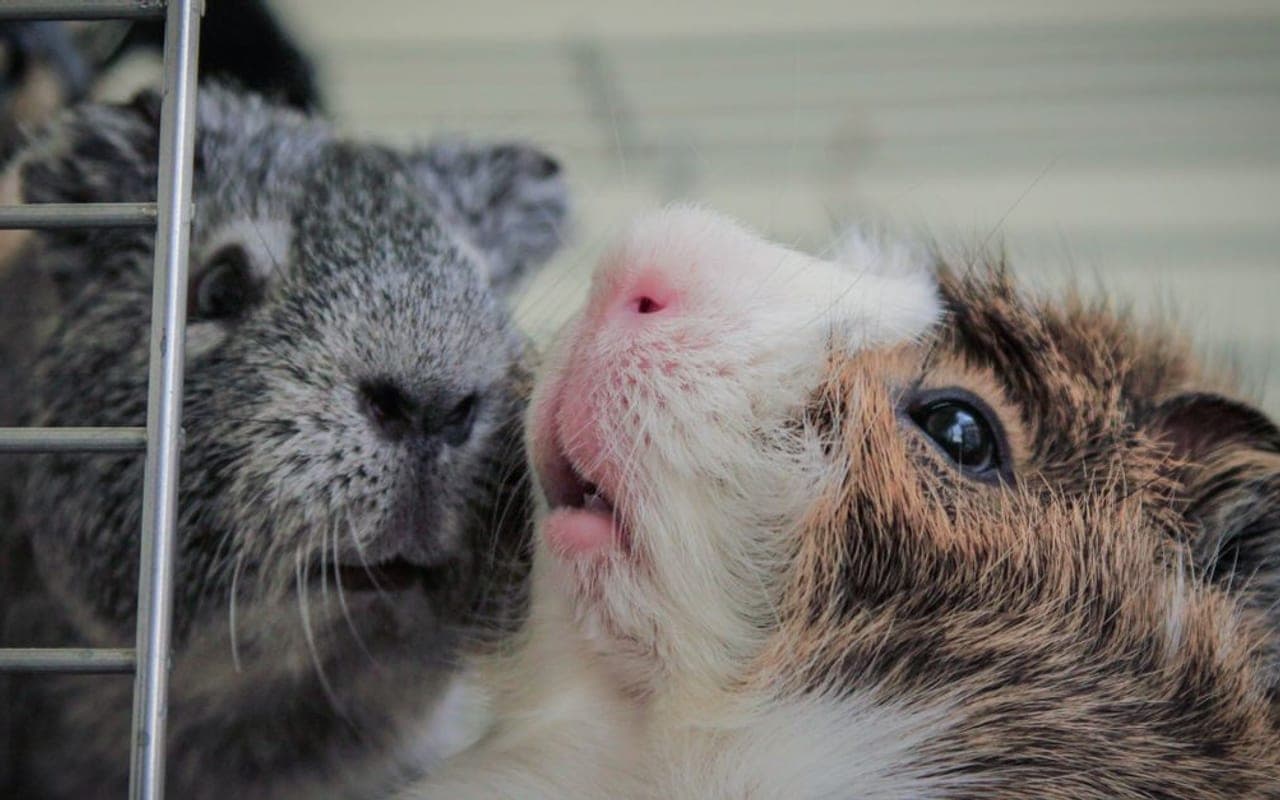
Silkie Guinea Pig photos
Images are cropped consistently and loaded progressively to keep the page responsive.
Lower-page context
Silkie Guinea Pigs in culture
Where the breed shows up in film, sport, work and folklore — the enjoyable part, once the practical questions are answered.
Fun facts
- Of the six Longhair standards the British Cavy Council recognises — Sheltie, Coronet, Peruvian, Texel, Merino and Alpaca — the Sheltie is the only one shown without a central parting.
- Seventy of the Sheltie's hundred show points are coat: thirty for coat appearance and thirty for coat feel, split evenly between texture and density.
- The standard defines the mane as the hair growing from the top of the head to the shoulder. On a Sheltie it must be unparted and full, and swept back to join the sweep; on an Abyssinian the same mane stands erect.
- Shelties may be shown in any colour or mixture of colours, so colour tells you nothing about quality. Anyone pricing one higher for its markings is pricing the wrong thing.
- Add a crest to a Sheltie and it becomes a Coronet. Add the rexoid gene and it becomes a Texel. Add both and it becomes a Merino. All three are, in the standard's own framing, variants built on this coat.
Silkie Guinea Pig FAQs
What is the difference between a Silkie and a Peruvian guinea pig?
Direction, not length. The British Cavy Council requires a Sheltie — the British name for the Silkie — to be shown without a central parting, with the hair on the face lying towards the rear. The Peruvian is shown with a central parting and a frontal of hair falling forward across the face. A Peruvian also carries two rump rosettes, which are a specific disqualification in the Sheltie standard.
Why is my Silkie guinea pig called a Sheltie?
Because that is its British registry name. The British Cavy Council standard uses Sheltie throughout and the word Silkie does not appear in it anywhere; Silkie is the North American name for the same coat. If you are reading a British breed standard, a UK breeder listing or a show catalogue, look for Sheltie.
How often do Silkie guinea pigs need grooming?
Every day. The routine is a belly and rear check, a finger-check close to the skin for mats, and a comb from the tips upward with a wide-tooth comb, and it takes about five minutes once you are practised. The standard's own presentation test is useful at home: the coat should offer no resistance to a comb.
Do Silkie guinea pigs need haircuts?
As pets, almost always. The coat grows at roughly one inch per month of age and never stops. Two to three inches is a normal and kind pet length, cut in small sections with blunt-nosed scissors and never toward the skin. Trimming is not a failure of care; it removes most of the daily workload and costs only show eligibility.
Are Silkie guinea pigs good for beginners?
In a maintained pet trim, yes, provided an adult owns the grooming rather than delegating it to a child. In full coat, no. The absence of a face curtain makes a Silkie easier to live with than a Peruvian in one specific respect, but the total coat length and the daily commitment are the same.
Can a Silkie guinea pig have rosettes?
Not if it is being shown as a Sheltie. Rosettes are the single Specific Disqualification in the British Cavy Council's Sheltie standard. An animal sold to you as a Silkie that has rosettes on its rump is either a Peruvian, a cross, or mislabelled, and that is worth clarifying with the seller before you buy.
Why does my older Silkie's coat look thinner?
This is expected and the standard says so. It notes that the coat will appear thinner in older, longer-coated animals because the undercoat does not reach the same length as the top coat, which ends up spread over a larger area. Judges are told to allow for it. Density is assessed near the body, not at the tips.
Can Silkie guinea pigs live alone?
No. The RSPCA is explicit that guinea pigs get lonely and should not be kept alone, and that they are happiest in pairs, with wild guinea pigs living in family groups of five to ten. Companionship means at least one other guinea pig — a rabbit, cat or dog does not meet the requirement. Here that means two long swept-back coats, so the weekly session covers both animals and the trim decision applies to the pair, not just the one you bought first.
Is a wavy coat a fault in a Silkie?
Not necessarily. The Sheltie standard aims for a straight coat but states that slight waviness should not be punished. A distinctly curled or ringletted coat is a different matter: that is the rexoid gene, and it makes the animal a Texel rather than a Sheltie with a fault.
Similar breeds to consider
Worth comparing if this breed appeals but you want a different fit on family life, size, temperament or care needs.
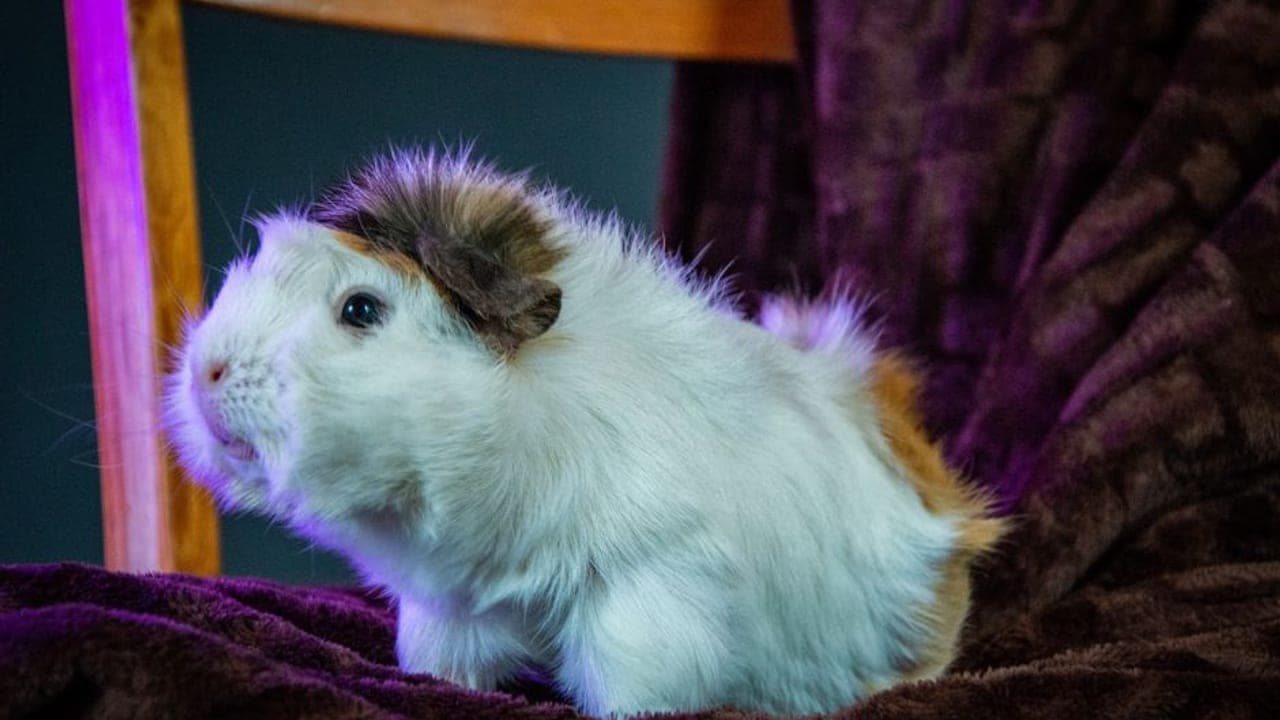
Coronet Guinea Pig
Also in the Long-haired group, with different coat care, handling, and companionship tradeoffs.
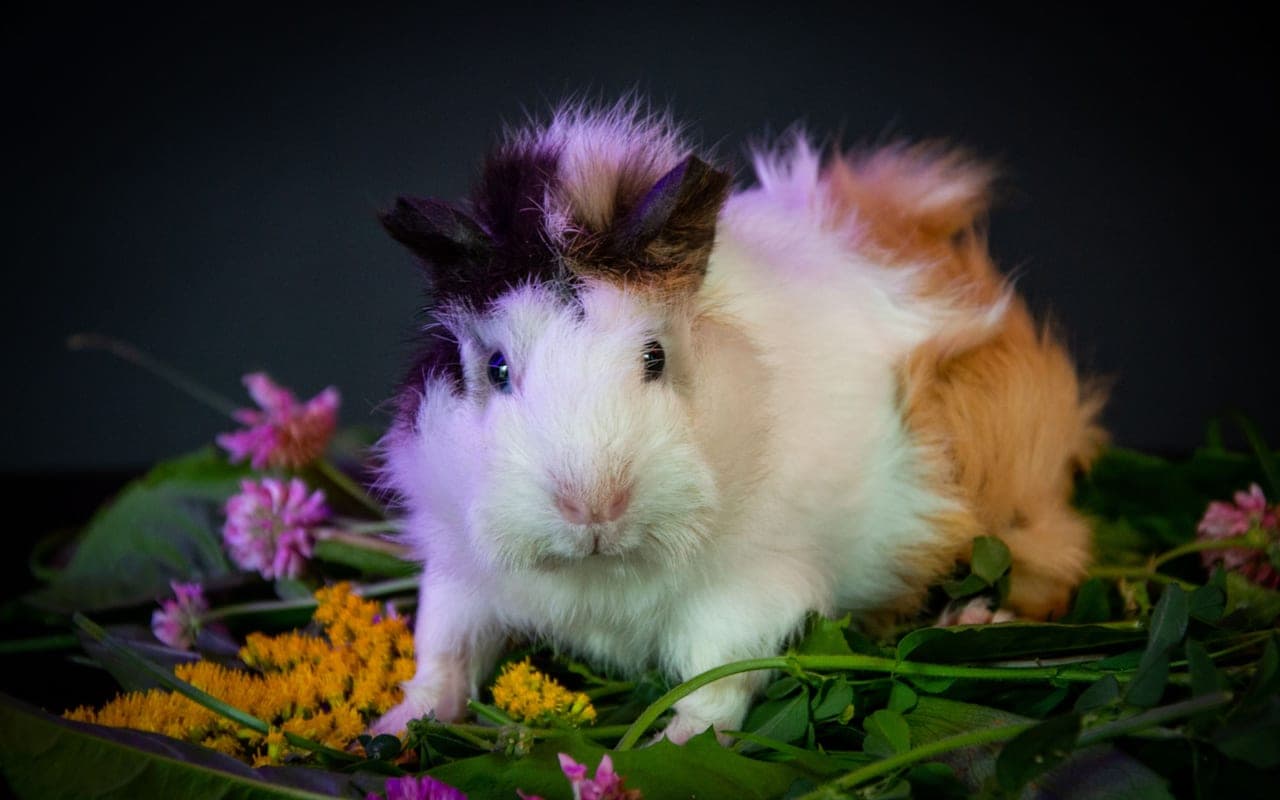
Lunkarya Guinea Pig
Also in the Long-haired group, with different coat care, handling, and companionship tradeoffs.
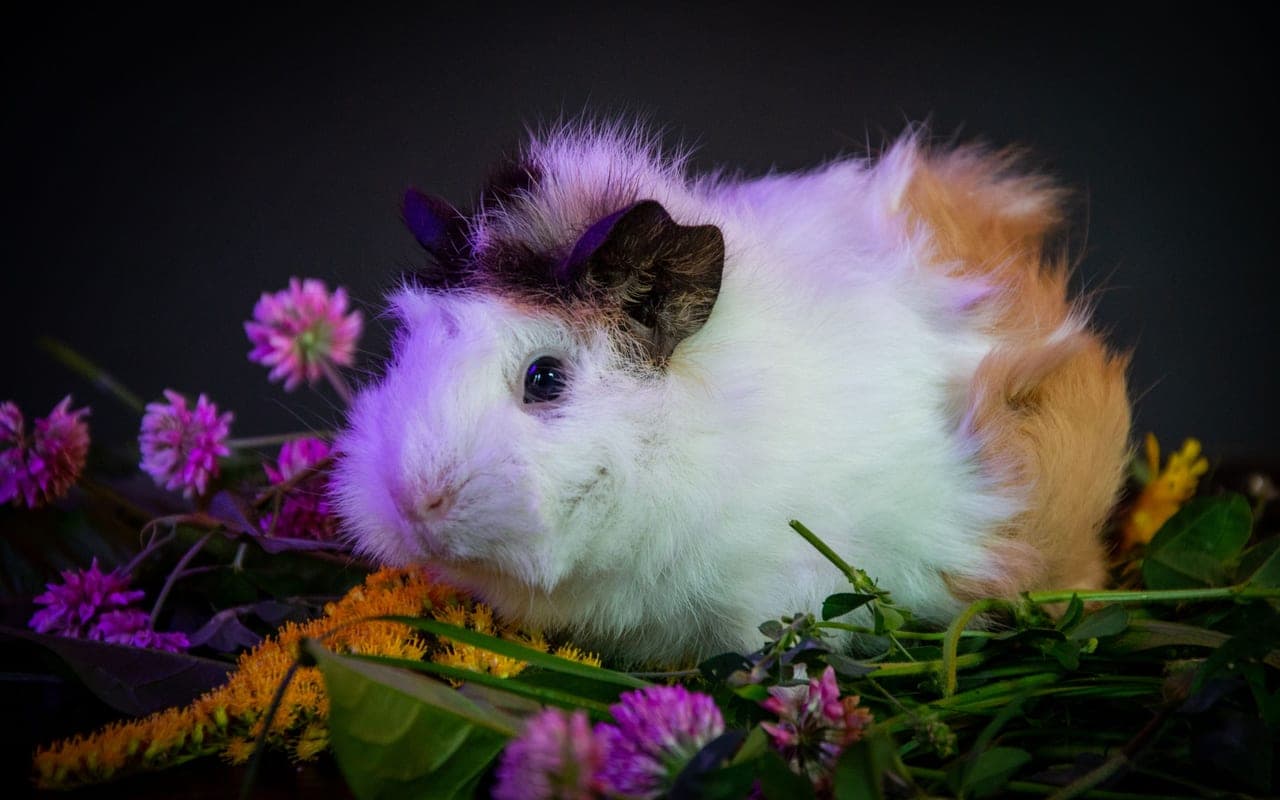
Texel Guinea Pig
Also in the Long-haired group, with different coat care, handling, and companionship tradeoffs.
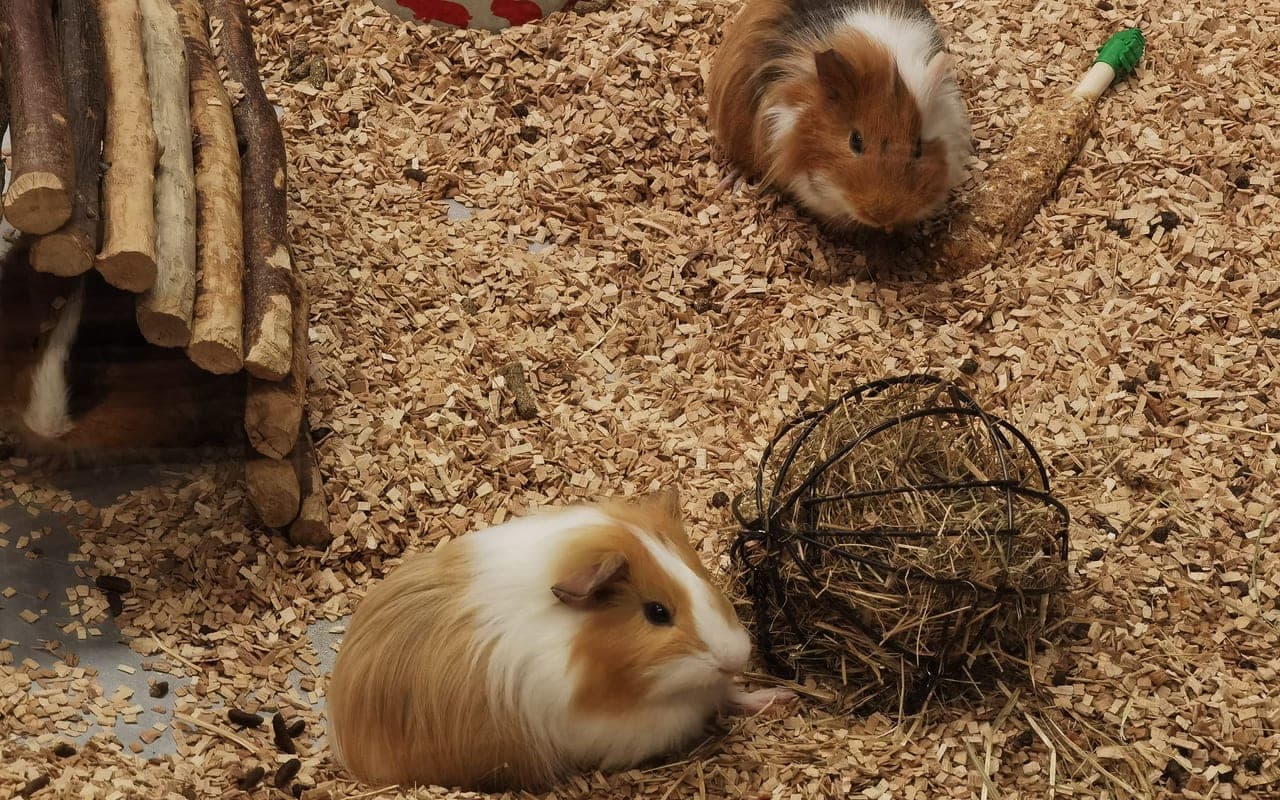
Merino Guinea Pig
Also in the Long-haired group, with different coat care, handling, and companionship tradeoffs.
Explore More About Silkie Guinea Pig
Dive deeper into everything Silkie Guinea Pig — costs, care, and expert insights.
Considering a rabbit instead?
Browse Rabbits