
Long-haired type
Lunkarya Guinea Pig
The Lunkarya is the cavy that is supposed to look untidy, and the standard says so in those words.
Size
2-3 lb
Lifespan
5-7 years
Floor time
1+ hour floor time
Experience
Cavy-savvy planning
Decision first
Is a Lunkarya Guinea Pig right for you?
Start with fit before history or trivia. These are ownership signals, not guarantees about any individual guinea pig.
Best suited for
- Owners prepared for hay, vitamin C, enclosure cleaning, and exotics-vet planning.
Think carefully if
- You need a pet with almost no daily feeding, bedding, social, or health-monitoring routine.
- You cannot keep up with bedding, grooming, vitamin C, and preventive care.
- You cannot access an exotic or cavy-savvy veterinarian for routine and urgent care.
Conditional fit
Apartment living may be difficult unless the owner can provide a large enclosure, daily floor time, and clean, low-dust bedding.
Daily reality
Lunkarya Guinea Pig commitment snapshot
Daily floor time
1+ hour floor time
Match floor time, enrichment, companionship, vitamin C, and cleaning to age, health, and housing.
Coat care
High
Grooming needs vary by coat, shedding, and lifestyle.
Social needs
Needs planning
Most guinea pigs need companionship, daily appetite checks, clean bedding, and quick response to weight or breathing changes.
Structured facts
Lunkarya Guinea Pig at a glance
The measurements and traits that most affect day-to-day life with this breed.
Group
Long-haired
Weight
2-3 lb
Lifespan
5-7 years
View all characteristics and methodology
Lifestyle fit
- Indoor housingWorks best with a large, ventilated enclosure and daily supervised floor time.
- Needs caution
- Child friendliness
- Needs caution
- Companion fit
- Individual match
- Handling styleGuinea pigs are prey animals and usually trust floor-level interaction first.
- Secure and gentle
Owner commitment
- Floor time
- 1+ hour floor time
- Grooming
- High
- Bedding routineClean bedding controls ammonia and makes appetite or urinary changes easier to see.
- Daily spot clean
- Vitamin CFresh foods or supplements must cover daily vitamin C needs.
- Daily
Behavior
- Sociability
- Very high
- Energy
- Moderate
- Handling
- Low-moderate
- Vocalization
- Expressive
Environment and health
- Dental and gut care
- Hay-first
- Air quality
- Low dust, low ammonia
- Health risk
- Needs planning
- Vet type
- Exotics or cavy-savvy
Ratings combine structured breed data, visible breed fields, and editorial context. They are planning aids, not predictions for an individual guinea pig.
Daily life
Lunkarya Guinea Pig temperament and behavior
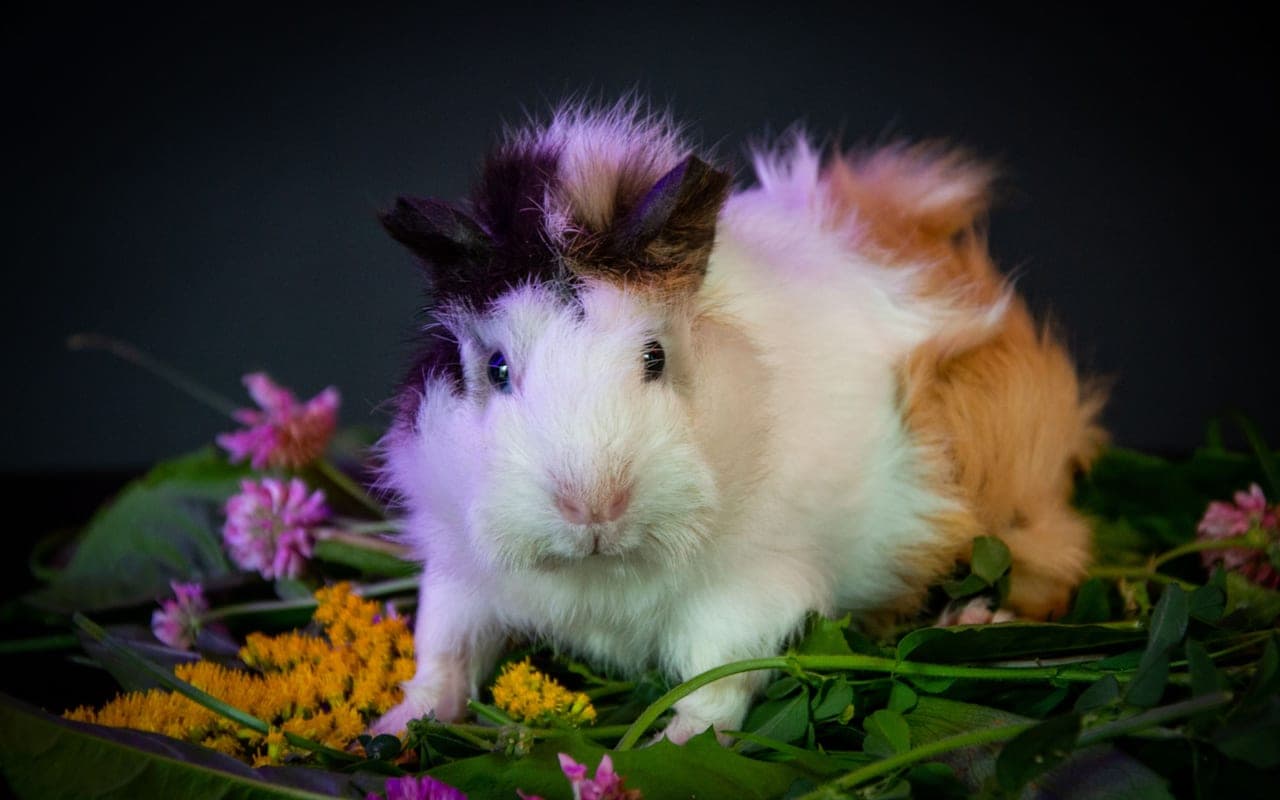
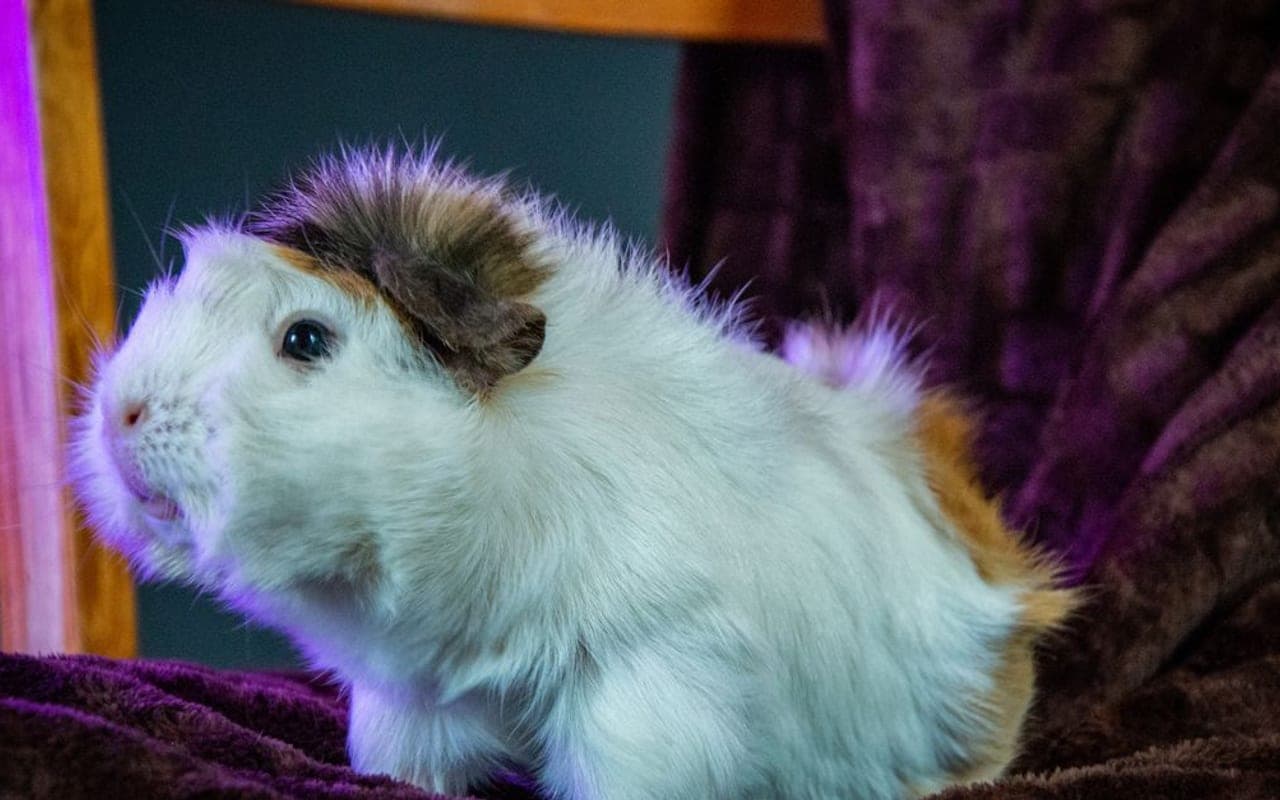
The Lunkarya is the cavy that is supposed to look untidy, and the standard says so in those words. The British Cavy Council's Guide Standard describes it as "a longhaired cavy in the Peruvian model (having a frontal, chops and two rump rosettes)", but with a harsh, coarse coat that forms ringlets. On the body the coat should be "curly in a ringletted fashion, giving a corkscrew effect that needs to be present from the base of the coat to the tips", with the tips intact — and the curls should stick out from the body "in a naturally untidy fashion". A Lunkarya groomed smooth is a Lunkarya groomed wrong. That is the first thing to understand, because it inverts the instinct every other longhair teaches. A Peruvian is judged partly on a coat that lies in a clean curtain from a central parting. The Lunkarya is explicitly not presented with a central parting at all, and its coat is meant to grow outward from the body rather than fall from it. The second thing is a measurement trap. The coat grows at approximately one inch per month, the same as every other longhair — but the standard warns it "may appear shorter" because of the curl, and states it "should therefore be measured by holding the hair straight". Owners routinely underestimate how much coat a Lunkarya is actually carrying, and therefore how far behind they are on grooming, because they are judging by what they can see. Not every part is ringletted. The frontal, the chop furnishings and the belly are rexoid but not in ringlets, so the texture changes across the animal. Best suited to an experienced longhair owner who wants something genuinely different and will not fight the coat's natural disorder. Think twice if this would be a first cavy.
Owner note
Temperament labels are starting points, not guarantees. Meet the individual guinea pig and ask about behavior history whenever possible.
Care essentials
How to care for a Lunkarya Guinea Pig
What looking after one actually involves: diet, enclosure, floor time, bonding and routine health.
Know Which Parts Are Not RinglettedAs needed
- Check these areas daily and expect a different texture. The standard specifies that the hair on the frontal, the chop furnishings and the belly is rexoid but not ringletted, so the corkscrew you are maintaining on the body does not apply there. The frontal is Peruvian-model hair falling forward over the face, so it needs the same eye check a Peruvian's does — part it and look at both eyes, since PDSA lists redness, discharge and cloudiness among signs to watch for. The belly should show dense curls and sits against bedding, which makes it the first place to mat and the last place an owner looks.
Separate Ringlets With Fingers, DailyAs needed
- Work the coat every day with your fingertips rather than a comb. The standard asks for a corkscrew effect running from the base of the coat all the way to the tips, and for those tips to be intact; a comb pulled through a ringlet straightens it and breaks the ends, which removes the feature the breed is judged on and does not make the coat easier to manage. Take a small section, ease it apart down to the skin, check the skin, and move to the next. Use a wide-tooth comb only close to the body when you have found a mat, and only to open it, never to style the coat.
Do Not Tidy It — The Untidiness Is The StandardAs needed
- Resist the urge to make the coat look neat, and check weekly that you have not been doing so by habit. The standard asks for even lengths of ringletted curls sticking out from the body "in a naturally untidy fashion", and explicitly says the Lunkarya should not be presented with a central parting. Smoothing the coat down, parting it or brushing it into a lie works against every one of those requirements. In an older animal the standard expects the weight of hair to make the outer coat fall towards the body, but says the innate tendency to grow outward should still be evident and there should be no tendency to a parting.
Measure By Holding The Hair Straight, Once A WeekAs needed
- Once a week, take a section over the shoulder or flank and hold it straight to see its true length. The standard warns that the Lunkarya's coat grows at approximately one inch per month but may appear shorter because of the curliness, and states it should therefore be measured by holding the hair straight. This is the most useful habit on the whole page. Owners judge grooming workload by what they can see, and on this breed what you can see understates the coat by a wide margin, so people fall behind without realising it. Trim from the measured length rather than the apparent one.
Health planning
Lunkarya Guinea Pig health risks and screening
Every guinea pig breed has individual health variation. Use this profile for planning and discuss vitamin C, hay intake, dental care, urinary signs, breathing, and urgent symptoms with an exotic or cavy-savvy veterinarian.
Ownership cost
How much does a Lunkarya Guinea Pig cost?
Cost figures are structured so first-year and lifetime estimates do not conflict with the underlying line items.
| Acquisition | $50-$200 |
|---|---|
| Routine monthly | About $80/month |
| Routine annual | About $960/year |
| First-year estimate | $1,010-$1,160 |
| Lifetime routine estimate | $4,800-$6,720 routine costs |
Currency: USD. Region: United States. Updated: . Typical ranges for this breed. Equipment, insurance, emergency veterinary care, boarding and training are NOT included: we hold no sourced figures for them, and estimating them would be a guess presented as data.
Responsible ownership
Finding a Lunkarya Guinea Pig responsibly
What to ask a breeder or rescue is the same conversation for every breed, so we keep it in one place and keep it current.
Health documentation, meeting the parents or foster, contracts and return support, and the warning signs worth walking away from.
Original purpose
Lunkarya Guinea Pig history
History is useful when it explains today's behavior, coat, care needs, and temperament.
Read the breed history
The Lunkarya is one of two breeds the British Cavy Council holds at Guide Standard rather than full standard, the Swiss being the other, and that status shapes what can honestly be said about it. A Guide Standard is a working description for a breed the Council recognises without having yet given it a full standard. In practice that means fewer keepers, more variation between animals, and considerably less published material against which to check a seller's claims. The Lunkarya sits with the Rare Varieties Cavy Club, alongside the Argente, Belted, Bicolour, Brindle, Chinchilla, Harlequin, Magpie, Ridgeback, Satin, Tortoiseshell and Tricolour — the varieties kept by the smallest numbers of people. What the standard does document precisely is its relationship to the Peruvian. The Lunkarya is built on the Peruvian model, carrying a frontal, chops and two rump rosettes, so structurally it is the same coat architecture. What differs is texture: harsh and coarse where the Peruvian is soft and silky, and ringletted where the Peruvian is straight. That makes it a distinct animal rather than a Peruvian variant, and the standard treats it as one. There is also a related variety worth knowing about when reading breeder listings: the standards book notes the MiniPli as genetically a Longhair cavy that carries curly genes derived from the Lunkarya. On geographic origins we have not located a primary source and record the gap rather than filling it.
Gallery
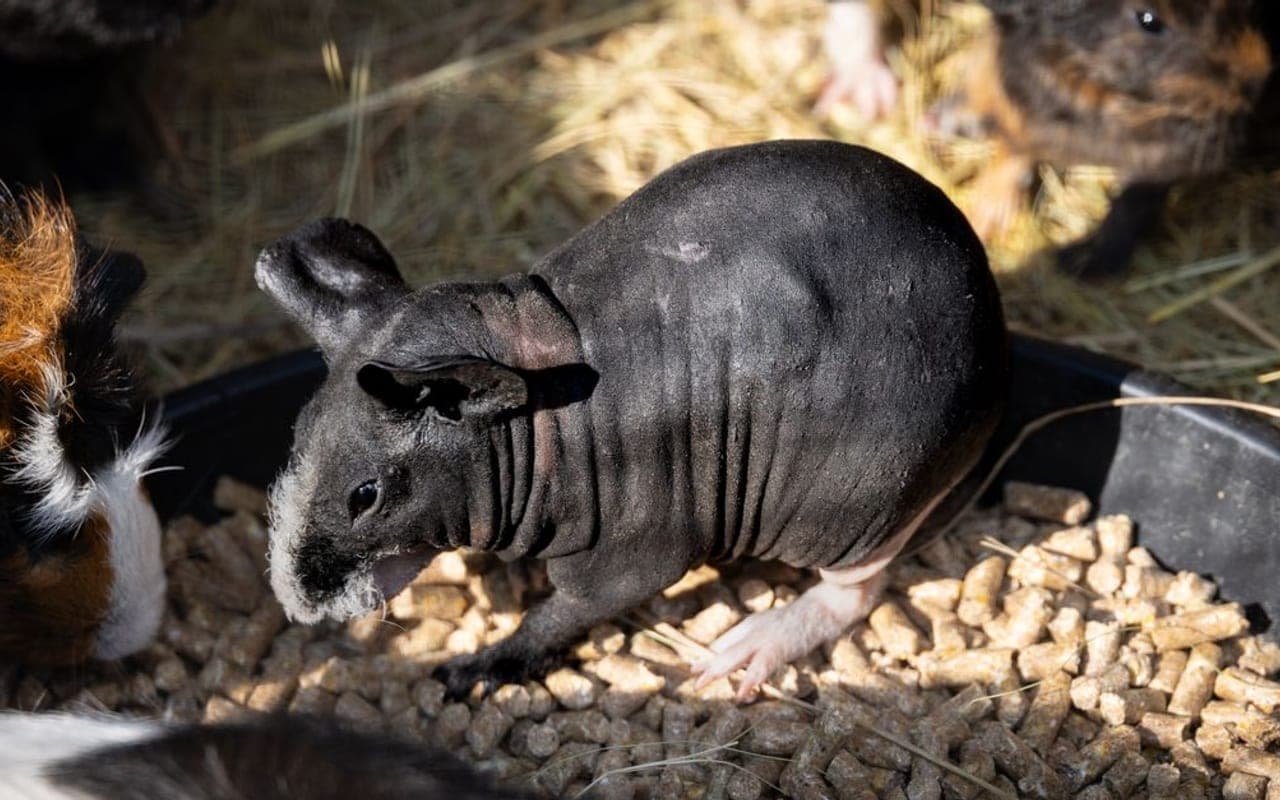
Lunkarya Guinea Pig photos
Images are cropped consistently and loaded progressively to keep the page responsive.
Lower-page context
Lunkarya Guinea Pigs in culture
Where the breed shows up in film, sport, work and folklore — the enjoyable part, once the practical questions are answered.
Fun facts
- The standard asks for curls sticking out from the body 'in a naturally untidy fashion' — one of very few places a breed standard requires an animal to look unkempt.
- The Lunkarya is one of only two breeds the Council holds at Guide Standard; the Swiss is the other.
- Its coat must be measured by holding the hair straight, because the curl makes it look shorter than it is.
- The corkscrew effect is required from the base of the coat all the way to the tips, and the tips must be intact — a broken tip is a groomed-out ringlet.
- The standards book notes the MiniPli as genetically a Longhair cavy carrying curly genes derived from the Lunkarya.
Lunkarya Guinea Pig FAQs
What is a Lunkarya guinea pig?
A longhaired cavy built on the Peruvian model — it carries a frontal, chops and two rump rosettes — but with a harsh, coarse coat that forms ringlets rather than falling straight. The standard asks for a corkscrew effect present from the base of the coat to the tips, with the curls sticking out from the body in a naturally untidy fashion.
Should I brush a Lunkarya's coat smooth?
No. The standard asks for curls sticking out from the body in a naturally untidy fashion and says the Lunkarya should not be presented with a central parting. Combing the ringlets straight breaks the tips and removes the corkscrew the breed is judged on. Separate the curls with fingertips instead and use a comb only to open a mat near the skin.
How long is a Lunkarya's coat really?
Longer than it looks. The standard says the coat grows at approximately one inch per month but may appear shorter because of the curliness, and should be measured by holding the hair straight. Owners consistently underestimate the coat they are carrying, which is why they fall behind on grooming without realising.
What is the difference between a Lunkarya and a Peruvian?
Texture. Both carry a frontal, chops and two rump rosettes, so the coat architecture is the same. The Peruvian's coat is soft, silky and straight and is shown with a central parting; the Lunkarya's is harsh and coarse, forms ringlets, grows outward from the body and is shown with no parting at all.
Are Lunkarya guinea pigs good for beginners?
No. This is a daily-grooming breed whose coat cannot be judged by appearance, held at Guide Standard with fewer keepers and less published guidance to check against. A smooth-coated American or an Abyssinian is a far better first cavy, and either will teach you the husbandry that matters more than coat type.
Are all parts of a Lunkarya curly?
No, and the standard is specific. The hair on the frontal, the chop furnishings and the belly is rexoid but not ringletted, while the body coat carries the corkscrew ringlets. So texture changes across the animal, and the parts around the face are closer to a rexoid coat than to the ringlets on the back and sides.
Is the Lunkarya a recognised breed?
Yes, at Guide Standard — the British Cavy Council's tier for breeds it recognises but has not yet given a full standard, shared only with the Swiss. It is covered by the Rare Varieties Cavy Club. Practically, that means fewer breeders, more variation between animals, and less published material to verify a seller's claims against.
Can Lunkarya guinea pigs live alone?
No. The RSPCA is explicit that guinea pigs get lonely and should not be kept alone, and that they are happiest in pairs, with wild guinea pigs living in family groups of five to ten. Companionship means at least one other guinea pig; a rabbit, cat or dog does not meet the requirement and brings predation or disease risk with it. With this breed it means two dense curly coats, and neither should be brushed out straight, so budget the handling time for both before adding the second animal.
How long do Lunkarya guinea pigs live?
VCA gives 5 to 6 years as typical for guinea pigs, with some reaching 8 to 10. Plan for the upper end, and find out what your nearest exotics practice charges before you need it, because not every veterinary practice treats guinea pigs and that cost decides whether an emergency is affordable.
Similar breeds to consider
Worth comparing if this breed appeals but you want a different fit on family life, size, temperament or care needs.
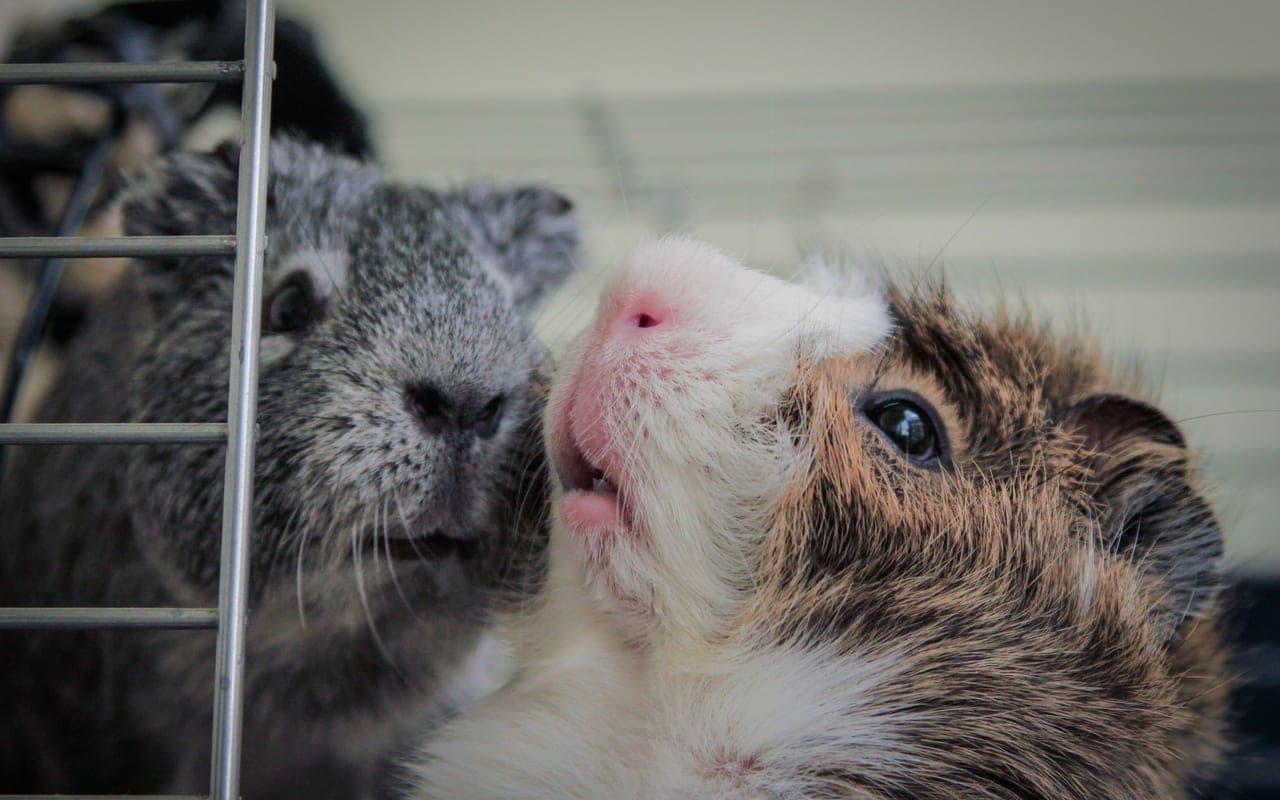
Silkie Guinea Pig
Also in the Long-haired group, with different coat care, handling, and companionship tradeoffs.
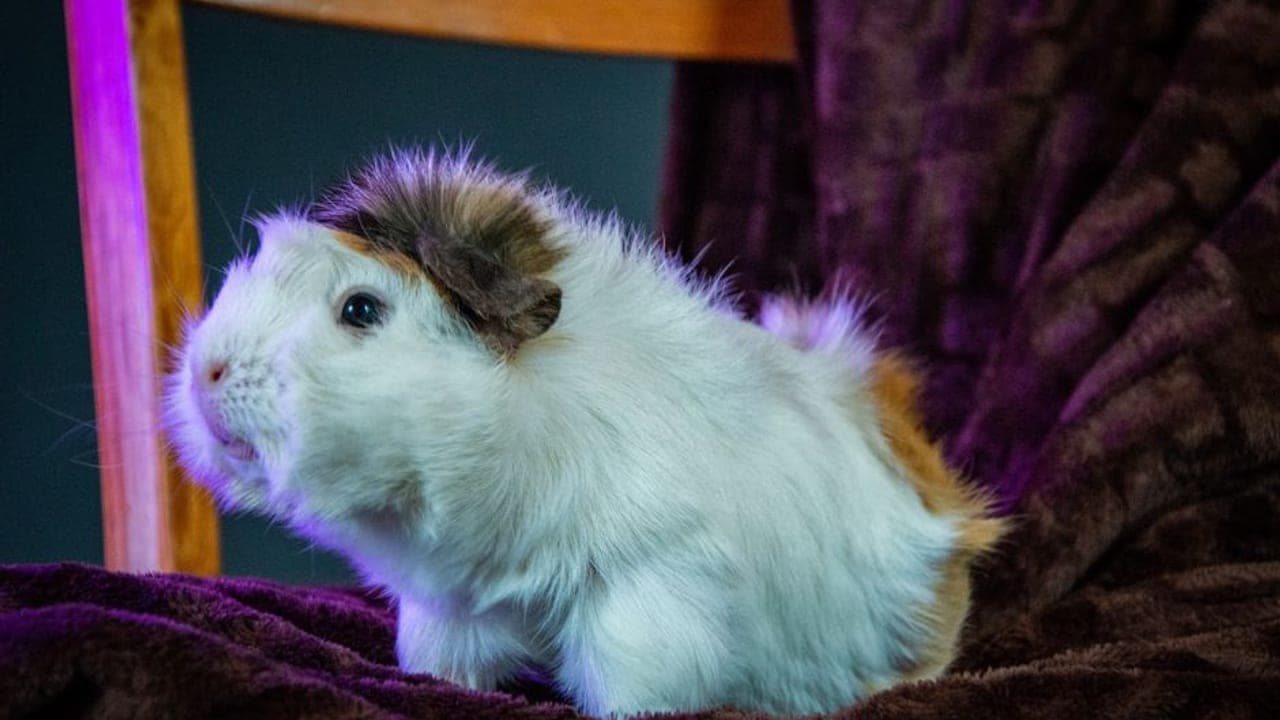
Coronet Guinea Pig
Also in the Long-haired group, with different coat care, handling, and companionship tradeoffs.
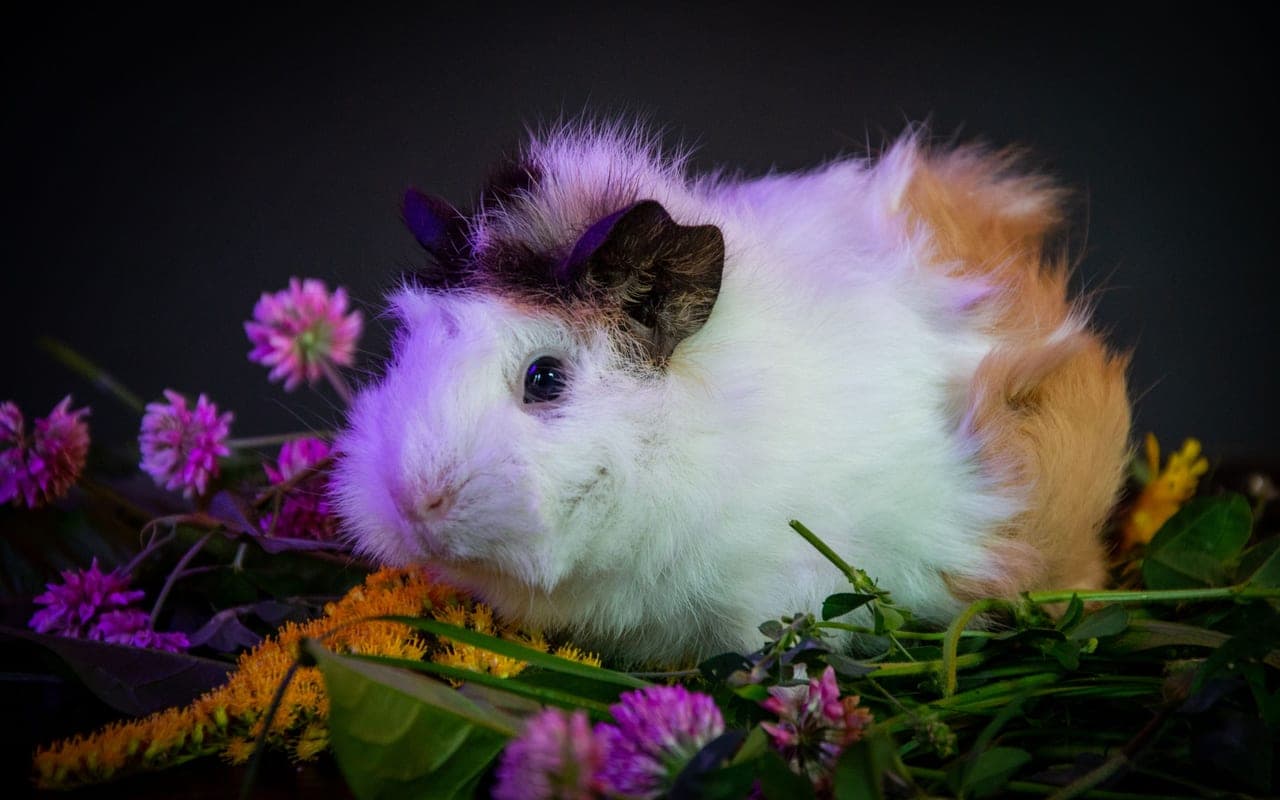
Texel Guinea Pig
Also in the Long-haired group, with different coat care, handling, and companionship tradeoffs.
Merino Guinea Pig
Also in the Long-haired group, with different coat care, handling, and companionship tradeoffs.
Explore More About Lunkarya Guinea Pig
Dive deeper into everything Lunkarya Guinea Pig — costs, care, and expert insights.
Considering a rabbit instead?
Browse Rabbits