
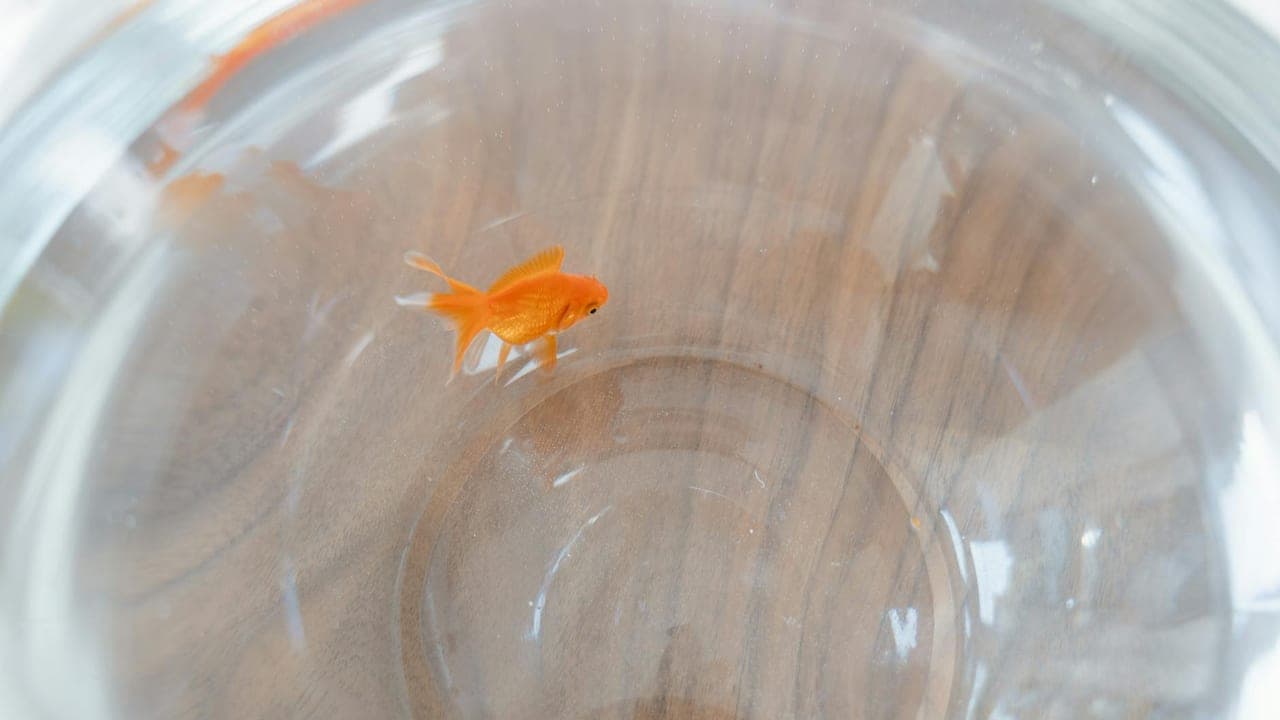
The Accidental Discovery That Changed Aquatic Pet Keeping
In the Jin Dynasty (265–420 CE), Buddhist monks practicing ahimsa — the principle of non-harm — maintained ponds at their monasteries where fish could live free from the threat of being eaten. Wild crucian carp (Carassius auratus) were common in Chinese waterways, and their natural coloration was a dull silver-gray that blended perfectly with murky water. The monks noticed something unusual in some of their pond populations: spontaneous color mutations producing fish that were yellow, orange, or red.
For ordinary Chinese fishermen, a brightly colored fish would have been a curiosity quickly eaten. For Buddhist monks committed to non-killing, these color mutations were instead a reason to segregate the unusual fish and keep them separate — because their brilliant colors made them impossible to mistake for ordinary food fish. This accidental preservation program became the foundation of goldfish breeding.
Dr. Zeng Fansheng of the Institute of Zoology, Chinese Academy of Sciences, has documented this origin story in detail, noting that the genetic mutation responsible for the orange coloration in goldfish — a reduction in melanophores (black pigment cells) combined with an increase in xanthophores (yellow-orange pigment cells) — was not selected for any functional advantage. It was preserved purely by accident, through the intersection of Buddhist ethics and human visual fascination with the unexpected.
Tang Dynasty: From Accident to Art Form
By the Tang Dynasty (618–907 CE), what had begun as accidental preservation in Buddhist ponds had become deliberate cultivation. Tang Dynasty records document that private citizens were maintaining color-bred carp in garden ponds by the seventh century CE, and that specific color varieties commanded premiums in fish markets.
The Tang court itself maintained ornamental fish ponds in imperial gardens, and the goldfish — not yet named as such, still classified as a variety of crucian carp — occupied a middle position in Chinese ornamental aesthetics between the purely functional fish pond and the later purely decorative aquarium. Fish ponds were designed landscapes, and the movement of orange and red fish through carefully arranged water plants and stones was understood as a kinetic element of garden design.
Critically, it was during the Tang period that Buddhist monks began selectively breeding not just for color but for body shape. The natural crucian carp has a streamlined, torpedo-shaped body optimized for speed in open water. Selective pressure — unconscious at first, then deliberate — began producing fish with shorter, rounder bodies, larger fins, and eventually the fantail configurations that would define dozens of later breeds. The monk-breeders were operating without any understanding of genetics, but their aesthetic preferences were exerting exactly the selective pressure that Darwin would later describe.
Song Dynasty: Going Public
The Song Dynasty (960–1279 CE) produced the decisive shift in goldfish history: the move from private ponds to public display. The Song capital Hangzhou — the city Marco Polo later described as the greatest in the world — developed what appear to be the first public goldfish exhibitions, where merchants displayed prized fish in large ceramic containers for paying viewers.
The Song Dynasty also produced the first definitive historical evidence for the term "gold fish" (jin yu in Mandarin). The writer Su Shunqin (1008–1048 CE) used the term in poetry, and it appears in administrative documents from the period referring to fish kept for ornamental rather than food purposes. This linguistic distinction mattered: it separated goldfish from food fish at the level of cultural classification, giving them a protected status that was partly economic (ornamental fish were more valuable) and partly aesthetic.
Song Dynasty breeding produced the first recognizably modern goldfish varieties: fish with double tails, fish with telescope eyes (the protruding eye mutation that characterizes Telescope and Moor varieties today), and fish with dramatically reduced dorsal fins. These mutations were not functional improvements — they made the fish slower, more vulnerable, and less efficient — but they were visually distinctive, and in the competitive Song ornamental fish market, distinction was value.
Ming Dynasty: The First Aquariums
The Ming Dynasty (1368–1644 CE) introduced an innovation that transformed goldfish keeping and established the conceptual template for modern aquarium keeping: the move from outdoor ponds into indoor ceramic containers. Wealthy Ming Dynasty households began keeping goldfish in large glazed ceramic tubs and basins indoors — creating the first domestic aquariums.
This was not a change in container technology. Moving fish indoors fundamentally changed the relationship between fish and keeper. Outdoor pond fish are viewed from above; indoor container fish are viewed from the side and at close range. This shift in viewing angle drove new breeding priorities — suddenly, the fish's lateral appearance mattered as much as its dorsal profile. Breeders began selecting for dramatic side-view characteristics: elaborate tail fins that spread horizontally when the fish is viewed from the side, dramatic head growths (the "lion head" or ranchu configuration), and bubble-eye mutations that made the fish almost spherically round.
Ming Dynasty ceramic art records this transition. Museum collections in Beijing, Shanghai, and Taipei contain dozens of Ming-period ceramic containers specifically designed for goldfish — with interior glazes in colors that made orange fish appear more vibrant, and proportions calculated to provide viewing windows at multiple heights. These were not improvised containers but purpose-designed objects, evidence of how seriously Ming Dynasty households took their fish keeping.
The Silk Road Export: Japan and Europe
Goldfish reached Japan around 1500 CE, almost certainly via Chinese traders rather than the Buddhist monk networks that had transmitted cats (see Cats in Imperial China). Japanese documents from the early sixteenth century describe goldfish as Chinese luxury goods, and early Japanese goldfish keeping was concentrated in the imperial court and wealthy merchant households.
Japan proved to be an enormously productive second center of goldfish breeding. Japanese breeders developed the Ryukin (a fantail variety with a dramatically humped back), the Ranchu (a lionhead variety without a dorsal fin, considered the "king of goldfish" in Japan), and the Shubunkin (a calico-patterned variety developed by crossing domesticated goldfish with wild-type carp). By the eighteenth century, goldfish breeding in Japan had achieved an independence from Chinese models that produced genuinely distinct variety families.
Goldfish reached Europe later. Portuguese traders brought them from China to Portugal around 1611 CE, and they spread across European courts as diplomatic gifts and luxury commodities. The story that Queen Elizabeth I received goldfish as a gift from Queen Mary I in the mid-sixteenth century is often repeated but appears to be apocryphal — the earliest solid European documentation of living goldfish places them in Europe after 1600.
By the mid-seventeenth century, goldfish were present in French royal gardens (Louis XIV's fish were documented by his court diarists), Dutch merchant households, and English aristocratic estates. Their exotic orange coloration, so alien to European pond fish, made them objects of intense fascination. The British naturalist Francis Willughby described them in 1686 in terms that made clear he had never seen anything like them.
The Victorian Goldfish Craze and the Invention of the Fish Tank
The Victorian period (1837–1901 CE) transformed goldfish from aristocratic luxury to working-class hobby through two innovations: mass production of glass, which made glass containers affordable, and the scientific work of naturalist Philip Henry Gosse, who published The Aquarium in 1854 and essentially invented the modern aquarium keeping hobby.
Gosse's book explained for the first time how to maintain a balanced aquatic ecosystem — the right ratio of plants to fish, the importance of water aeration, the nitrogen cycle (though Gosse didn't use that term). His writing made aquarium keeping accessible to middle-class Victorian households, and goldfish were the obvious first inhabitants. By the 1860s, glass aquariums were being manufactured industrially in Britain and Germany, and goldfish were being bred commercially to meet demand.
The Victorian goldfish craze produced both the aquarium hobby as we know it and a significant welfare problem that persists today: the goldfish bowl. The classic round glass bowl, sold with a single goldfish, was actually a Victorian marketing invention that survived purely on inertia. Goldfish in small bowls suffer from oxygen deprivation (the bowl's small surface area cannot exchange enough gas to maintain healthy oxygen levels), ammonia poisoning from their own waste, and stunted growth. A goldfish in appropriate conditions can live 20–30 years and grow to 30 centimeters; in a bowl, it typically dies within months.
Modern aquarium science has definitively established that goldfish bowls are inadequate for fish welfare — a conclusion that the Victorian breeders who developed the hobby would likely have reached themselves if they had had access to water chemistry testing. The bowl persists as a cultural artifact, not a functional aquarium.
The 200-Variety Legacy
Selective breeding over 1,700 years has produced over 200 recognized goldfish varieties, with new varieties still being developed by breeders in China, Japan, and increasingly in the United States and Europe. The genetic distance between a wild crucian carp and a bubble-eye goldfish is comparable to the distance between a wolf and a Bulldog — dramatic enough that the domesticated varieties cannot survive in the wild.
The goldfish genome was fully sequenced in 2019 by researchers at the Wuhan Institute of Aquaculture and the University of Maryland. Their findings confirmed that goldfish domestication involved not just single-gene mutations but complex polygenic changes affecting pigmentation, body shape, fin structure, and neurological development — the same class of deep genetic transformation that characterizes dog and cat domestication.
Learn more about early animal domestication at Pet Domestication Timeline and explore the history of Ancient Dogs: First Companions.
Frequently Asked Questions
Do goldfish really have a three-second memory?
No. This is one of the most persistent myths in popular science. Multiple studies, including work by researchers at Plymouth University published in 2003, have demonstrated that goldfish can remember learned behaviors for months. They can be trained to press levers for food, navigate mazes, and recognize their owners. The three-second memory claim has no scientific basis and appears to have originated as a colloquialism rather than any actual research.
How long do goldfish actually live?
With proper care, common goldfish live 20–30 years. The Guinness World Record for the oldest goldfish is held by Tish, a British goldfish who lived 43 years (1956–1999). Fancy varieties with deformed body shapes (bubble-eyes, lion heads) typically live shorter lives due to health complications from their morphology — usually 10–15 years under ideal conditions.
Why do goldfish bowls harm fish?
Goldfish bowls fail because of inadequate surface area for gas exchange (leading to oxygen depletion and carbon dioxide buildup), no filtration to process ammonia from fish waste (ammonia is acutely toxic to fish), and insufficient volume to dilute waste products. A minimum of 75 liters per goldfish is recommended by modern fishkeeping guidelines — a single goldfish requires roughly thirty times the volume of a typical goldfish bowl.
How many goldfish varieties exist?
Over 200 recognized varieties have been developed across 1,700 years of selective breeding, grouped into approximately 30 type classifications. New varieties continue to be developed; the "panda telescope" goldfish with black and white coloration was not standardized until the late twentieth century. Chinese, Japanese, and Western breeders maintain partially divergent breed standards, meaning the total count varies depending on which classification system is used.
Author & Reviewer
Related Reading
Continue the History
Understand Your Companion
Find Your Match
Ready to find your perfect companion?
Take the Breed Quiz →