
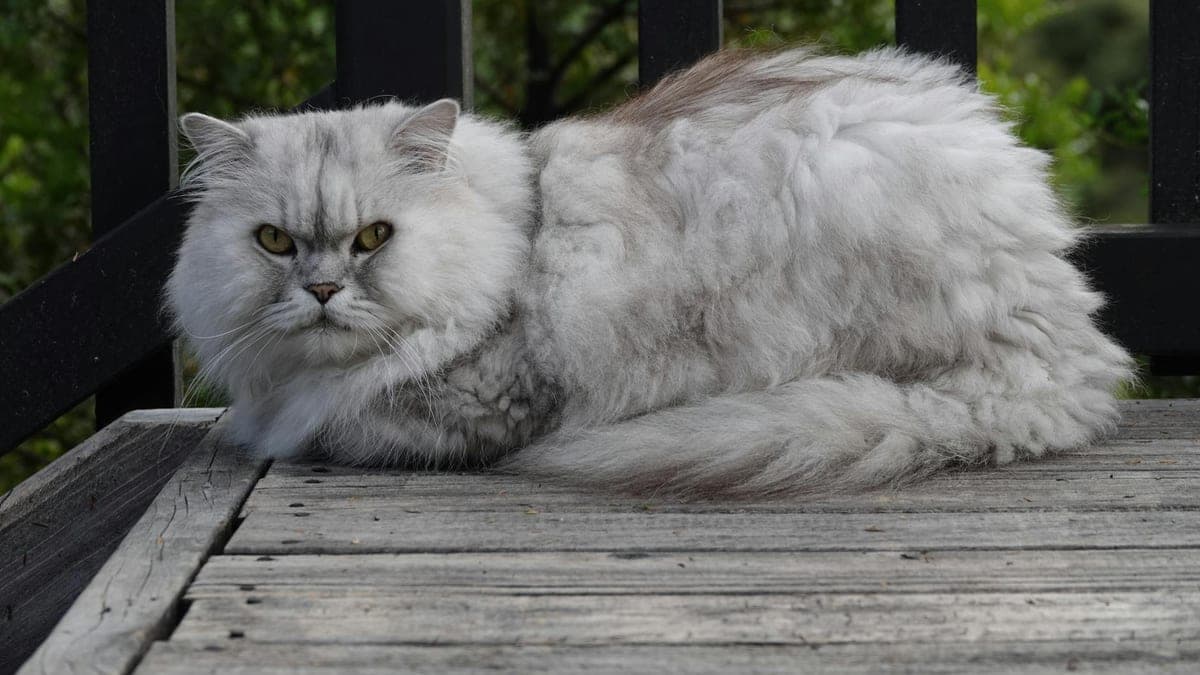
My Persian Cat's Grooming Routine Is My Meditation Practice
Story Subject
Cleo
Type
Cat
Read Time
10 min
Shared By
Isabel Grant
Editor
Mr Pet Lover Admin
In This Guide
The breeder told me: daily brushing, at minimum. Every single day. Non-negotiable with a Persian.
I thought I understood this. I did not understand this until I found a mat the size of a plum behind Cleo's left ear three weeks in, and spent forty minutes with a de-matting comb while Cleo expressed, with great dignity, her opinion of the situation.
After that, I understood. Daily brushing. Every day.
The Routine
Cleo's grooming session happens every morning after my second coffee — approximately 7:30am. Duration: 15 to 20 minutes.
It starts with a wide-tooth comb through her entire coat to catch new tangles. Then a slicker brush for general coat fluffing. Then a fine-tooth flea comb (not because Cleo has fleas, but because it catches small debris and keeps the face coat clean). Then a damp cotton round for her facial folds — Persians' flat faces accumulate discharge in the skin folds, and daily wiping prevents infection.
Finally: eye discharge wiped with a warm damp cloth, because Persian eyes tear more than most breeds, and staining occurs if this step is skipped.
The entire routine took three months to establish as habit. Cleo required similar adjustment — in month one, she tolerated about eight minutes before leaving. By month two, she was staying for the full session. By month three, she was positioning herself at the grooming station at 7:29.
What It Became
I own a company. My mornings are usually moving fast, full of notifications and decisions.
The grooming routine is the non-negotiable twenty minutes where none of that is happening. Cleo will not be rushed. She sits in the precise posture of an animal who is monitoring your technique and has feedback. I slow down.
My therapist once asked me what I did for myself in the mornings. I said I groomed my cat. She said that counted.
Professional Grooming
Every six weeks, Cleo visits a groomer for a full "lion cut" or a bath-and-blow-dry, depending on the season. The lion cut in summer keeps her comfortable; the full coat in winter is warmer. The professional appointment does not replace daily maintenance — it supplements it.
Total annual grooming cost including professional visits: approximately $480.
Cleo is four. Her coat is extraordinary. My morning routine is the most structured part of my day.
Persian cats require substantial daily grooming commitment. Read our Persian cat breed profile before adopting.
How much daily grooming does a Persian cat actually need?
Every day, without exception — and that daily-ness is the single fact most Persian buyers underestimate. Our own Persian breed profile puts it plainly: Persian care is grooming and face hygiene, every single day, for the life of the cat, with no low-effort version of the breed. The core task is a full-coat brush and comb, roughly 10–15 minutes, worked all the way down to the skin with a wide-tooth comb rather than skated across the top. Cleo's 15-to-20-minute morning session above isn't a devoted owner going overboard; it's, more or less, the baseline the breed requires.
The time commitment is the part worth being honest about before adopting. Budget about fifteen minutes a day, seven days a week, for 14–15 years — Persians commonly live into their mid-teens — plus the face-and-eye hygiene below and a professional appointment every few weeks. There is no "catch up on the weekend" version. As the Persian cat care guide frames the decision, if you can't guarantee daily grooming even when you travel, this is the wrong breed to choose. The three months Isabel spent turning the routine into a habit is the realistic on-ramp, not a sign she was slow.
The daily face-and-eye routine, and why it isn't optional
The damp cotton round and the warm cloth in Cleo's routine are doing medical work, not cosmetic touch-ups. The Persian's flat, "peke-faced" head — the very look the breed is prized for — distorts normal tear drainage, so the eyes weep more or less constantly. Left wet, that discharge causes the brown tear-staining Persian owners know well and, more seriously, skin-fold infection in the creases of the face. Our breed profile lists excessive tearing and blocked nasolacrimal (tear) ducts among the breed's defining problems, alongside entropion — inward-rolling eyelids that in some cats need surgery.
That's why the profile calls daily face-wiping a non-negotiable daily task rather than an occasional one. Wipe the eye area and the facial folds every day with a damp cloth to keep them clean and dry. It's a thirty-second step that heads off a recurring vet problem — exactly the trade Isabel is making at 7:30 each morning without thinking of it as medicine.
Why the coat mats — and what a skipped week really costs
A Persian coat mats because two things collide: hair long enough to tangle, and a cat sedate enough to lie on it for hours. Skip brushing for two or three days, the breed profile warns, and you get pelt-like mats that have to be shaved out under sedation — a preventable $100–$300 grooming-or-vet cost every time it happens. The plum-sized mat Isabel found behind Cleo's ear in week three is the small version of that; a whole neglected coat becomes a single felted pelt that is painful for the cat and can only be removed by shaving it off.
This is why the professional appointment in the story matters. A groom every 4–6 weeks — the breed profile quotes $60–$100, often with a sanitary or "lion" trim — is what makes home maintenance realistic for most owners. It doesn't replace the daily brush; it resets the coat so the daily brush stays manageable. Cleo's six-week lion-cut-or-blow-dry rhythm is textbook, and her roughly $480-a-year grooming spend sits at the low, well-managed end of the breed's range precisely because the daily work is being done.
Grooming a Persian is welfare, not vanity
It helps to see the coat and face routine as the visible edge of the breed's whole health picture. The breed profile is blunt that coat matting and skin-fold dermatitis are not a genetic disease but a near-certain welfare problem without daily grooming — leading to painful pelting, sedated shave-downs, and infected facial folds. The grooming isn't for the photos; it's the thing standing between a comfortable cat and a chronic one.
The rest of the breed's health load is worth knowing before you commit, because it sets the real cost of ownership. Polycystic kidney disease (PKD) is the defining inherited Persian risk — a DNA test exists, and buying from a PKD-tested line is, per the profile, the single most important purchase decision in this breed. The flat face also drives brachycephalic airway syndrome (noisy breathing, heat and exercise intolerance), and the breed is prone to hypertrophic cardiomyopathy and to dental crowding from the compressed jaw. One practical fork the profile draws out: the traditional "doll-face" Persian keeps the temperament and much of the look with far fewer breathing and tear-duct problems than the extreme "peke-face" show type.
None of that changes the daily routine — it explains why the routine is worth protecting. The profile puts realistic annual cost at $1,200–$2,500 for food, litter, routine vet and grooming before any PKD or airway treatment, either of which can add several thousand more. Weight matters here too: keep to two measured meals and a visible waist, because obesity both shortens a sedate cat's reach to groom itself and adds strain to already-vulnerable kidneys. The full picture is in the Persian breed profile and the Persian cat care guide; the short version is the one Isabel lives — the twenty minutes is the cheap part.
Why Cleo's twenty minutes are the point, not the price
Ask most breeders about a Persian and you'll hear the warning first: daily brushing, non-negotiable, for the life of the cat. Isabel got that warning too, and learned it the hard way behind Cleo's left ear. What her story adds is the other half — the part a breed profile can't tell you. The grooming that reads as a burden on paper became the most structured, unhurried twenty minutes of a founder's day: a cat who will not be rushed, a technique being monitored, a reason to slow down. The breed's demands are real and worth respecting before you adopt. But the daily routine isn't only the cost of a Persian; for Isabel and Cleo, four years in, it turned out to be the best thing about owning one.
Questions About Cleo
Common questions answered to help you better understand this story
A full-coat brush and comb worked down to the skin — roughly 10–15 minutes with a wide-tooth comb to catch tangles — followed by daily face and eye care. Our Persian breed profile treats both as everyday tasks: wipe the eye area and facial folds with a damp cloth to prevent staining and skin-fold infection. The sequence Isabel uses (comb, slicker, flea comb, facial folds, eyes) is a practical version of that baseline.
Plan on about 15 minutes of coat work a day, plus a minute or two for the eyes and face — and expect that commitment every day, for the cat's 14–15-year life, including when you travel. The Persian cat care guide is explicit that there is no low-effort or weekend-only version. A professional groom every 4–6 weeks sits on top of the daily routine, not in place of it.
Brush and comb to the skin every day, and don't let two or three days slide. Our breed profile warns that skipping that long produces pelt-like mats that have to be shaved out under sedation — a preventable $100–$300 cost each time. A professional trim every 4–6 weeks resets the coat between home sessions. In this breed matting is a welfare problem, not a cosmetic one: a felted coat is painful for the cat.
Every 4–6 weeks is the norm — often a sanitary or "lion" trim, at roughly $60–$100 per visit per our Persian breed profile. That appointment doesn't replace daily brushing; it makes the daily brushing realistic by keeping the coat short and manageable. Cleo's six-week lion-cut-or-blow-dry schedule, adjusted for the season, is a textbook example of pairing professional resets with everyday home maintenance.
Wipe the eye area and facial folds daily with a warm, damp cloth. The Persian's flat face drains tears poorly, so the eyes weep constantly; left wet, that discharge causes brown staining and skin-fold infection, and the breed is also prone to blocked tear ducts and inward-rolling eyelids. Daily wiping is the preventive step — our breed profile calls it non-negotiable, not occasional.
It can be, and honesty here matters more than encouragement. A Persian needs committed daily grooming and face-cleaning for its whole life; our care guide advises choosing a short-haired or doll-faced cat if you can't guarantee that, even when you travel. If you can commit — as Isabel did — it's a calm, affectionate companion. If your schedule can't hold a daily 15-minute anchor, a lower-maintenance cat breed is the kinder choice.
Didn't find your answer?
Get in touch →More Stories
Get more stories like this
Weekly heartwarming pet stories and care tips, straight to your inbox.
No spam, ever. Unsubscribe anytime.