
Arabian Mau Care Guide
The Arabian Mau at a Glance The Arabian Mau is one of the few pedigreed cats that a breeder did not design. It is a landrace: a population that shaped itself over more than a thousand years on the str
In This Guide
Overview
The Arabian Mau at a Glance
The Arabian Mau is one of the few pedigreed cats that a breeder did not design. It is a landrace: a population that shaped itself over more than a thousand years on the streets and edges of the Arabian Peninsula, across what is now Saudi Arabia, the United Arab Emirates, Kuwait, Qatar, Oman, and Bahrain. Its distant roots trace to the early African wildcat, and everything distinctive about it follows from survival in a hot, arid place rather than from a show standard.
The World Cat Federation approved the breed in 2008, after a multi-year study of the region's free-roaming cats, and it became eligible for international shows from 2009; the Emirates Feline Federation recognizes it as well. That recent, study-based recognition matters for owners, because it means the "breed" is a formalized version of a robust street cat, not a narrow gene pool.
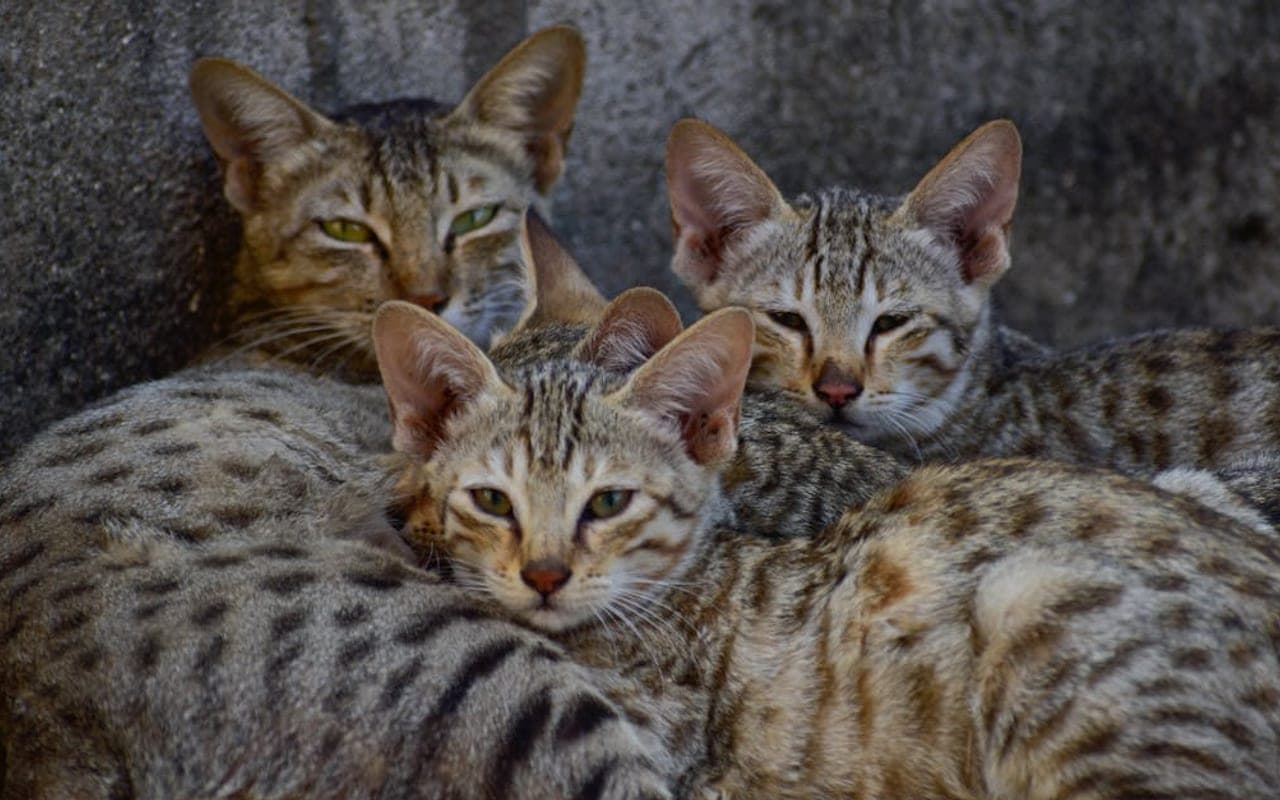
Physically, the Arabian Mau reads as function. It is a medium-sized, firmly muscled cat with long legs and oval paws, built for movement across open ground. The ears are large and high-set because oversized ears shed body heat, an advantage in desert temperatures. The coat is short and has no undercoat, which keeps the cat cool and, as a side effect, makes it a low shedder. Eyes are typically a bright green.
In temperament the breed is alert, energetic, and strongly people-oriented, the disposition of a former survivor that still wants to patrol, hunt, and stay involved. Understanding those desert origins is the key to caring for one well, because its grooming, exercise, and health needs all follow directly from how it came to be.
Exercise
Exercise and Enrichment
The Arabian Mau is a high-energy, athletic cat, and that is an inheritance, not a quirk. This is a landrace that earned its keep as a free-roaming hunter across the Arabian Peninsula, so the long legs and muscular build described by the World Cat Federation come with the drive to use them. A Mau that is bored finds its own entertainment, at your furniture's expense.
Plan on two or more active play sessions a day, because structured play channels a hunting instinct that will otherwise turn inward. Wand and feather toys work especially well, since letting the cat stalk, chase, and finally catch the "prey" completes the predatory sequence and leaves it satisfied rather than wound up. End each session with a real catch, because a hunt with no capture can leave a cat frustrated.
Vertical space is not optional for this breed. A strong climber wants height to survey its territory, so provide a tall cat tree, sturdy shelves, or a window perch; the elevation gives both exercise and the vantage point its instincts expect. Place a scratching post near where the cat rests, because scratching maintains claws and a sanctioned surface protects your own.
Enrichment matters as much as raw activity, since this is a bright, alert breed that needs its mind worked. Food puzzles and treat-dispensing toys make the cat solve for its meal, which mimics foraging and slows fast eaters. Many Arabian Maus take readily to clicker training and even leash walks, both worth trying because a job suits a cat bred by survival. If you are out for long stretches, a second cat or plenty of toys helps, because an under-stimulated Mau is prone to stress and mischief.
Grooming
Grooming the Arabian Mau
Grooming an Arabian Mau is genuinely low-effort, and that follows from its desert biology rather than a marketing line. The coat is short and single, with no undercoat, because a heavy insulating layer would be a liability in Arabian heat. The World Cat Federation's breed description notes exactly this short, undercoat-free coat, and that structure is why the cat sheds little and rarely mats: there is simply less loose fur to trap and tangle.
A weekly once-over with a soft brush or a grooming glove is enough for most of the year. Brush not because the coat demands it but because it removes dead hair before the cat swallows it while self-cleaning, which cuts down on hairballs, and because it is the easiest moment to feel for a lump or sore spot early. Step up to twice weekly during seasonal changes, when even a light coat sheds a bit more. Bathing is almost never necessary, because this is a fastidious self-groomer whose short coat dries fast; reserve baths for a real mess or a vet's instruction.
The rest is standard feline hygiene, and it is the part owners skip. Brush the teeth with a cat-specific paste several times a week, because dental disease is one of the most common problems in domestic cats and is easier to prevent than to treat. Check the large, high-set ears during your weekly brush and wipe only the visible outer area with a vet-approved cleaner if you see wax; never push anything into the canal. Trim the nails every couple of weeks so an active, climbing cat does not catch and tear a claw. Introduce anything new slowly and pair it with a reward, because calm handling is what keeps these routines sustainable.
Health
Arabian Mau Health
The honest health story of the Arabian Mau is unusual, and it is the most important thing to grasp before you own one. Unlike most pedigreed cats, whose closed gene pools carry a known burden of inherited disease, the Arabian Mau is a natural landrace rather than an engineered breed: it was shaped by a thousand years of survival on the Arabian Peninsula, and the World Cat Federation formalized it only in 2008 after studying the region's street cats. Breed registries and veterinary breed profiles report no hereditary disease specific to the Arabian Mau. Its distinction is precisely that it is a robust, generally healthy cat.
That good news comes with a caveat: "no breed-specific inherited disease" does not mean "no health needs." An Arabian Mau is still a domestic cat, so your attention belongs on routine preventive care, not on screening for a condition it is not known to carry. The most reliable step is a yearly vet exam, which catches early changes no owner checklist can.
Everyday risks that apply to every cat
Dental disease is among the most common conditions veterinarians see in cats. Tartar, gum inflammation, and painful tooth resorption develop quietly, so home tooth-brushing plus veterinary dental checks matter, because infection is cheaper to prevent than to repair.
Obesity is the next everyday threat: an energetic breed falls into it indoors if free-fed. Excess weight raises the risk of diabetes and joint strain, so measure meals and keep this cat active, because an overfed Mau gains weight as easily as any couch-bound cat.
Urinary and lower urinary tract signs deserve specific attention. Straining in the litter box, frequent small trips, blood in the urine, or crying while urinating are always a reason to call a vet promptly, and in a male cat an inability to pass urine is an emergency, because a blockage can turn life-threatening within a day.
Keep vaccinations and parasite control current on your vet's schedule, because prevention against infectious disease, fleas, worms, and ticks works better than treatment after the fact. Indoor living lowers but does not erase these exposures.
The desert-heritage angle: hydration and heat
The one area where the Arabian Mau's origins change day-to-day care is water and temperature. A body evolved for arid heat is efficient with water, and cats tend to drink too little anyway, so make fresh water appealing with several bowls or a pet fountain, because moving water encourages drinking and better hydration supports urinary and kidney health. Feeding wet food adds water through the diet, a hedge for a cat that under-drinks.
Being adapted to heat is not the same as being safe in it. A cat left in a hot car, a sealed sunroom, or a shadeless garden can still suffer heatstroke, so always provide shade, ventilation, and water, and never assume desert ancestry makes a Mau heatproof.
None of this replaces professional care. Use this guide to notice changes early, but let a licensed veterinarian diagnose and treat your cat, because only an exam, and sometimes testing, can turn a symptom into an answer.
Frequently Asked Questions
Does the Arabian Mau have any breed-specific genetic diseases?
No breed-specific hereditary disease is documented for the Arabian Mau. As a natural landrace shaped by survival rather than a narrow gene pool, breed registries describe it as generally hardy, but it still needs the same routine feline care as any cat, and only a veterinarian can assess your individual pet.
How long does an Arabian Mau typically live?
With good preventive care, a suitable diet, and indoor living, the Arabian Mau is widely reported as long-lived and robust, often reaching its mid-to-late teens with good care. Longevity tracks veterinary care, weight, and dental health, not the breed label.
What are the most important health problems to watch for?
Ordinary feline ones, not breed-specific: dental disease, obesity, and urinary signs, plus routine vaccination and parasite prevention. Straining to urinate or blood in the urine warrants a prompt vet call, and a male unable to pass urine is an emergency.
Does its desert origin change how I should care for one?
Mainly hydration and heat. Encourage water with fountains or wet food, because good hydration supports urinary and kidney health, and never treat desert ancestry as heatproofing, since any cat can suffer heatstroke without shade, ventilation, and water.
Sources
This guide draws on the following published references. Each opens in a new tab so you can check it against what you have read here.
Wikipedia (Wikimedia Foundation)
Arabian Mau (natural landrace; WCF and TICA recognition)(opens in a new tab)PETBOOK
Why the Arabian Mau Has Hardly Changed for Almost a Thousand Years - Personality, Appearance, Care(opens in a new tab)Cornell University College of Veterinary Medicine
Cornell Feline Health Center(opens in a new tab)PetMD
9 Fascinating Genetic Anomalies in Cats(opens in a new tab)
Affiliate disclosure: We may earn a commission from qualifying purchases. This doesn't affect our recommendations.
Recommended Products
Arabian Mau Care Guide Book
Breed-focused reading and owner references for Arabian Mau care, training, grooming, and health planning.
Arabian Mau Food and Supplies
Helpful supplies for arabian mau cat supplies routines at home.
Arabian Mau Grooming Tools
Helpful supplies for arabian mau grooming tools routines at home.
Get personalized pet care tips
Join our newsletter for breed-specific advice, care guides, and expert tips delivered weekly.
No spam, ever. Unsubscribe anytime.