
Bluetick Coonhound Care Guide
Overview The Bluetick Coonhound is an American scenthound built for one demanding job: trailing and treeing raccoons through the dark, over miles of rough country. The breed took shape in the American
Reading Time
📖 8 min read
Guide Type
🐾 Breed-Specific
Last Updated
📅 Sep 10, 2026
Breed
🐶 Bluetick CoonhoundIn This Guide
Overview
Overview
The Bluetick Coonhound is an American scenthound built for one demanding job: trailing and treeing raccoons through the dark, over miles of rough country. The breed took shape in the American South — Louisiana especially — from a mix of the French Grand Bleu de Gascogne, English and American Foxhounds, and the Black and Tan Virginia Foxhound, and it was registered as a distinct breed by the United Kennel Club in 1946 and recognized by the AKC in 2009 (Wikipedia; AKC). Almost everything about living with a Bluetick follows from that treeing-hound heritage.
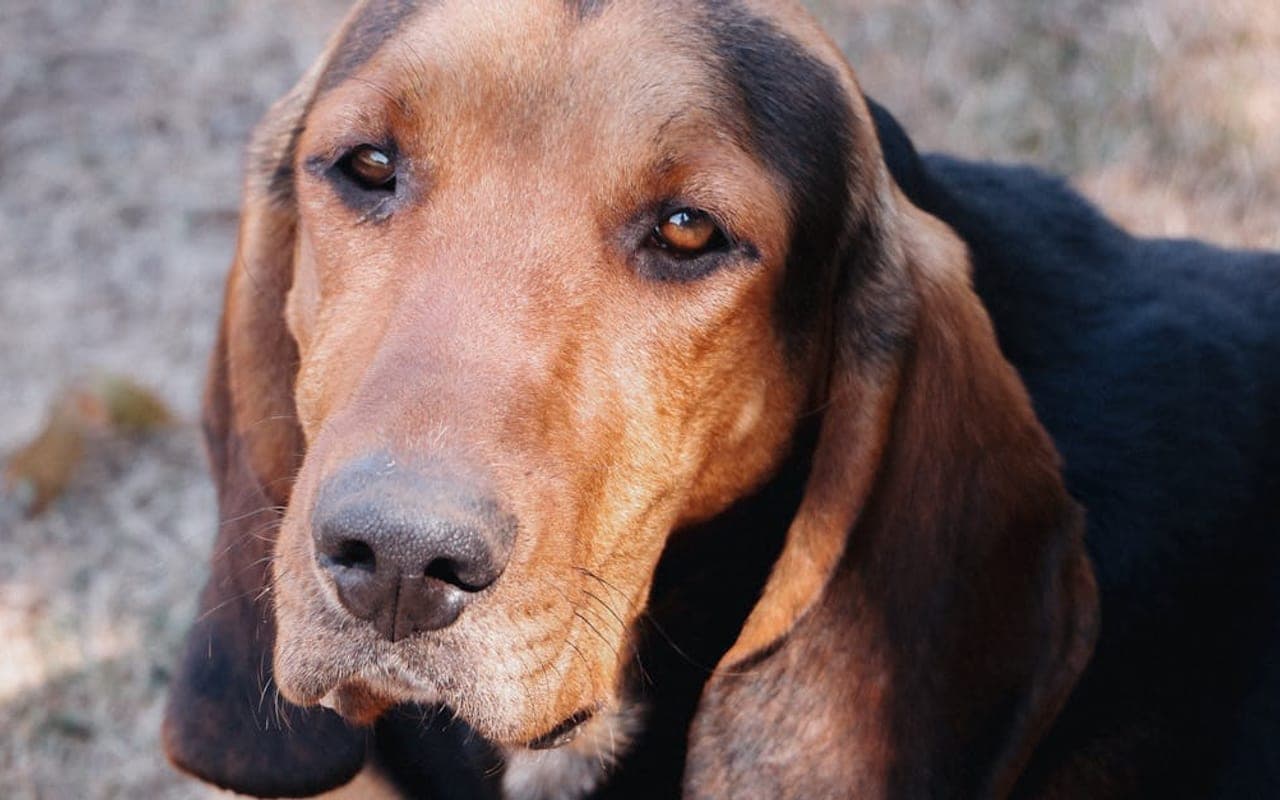
The coat is the breed's namesake. What looks like navy blue is actually dense black "ticking" — a heavy peppering of dark spots — mottled over a white base, usually with larger black patches and often tan points over the eyes, on the muzzle, chest, and legs (Wikipedia; UKC). The overall effect reads as a deep, glossy blue.
Then there is the voice. Blueticks were bred to bay while they work, and their striking and trailing calls run from a drawn-out bawl to a bugle or a chopping bark, changing over to a distinct tree call once quarry is cornered (UKC). This is not incidental noise — it is a working trait, and it is loud.
That famous "cold nose" lets a Bluetick pick up a scent trail days old and follow it single-mindedly (AKC). Paired with a strong prey drive, it means a Bluetick on a scent will roam and can be hard to recall (Wikipedia; WebMD). At home they are affectionate, loyal, alert watchdogs; on a trail they are relentless. This guide covers care specific to the breed — history and choosing a puppy live on the Bluetick Coonhound breed page.
Exercise
Exercise & Enrichment
A Bluetick Coonhound was bred to work a raccoon trail for hours, and that stamina does not switch off in a suburban backyard. This is a high-energy hound that needs a real daily outlet — long walks, jogs, or, ideally, a job such as tracking, hunting, obedience, or agility to stay level-headed and content (WebMD; Wikipedia). A bored, under-exercised Bluetick will find its own entertainment, usually loudly.
Feed the nose, not just the legs. Because scent is the center of this breed's world, the best enrichment is olfactory: scent games, tracking work, snuffle mats, and letting the dog sniff and investigate on walks tire a Bluetick far more than plain distance does.
Containment is the non-negotiable part. A Bluetick that catches a scent will put its nose down and go, tuning out your calls, so a securely fenced yard and a leash on every walk are essential — this is not a dog to trust off-leash in open ground (WebMD; Wikipedia). Fencing should be tall and secure, because a determined, athletic hound will test it.
Finally, plan for the voice. Blueticks were bred to bay while they work and can call out in loud, bell-like tones, so give the barking an outlet through exercise and start training an "enough" cue early rather than expecting silence (Wikipedia; WebMD). Their carrying voice is worth weighing honestly if you have close neighbors.
Grooming
Grooming
The Bluetick's short, coarse, glossy coat is genuinely low-maintenance. A weekly once-over with a soft brush or a grooming glove lifts loose hair and keeps the coat shining, and a bath is only needed occasionally — or after a Bluetick has rolled in something on the trail (WebMD). Expect moderate, year-round shedding rather than heavy seasonal blowouts; the weekly brushing keeps it in check.
The part of grooming that is not optional is the ears. A Bluetick's long, low-hung, pendulous ears trap moisture, wax, and debris inside the canal, and that warm, poorly ventilated space is exactly what bacteria and yeast need to bloom — which is why coonhounds sit among the breeds most prone to ear infections (Vetnique; Merck Veterinary Manual). Check inside the ears weekly, clean them with a vet-approved solution rather than cotton swabs, and dry the ears thoroughly after every bath or swim, since standing moisture is the main trigger (Vetnique; WebMD). Redness, a yeasty smell, head-shaking, or scratching means a vet visit, not more home cleaning.
Round out the routine with the basics this active, hard-working breed needs: trim the nails every few weeks so they never click on the floor or catch on ground, and brush the teeth several times a week (WebMD).
Health
Health
Bluetick Coonhounds are generally hardy, athletic dogs, but a handful of conditions matter enough to understand before problems appear — ranked here by how breed-relevant and how serious they are. This is general information about risk, not a diagnosis; your veterinarian is the person to evaluate any individual dog.
Ear infections — the everyday one. A Bluetick's long, pendulous ears hang over the canal and trap moisture and debris, creating the warm, poorly ventilated space where bacteria and yeast overgrow, which is why coonhounds rank among the breeds most prone to ear infections (Vetnique; Merck Veterinary Manual). This is the health issue you are most likely to meet, and it is largely preventable: check and clean the ears regularly with a vet-approved solution and dry them thoroughly after baths or swims (WebMD; Vetnique). Head-shaking, odor, or redness warrants a vet visit.
Hip and elbow dysplasia. These are inherited malformations in which the joint fails to develop properly, so the bones grind and wear toward painful arthritis over time; the Bluetick is among the breeds screened for them, and reputable breeders test breeding stock (WebMD). Keeping your dog lean protects the joints for life.
Bloat / gastric dilatation-volvulus (GDV). As a deep-chested breed, the Bluetick carries the risk of gastric torsion, a life-threatening emergency in which the stomach fills with gas and can twist, cutting off blood flow and requiring immediate surgery (WebMD). Feeding smaller meals rather than one large one and avoiding hard exercise around mealtimes lowers the risk; a swollen belly, unproductive retching, drooling, and restlessness mean go to an emergency vet at once.
Eye conditions. Cataracts, in which the lens turns opaque and vision clouds toward blindness, are reported in the breed, so periodic eye checks belong in long-term care (WebMD). Any change in the appearance of the eye or in your dog's sight is worth a veterinary look.
Coonhound paralysis (acute polyradiculoneuritis). This one is tied directly to the breed's job. It is an inflammation of the peripheral nerves that causes rapid weakness or paralysis, and signs often appear 7 to 14 days after a raccoon bite or scratch — the exposure that gave the condition its name — thought to involve an immune reaction, though not every case involves raccoons (Merck Veterinary Manual; VCA; University of Illinois). There is no specific cure beyond intensive nursing care, and most dogs recover over weeks to months, so any sudden weakness in the legs needs urgent veterinary attention (WebMD; Merck Veterinary Manual).
Beyond these, the breed can also carry hypothyroidism, patellar luxation, and rare neuronal ceroid lipofuscinosis, which is why routine vet checks and thyroid and eye screening are worthwhile (WebMD).
A few Bluetick-specific questions come up again and again.
Frequently Asked Questions
My Bluetick bays and bawls loudly — is that normal, and can I stop it?
It is entirely normal. Blueticks were bred to bay while they hunt, with loud, carrying, bell-like calls, so a completely silent Bluetick is not a realistic goal (Wikipedia; WebMD). You can manage it: give the dog enough exercise and scent work that it is not calling out from boredom, and train an "enough" or "quiet" cue early. If you have close neighbors, weigh the breed's voice honestly before committing.
Why can't I let my Bluetick off-leash, and what fencing do I need?
A Bluetick's powerful nose and strong prey drive mean that once it locks onto a scent it will follow it single-mindedly and can tune out your recall, so it should not be trusted off-leash in open ground (WebMD; Wikipedia). Walk on a leash and give access only to a securely, tall-fenced yard — an athletic, determined hound will test weak fencing and roam if it finds a way out.
My Bluetick keeps getting ear infections — what can I do?
Recurring ear infections are common in the breed because those long, floppy ears trap moisture and debris in a warm, poorly ventilated canal, the ideal environment for bacteria and yeast (Vetnique; Merck Veterinary Manual). Check the ears regularly, clean them with a vet-approved solution rather than cotton swabs, and dry them thoroughly after every bath or swim (WebMD; Vetnique). If an ear is red, smelly, or painful, see your vet rather than cleaning harder.
A raccoon scratched my Bluetick and now it seems weak — should I worry?
Take it seriously and call your vet. Coonhound paralysis (acute polyradiculoneuritis) causes rapid weakness or paralysis that typically appears 7 to 14 days after a raccoon bite or scratch, and although most dogs recover with intensive nursing care over weeks to months, severe cases can be dangerous (Merck Veterinary Manual; VCA; University of Illinois). Any sudden hind-limb or whole-body weakness in a coonhound is an urgent veterinary matter, not something to watch at home.
Sources
This guide draws on the following published references. Each opens in a new tab so you can check it against what you have read here.
United Kennel Club (UKC)
Bluetick Coonhound Breed Standard(opens in a new tab)American Kennel Club (AKC)
Bluetick Coonhound Dog Breed Information(opens in a new tab)PetMD
Bluetick Coonhound Dog Breed Health and Care(opens in a new tab)VCA Animal Hospitals
Bluetick Coonhound(opens in a new tab)VCA Animal Hospitals
Coonhound Paralysis(opens in a new tab)
Affiliate disclosure: We may earn a commission from qualifying purchases. This doesn't affect our recommendations.
Recommended Products
Bluetick Coonhound Care Guide Book
Breed-focused reading and owner references for Bluetick Coonhound care, training, grooming, and health planning.
Bluetick Coonhound Food and Supplies
Helpful supplies for bluetick coonhound dog supplies routines at home.
Bluetick Coonhound Grooming Tools
Helpful supplies for bluetick coonhound grooming tools routines at home.
Get personalized pet care tips
Join our newsletter for breed-specific advice, care guides, and expert tips delivered weekly.
No spam, ever. Unsubscribe anytime.